

When Does Your HVAC System Need Help Right Now?
What constitutes an HVAC emergency is one of the most important things a homeowner can know — and the short answer is this: any situation that puts your health, safety, or home at immediate risk.
Here's a quick breakdown:
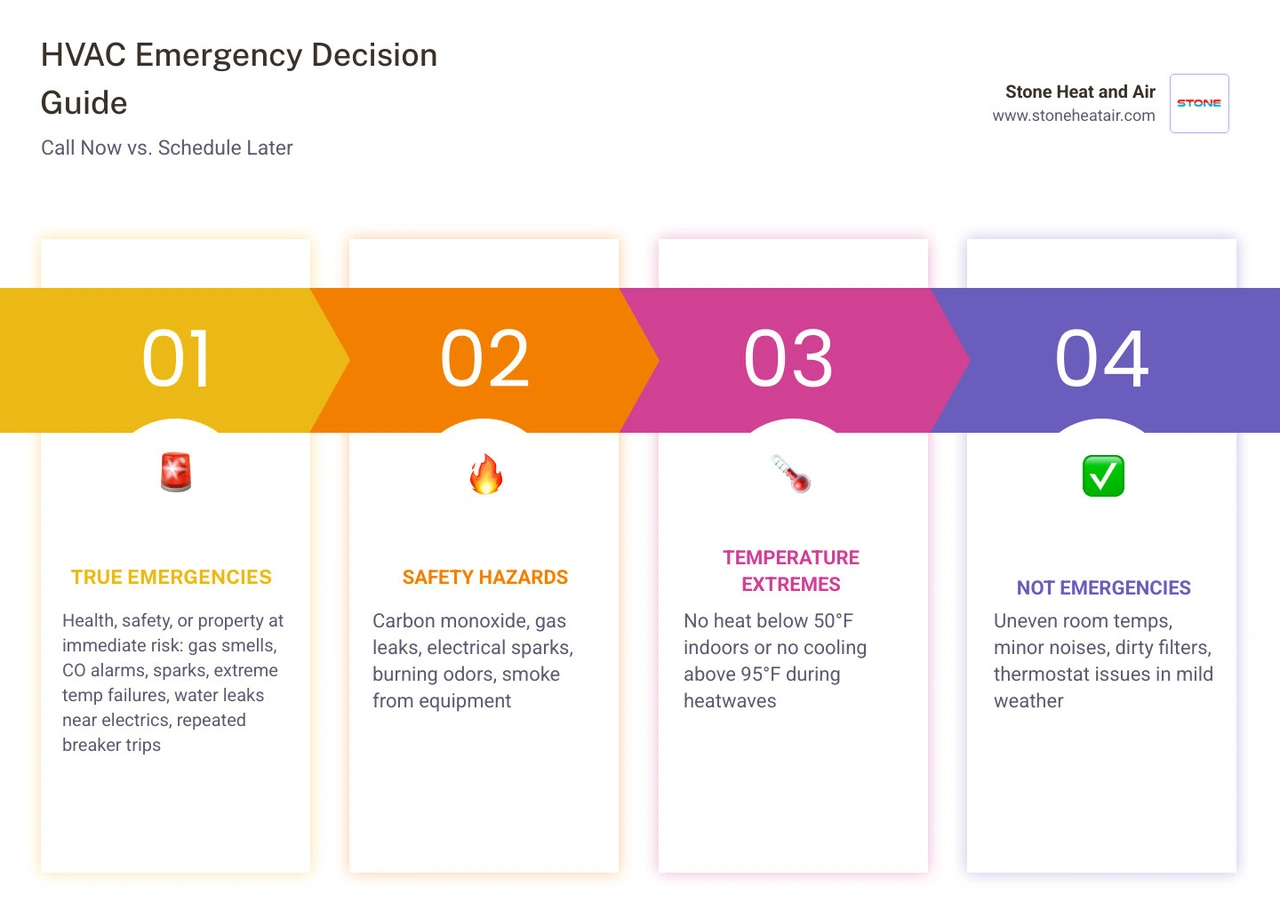
True HVAC Emergencies (Call Now):
• Smell of rotten eggs or gas near your system
• Carbon monoxide detector alarm
• Visible smoke, sparks, or burning smell from equipment
• No heat when indoor temps drop below 50°F
• No cooling when outdoor temps push indoor temps above 95°F
• Significant water leaking near electrical components
• Repeated circuit breaker tripping from HVAC equipment
Not an Emergency (Can Wait for Regular Hours):
• Slightly uneven temperatures between rooms
• Minor rattling noises with system still running normally
• Dirty air filter reducing airflow
• Thermostat acting up in mild weather
• Older system running less efficiently than before
Your HVAC system works quietly in the background every day — keeping your Rogue Valley home warm in winter, cool during the valley's hot summers, and your family safe year-round. Most of the time, you don't think about it at all. But when something goes wrong, the big question hits fast: is this an emergency, or can it wait?
The answer matters more than you might think. Call too late on a real emergency and you risk carbon monoxide exposure, frozen pipes, or heat-related illness. Call after hours for something routine and you pay a premium you didn't need to. Knowing the difference gives you confidence, protects your household, and helps you make the right call — at 2 p.m. or 2 a.m.
At Stone Heat and Air, we serve homeowners across the Rogue Valley with 24/7 emergency HVAC support, and we've seen how quickly a small problem can become a dangerous one. This guide will help you recognize the real warning signs, know exactly what to do in the moment, and understand how regular maintenance can keep most emergencies from happening in the first place.
What Constitutes an HVAC Emergency in the Rogue Valley?
Living in Southern Oregon means dealing with a wide range of weather. From the sweltering July afternoons in Medford to the frosty January mornings in Grants Pass, our comfort systems are under constant pressure. In our professional experience, what constitutes an HVAC emergency generally falls into three buckets: health risks, safety hazards, and potential property damage.
If your furnace or air conditioner fails, it isn't always just about being "uncomfortable." It can be about the structural integrity of your home or the physical well-being of your family. For instance, a broken furnace in sub-freezing weather can lead to burst pipes, which causes thousands in water damage. Conversely, a gas leak is an immediate fire and explosion hazard.
To help you decide whether to pick up the phone right now, we’ve put together a comparison of common scenarios we see in the field.
• Rotten Egg Smell — Emergency Status: TRUE EMERGENCY — Why?: Indicates a gas leak; high risk of explosion or fire.
• No AC (75°F Outside) — Emergency Status: Routine Service — Why?: It's annoying, but not a threat to life or property.
• Water Pooling on Floor — Emergency Status: TRUE EMERGENCY — Why?: Can cause structural damage, mold, or electrical shorts.
• Loud Banging/Grinding — Emergency Status: TRUE EMERGENCY — Why?: Signals major mechanical failure that could ruin the motor.
• Minor Airflow Issues — Emergency Status: Routine Service — Why?: Usually a dirty filter or duct issue that can wait for morning.
If you are unsure of your specific situation, it is always better to err on the side of caution. You can learn more about when to call for emergency HVAC services or dive deeper into what causes HVAC emergencies to understand the mechanics behind these failures.
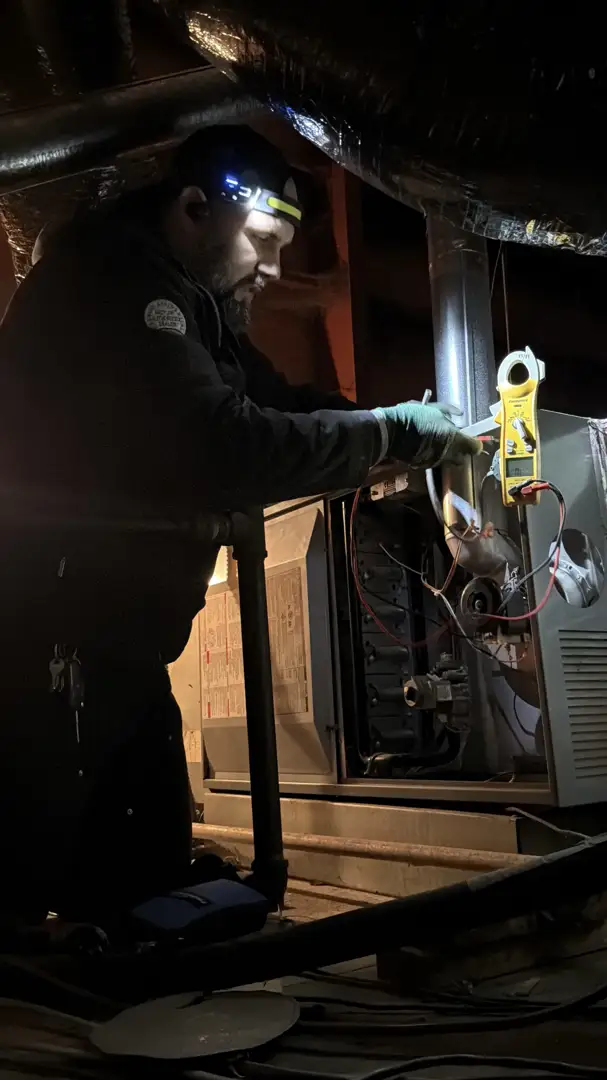
Identifying What Constitutes an HVAC Emergency During Summer Heatwaves
In April 2026, we are already looking ahead to the peak summer months. In the Rogue Valley, summer isn't just warm; it can be dangerous. When outdoor temperatures climb, your home can become a "heat box" surprisingly fast.
We generally consider a total AC failure an emergency when the indoor temperature reaches a 95°F threshold. At this level, the risk of heat exhaustion and heat stroke becomes very real, especially for vulnerable residents like infants, the elderly, or those with chronic respiratory conditions. If your system isn't blowing cold air and the mercury is rising, don't try to "tough it out."
While you wait for help, check out our guide on staying cool in an HVAC emergency: tips and tricks to keep your family safe. For those in the heart of the valley, we provide dedicated emergency HVAC service in Medford, OR to get your cooling back online before the house becomes unsafe.
Understanding What Constitutes an HVAC Emergency in Freezing Temperatures
Winter in Southern Oregon brings its own set of "must-fix-now" problems. While a chilly house is unpleasant, a house that drops below 50°F indoors is a genuine emergency.
The primary concerns here are hypothermia for residents and the protection of your plumbing. When indoor temperatures stay too low for too long, the water in your pipes can freeze. Since water expands when it freezes, those pipes can burst, leading to a catastrophe that goes far beyond a simple heater repair.
Whether you need emergency HVAC service in Central Point, OR or are looking for emergency HVAC service in Grants Pass, OR, our team is ready to respond to no-heat calls in sub-freezing weather as a top priority.
Critical Safety Hazards Requiring Immediate Attention
Some issues are so severe that they bypass the "comfort" conversation entirely and move straight to "safety." These are the situations where you should not only call for service but potentially evacuate your home.
If you see sparks, smell something burning that isn't just "first-day-of-winter dust," or hear a carbon monoxide alarm, you are facing a critical hazard. Our emergency service team is trained to handle these high-stakes situations. Residents needing emergency HVAC service in Ashland, OR can rest easy knowing we prioritize these life-safety calls above all others.
Carbon Monoxide and Gas Leak Protocols
Carbon monoxide (CO) is often called the "silent killer" because it is colorless and odorless. However, your HVAC system can give you clues. If you have a gas furnace and notice a yellow or flickering flame instead of a crisp blue one, or if you see soot buildup around the unit, you may have a combustion problem.
According to the CDC, unintentional carbon monoxide poisoning sends over 100,000 Americans to emergency departments every year. If your CO detector goes off:
1. Open windows and doors immediately.
2. Get everyone (including pets) out of the house.
3. Call 911 or the gas company from outside.
4. Call us for an emergency inspection.
The same applies to gas leaks. Natural gas providers add a chemical that smells like rotten eggs to help you detect leaks. If you smell this, do not turn any lights on or off—just leave and call for help. We offer specialized emergency HVAC service in Jacksonville, OR and emergency HVAC service in Phoenix, OR to address these critical gas-related threats.
Electrical Malfunctions and Fire Risks
Electrical issues are responsible for a significant portion of home fires. In fact, research shows that about 40% of HVAC emergencies start with thermostat malfunctions or related electrical failures.
If your circuit breaker trips every time the AC kicks on, do not keep flipping it back. The breaker is doing its job by preventing a fire. Frequent tripping, the smell of burning wires, or visible smoke from the outdoor unit are all signs of a serious electrical fault.
We provide rapid emergency HVAC service in White City, OR and emergency HVAC service in Eagle Point, OR to diagnose these shorts before they can cause a fire.
Immediate Steps to Take During a System Failure
When you realize you are facing a true emergency, your actions in the first few minutes can make a huge difference. Here is our recommended first-response plan:
1. Prioritize Safety First: If you suspect a gas leak or fire, evacuate immediately. Do not stop to grab belongings.
2. Shut Off Utilities: If it is safe to do so, turn off the gas supply valve to the furnace or shut off the dedicated HVAC breaker at your electrical panel.
3. Check the Simple Stuff: Sometimes an "emergency" is just a dead thermostat battery or a tripped breaker (try resetting it once).
4. Call for Professional Help: Contact a 24/7 service provider. Be ready to describe the sounds, smells, and any error codes on your thermostat.
5. Protect the Home: In winter, open cabinet doors under sinks to let warm air reach pipes. In summer, close all blinds to block the sun.
6. Document the Issue: Note when the problem started and what the system was doing right before it failed.
For our local business owners, we also have specialized advice on how to handle your commercial HVAC emergency. Whether you need emergency HVAC service in Talent, OR or emergency HVAC service in Rogue River, OR, having a plan in place reduces panic and speeds up the repair process.
Preventing Future Breakdowns with Regular Maintenance
The best way to handle an HVAC emergency is to make sure it never happens. Statistics show that homeowners who schedule regular maintenance are 50% less likely to experience an emergency breakdown.
Why is that? During a biannual tune-up, we catch the small things—a frayed wire, a cracked belt, or a failing capacitor—before they turn into a 2 a.m. disaster. Over 60% of HVAC emergencies happen during peak seasons simply because that’s when the system is working the hardest. A clean system with a fresh air filter runs more efficiently and lasts years longer.
We are proud to offer the "Stone Comfort Membership Club," which provides our members with priority service and regular tune-ups to ensure uninterrupted comfort. From emergency HVAC service in Shady Cove, OR to emergency HVAC service in Gold Hill, OR, we are committed to helping our neighbors avoid the stress of a sudden system failure.
Frequently Asked Questions about HVAC Emergencies
Is a noisy air conditioner considered an emergency?
It depends on the noise. A minor rattle might just be a loose screw, but grinding, screeching, or loud banging should be treated as an emergency. These sounds often indicate a broken motor bearing or a detached fan blade. If you continue to run the system, you could cause irreparable damage to the entire unit. If you hear these sounds in Butte Falls, don't wait—call for emergency HVAC service in Butte Falls, OR to save your equipment.
What should I do if my thermostat screen is blank?
A blank screen means the "brain" of your system has lost power. This could be as simple as dead batteries, but it often signals that the furnace or air handler has lost power or that a safety switch (like a float switch) has triggered. Since 40% of HVAC emergencies start with thermostat malfunctions, it’s worth a quick check. If new batteries don't work, residents can reach out for emergency HVAC service in Williams, OR.
Can a water leak from my HVAC wait until morning?
If the leak is a slow drip into a secondary drain pan, it might wait. However, if you see water pooling on the floor or staining your ceiling, it is an emergency. Water leaks from an HVAC system are usually caused by clogged condensate lines or frozen coils. Left unaddressed, they lead to toxic mold growth and structural rot. For fast help with moisture issues, contact our emergency HVAC service in Kerby, OR.
Conclusion
Understanding what constitutes an HVAC emergency is the first step in keeping your Rogue Valley home safe and comfortable. Whether it's a dangerous gas leak, a freezing winter night without heat, or a sweltering summer afternoon in Medford, knowing when to call the pros can save you from a major disaster.
At Stone Heat and Air, we believe in honest, fair dealings and treating your home like ours. We provide 24/7 reliability across Southern Oregon, ensuring that even in the middle of a 2026 heatwave, you are never left without help. Don't let a small problem turn into a dangerous situation—if you're experiencing any of the warning signs mentioned in this guide, reach out to us immediately.
For fast, professional assistance, visit our emergency service page or call us today. Your comfort and safety are our highest priorities.