
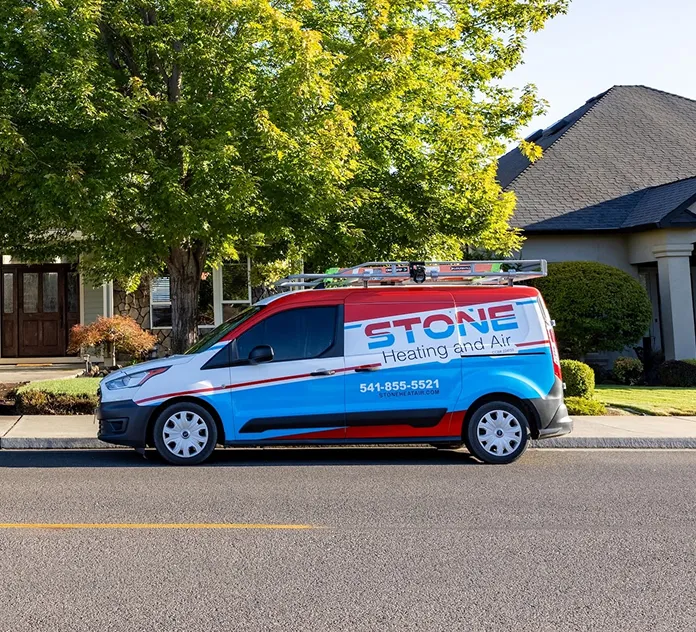

A malfunctioning HVAC system in your commercial space affects productivity, customer experience, and your bottom line. Employees can't focus in a hot office, and customers won't linger in a freezing retail space. Stone Heating & Air provides commercial HVAC services in Central Point, OR, for businesses that need reliable climate control without downtime.
We keep your business comfortable and running:
- Commercial AC and heating repair for rooftop and split systems.
- Preventative maintenance contracts to minimize disruptions.
- Multi-zone system balancing for consistent temperatures throughout.
- Emergency commercial HVAC service for urgent failures. Call Stone Heating & Air at (541) 855-5521 to schedule commercial HVAC service in Central Point today.
Comprehensive Commercial HVAC Services Available Today
Commercial heating and cooling requires a different tier of expertise than residential work due to the complexity, load requirements, and zoning needs of business facilities. When you engage professional services for your building, the focus is on maximizing energy efficiency while maintaining strict temperature and humidity controls necessary for inventory, equipment, and employee comfort.
System Diagnostics and Repair
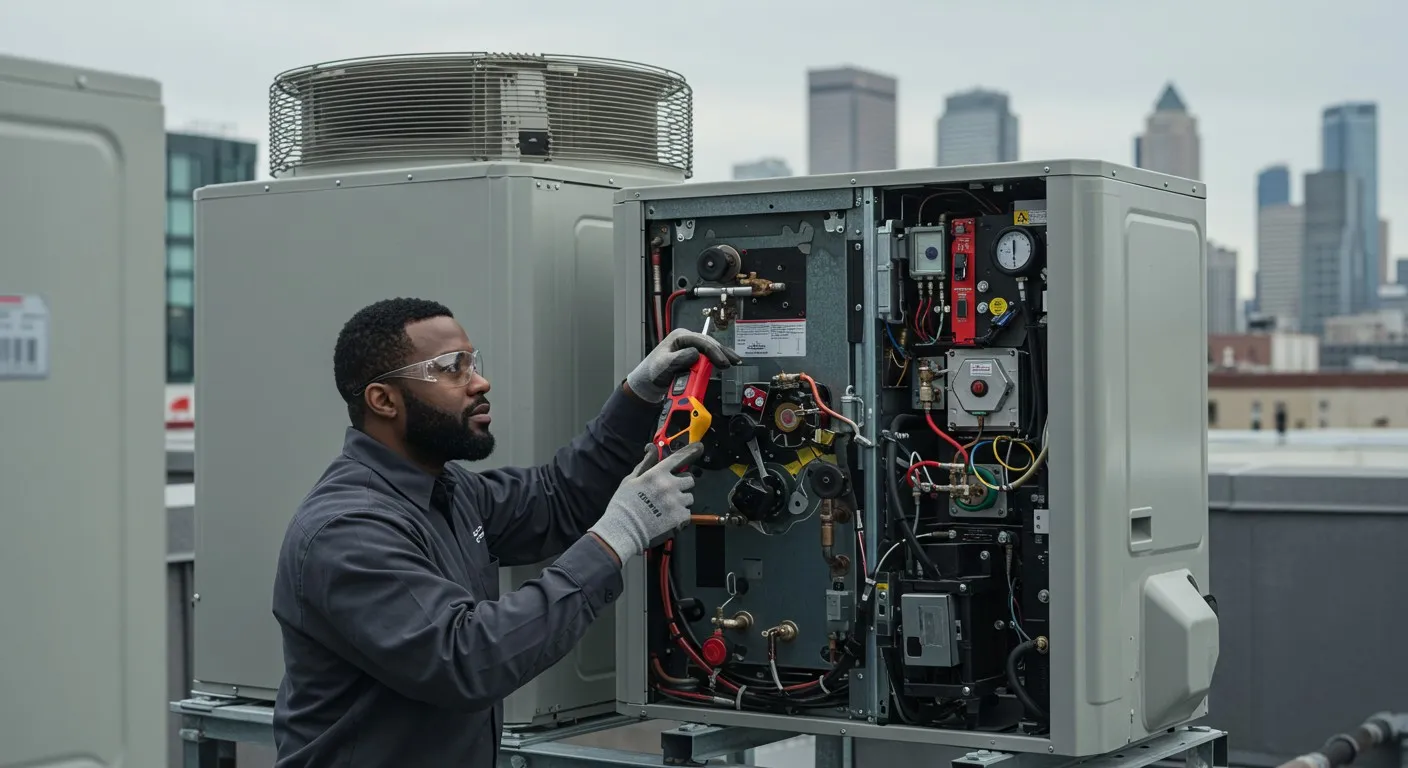
The moment a technician arrives, the priority is identifying the root cause of the failure. Commercial systems, whether they are packaged rooftop units (RTUs), split systems, or chillers, often have complex control wiring and economizers that require specialized diagnostic tools.
- Technicians perform a full electrical and mechanical analysis to pinpoint issues in compressors, fans, or control boards.
- Airflow measurements are taken to ensure static pressure is within the manufacturer's specified range.
- Refrigerant levels are checked against superheat and subcooling targets to verify efficient heat transfer.
Equipment Types Serviced and Installed
Your facility’s layout determines the hardware required. We provide full support for a wide array of commercial configurations.
- Rooftop Units (RTUs): These are common in retail and office spaces, consolidating heating and cooling into a single cabinet. Service includes weatherproofing checks and heat exchanger inspections.
- Split Systems: Often used in smaller commercial buildings or server rooms, requiring precise line set installation and pressure testing.
- VRF (Variable Refrigerant Flow) Systems: ideal for facilities requiring simultaneous heating and cooling in different zones. These complex systems demand certified expertise for refrigerant handling.
- VAV (Variable Air Volume) Boxes: Critical for zoning large ductwork systems, requiring calibration of dampers and thermostats.
Preventative Maintenance Agreements
Reactive repair is often the most expensive way to manage a facility. Scheduled maintenance shifts the focus to asset preservation.
- Filter changes are conducted regularly to maintain airflow and indoor air quality, which is vital for occupant health.
- Belt tensioning and alignment prevent premature bearing failure in blower motors.
- Condenser coil cleaning removes grime and debris that artificially inflate energy bills by forcing the system to work harder.
The Commercial Installation and Replacement Process
Replacing a commercial HVAC system is a major capital project that requires logistical precision. Unlike residential swaps, commercial installations often involve heavy machinery, road closures, or coordination with other trades. The process is designed to ensure safety and code compliance while aiming for the lowest possible disruption to your daily operations.
Load Calculation and Site Assessment:
First, a comprehensive load calculation is performed. This goes beyond square footage; it accounts for heat-generating equipment, lighting loads, occupancy levels, and solar gain through windows. This step ensures the new unit is neither undersized (leading to constant running) nor oversized (leading to short-cycling and humidity issues).
Logistics and Rigging:
Next, the logistical plan is finalized. For rooftop units, this typically involves coordinating a crane lift. Safety perimeters are established, and existing roof curbs are measured to determine if a curb adapter is necessary to fit the new unit’s footprint without compromising the roof warranty.
System Removal and Placement:
Then, the existing equipment is disconnected. Refrigerant is recovered according to EPA guidelines to prevent environmental contamination. The old unit is lifted away, and the new system is set in place. Technicians ensure the unit is level and securely fastened to the curb or slab to withstand wind loads.
Connections and Integration:
Subsequently, utility connections are made. This includes high-voltage electrical wiring, low-voltage control wiring, gas piping (if applicable), and condensate drain lines. If the building utilizes a Building Automation System (BAS), the new HVAC equipment is integrated into the network for centralized control.
Commissioning and Balancing:
Finally, the system undergoes a rigorous commissioning process. Technicians start the unit, verify fan rotation, adjust gas pressures, and measure airflow at supply registers. The system is balanced to ensure every zone receives the calculated amount of air, eliminating hot or cold spots in the facility.
Deciding Between Repair and Replacement
Determining whether to inject more capital into an aging asset or invest in a new system is a financial decision that impacts operational budgets (OpEx) versus capital expenditures (CapEx). While Stone Heating and Air technicians can provide the data, the decision ultimately rests on the long-term goals of the facility manager or business owner.
The 50% Rule
A common metric used in commercial HVAC decision-making is the 50% rule. If the cost of the repair approaches or exceeds 50% of the value of the system (or the cost of a new unit), replacement is generally the smarter financial move. This prevents the "money pit" scenario where multiple expensive components fail in succession.
Equipment Age and Efficiency
Commercial equipment typically has a lifespan of 15 to 20 years, depending on maintenance history and operating conditions.
- Energy Efficiency Ratios (EER/IEER): Older units often operate at significantly lower efficiency levels than modern standards. Upgrading to a high-efficiency unit can result in utility savings that help offset the installation cost over time.
- Refrigerant Availability: Older systems may utilize R-22 refrigerant, which is phased out and incredibly expensive to source. If an R-22 unit develops a leak, replacement is almost always the only viable option.
Frequency of Downtime
If a unit requires service calls multiple times a quarter, the cost of downtime must be factored in. For retail environments, a broken AC drives away customers. For offices, it lowers productivity. For server rooms, it risks catastrophic data loss. Chronic unreliability is a clear signal that the system has reached the end of its useful service life.
Local Climate Considerations and Compliance
Operating a commercial facility in this region requires adapting to specific environmental challenges. The climate in Central Point is characterized by distinct seasonal extremes that stress HVAC equipment in unique ways. A generic approach to heating and cooling often leads to comfort complaints and equipment failure.
Handling High Summer Temperatures
Summers here bring sustained high temperatures. Commercial systems must be sized to handle peak cooling loads without tripping out on high head pressure.
- Condenser Maintenance: The dry heat often comes with dust. Keeping condenser coils clean is non-negotiable for maintaining heat rejection capabilities during 100°F+ days.
- Economizer Settings: Properly calibrated economizers can utilize cool morning air to reduce the mechanical cooling load, saving energy. However, if dampers are stuck or sensors fail, they can introduce hot air, overwhelming the system.
Mitigating Wildfire Smoke Impact
The risk of wildfire smoke in late summer and early fall presents a significant challenge for indoor air quality (IAQ).
- Filtration Upgrades: Standard filters may not be sufficient during smoke events. Upgrading to higher MERV-rated filters or installing supplemental air scrubbers can protect employees and customers from particulate matter.
- Intake Management: Commercial systems typically bring in fresh outdoor air to meet code requirements. During smoke events, it is often necessary to temporarily adjust fresh air intakes to minimize the infiltration of smoke while still maintaining positive building pressure.
Winter Humidity and Heating
While winters are generally milder compared to other regions, the wet season introduces humidity challenges.
- Dehumidification: Effective heating systems must also manage moisture levels to prevent mold growth and "sick building syndrome."
- Gas Heating Efficiency: For units utilizing gas heat, regular combustion analysis ensures safe operation and optimal fuel usage during the colder months.
Permits and Regulations
Commercial HVAC work is subject to strict oversight.
- Permitting: Any significant installation or structural modification requires proper permitting from local building departments. This ensures the structural integrity of the roof and safety of electrical connections.
- Title 24 and Energy Codes: Compliance with state energy efficiency mandates is mandatory. This often influences the choice of equipment, requiring specific EER ratings and the installation of programmable thermostats or occupancy sensors.
Why Technical Expertise Matters for Your Business
The difference between a functional building and a comfortable, efficient workspace often comes down to the quality of the HVAC service provider. Commercial equipment is not "plug and play." It requires engineered solutions and precise calibration.
Asset Protection
Your HVAC system is likely one of the most expensive assets in your building. Specialized commercial technicians approach maintenance with the goal of extending the lifecycle of that asset. By identifying vibration issues, electrical imbalances, or refrigerant leaks early, catastrophic failures are avoided.
Specialized Diagnostics
Commercial systems often use advanced controls, VFDs (Variable Frequency Drives), and pneumatic systems that residential technicians never encounter. Hiring a generalist for commercial work often leads to misdiagnosis, where symptoms are treated but the underlying cause remains, leading to repeat failures.
Safety and Liability
Working with high-voltage electricity, natural gas, and pressurized refrigerants carries inherent risks. Professional providers carry the necessary liability insurance and worker’s compensation coverage. This protects your business from liability in the event of an accident on your property. Furthermore, adherence to safety protocols ensures that your building remains safe for all occupants.
Business Continuity
Ultimately, the goal of commercial HVAC service is business continuity. Whether it is a restaurant that needs a functioning hood system, a medical facility requiring strict temperature control, or an office needing ventilation, the HVAC system is the lungs of the building. Partnering with a dedicated commercial service provider ensures that this vital system supports, rather than hinders, your business goals.
Secure Your Commercial Environment
Your business cannot afford to pause due to HVAC failures. Whether you are facing an immediate breakdown, planning a capital replacement, or seeking to improve energy efficiency, you need a partner who delivers technical precision and reliable results. Don't wait for a total system failure to address your heating and cooling needs.
Contact Stone Heating and Air today to schedule a comprehensive evaluation of your commercial HVAC system and secure a comfortable, productive environment for your business.
- Book Expert Service Or Contact Us