
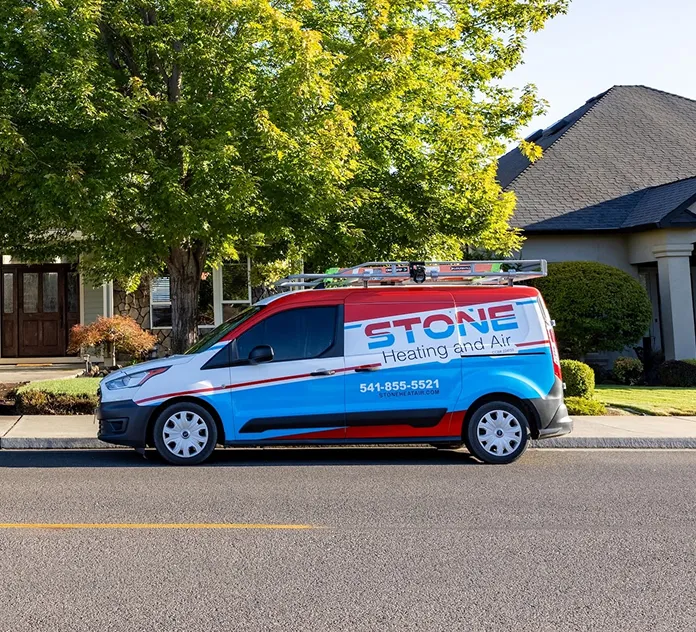

When your furnace quits during a freezing night or your AC dies on a 100-degree afternoon, waiting until business hours isn't an option. A total HVAC failure puts your family at risk and can cause serious property damage from frozen pipes or extreme heat. Stone Heating & Air provides 24/7 emergency HVAC service in Eagle Point, OR, with fast response times when you need help most.
We're available around the clock for urgent situations:
- 24/7 emergency dispatch for complete heating and cooling failures.
- Fully stocked trucks for common repairs on the first visit.
- Upfront diagnosis and pricing — no surprise emergency surcharges.
- Fast response for both residential and commercial emergencies. Call Stone Heating & Air now at (541) 855-5521 for emergency HVAC service in Eagle Point.
What to Expect From Emergency Service
When you request emergency service, the primary objective is stabilizing your home environment as quickly as possible. An HVAC failure is not just an inconvenience; in extreme temperatures, it can become a safety hazard for your family and your property. The service protocol is designed to cut through red tape and logistics to get a qualified technician to your door with the right tools to diagnose and resolve the issue.
Upon arrival, the technician performs a comprehensive assessment of the system. This is not a superficial check; it involves testing electrical connections, measuring refrigerant levels, inspecting the heat exchanger for cracks, and verifying thermostat communication. The goal is to identify the root cause of the failure immediately. Because emergency vehicles are stocked with common parts, many repairs can be completed on the spot without waiting for supply houses to open the following day.
Transparency is maintained throughout this high-pressure situation. You receive a clear explanation of what failed, why it failed, and exactly what it will cost to fix it before any work begins. There are no surprise bills or hidden emergency surcharges that are not disclosed upfront. The focus remains entirely on restoring functionality and ensuring your system is safe to operate for the remainder of the season.

Critical HVAC Situations Requiring Immediate Attention
Not every noise or rattle constitutes an emergency, but certain symptoms indicate a system failure that cannot wait for a scheduled appointment. Understanding these signs helps you make the decision to call for immediate assistance.
- Total System Failure: When the unit refuses to turn on despite thermostat adjustments, and you are facing extreme outdoor temperatures.
- Gas Smells or Leaks: If you detect the scent of sulfur or rotten eggs, this indicates a natural gas leak. This requires immediate utility shutoff and professional HVAC intervention to prevent fire or health hazards.
- Electrical Burning Odors: A scent of burning plastic or ozone often suggests melting wires or overheating motors. Continuing to run the system can lead to electrical fires or catastrophic component failure.
- Loud Screeching or Banging: High-pitched squealing usually indicates a seized motor bearing or slipped belt, while banging suggests loose components are thrashing inside the unit. These issues cause rapid, expensive damage if left running.
- Rapid Cycling: If the system turns on and off every few minutes (short cycling), it places immense strain on the compressor or heat exchanger, leading to burnout.
- Frozen Evaporator Coils: Ice buildup on your AC unit restricts airflow and can cause liquid refrigerant to flood the compressor, destroying the heart of your cooling system.
The Emergency Repair Process
Restoring your comfort follows a strict, efficient workflow designed to minimize downtime. The process is streamlined to ensure that from the moment a technician is dispatched, every step moves closer to a resolution.
First, the dispatch team confirms your location in Eagle Point and the nature of the emergency. This allows the technician to prepare specifically for your type of equipment, whether it is a furnace, heat pump, or central air conditioner. Knowing the make and model beforehand helps in retrieving specific parts that might be needed.
Next, the on-site diagnostic phase begins. The technician isolates the problem area. For heating systems, this often involves checking the ignition sequence, flame sensors, and safety switches. For cooling systems, the focus is on capacitors, contactors, and refrigerant pressures. Advanced diagnostic tools are used to read error codes and test electrical loads.
Once the issue is pinpointed, the technician presents the repair options. If the part is on the truck, installation begins immediately. This involves safely disconnecting power, removing the faulty component, installing the new part, and securing all connections.
Finally, the system is tested through a full cycle. The technician does not leave until the unit is running, the thermostat is satisfying the set temperature, and all safety parameters are within manufacturer specifications. A final walkthrough explains what was done and provides tips to prevent recurrence.
Repair vs. Replacement: Making the Right Call Under Pressure
One of the most difficult aspects of an HVAC emergency is deciding whether to pour money into a repair or invest in a new system. This decision often has to be made quickly. However, specific criteria can guide this choice to ensure financial prudence.
The 50% Rule
A general guideline in the industry is the 50% rule. If the cost of the repair approaches or exceeds 50% of the value of a new system, replacement is usually the smarter financial move. Investing half the cost of a new unit into an old one that may fail again shortly is rarely cost-effective.
Age of the Equipment
HVAC systems have a finite lifespan. Furnaces typically last 15-20 years, while air conditioners and heat pumps last 10-15 years. If your system is nearing the end of this expected life and suffers a major breakdown, a repair acts as a temporary bandage. A new system offers renewed warranties and reliability that an aging unit cannot provide.
Frequency of Breakdowns
If this emergency call is the latest in a series of repairs over the last two years, the system is likely signaling the end of its operational life. Cumulative repair costs often exceed the price of a modern, efficient replacement.
Efficiency Considerations
Older units are significantly less efficient than modern standards. A breakdown provides an opportunity to upgrade to a higher SEER (Seasonal Energy Efficiency Ratio) or AFUE (Annual Fuel Utilization Efficiency) rating. The monthly energy savings from a new system can help offset the installation cost over time, whereas repairing an old unit keeps you locked into higher utility bills.
Stone Heating and Air technicians provide honest assessments regarding the condition of your unit. If a repair is merely delaying the inevitable by a few weeks, that information is shared so you can make an informed capital investment rather than a panicked expense.
Regional Factors Impacting HVAC Performance
Operating HVAC equipment in the Rogue Valley presents specific challenges that influence how systems fail and how they must be maintained. The local climate is characterized by distinct seasonal extremes that test the limits of heating and cooling technology.
Summer Heat and Dryness
Summers here bring average highs around 85°F, with heatwaves pushing temperatures significantly higher. July and August are particularly dry. This intense heat places a heavy load on air conditioning compressors and capacitors. In dry climates, coils must be kept exceptionally clean to facilitate heat transfer. Furthermore, the potential for wildfire smoke in the region means that air filters can clog rapidly with particulates, restricting airflow and causing systems to overheat or freeze up.
Winter Freeze Cycles
Winters see lows dropping to around 30°F with highs in the 45°F range. This temperature band is critical for heat pumps. As temperatures drop toward freezing, heat pumps must enter defrost cycles to melt ice off the outdoor coils. If the defrost board fails or sensors malfunction, the unit can turn into a block of ice, halting heating completely. For gas furnaces, the cool, wet winters require ensuring that flue vents remain clear of debris and moisture to prevent carbon monoxide safety switches from tripping.
Utility and Permit Considerations
Emergency replacements sometimes require adherence to local building codes and permitting processes. Professional service providers handle the logistical side of compliance, ensuring that any major work performed meets local safety standards. This includes verifying proper electrical dedicated circuits and gas line sizing, which are crucial for insurance validity and future home sales.
Why Professional Diagnosis Matters
In an attempt to save time or money, homeowners sometimes attempt DIY fixes during an emergency. However, modern HVAC systems are complex machines integrating high-voltage electricity, combustible gases, and high-pressure refrigerants. Without specialized training, attempting to repair these systems is dangerous and often results in further damage.
Electrical Safety
HVAC systems run on high voltage. A mishandled capacitor can discharge a lethal shock even after power is disconnected. Professional technicians adhere to Lockout/Tagout (LOTO) procedures to ensure zero energy state before touching internal components.
Refrigerant Handling
Handling refrigerant requires EPA certification. Venting refrigerant is illegal and harmful to the environment. Furthermore, an overcharged or undercharged system will not cool effectively and can damage the compressor. Professionals use digital gauges to dial in the charge to the exact ounce required by the manufacturer.
Carbon Monoxide Risks
Gas furnaces rely on precise combustion. If a heat exchanger is cracked or a flue pipe is improperly seated, carbon monoxide can leak into the living space. Professionals use combustion analyzers to verify that the unit is burning cleanly and venting safely, a step that is impossible without specialized equipment.
Warranty Protection
Most equipment warranties require that repairs and maintenance be performed by a licensed professional. DIY repairs or work done by unlicensed handymen can void the manufacturer’s warranty, leaving you responsible for the full cost of future parts replacements.
The Importance of Routine Maintenance Post-Repair
Once the emergency is resolved, the focus shifts to prevention. The vast majority of emergency breakdowns are preventable through regular maintenance. After a system has been repaired, establishing a routine inspection schedule is the best way to avoid future panic situations.
Maintenance involves more than just changing a filter. It includes tightening electrical connections to prevent voltage fluctuations, lubricating motor bearings to reduce friction, and cleaning coils to ensure efficient heat transfer. For residents in this area, having a technician inspect the system before the peak of summer and the trough of winter ensures that the equipment is ready for the heavy workload ahead.
Regular maintenance also maintains efficiency. A system that struggles to breathe due to a dirty blower wheel or clogged coil runs longer to satisfy the thermostat, driving up energy costs. By keeping the system tuned, you extend its lifespan and keep energy consumption in check.
Comprehensive Emergency Solutions
When your comfort is compromised, you need a solution that encompasses diagnosis, repair, and long-term reliability. The approach to emergency service is holistic. It is not just about swapping a part; it is about ensuring the entire system functions as a cohesive unit.
Technicians arrive equipped to handle a wide array of brands and models. Whether your home utilizes a split system, a package unit, a ductless mini-split, or a traditional gas furnace, the expertise is available to address the specific mechanics of that design. This versatility ensures that regardless of the age or configuration of your HVAC setup, a solution is available.
Furthermore, the service extends beyond the mechanical unit. Ductwork issues, thermostat malfunctions, and airflow restrictions are all within the scope of emergency diagnostics. If a collapsed duct is preventing heat from reaching a bedroom, or a smart thermostat has lost connection with the furnace, these issues are treated with the same urgency as a mechanical failure.
Restoring Your Comfort Immediately
An HVAC emergency disrupts your life and threatens the safety of your home environment. Waiting for business hours is not an option when temperatures are dropping or soaring to dangerous levels. You need a partner who understands the urgency of the situation and possesses the technical capability to resolve it instantly.
Stone Heating and Air is dedicated to providing that immediate relief. With a focus on technical excellence, transparent communication, and rapid deployment, the goal is to turn a stressful breakdown into a resolved issue with minimal disruption to your life. Don't let a broken system compromise your safety or comfort for another hour.
Contact us immediately to dispatch an emergency technician to your home and restore your heating and cooling today.
- Book Expert Service Or Contact Us