

A new heating system is a major investment — and getting the installation wrong means poor performance, higher bills, and a shorter equipment lifespan. Oversized furnaces short-cycle and waste fuel, while undersized units run constantly without warming your home. Stone Heating & Air provides professional heating installation in Eagle Point, OR, with proper sizing and expert setup.
We make sure your new system delivers from day one:
- Heat load calculations to match the right system to your home.
- Furnace and heat pump installation for all major brands.
- Ductwork evaluation and modification for optimal airflow.
- Full system testing and performance verification after install. Call Stone Heating & Air at (541) 855-5521 or schedule your free estimate in Eagle Point today.
Expert Heating Solutions for Immediate Relief
When your heating system reaches the end of its lifecycle, a direct replacement is not always the only or best option. Modern heating technology has evolved significantly over the last decade, offering homeowners in Eagle Point more choices regarding fuel sources, zoning capabilities, and energy efficiency. The goal of a professional installation is to tailor the solution to the specific thermal envelope of your home. This ensures that the heat generated is distributed evenly, eliminating cold spots and drafts that often plague older properties.
A comprehensive installation service covers every aspect of the transition from old to new. It begins with a detailed load calculation. Many older homes have oversized or undersized units because previous contractors guessed rather than calculated the necessary British Thermal Units (BTUs). An oversized unit will short-cycle, turning on and off rapidly, which wears out components and fails to dehumidify the air. An undersized unit will run constantly, driving up electricity or gas bills without ever reaching the set temperature. By performing a Manual J load calculation, we ensure the new equipment matches your home's specific layout, insulation levels, and window orientation.
The scope of service also includes an evaluation of your existing ductwork and ventilation. High-efficiency furnaces and heat pumps require specific airflow parameters to function correctly. If your ducts are leaky, uninsulated, or crushed, even the most expensive new heater will perform poorly. The installation process addresses these infrastructure issues, sealing leaks and optimizing airflow to ensure you get the efficiency rating you paid for. Whether you are switching from a gas furnace to a dual-fuel system or upgrading an aging heat pump, the focus remains on delivering consistent, reliable heat.
Your Heating Installation Process Explained Step-by-Step
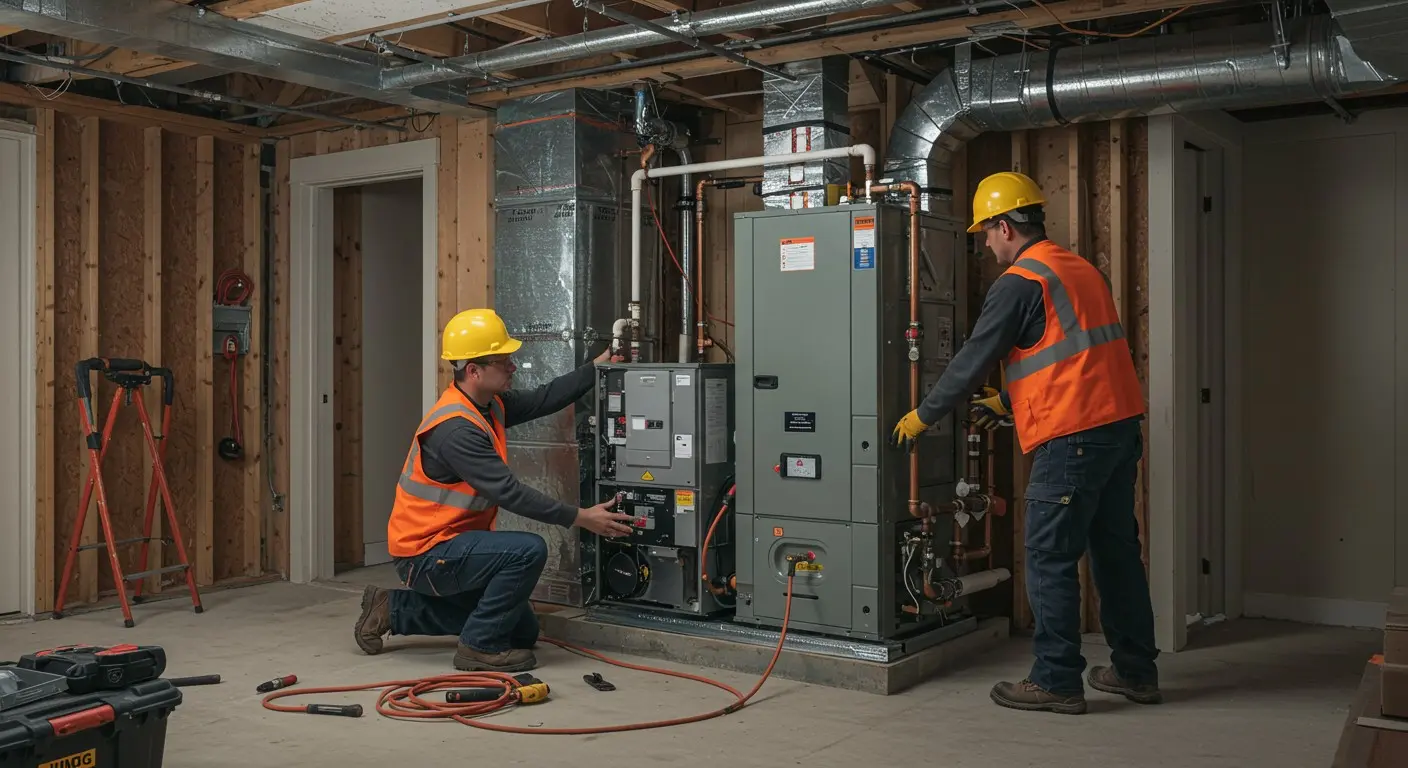
Replacing a heating system is a major home improvement project, but understanding the workflow can alleviate anxiety. We utilize a systematic approach to ensure every installation meets strict quality control standards. This process is designed to be efficient, respectful of your property, and transparent from start to finish.
- Site Assessment and Engineering: The process begins with a technical evaluation of your home. Technicians measure square footage, check insulation ratings, and inspect the current ventilation system. This data is used to select the correct equipment size and model.
- Protection of Property: Before any heavy lifting begins, the installation team prepares the work area. Drop cloths are laid down to protect flooring, and furniture is moved or covered to prevent dust accumulation. The goal is to leave your home cleaner than it was found.
- Safe Removal of Existing Equipment: The old unit is disconnected from gas, electric, and ventilation lines according to safety protocols. It is then removed from the property and disposed of in an environmentally responsible manner, including the reclamation of any refrigerant if applicable.
- System Installation: The new unit is positioned and leveled. This step involves connecting the new furnace or air handler to the plenum and return air drops. Gas lines are reconnected and tested for leaks, or electrical connections are tightened and verified for proper voltage.
- Venting and Drainage: For combustion-based systems, proper venting is critical to prevent carbon monoxide buildup. New flue pipes are installed or existing ones are lined to meet code. Condensate drains are also routed to ensure moisture produced during the heating process is moved away from the equipment and the home foundation.
- Commissioning and Testing: Once the physical installation is complete, the system is not just turned on; it is commissioned. Technicians adjust gas pressure, blower speeds, and thermostat settings to manufacturer specifications. They test the temperature rise to ensure the system is heating within the safe and efficient range.
- Final Walkthrough: The lead technician walks you through the new system's operation. This includes how to change filters, how to program the thermostat, and an explanation of the warranty registration process.
Deciding Between Heating Repair or Replacement
Homeowners often struggle with the decision of whether to pour more money into a failing unit or invest in a new system. While repairs can sometimes offer a quick fix, they are often a temporary bandage on a systemic issue. Making the right financial decision requires analyzing the age of the unit, the cost of the repair, and the cumulative cost of operation.
The "50% Rule" is a standard industry metric used to guide this decision. If the cost of the repair approaches 50% of the value of a new system, replacement is generally the wiser financial move. Additionally, you must consider the age of your equipment. In the Eagle Point area, furnaces and heat pumps typically last between 12 and 15 years. If your unit is approaching or has surpassed this age range, putting money into a major component like a blower motor or heat exchanger is often throwing good money after bad. Stone Heating and Air can help you run the numbers to see which path offers the best return on investment.
- Frequency of Breakdowns: If you have required service calls more than once a year for the past two years, your system is signaling that it is unreliable. Frequent breakdowns indicate that internal components are wearing out simultaneously.
- Rising Energy Bills: As heating systems age, they lose efficiency. Parts wear down, friction increases, and heat exchangers foul. If your energy usage has spiked despite normal weather patterns, your unit is working harder to provide the same amount of heat.
- Uneven Heating and Comfort Issues: If some rooms are stiflingly hot while others remain freezing, or if the unit runs for long periods without satisfying the thermostat, the system is likely nearing the end of its useful life.
- Safety Concerns: Older gas furnaces are at a higher risk of developing cracks in the heat exchanger. This can lead to carbon monoxide leaks, which pose a serious health risk. If a safety inspection reveals such cracks, immediate replacement is the only safe option.
Navigating Local Permit Requirements & Seasonal Insights
Installing a heating system involves more than just mechanical work; it involves compliance with local building codes and an understanding of the regional climate. In Eagle Point and the surrounding Jackson County area, specific permits are required for HVAC installations. These regulations are in place to ensure that gas lines are plumbed correctly, electrical circuits are not overloaded, and exhaust gases are vented safely away from the home. Professional installers handle the entire permitting process, from application to final inspection, ensuring that your homeowner’s insurance remains valid and your home remains compliant for future resale.
The climate in Southern Oregon presents unique challenges for heating systems. While summers are dry, winters are cool and significantly wetter. This humidity can make the cold feel more penetrating. Consequently, the heating system must not only warm the air but also manage airflow to prevent moisture buildup within the home, which can lead to mold growth.
- Heat Pump Efficiency: In this climate, heat pumps are an incredibly efficient option. Because winter temperatures rarely drop to extreme sub-zero levels for extended periods, heat pumps can extract heat from the outside air effectively. Modern systems often come with auxiliary heat strips to handle the occasional deep freeze.
- Utility Rebates and Incentives: Local utility providers often offer rebates for upgrading to high-efficiency equipment. These programs change annually but often incentivize the installation of high-HSPF heat pumps or high-AFUE gas furnaces. Navigating these rebates requires documentation that professional installers provide as part of the service.
- Proper Sizing for Seasonality: The heating load in December and January is significantly higher than in the shoulder months. The system must be sized to handle the "design temperature"—the coldest average day of the year—ensuring you aren't left shivering during a cold snap, while also having the modulation capabilities to run efficiently during milder weather.
Why Trust Your Installation to a Professional Service
Selecting a contractor is the most critical variable in the longevity and performance of your new heating system. Equipment reliability is determined more by the quality of the installation than the brand name on the box. A top-tier furnace installed poorly will fail sooner and run less efficiently than a mid-range unit installed perfectly.
Professional service means utilizing NATE-certified technicians who have undergone rigorous testing and continuing education. It involves a commitment to using high-quality materials, from the brazing rods used to seal refrigerant lines to the mastic used to seal ductwork. Cutting corners on these small materials can lead to leaks and failures down the road.
Furthermore, established local providers offer warranties that cover both the equipment and the labor. While manufacturers provide parts warranties, these are often voided if the equipment is not installed by a licensed professional. A labor warranty from the installer ensures that if an issue arises due to workmanship, it will be corrected at no cost to you. This accountability is the hallmark of a reputable service provider.
Prioritizing a professional installation from Stone Heating and Air ensures that your system operates quietly, maintains consistent temperatures, and delivers the energy savings promised on the Energy Guide label. It transforms a hardware purchase into a long-term home improvement solution.
Your home’s comfort and safety during the winter months depend on the reliability of your heating system. Don’t wait for a complete breakdown during a freeze to address aging or inefficient equipment. Secure your comfort now with a professionally installed, high-efficiency system that adds value to your home. Contact us today to schedule your consultation and take the first step toward a warmer, more efficient home.
- Book Expert Service Or Contact Us