

Why Duct and Dryer Vent Cleaning Matter More Than Most Homeowners Realize
Understanding how duct and dryer vent cleaning improve your home starts with a simple fact: the air moving through your home every day passes through your ductwork and past your dryer exhaust system. When those pathways are clogged with dust, lint, or debris, everything suffers — your air quality, your energy bills, your appliances, and even your safety.
Here is a quick overview of the key ways these two services improve your home:
• Safer home — Air Duct Cleaning: Removes mold, vermin debris, contaminants — Dryer Vent Cleaning: Prevents lint-related dryer fires
• Cleaner indoor air — Air Duct Cleaning: Reduces dust, allergens, and mold spores — Dryer Vent Cleaning: Limits lint and humidity entering living spaces
• Lower energy bills — Air Duct Cleaning: Reduces strain on your HVAC blower — Dryer Vent Cleaning: Dryer runs shorter, more efficient cycles
• Longer appliance life — Air Duct Cleaning: Less wear on HVAC motors and coils — Dryer Vent Cleaning: Prevents dryer from overheating
• Better comfort — Air Duct Cleaning: More even airflow room to room — Dryer Vent Cleaning: Faster drying, cooler laundry room
Most homeowners clean their lint trap after every load and swap out their air filter every few months — and think that covers it. It doesn't. Lint travels past the trap and builds up deep inside the dryer exhaust duct. Dust, pet dander, and debris settle inside HVAC ductwork over years of use. Neither problem is visible from where you're standing, but both quietly work against your home's comfort, efficiency, and safety.
According to the U.S. Fire Administration, clothes dryers cause approximately 2,900 fires each year in the United States, resulting in an estimated $35 million in property loss. The leading cause? Failure to clean. On the HVAC side, even a thin layer of debris on heat exchange surfaces can measurably reduce system efficiency and push your utility costs higher.
This guide walks through everything you need to know — what each service involves, how often to schedule them, what warning signs to watch for, and how to keep your systems cleaner between professional visits.
What Air Duct and Dryer Vent Cleaning Actually Involve
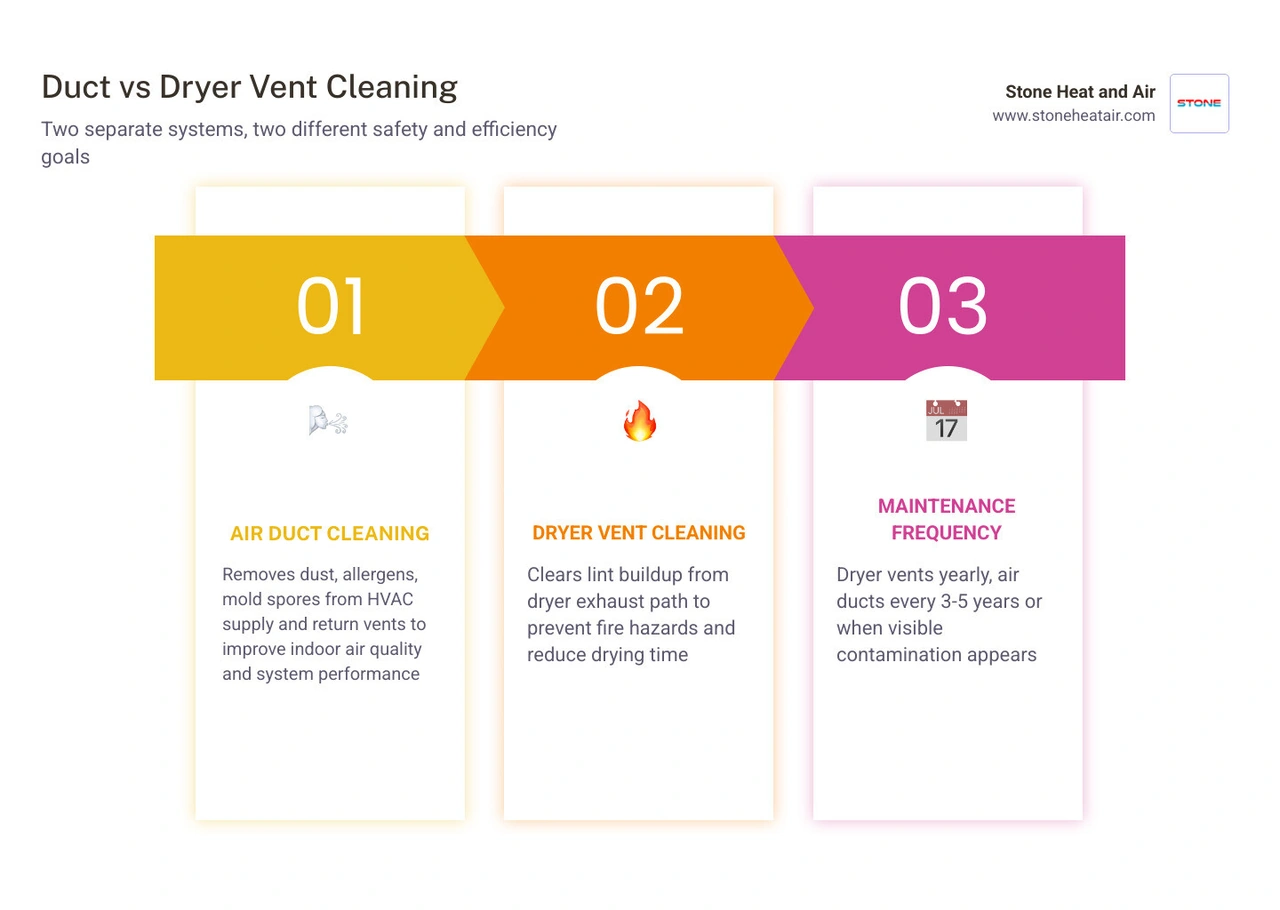
Air duct cleaning and dryer vent cleaning are related, but they are not the same job. One targets your HVAC air distribution system. The other targets the exhaust path that carries hot, moist air and lint from your dryer to the outdoors.
In both cases, the goal is source removal: physically removing debris from the system rather than just stirring it around and hoping for the best.
• Air duct cleaning — Main System: HVAC supply and return ductwork — What Gets Removed: Dust, debris, pet hair, allergens, construction residue — Main Goal: Better airflow and cleaner circulation — Typical Timing: Usually every 3-5 years, or as needed
• Dryer vent cleaning — Main System: Dryer exhaust duct — What Gets Removed: Lint, dust, nesting debris, blockages — Main Goal: Fire prevention and better dryer performance — Typical Timing: Usually once a year, sometimes more often
Air Duct Cleaning: What Pros Clean in Your HVAC System
Professional duct cleaning typically includes more than vacuuming vent covers. A proper service should address the whole HVAC air path, including supply vents, return vents, registers, and key internal components that affect airflow.
That can include:
• Supply and return ducts
• Registers and grilles
• Debris near vent openings
• Blower components
• Accessible HVAC components tied to airflow and dust movement
Good cleaning methods usually involve negative pressure equipment, agitation tools, and controlled debris removal so loosened dust is captured instead of blown back into the home.
If you want a deeper look at timing, we cover that here: How Often Should You Have Your Air Ducts Cleaned
Dryer Vent Cleaning: What Happens During the Service
Dryer vent cleaning focuses on the full exhaust route, not just the lint screen or the short hose behind the appliance. That usually includes:
• The transition hose behind the dryer
• The vent line running through the wall or ceiling
• The outside termination hood
• Airflow testing or exhaust verification after cleaning
This matters because lint builds up where homeowners cannot easily see it, especially in bends, long runs, and exterior terminations. That buildup restricts airflow, traps heat, and forces the dryer to work much harder.
For more on timing, see How Often Should You Clean Your Dryer Vent
Why These Are Separate Services Homeowners Should Not Confuse
This is a common point of confusion, so let us clear it up: air duct cleaning does not usually include dryer vent cleaning, and dryer vent cleaning does not clean your HVAC ducts.
They serve different systems and different priorities:
• Air duct cleaning is mostly about indoor air circulation, HVAC efficiency, dust, and comfort.
• Dryer vent cleaning is mostly about fire safety, dryer performance, and moisture removal.
As a general rule, dryer vents need attention more often than air ducts. Many homes need annual dryer vent cleaning, while air duct cleaning is often needed every 3 to 5 years or based on condition.
How Duct and Dryer Vent Cleaning Improve Your Home for Safety, Air Quality, and Efficiency
When homeowners ask us about benefits, we usually break it into three buckets: cleaner air, safer operation, and better efficiency. Those three improvements affect daily comfort more than many people expect.
How Duct and Dryer Vent Cleaning Improve Your Home’s Indoor Air
Dirty ducts can collect dust, pet dander, pollen, and other debris over time. Not every speck of dust in ductwork is dangerous, and the EPA does not say routine duct cleaning is necessary in every home. But when contamination is significant, it can contribute to poor indoor air quality, stale odors, and more dust circulating through living spaces.
That matters even more for households with:
• Allergies
• Asthma
• Pets
• Recent remodeling dust
• Past moisture issues
• Musty odors when the HVAC starts
Clean ducts can help reduce the recirculation of loose contaminants and support more comfortable breathing conditions, especially when paired with proper filtration and sealed ductwork. If your system also has leaks, dirty air from attics, crawl spaces, or wall cavities may be entering the duct system before it reaches your rooms. Learn more here: Why Are Ductwork Leaks Bad for Indoor Air Quality
Dryer vents also affect indoor air quality, just in a different way. A clogged vent can push heat, moisture, and stray lint back into the laundry area. That can make the room feel humid, stuffy, and dusty. Nobody wants their laundry room acting like a tiny indoor weather system.
How Duct and Dryer Vent Cleaning Improve Your Home’s Energy Efficiency
Restricted airflow wastes energy. It is that simple.
When HVAC ducts and system components are loaded with debris, your equipment can work harder to move air. When a dryer vent is packed with lint, the dryer runs longer and hotter to do the same job.
The energy effects can be noticeable:
• A clean dryer vent can improve dryer efficiency by up to 30%.
• Restricted dryer vents can add significant time to each load.
• Dirty HVAC components can reduce airflow and increase blower strain.
• Debris on heat exchange surfaces can reduce system efficiency.
That means longer run times, more wear, and more utility waste. Even if the system is still technically working, it may be doing that work the hard way.
If you are trying to protect system performance year-round, this resource helps: Protect Your HVAC System from Dust and Dirt
How Duct and Dryer Vent Cleaning Improve Your Home’s Safety
Dryer vent cleaning has the clearest direct safety benefit: reducing fire risk.
Lint is highly flammable. When it builds up inside a hot dryer exhaust line, airflow drops, temperatures rise, and ignition risk increases. According to the U.S. Fire Administration, clothes dryers are responsible for about 2,900 fires each year, causing an estimated 5 deaths, 100 injuries, and $35 million in property loss. Failure to clean is a leading factor.
If you have a gas dryer, restricted venting can also raise concerns about improper exhaust and combustion byproducts. That is another reason full, clear venting matters.
Air duct cleaning is a little different. The safety benefit is less about open flame risk and more about removing problem contamination when present, such as:
• Visible mold growth in hard-surface ducts or on HVAC components
• Rodent or insect debris
• Heavy dust and construction residue
• Moisture-related buildup affecting the system
When Cleaning Is Actually Needed and How Often to Schedule It
Not every home needs both services on the same schedule. One of the most important things homeowners should know is that “clean it every year no matter what” is not the right advice for HVAC ducts.
How Often to Clean Dryer Vents in a Typical Home
For most homes, professional dryer vent cleaning once a year is a smart baseline. Some households need it more often, especially if you have:
• A large family
• Frequent laundry loads
• Pets that add hair to fabrics
• A long or complex vent run
• Slow drying times already showing up
Homes with heavier use may need service every 6 months. If your clothes suddenly need two cycles, do not shrug and blame the dryer’s feelings. The vent may be the real problem.
For common symptoms, see Signs Your Dryer Vent Needs Cleaning
How Often to Clean Air Ducts Based on Conditions
Air ducts are more condition-based. A common planning range is every 3 to 5 years, but that depends on what is happening in the home.
You may need cleaning sooner if you have:
• Visible dust blowing from vents
• Recent remodeling or construction
• Pet hair and dander buildup
• Allergy flare-ups indoors
• Musty smells when the system runs
• Evidence of rodents or insects
• Visible mold concerns
• Excessive dust collecting quickly after cleaning
For more guidance, see When Should I Clean My Air Ducts
What the EPA Says About Routine Duct Cleaning
The EPA does not recommend blanket routine duct cleaning for every home. That point matters.
Their guidance is essentially this: clean ducts when there is a reason, not just because someone says every home must do it on a fixed schedule. Situations that justify cleaning include:
• Substantial visible mold
• Vermin infestation
• Heavy debris or dust actually entering living spaces
The EPA also notes that duct cleaning has not been proven to prevent health problems in all homes. That is why prevention matters just as much as cleaning. Regular filter changes, moisture control, prompt leak repairs, and sealing duct leaks are often the bigger long-term wins.
Warning Signs Your Ducts or Dryer Vents Need Attention
A lot of homeowners miss the early signals because they build gradually. Here are the most common red flags.
Signs Your Dryer Vent Needs Professional Cleaning Soon
Watch for these warning signs:
• Clothes take more than one cycle to dry
• The dryer feels unusually hot
• The laundry room gets hot or humid
• You smell something burnt while the dryer runs
• Lint collects behind the dryer or near the outside vent
• The exterior vent flap barely opens
• Drying performance suddenly drops
If those signs sound familiar, do not wait too long. Here is a helpful guide: Signs Your Dryer Vent Needs Cleaning
Signs Your Air Ducts May Be Dirty, Leaky, or Damaged
Air duct issues do not always mean “dirty.” Sometimes the real problem is leakage, crushed sections, or poor airflow design. Common warning signs include:
• Dust puffing from vents when the system starts
• More dust on furniture shortly after cleaning
• Uneven temperatures between rooms
• Musty or stale odors
• Allergy symptoms that seem worse indoors
• Visible debris inside vent openings
• Whistling sounds or weak airflow
These resources can help you spot the difference:Signs You Need to Schedule Professional Duct CleaningHow to Tell If You Have an Air Duct Leak
When Cleaning Alone May Not Be Enough
Sometimes cleaning helps, but it is not the whole fix.
If the ductwork has leaks, crushed sections, disconnected joints, insulation problems, or moisture damage, cleaning alone will not solve comfort or air quality issues. The same goes for heavy attic dust infiltration or contamination coming from surrounding spaces.
That is why inspection matters. These resources explain why:The Importance of Having Ductwork Inspected by HVAC ProsHow a Clean Attic Helps Your HVAC System
Smart Maintenance Habits That Keep Ducts and Vents Cleaner Longer
Professional cleaning is important, but it works best when paired with good habits between visits.
Preventive Steps for Cleaner Air Ducts Between Appointments
A few habits can make a real difference:
• Change HVAC filters regularly
• Use the highest efficiency filter your system can handle
• Dust and vacuum return vent areas
• Keep supply and return registers clear
• Seal registers during renovations
• Address roof, plumbing, or HVAC moisture issues quickly
• Have duct leaks inspected and repaired when needed
If you want to stretch the benefits of cleaning, start here:How to Keep Your HVAC Ducts Cleaner for LongerReducing Dust with Air Filters
Preventive Steps for Safer, Cleaner Dryer Vents
Dryer maintenance should be simple and consistent:
• Clean the lint screen after every load
• Check that the exterior vent hood opens freely
• Watch for longer drying times
• Avoid crushing the vent line behind the dryer
• Use proper metal venting instead of plastic or vinyl-style materials
• Pay attention to lint, nests, or debris at the outside termination
These small checks help, but they do not replace full professional vent cleaning when buildup is deeper in the line.
How to Choose a Reputable Duct and Dryer Vent Cleaning Service
Homeowners should look for a service provider that treats these as technical cleaning jobs, not quick blow-and-go visits.
Ask whether the service includes:
• Full-system inspection
• Cleaning of all accessible duct or vent sections
• Negative pressure or contained debris removal
• HEPA-filtered collection equipment when appropriate
• Safe agitation tools suited to the duct material
• Post-cleaning verification or airflow checks
• Clear written scope of work
Also be cautious about unnecessary chemical treatments. In many cases, physical source removal is the priority. If mold is suspected, the right first step is confirming the issue and addressing moisture, not automatically spraying chemicals and calling it solved.
Conclusion: A Healthier, Safer Home Starts With the Right Cleaning Plan
Air duct cleaning and dryer vent cleaning do different jobs, but together they support a healthier, safer, and more efficient home.
When your ducts are clean and your venting is clear, you can expect:
• Better airflow
• Less dust and fewer odors
• Safer dryer operation
• Lower system strain
• More consistent comfort throughout the home
The key is using the right schedule for the right system. Dryer vents usually need yearly attention. Air ducts should be cleaned based on condition, contamination, and household factors like pets, allergies, and renovations.
If you live in Central Point, Rogue Valley, Southern Oregon, Roseburg, Brookings, or Klamath Falls, we can help you build a practical plan that fits your home, not a one-size-fits-all checklist. Learn more about our Air Duct Cleaning Services Rogue Valley or explore our main duct service page.
At Stone Heat Air, we believe better comfort starts with honest guidance, careful work, and preventive care that actually makes your home feel better day to day.