

Your Dryer Might Be Warning You About a Fire Risk Right Now
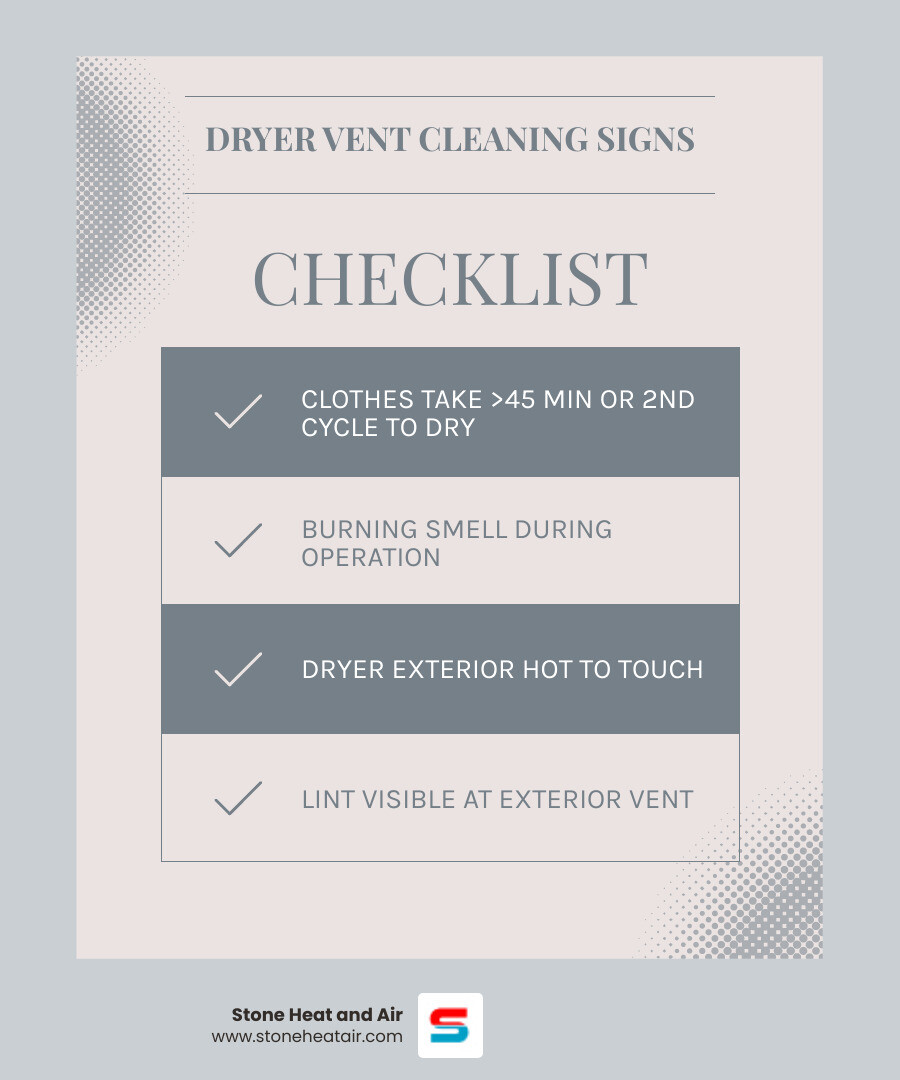
The most common signs your dryer vent needs cleaning are clothes that take more than one cycle to dry, a burning smell during operation, a dryer that's hot to the touch on the outside, visible lint around the exterior vent opening, excessive humidity or musty odors in your laundry room, and no cleaning service in over a year.
Quick answer — signs your dryer vent needs cleaning:
1. Clothes take longer than 45 minutes (or need a second cycle) to dry
2. You notice a burning smell while the dryer runs
3. The outside of the dryer feels unusually hot
4. Lint is visible around the exterior vent flap or opening
5. Your laundry room feels humid or smells musty after a cycle
6. Your dryer shuts off before the cycle finishes
7. It has been more than 12 months since your last vent cleaning
Most homeowners clean the lint trap after every load and assume that's enough. It isn't. The lint trap only catches a portion of the debris. The rest travels deeper into the vent line, where it builds up over time — quietly restricting airflow, forcing your dryer to work harder, and creating a serious fire hazard inside your walls.
According to the U.S. Fire Administration, roughly 2,900 home dryer fires are reported every year in the United States, resulting in an estimated 5 deaths, 100 injuries, and $35 million in property damage. Failure to clean the dryer vent is the leading cause, responsible for about 34% of those fires.
For homeowners in the Rogue Valley, where homes range from older builds with long, winding vent runs to newer constructions, the risk is just as real — and just as preventable.
7 Critical Signs Your Dryer Vent Needs Cleaning
When we visit homes in Central Point or Medford, we often find that the dryer is the hardest-working appliance in the house, yet it’s the one that receives the least maintenance. A clogged vent is more than just a nuisance; it’s a bottleneck for your home’s efficiency.
As lint accumulates, it creates a physical barrier that restricts airflow. Your dryer relies on a steady stream of hot air moving through the drum and out the exhaust. When that path is blocked, the hot, moist air has nowhere to go. This leads to overheating, massive energy waste, and a significant strain on the machine's internal components. Whether you are running a household in Roseburg or Brookings, keeping an eye on these warning signs is essential for your family's safety.
For local business owners, the stakes are even higher. High-capacity machines in salons, gyms, or hotels process much more lint than a standard home unit. If you're managing a facility, our Commercial Dryer Vent Cleaning services are designed to keep your operations running safely and efficiently.
Clothes Taking Longer Than One Cycle to Dry
This is usually the very first sign homeowners notice, but it’s also the one most frequently ignored. We’ve all been there: the buzzer goes off, you reach in, and the jeans are still damp. You shrug and start a second cycle.
In a healthy system, a standard load of laundry should be dry in about 45 minutes. If your cycles are consistently creeping up to 60 or 90 minutes, or if you find yourself needing two full cycles for one load, your vent is likely restricted. Because the moist air is trapped inside the drum, the dryer can't pull in fresh, dry air to finish the job. This isn't just a waste of your afternoon; it's a sign that your dryer is gasping for air.
A Persistent Burning Smell During Operation
If you ever smell something burning while the dryer is running, stop the machine immediately. This is a high-priority warning that should never be ignored.
Dryer lint is incredibly flammable. When the vent is clogged, the internal temperature of the dryer can skyrocket. Small bits of lint that make it past the trap can land on the heating element or stay trapped in the ductwork where temperatures are highest. If that lint ignites, it can spread through the vent pipe in seconds. A burning smell is often the scent of scorched lint—the final warning before a fire starts. If you notice this in your Southern Oregon home, unplug the appliance and call for a safety inspection right away.
The Exterior of the Dryer is Hot to the Touch
Your dryer is designed to get hot on the inside, but the outside should remain relatively cool. If the top or sides of the machine feel uncomfortably hot to the touch, or if your laundry room feels like a sauna every time you run a load, the exhaust system is failing to dissipate heat.
This excessive heat causes component strain on the motor and the heating element. Modern dryers have thermal safety switches designed to shut the machine down if it gets too hot, but relying on these emergency features is risky. In our experience, a dryer that runs too hot is a dryer that is headed for a premature breakdown.
Visible Lint Accumulation at the Outside Vent Opening
One of the easiest checks you can perform at home is a quick walk-around to your exterior vent flap. This is where the exhaust exits your home.
If you see clumps of lint hanging out of the vent opening or stuck to the flap, you have a problem. In a well-functioning system, the airflow velocity should be strong enough to blow most debris clear. If lint is collecting there, it means the airflow is so weak that the debris is just settling in the pipe. Furthermore, if the lint buildup is heavy enough to prevent the vent flap from opening or closing properly, it can allow pests or cold air to enter your home.
Excessive Humidity or Musty Odors in the Laundry Room
A clogged vent acts as a vapor trap. Instead of pushing all that moisture outside, it leaks back into your laundry room. If you notice that the windows in your laundry room are foggy or the air feels unusually humid, it’s a sign of ventilation failure.
Over time, this trapped moisture can lead to musty odors on your "clean" clothes and even promote mold growth behind the dryer or inside the walls. For residents in damp climates like Brookings or the Rogue Valley, managing indoor air quality is vital, and a clean dryer vent is a major part of that.
It Has Been More Than a Year Since Your Last Service
Sometimes, the sign isn't something you see or smell; it's simply the date on the calendar. The National Fire Protection Association (NFPA) recommends that dryer vents be cleaned at least once per year.
As we move through April 2026, take a moment to look back. If you can’t remember the last time a professional cleared your lines, you are likely overdue. Preventive care is far more affordable than a fire or an appliance replacement. Even if your dryer seems to be working "fine," an annual maintenance check ensures that hidden lint isn't quietly building up in those hard-to-reach bends of the ductwork.
Noticing These Signs Your Dryer Vent Needs Cleaning?
If you can check off one or more of these red flags, it’s time for a professional assessment. Many homeowners in the Rogue Valley try to ignore these symptoms, thinking they are just part of an aging appliance's quirks. In reality, these are clear indicators of a system in distress. Restoring your dryer’s performance starts with a clear exhaust path, ensuring your home remains the safe, comfortable sanctuary it’s meant to be.
Why a Clogged Vent is a Serious Fire Hazard
It’s a sobering thought, but the very tool we use to keep our families clean and comfortable is one of the leading causes of residential fires. The reason is simple: lint is a perfect fuel source. It is lightweight, dry, and highly combustible. When you combine that fuel with the high heat of a dryer and a restricted airflow environment, you have the recipe for a disaster.
The statistics provided by the NFPA and FEMA are clear:
• 13,820 home structure fires involve clothes dryers annually.
• These fires result in approximately 7 deaths and 344 injuries every year.
• The direct property damage averages $238 million annually.
• Failure to clean the vent is the leading cause (34%) of these fires.
When lint builds up, it doesn't just stay in the pipe. It can back up into the dryer cabinet itself, surrounding the motor and the heating element. Once the ignition source—usually the heating element—reaches a certain temperature, the lint can ignite instantly. Because the vent pipe acts like a chimney, it provides a direct path for the fire to travel through your walls and into the attic or other parts of your home.
This risk isn't limited to residential settings. Commercial laundry environments process significantly more volume, making regular maintenance even more critical. Our team provides specialized Commercial Dryer Vent Cleaning to help businesses in Southern Oregon stay compliant with safety standards and protect their property from these preventable risks.
The Hidden Costs of Neglecting Your Dryer Exhaust System
While safety is the most important reason to keep your vents clear, the financial impact is also significant. Neglecting your dryer exhaust system is like throwing money out the window—or, more accurately, blowing it through a clogged pipe.
1. Skyrocketing Energy ConsumptionWhen a dryer vent is clogged, the machine has to run longer to get the same results. Research shows that a restricted vent can increase energy consumption by up to 30%. If your dryer is running for 90 minutes instead of 45, you are essentially doubling the cost of every load of laundry. Over the course of a year, this adds up to a substantial increase in your Rogue Valley utility bills.
2. Reduced Appliance LifespanA typical dryer should last between 10 and 13 years. However, when a machine is forced to operate under constant strain and high heat, its lifespan can be cut in half. The motor has to work harder to push air through the resistance, and the heating element stays on for much longer periods. This leads to premature component wear, resulting in expensive repairs or the need for a total replacement years before it should be necessary.
3. System ReliabilityAt Stone Heat and Air, we believe in "treating your home like ours." That means we want your systems to be reliable. There is nothing more frustrating than an appliance breaking down right when you need it most. By maintaining a clear vent, you ensure that your dryer operates within its designed parameters, reducing the likelihood of a mid-cycle breakdown.
Frequently Asked Questions About Dryer Maintenance
To help you better understand the needs of your home, we’ve put together a quick comparison of the two types of maintenance every dryer needs.
• Frequency — Lint Trap Cleaning: After every single load — Full Vent Cleaning: At least once per year
• Location — Lint Trap Cleaning: Inside the dryer door or top — Full Vent Cleaning: From the back of the dryer to the exterior exit
• Purpose — Lint Trap Cleaning: Catches large fibers and debris — Full Vent Cleaning: Removes deep-seated lint and blockages
• Who can do it? — Lint Trap Cleaning: Homeowner — Full Vent Cleaning: Professional (highly recommended)
• Impact — Lint Trap Cleaning: Improves daily cycle efficiency — Full Vent Cleaning: Prevents house fires and major energy waste
How often should you clean your dryer vent in a large household?
While the standard recommendation is once a year, large families in the Rogue Valley who do several loads of laundry every day may need service every 6 months. If you have pets that shed, their hair often bypasses the lint trap and accumulates in the vent even faster. Heavy usage means more lint, which means a faster path to a dangerous clog. If your household is constantly cycling through towels, bedding, and kids' clothes, consider a more frequent maintenance schedule to keep things safe.
What is the difference between the lint trap and the full vent?
Think of it this way: cleaning your lint trap is like brushing your teeth—it’s something you do every day to stay on top of things. Professional vent cleaning is like going to the dentist for a deep clean.
The lint trap is your first line of defense, but it’s not 100% effective. Fine fibers, hair, and dust manage to slip past the screen. These particles then settle in the bends and ridges of the exhaust duct. Over time, these small amounts of debris "snowball" into a thick, felt-like layer that can completely block the pipe. You need both daily care and professional deep cleaning to maintain a safe system.
Are there specific signs your dryer vent needs cleaning that I can check myself?
Absolutely. We encourage homeowners to be proactive. You can perform these three simple checks today:
• The Touch Test: Feel the top of your dryer halfway through a cycle. If it feels hot enough to be uncomfortable, you likely have a blockage.
• The Flap Check: While the dryer is running, go outside and look at the vent flap. It should be blowing open firmly. If it’s barely moving or if you feel very little air coming out, the line is restricted.
• The Timing Test: Time a standard load of towels. If it takes more than 50-60 minutes to dry completely, your vent is trying to tell you it’s time for a cleaning.
Conclusion
Maintaining your home in the Rogue Valley is all about peace of mind. You want to know that when you turn on an appliance, it’s going to do its job safely and efficiently. Recognizing the signs your dryer vent needs cleaning is one of the simplest ways to protect your property and your family from a completely preventable fire hazard.
At Stone Heat and Air, we take pride in our honest and fair dealings. Whether you're in Central Point, Roseburg, or Klamath Falls, our team is dedicated to providing the meticulous attention to detail your home deserves. We don't just clear out lint; we restore your dryer’s performance and ensure your exhaust system meets professional standards.
Don't wait for the burning smell or a spiked energy bill to take action. If it’s been over a year since your last service, or if your dryer is struggling to keep up with your laundry, give us a call. We’ll treat your home like ours and get your systems back in peak condition. For business owners, our Commercial Dryer Vent Cleaning is always available to keep your professional space safe. Stay comfortable, stay efficient, and most importantly, stay safe!