

Understanding the Risks and Durations of Wildfire-Related Power Outages
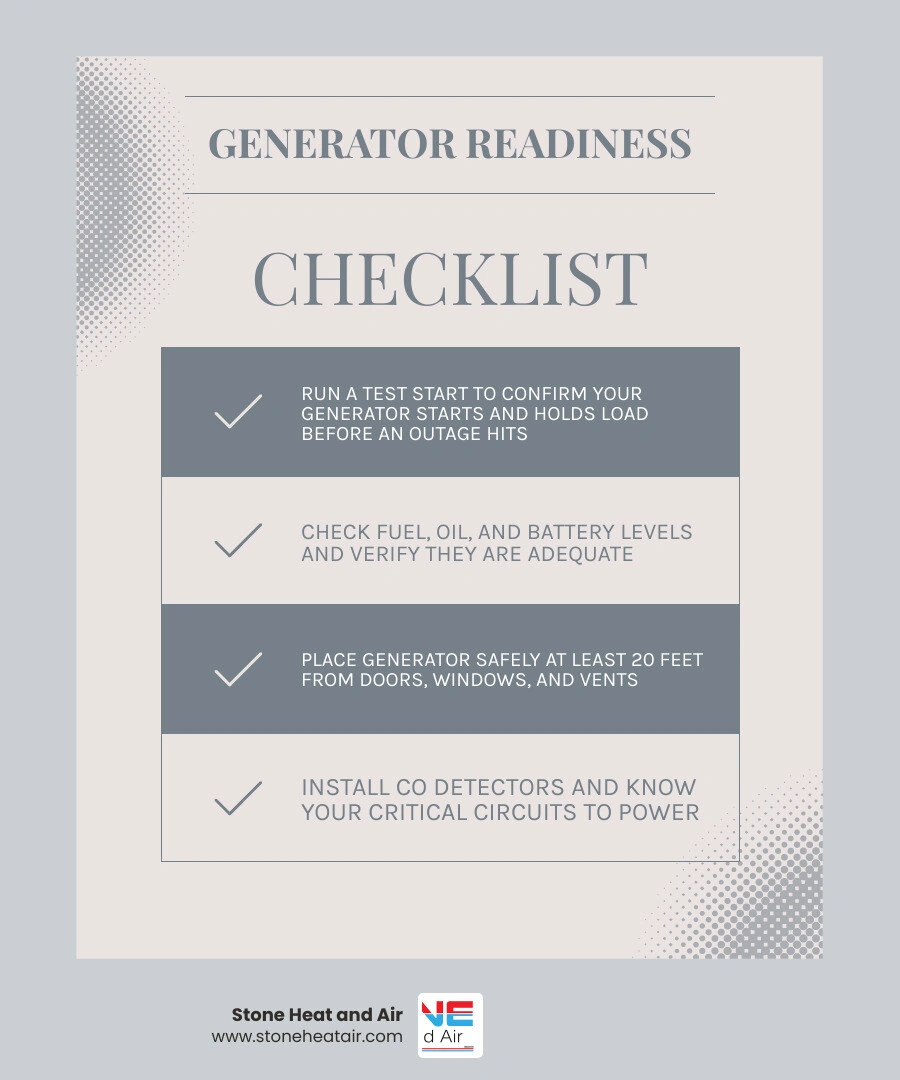
Generator readiness during wildfire season outages is one of the most important steps Rogue Valley homeowners can take before fire weather arrives. Here is a quick overview of what you need to know:
Quick-start generator readiness checklist:
1. Run a test start - Confirm your generator starts and holds load before an outage hits
2. Check fuel, oil, and battery - Top off fuel, verify oil levels, and test the battery
3. Place it safely - Always operate at least 20 feet from doors, windows, and vents
4. Install CO detectors - Carbon monoxide is colorless, odorless, and deadly
5. Know your critical circuits - List the appliances and devices your generator needs to power
6. Prepare for 48-72 hours minimum - Utilities recommend planning for at least 72 hours without power
Wildfire season in the Rogue Valley is no longer just a seasonal concern — it is a year-round reality that demands real preparation. Utilities can shut off power intentionally through Public Safety Power Shutoffs (PSPS) during periods of extreme fire danger, cutting electricity to thousands of homes with as little as 48 hours' notice. Since 2013, California utilities alone have de-energized lines on nearly 30 days, with the average PSPS event lasting more than 30 hours — and some stretching well beyond that. When fire damage compounds the problem, outages can last weeks, not hours.
For homeowners in the Rogue Valley, that means a generator that "started fine last year" is not a plan. It means food spoils, medical devices go dark, and your HVAC system cannot filter the smoke filling the air outside. The risks are real, and the window to prepare is shorter than most people expect.
If you have ever experienced the sudden silence of a grid shutdown on a hot August afternoon, you know how quickly comfort turns to anxiety. Preparing for a winter storm is one thing — we even have a guide on Preparing for Heat Power Loss in the Winter — but preparing for a summer wildfire outage brings a completely different set of challenges. High heat, heavy smoke, and dry winds mean you cannot simply open the windows for a breeze. You need power, and you need it reliably.
Essential Steps for Generator Readiness During Wildfire Season Outages
When the power goes out, your backup generator becomes the heart of your home’s electrical system. However, a generator is an engine, and like any engine, it requires proactive care to perform under pressure. There are two primary types of residential backup systems: whole-home standby generators and portable generators.
Standby generators are permanently installed outside your home, constantly monitoring grid power. When the grid fails, they automatically start up and transfer the electrical load within seconds. Portable generators, on the other hand, are smaller, manually operated units that require you to pull-start them, manage fuel, and run heavy-duty extension cords.
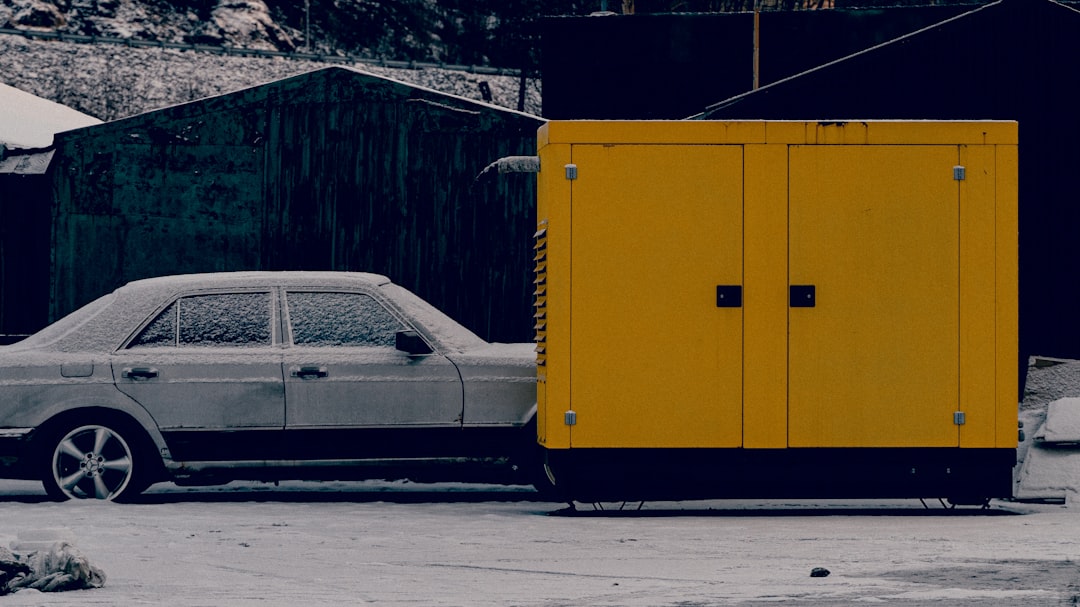
Regardless of which type you have, true generator readiness during wildfire season outages requires more than a quick visual glance. Here are the essential steps to ensure your backup power source is ready to run:
• Perform a True Load Test: Simply turning on your generator and letting it idle for five minutes does not prove it is ready for a real outage. You need to perform a load test. For portable units, start the engine, let it warm up, and plug in a high-draw appliance (like a space heater or hair dryer) to ensure it can carry an electrical load without stalling or surging. For standby systems, simulate an outage by safely switching off your main breaker to verify the unit starts automatically and powers your designated emergency circuits.
• Implement a Fuel Rotation Strategy: Gasoline and diesel do not last forever. Standard unleaded gasoline can begin to degrade in as little as three to six months, forming a gummy residue that clogs carburetors and fuel injectors. If you store fuel for a portable generator, treat it with a high-quality fuel stabilizer immediately upon purchase. Never store fuel in your garage for more than a year; rotate it into your vehicle’s gas tank and replenish your emergency supply with fresh fuel.
• Invest in Professional Maintenance: Just like your car or your air conditioner, generators require oil changes, filter replacements, and spark plug checks. Standby generators typically need professional servicing at least once a year or after every 100 to 200 hours of continuous operation.
If you want to ensure your standby system is installed correctly and ready for the heat of summer, scheduling a professional installation or inspection is key. Homeowners looking to secure their power supply can explore professional Generator Installation in Eagle Point, OR or schedule a consultation for Generator Installation in Jacksonville, OR to guarantee their systems are up to code and ready to perform.
Safe Operation and Generator Readiness During Wildfire Season Outages
Operating a generator safely is just as important as keeping it running. The single greatest hazard associated with portable generators is carbon monoxide (CO) poisoning. Carbon monoxide is a colorless, odorless, and completely tasteless gas produced by burning fuel. It can build up to lethal levels in enclosed spaces in a matter of minutes, causing symptoms like headaches, dizziness, nausea, chest pain, and confusion.
To keep your family safe, always adhere to the 20-foot rule: operate your portable generator outdoors only, placed at least 20 feet away from any doors, windows, vents, or crawlspaces. Never run a generator inside a garage, carport, basement, or even on a covered porch, even if the garage door is open or a fan is running.
Additionally, ensure your home is equipped with working carbon monoxide detectors on every level, particularly near sleeping areas. Test these detectors monthly and replace their batteries ahead of every wildfire season.
Another critical safety consideration is how you connect the generator to your home. Never "backfeed" power by plugging a portable generator directly into a standard wall outlet. This incredibly dangerous practice can energize the utility lines outside your home, risking the lives of utility workers who are trying to restore power. Instead, always use a professionally installed manual transfer switch or an approved interlock kit.
For safe hookups, you can rely on professional services like Generator Installation in White City, OR or Generator Installation in Shady Cove, OR to install the necessary safety switches.
Professional Maintenance for Generator Readiness During Wildfire Season Outages
If you own a standby generator, regular professional maintenance is the best way to prevent unexpected failures during a crisis. A comprehensive maintenance visit involves checking the engine oil level and quality, inspecting and replacing the air and oil filters, testing the starting battery's voltage and cold-cranking amps, and checking the spark plugs for wear or carbon buildup.
A weak battery is the number-one reason standby generators fail to start during an outage. Because these batteries are constantly kept on a trickle charger, they can degrade over time without showing obvious signs of weakness until they are asked to crank the engine.
Professional technicians can also check the generator’s enclosure for nesting pests, clear debris from the cooling vents, and verify that the automatic transfer switch functions flawlessly. If you reside in the outlying areas of the Rogue Valley, securing local, professional service is highly recommended. You can schedule a maintenance visit or discuss new options by looking into Generator Installation in Williams, OR to keep your system in peak condition.
Protecting Your HVAC System and Indoor Air Quality from Smoke and Ash
During wildfire season, a power outage is often accompanied by heavy, choking smoke and falling ash. This creates a double threat: not only do you lose power, but the air outside becomes hazardous to breathe. When your power is restored—or while you are running your HVAC system on a sufficiently sized standby generator—protecting your indoor air quality becomes a top priority.
Wildfire smoke is composed of a complex mixture of gases and fine particulate matter (PM2.5), which can easily penetrate deep into your lungs and bloodstream. To protect your home, you must prepare your heating and cooling system to act as a barrier against these pollutants:
1. Upgrade to MERV 13 Filters: Standard 1-inch fiberglass filters are designed to protect your HVAC equipment from large dust bunnies, not to clean your breathing air. During smoke events, upgrade to a pleated filter with a Minimum Efficiency Reporting Value (MERV) of 13, provided your system’s blower motor can handle the restriction. These filters are highly effective at trapping the microscopic particles found in wildfire smoke.
2. Run Your Fan Continuously: Normally, your HVAC system only filters the air when it is actively heating or cooling. During wildfire smoke events, switch your thermostat’s fan setting from "AUTO" to "ON". This keeps the blower motor running continuously, constantly pulling indoor air through your high-efficiency filter to scrub out smoke particles.
3. Protect Your Outdoor Condenser: Fine ash can settle on the delicate aluminum fins of your outdoor AC condenser unit, blocking airflow and forcing your system to work harder, which can lead to overheating and short-cycling. Once the immediate fire danger has passed and it is safe to do so, gently rinse the outdoor unit with a garden hose (never use a pressure washer, which can bend the fins) to clear away ash and debris.
For a deeper dive into how environmental factors affect your home's comfort systems, read our article on How Wildfire Smoke Impacts HVAC Maintenance Needs.
If your system begins making strange noises, short-cycling, or failing to cool during a heavy smoke event, do not wait for the system to break down completely. Immediate professional assistance is available through Emergency HVAC Service in Ashland, OR, Emergency HVAC Service in Talent, OR, or Emergency HVAC Service in Shady Cove, OR.
Creating a Comprehensive Outage and Evacuation Plan
A backup generator is a powerful tool, but it should be part of a larger, comprehensive emergency plan. When wildfire conditions worsen, a power outage can quickly escalate into an evacuation order. Being prepared means knowing when to stand your ground with backup power and when to pack up and leave.
Every Rogue Valley household should build and maintain an emergency supply kit designed to sustain the family for at least seven days. This kit should include:
• One gallon of water per person, per day (and extra for pets)
• Non-perishable food that does not require cooking or refrigeration
• Flashlights, headlamps, and plenty of extra batteries
• A first-aid kit, essential tools, and a manual can opener
• A battery-powered or hand-crank NOAA weather radio
• Cash in small bills (ATMs and card readers will not work during a widespread outage)
If you or a loved one relies on electricity-dependent medical equipment—such as oxygen concentrators, CPAP machines, or power wheelchairs—your planning must be even more meticulous. Reach out to your utility company to register for their medical baseline program, which often provides advanced notifications for PSPS events.
Keep a backup battery pack specifically dedicated to your medical devices, and know exactly how long it will run. If you have medications that require constant refrigeration, such as insulin, keep a cooler and frozen gel packs ready, or verify that your generator is configured to keep your refrigerator running.
When fire conditions threaten, always practice releasing your garage door manually. Most modern garage doors are electric, and trying to figure out how to pull the emergency red cord in a dark, smoke-filled garage during an active evacuation is a recipe for disaster. Practice it now so everyone in your household knows how to do it in seconds.
To help you decide which backup power option fits your family's needs, consider this comparison table:
• Standby Generator — Pros: Starts automatically; powers entire home; runs on home gas/propane line. — Cons: Higher initial investment; requires professional installation. — Best For: Medical needs; seamless comfort; long outages.
• Portable Generator — Pros: Lower cost; mobile; can be stored when not in use. — Cons: Manual setup; refueling required; carbon monoxide risks; limited power capacity. — Best For: Running select appliances; budget-conscious prep.
• Battery Storage System — Pros: Silent; zero emissions; indoor safe; can pair with solar. — Cons: Limited capacity; long recharge times; high battery replacement costs. — Best For: Short outages; powering electronics; quiet operation.
Should your heating or cooling system fail when you need it most during these stressful times, prompt support is crucial. You can access reliable assistance through Emergency HVAC Service in Grants Pass, OR, Emergency HVAC Service in Rogue River, OR, and Emergency HVAC Service in Jacksonville, OR.
Frequently Asked Questions About Wildfire Outages and Backup Power
Preparing for wildfire season can feel overwhelming, but breaking down the details can help you make informed decisions. If you run into system issues during extreme weather, you can find help through Emergency HVAC Service in Williams, OR or Emergency HVAC Service in Cave Junction, OR. Below are answers to some of the most common questions homeowners ask.
How long do wildfire-related power outages typically last?
While some localized outages can be resolved in a matter of hours, wildfire-related power outages—especially Public Safety Power Shutoffs (PSPS)—typically last between 24 and 48 hours after the extreme weather has passed.
This delay exists because utility companies must physically inspect every mile of overhead power lines for wind damage, fallen branches, or compromised equipment before re-energizing the grid. If a line is turned back on while a tree branch is resting on it, it could spark a new fire. Therefore, you should always prepare to be self-sufficient for at least 72 hours.
If you find your heating or cooling systems acting up once power is restored, you can get rapid assistance from Emergency HVAC Service in Phoenix, OR or Emergency HVAC Service in Applegate, OR.
What are microgrids and how do they improve community resilience?
A microgrid is a localized electrical grid that can disconnect from the traditional wide-area utility grid and operate independently. During wildfires, if a major transmission line is threatened or damaged, a microgrid can use local energy sources—such as large substation generators, solar arrays, and commercial battery storage—to keep electricity flowing to critical community infrastructure.
For example, during the Smith River Complex fire, officials deployed a temporary microgrid using commercial-grade generators to keep essential services running for thousands of residents. This technology provides incredible community resilience, keeping grocery stores, water treatment plants, and emergency shelters online.
If you want to ensure your own home remains a resilient haven, keeping your HVAC system in top shape is key. Residents can access Emergency HVAC Service in Prospect, OR to keep their indoor air safe and comfortable.
Where can Rogue Valley residents find official alerts and PSPS notifications?
Rogue Valley residents should sign up for multiple layers of emergency notifications. You can register for county-level alerts (such as Citizen Alerts in Jackson and Josephine counties) to receive real-time evacuation and emergency updates. Additionally, make sure your contact information is fully updated with your local electric utility (such as Pacific Power or your local cooperative) to receive automated text, email, or phone call notifications regarding planned PSPS events.
To ensure your home remains safe and comfortable when alerts are active, keep our contact information handy. If you require urgent assistance, you can easily reach out for Emergency HVAC Service in White City, OR.
Conclusion
When wildfire season arrives in the Rogue Valley, being prepared is the difference between facing an outage with confidence or dealing with it in a state of stress. By ensuring your backup generator is maintained, tested, and operated safely, you protect both your family and your home.
At Stone Heating & Air, we are committed to keeping your home comfortable and your indoor air clean, no matter what the weather brings. From continuous filtration solutions to emergency system repairs, we treat your home like ours. For ultimate peace of mind and professional support, explore our Indoor Air Quality Services in Central Point, OR and let us help you prepare for a safe, comfortable summer.