
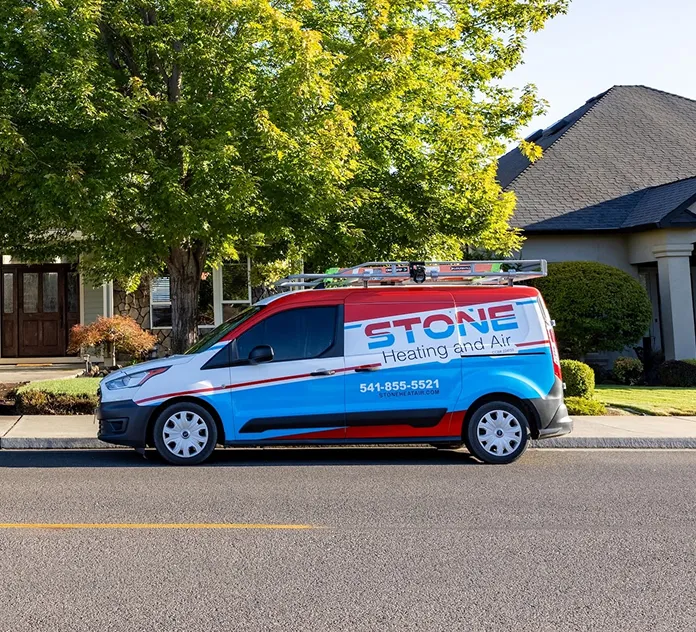
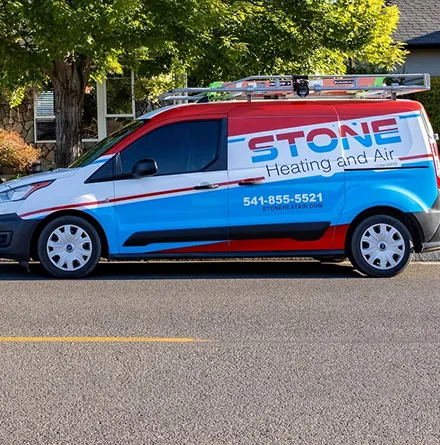

When your furnace quits during a freezing night or your AC dies on a 100-degree afternoon, waiting until business hours isn't an option. A total HVAC failure puts your family at risk and can cause serious property damage from frozen pipes or extreme heat. Stone Heating & Air provides 24/7 emergency HVAC service in Applegate, OR, with fast response times when you need help most.
We're available around the clock for urgent situations:
- 24/7 emergency dispatch for complete heating and cooling failures.
- Fully stocked trucks for common repairs on the first visit.
- Upfront diagnosis and pricing — no surprise emergency surcharges.
- Fast response for both residential and commercial emergencies. Call Stone Heating & Air now at (541) 855-5521 for emergency HVAC service in Applegate.
Comprehensive Emergency Diagnostics and Repair Scope
When a heating or cooling system fails outside of standard business hours, the priority shifts immediately to safety and climate control. Emergency service is not merely a quick patch; it is a comprehensive diagnostic process designed to identify the root cause of the failure and prevent a recurrence. Residents in Applegate often face these issues during peak usage times, such as the hottest summer afternoons or the coldest winter nights.
Our emergency response protocols cover a wide array of mechanical and electrical failures. When a technician arrives, the focus is on isolating the component that has compromised the system. This involves testing high-voltage connections, inspecting refrigerant pressure levels, and verifying the integrity of the heat exchanger or compressor.
The scope of emergency service typically includes:
- Electrical System Analysis: Technicians test capacitors, contactors, and relays. Electrical failures are a leading cause of sudden system death, often resulting from voltage fluctuations or wear and tear.
- Airflow and Blower Motor Inspection: If air is not moving, the system cannot regulate temperature. We examine the blower motor, belt tension, and fan blades for obstructions or mechanical seizure.
- Refrigerant Leak Detection: For air conditioners and heat pumps, low refrigerant levels indicate a leak. This is an environmental hazard and a major performance issue that requires immediate identification and sealing.
- Ignition and Safety Control Verification: In furnaces, faulty igniters, flame sensors, or limit switches can cause the system to shut down to prevent fires. We test these safety circuits to ensure the unit operates without risk to the household.
- Thermostat and Control Board Calibration: Sometimes the issue lies in the "brain" of the system. We verify that the thermostat is sending the correct signals to the furnace or AC unit.
We arrive with fully stocked trucks containing universal parts to resolve the majority of issues on the first visit. The goal is to turn the system back on safely, ensuring your home returns to a livable temperature within hours of the technician’s arrival.
The Emergency Repair Process: Step-by-Step
Understanding what happens after you request emergency service helps alleviate the anxiety associated with a breakdown. The process is streamlined to reduce waiting times and ensure clear communication from the initial call to the final system test. We operate with a strict protocol to ensure consistency and speed for homeowners in Applegate and nearby communities:
- Initial Triage and Dispatch: Upon receiving your request, our dispatch team assesses the severity of the issue. Situations involving potential gas leaks, electrical sparks, or complete loss of heat in freezing temperatures are prioritized. You receive a projected arrival window immediately.
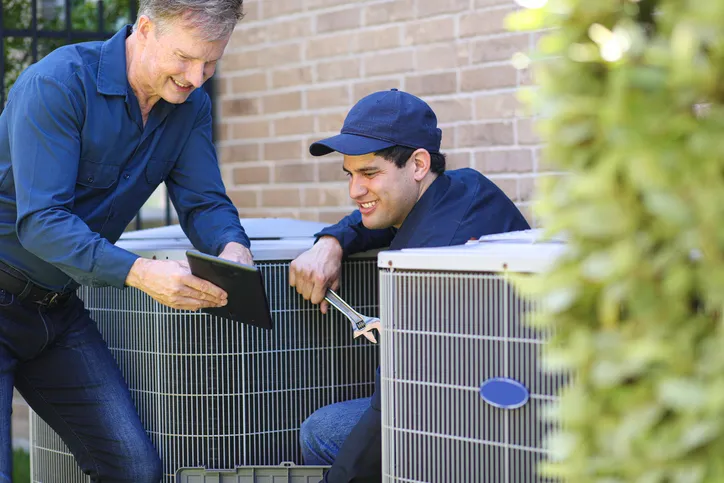
- Technician Arrival and Site Assessment: The technician arrives and respects your property by wearing shoe covers and using drop cloths. The assessment begins with a discussion of the symptoms you noticed, such as strange noises, smells, or specific error codes on the thermostat.
- System Diagnostics: Using specialized multimeters, pressure gauges, and combustion analyzers, the technician performs a point-by-point inspection. This moves beyond surface-level symptoms to find the underlying cause.
- Transparent Reporting and Quote: Before any repair work begins, you receive a detailed explanation of the problem. We provide a flat-rate quote for the repair. You will know exactly what the cost is and what work will be performed. There are no surprise hourly adjustments after the fact.
- Execution of Repairs: Once authorized, the technician performs the repair. This may involve replacing a blown capacitor, clearing a condensate drain line, or replacing a faulty igniter.
- System Verification and Testing: After the part is replaced, the system is run through a full cycle. We measure temperature differentials (the difference between supply and return air) to confirm the unit is heating or cooling effectively.
- Final Safety Check and Cleanup: The work area is cleaned, and a final safety check is performed to ensure no gas leaks or electrical hazards remain.
Critical Decision Guide: When to Repair vs. Replace
During an emergency visit, you may face a difficult decision: is it worth fixing the current unit, or is it time for a replacement? This decision often needs to be made quickly. We provide the data you need to make a financially sound choice.
The industry standard for making this decision often relies on the "$5,000 Rule." Multiply the age of your equipment by the estimated cost of the repair. If the total exceeds $5,000, replacement is generally the more economical option. However, other factors play a critical role:
- Safety Violations: If a furnace has a cracked heat exchanger, it cannot be repaired due to the risk of carbon monoxide poisoning. In this instance, replacement is mandatory for the safety of the occupants.
- Refrigerant Type: If your older AC unit utilizes R-22 (Freon), which has been phased out, repair costs for refrigerant leaks are astronomical. Upgrading to a modern system using R-410A or newer refrigerants is often more cost-effective.
- Frequency of Breakdowns: If Stone Heating and Air or another provider has visited your home multiple times in the last two years for different repairs, the system is likely reaching the end of its useful life. Continuing to patch a dying system is throwing good money after bad.
- Efficiency Ratings: Older units often have AFUE (heating) or SEER (cooling) ratings significantly lower than modern standards. Installing a new unit can result in immediate utility bill reductions, which can help offset the cost of the installation.
- Warranty Status: We check if your current unit is still under manufacturer warranty. If the parts are covered, a repair is usually the best path. If the warranty has expired, the cost of major components like compressors or heat exchangers falls entirely on you.
Regional Considerations: Climate, Permits, and Codes
Operating HVAC equipment in the Pacific Northwest requires specific attention to local climate patterns and regulations. In Applegate and Grants Pass, we experience a Mediterranean climate profile. This means summers are warm and dry, with temperatures frequently reaching the 80s and 90s °F, while winters are mild but damp, with lows dipping into the 20s.
This distinct weather pattern impacts how emergency services are delivered and what issues are most common:
- Transition Season Failures: The highest volume of emergency calls occurs during the first heat wave of summer or the first freeze of winter. Systems that have sat dormant for months are suddenly pushed to maximum capacity, causing weak components to fail.
- Heat Pump Prevalence: Because of our mild winters, heat pumps are extremely common in Oregon. These systems work year-round. Emergency diagnostics for heat pumps are more complex than standard AC units because they involve reversing valves and defrost boards that must function correctly to prevent the outdoor unit from icing over.
- Wildfire Smoke Impact: In recent years, smoke from regional wildfires has become a factor. Heavy smoke can clog filters rapidly, leading to airflow restriction and system overheating. Emergency calls often involve systems that have frozen up or shut down due to dirty filters that looked clean just weeks prior.
- Local Permitting and Codes: Any significant HVAC repair involves compliance with local building codes. If an emergency requires a system replacement, specific permits are required to ensure the installation meets safety standards. We handle all permitting requirements, ensuring that your system complies with local energy codes and safety regulations regarding gas piping and electrical connections.
- Electrical Infrastructure: Older homes in the region may have outdated electrical panels. When installing modern, high-efficiency equipment during an emergency replacement, we assess if your current electrical service can handle the load, coordinating with electricians if panel upgrades are necessary.
Why Professional Execution Prevents Future Risks
Attempting to troubleshoot an HVAC emergency without professional training is dangerous and often results in higher costs. Modern heating and cooling equipment involves high-voltage electricity, combustible gases, and high-pressure refrigerants.
Professional execution ensures that the immediate problem is solved without creating secondary issues. For example, overcharging an air conditioner with refrigerant can destroy the compressor, turning a minor repair into a major replacement. Similarly, bypassing safety switches on a furnace to "get it running" creates a severe fire hazard:
- Accurate diagnostics prevent parts-changing: Amateurs often guess at the problem, replacing parts until the unit works. Professionals use diagnostic tools to pinpoint the exact failure, saving you money on unnecessary parts.
- Warranty protection: Most manufacturer warranties require proof of professional service. DIY repairs or service by unlicensed handymen can void the warranty on your expensive equipment.
- Long-term reliability: A professional repair includes a comprehensive check of the system. We don't just fix the broken part; we look for what caused it to break. If a capacitor blew because the condenser coil was dirty, we clean the coil to ensure the new capacitor lasts.
When you rely on professional service, you are investing in the longevity of your home’s climate control system. We ensure that your system is not just running, but running efficiently and safely.
Restore Your Home’s Comfort Now
A broken HVAC system disrupts your life and compromises your safety. Whether you are dealing with a furnace that won't ignite in the dead of winter or an AC unit blowing warm air during a heatwave, time is of the essence. You need a solution that is fast, reliable, and technically sound.
Stone Heating and Air provides the expertise and rapid response required to handle any HVAC emergency. Do not let a breakdown linger and cause further damage to your home or health. Contact us immediately to schedule your emergency diagnostic service.
- Book Expert Service Or Contact Us