
What to Do When Your Furnace Fails on a Cold Night in the Rogue Valley
Knowing what to do when your furnace fails on a cold night can make the difference between a stressful few hours and a real emergency. Here are the most important steps to take right away:
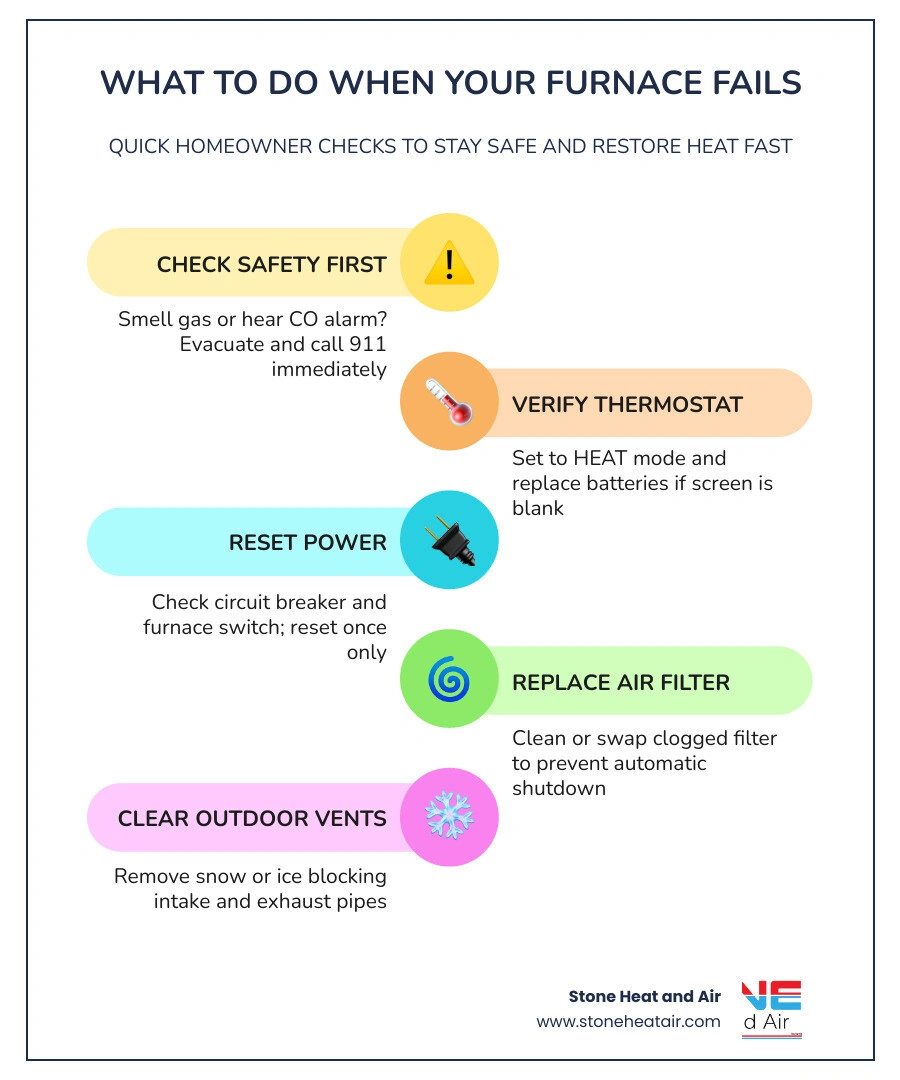
1. Check for gas smells or CO alarms - If you smell rotten eggs or your carbon monoxide detector goes off, leave immediately and call 911.
2. Check your thermostat - Make sure it's set to HEAT and the temperature is above the current room temp. Replace the batteries if the screen is blank.
3. Check the circuit breaker and furnace power switch - Reset a tripped breaker once. If it trips again, stop and call a pro.
4. Inspect your air filter - A clogged filter can cause the furnace to shut itself off. Replace it if it's dirty.
5. Check outdoor vents - Snow or ice can block high-efficiency furnace intake and exhaust pipes, triggering an automatic shutdown.
6. Stay warm safely - Close off unused rooms, layer up, and use an indoor-rated space heater if needed. Never use a stove or oven for heat.
7. Call for emergency furnace repair - If basic checks don't solve the problem, call a certified HVAC technician right away.
There are few things more unsettling than waking up on a freezing Rogue Valley night to a cold, silent house. You check the thermostat. Nothing. The furnace isn't running, the temperature is dropping fast, and you're not sure what to do next.
It happens more than people expect. Furnaces tend to run almost nonstop during cold snaps, and that heavy workload is exactly when hidden problems show up. Older homes can lose heat quickly, and once indoor temperatures fall far enough, frozen pipes become a real risk on top of everything else.
The good news is that some furnace failures have simple causes you can check yourself in minutes. Others need a professional, and knowing which is which matters — especially in the middle of the night.
This guide walks you through every step clearly, from the first safety checks to staying warm safely while you wait for help.
Simple guide to what to do when your furnace fails on a cold night:
• how 24 7 emergency service protects your family
• signs you need immediate hvac help
• what constitutes an hvac emergency
First Safety Steps to Take When Your Heating Stops
Before you start looking at buttons, wires, or vents, you must establish that your home is safe. When a heating system fails unexpectedly, there are a few hazards that require immediate attention.
First and foremost is the threat of carbon monoxide (CO) or a natural gas leak. If you have a gas or oil furnace, a failure in the combustion chamber or venting system can cause dangerous gases to enter your living space.
Take a moment to check your surroundings:
• Listen for your CO detectors: If a carbon monoxide alarm is sounding, do not hesitate. Leave the house immediately. Carbon monoxide is an odorless, colorless, and tasteless gas that can be fatal.
• Use your nose: Natural gas utilities add a chemical called mercaptan to gas lines, which smells like rotten eggs or sulfur. If you smell this anywhere in your home, do not turn on any lights, use your phone indoors, or attempt to shut off the gas valve yourself. Evacuate everyone from the home immediately and call 911 once you are safely outside.
• Watch for physical symptoms: If you or your family members are experiencing sudden, unexplained headaches, dizziness, nausea, confusion, or sleepiness, these are classic signs of carbon monoxide poisoning. Get into fresh air right away.
If you suspect a gas leak or carbon monoxide exposure, do not attempt any troubleshooting. Your priority is getting your household to safety. Once you are safe, you can make the necessary emergency calls.
For homes that are structurally safe but simply without heat, it is time to shift your focus to preserving the warmth you have and preparing for the hours ahead. Taking a few proactive steps early on can prevent your home’s indoor temperature from plummeting too quickly. You can read more about setting up your home for unexpected winter outages in our detailed guide on Preparing for Heat & Power Loss in the Winter.
What to Do When Your Furnace Fails on a Cold Night: Quick Homeowner Checks
If your home is safe and there are no signs of gas leaks or carbon monoxide, you can run through a few basic troubleshooting steps. Many "no-heat" situations are actually caused by simple, external issues that you can resolve without waiting for a technician.
When a furnace stops running, it often goes into a safety lock-out mode. This occurs because one of the system’s internal sensors detects an issue—such as restricted airflow or an electrical hiccup—and shuts the system down to prevent damage or dangerous conditions. By checking the following three areas, you might be able to safely reset your system and restore your heat. For a deeper look at why your system might have shut down in the first place, check out our article on the common Reasons Why Your Furnace Isn't Turning On.
Inspecting the Thermostat Settings
It sounds simple, but the thermostat is the brain of your heating system, and it is the very first place you should look. A minor setting change or a dead battery can easily mimic a complete furnace failure.
• Verify the System Mode: Ensure the thermostat is set explicitly to HEAT. Sometimes, during transitional seasons or accidental bumps, the thermostat can be switched to "Cool," "Off," or "Fan Only."
• Check the Temperature Setting: Raise the set temperature at least five degrees above the current room temperature. Listen closely to see if you hear the thermostat click or if the furnace starts its startup sequence.
• Inspect the Battery Power: If your thermostat has a blank or fading digital screen, the batteries are likely dead or dying. Many thermostats do not have a direct connection to your home's electrical grid and rely entirely on AA or AAA batteries. Pop the cover off, replace the batteries with fresh ones, and see if the display restores and calls for heat.
• Look for Wi-Fi or Connection Issues: If you use a smart thermostat, check if it has lost its connection to your home network or is displaying an error code. A quick system restart of the thermostat itself can often restore the signal to your furnace.
If you have verified the settings and the batteries are fresh, but the system still refuses to budge, you can find more advanced thermostat troubleshooting tips in our guide on What to Do When Your Heater Won't Turn On.
Checking the Power Supply and Circuit Breakers
A furnace is a powerful appliance that requires a steady supply of electricity to run its blowers, ignition systems, and safety switches—even if it is a gas-powered unit. If the electrical pathway is interrupted, the furnace will remain completely dead.
• Locate the Furnace Power Switch: Near your furnace (often mounted on the side of the unit or on a nearby wall), you should see a switch that looks exactly like a standard household light switch. It is very common for this switch to be accidentally flipped off by someone retrieving holiday decorations, cleaning, or working in the garage or basement. Ensure this switch is flipped to the ON position.
• Check the Circuit Breaker Panel: Find your home’s main electrical panel. Look for the circuit breaker labeled "Furnace" or "Heating." If the breaker has tripped, it will be sitting in the middle position between "ON" and "OFF," often showing a small red indicator. Flip the breaker fully to the "OFF" position, and then flip it firmly back to "ON."
• Avoid Repeated Resets: If you reset the breaker and it immediately trips again, do not attempt to reset it a second time. A repeatedly tripping breaker indicates a serious electrical fault, a short circuit, or a motor failure within the furnace. Forcing it to stay on can damage your system or create a fire hazard.
Examining the Air Filter and Vents
Airflow is the lifeblood of your furnace. If air cannot move freely through the system, heat builds up rapidly inside the heat exchanger. To prevent the unit from cracking or catching fire, a safety switch called a limit switch will automatically shut the burners down.
• Inspect the Furnace Filter: Pull your furnace filter out and hold it up to a light source. If you cannot see light passing through it, or if it is caked in a thick layer of dust, pet hair, and dander, it is completely clogged. This restricted airflow is one of the single most common reasons furnaces shut down during cold snaps. Replace the dirty filter with a fresh one immediately.
• Check the Air Registers: Walk through your home and ensure that your return air grilles and supply registers are open and not blocked by heavy furniture, thick rugs, or curtains. Closing off too many vents in unused rooms can actually choke the system and trigger an automatic shutdown.
• Examine Outdoor Intake and Exhaust Vents: If you have a modern, high-efficiency condensing furnace, it vents through plastic PVC pipes that exit through the side of your home rather than up a traditional chimney. During heavy winter weather, these vents can easily become blocked by drifting snow, ice buildup, or fallen leaves. If the intake or exhaust is restricted, the furnace’s internal pressure switches will prevent the system from igniting. Head outside with a flashlight and ensure these pipes are completely clear of obstructions.
If your furnace starts up but only blows cold air before shutting down again, read our helpful guide on What to Do If You Notice Your Furnace Blowing Cold Air to identify the underlying cause.
When to Stop Troubleshooting and Call for Professional Furnace Repair
There comes a point where DIY troubleshooting is no longer safe or effective. Modern furnaces are highly complex machines that utilize high-voltage electricity, natural gas or propane, and delicate electronic sensors. Attempting to dismantle combustion chambers, adjust gas valves, or bypass safety switches can lead to severe injury, voided manufacturer warranties, or catastrophic damage to your home.
Knowing when to step back and call in a licensed professional is key to keeping your family safe. For a comprehensive look at when to make that call, read our guide on When to Call for Emergency HVAC Services.
Recognizing Critical Signs of Furnace Failure
If you notice any of the following warning signs, stop troubleshooting immediately and call for professional assistance:
• Strange or Unusual Noises: Loud banging, screeching, rattling, or grinding sounds coming from the furnace cabinet indicate mechanical failures, such as a failing blower motor, a broken inducer fan, or a cracked heat exchanger.
• Persistent Burning Smells: While a faint dusty smell is normal when a furnace first turns on after a long period of inactivity, a strong chemical smell, burning plastic odor, or electrical smoke scent is a major red flag.
• A Yellow or Flickering Pilot Light: If your gas furnace has a viewing window and you notice the burner flame is yellow, orange, or flickering wildly instead of burning a steady, crisp blue, your system is not combusting fuel properly. This is a primary source of carbon monoxide leaks.
• Rapid Short Cycling: If the furnace turns on, runs for a minute or two, and then shuts down repeatedly without warming your home, it is short cycling. This places immense wear and tear on your system and points to failing internal sensors or overheating.
Knowing what to do when your furnace fails on a cold night and requires emergency service
A complete loss of heat on a mild autumn evening is inconvenient, but a furnace failure during a freezing Southern Oregon winter night is a true emergency. You should call for emergency repair services immediately if:
• The Outdoor Temperature is Below Freezing: When outdoor temperatures drop into the 20s or teens, a home’s interior temperature can fall rapidly, creating immediate health risks and threatening your plumbing.
• Vulnerable Occupants Live in the Home: If your household includes infants, elderly family members, pregnant individuals, or anyone with a chronic medical condition, maintaining a stable indoor temperature is critical to their health.
• The Indoor Temperature Drops Below 55°F: Once your indoor living spaces fall below this threshold, your body has to work significantly harder to stay warm, and the risk of your home's water lines freezing rises dramatically.
Safe Ways to Stay Warm and Protect Your Home While Waiting for Help
Once you have determined that you need a professional technician and have scheduled an emergency service visit, your focus must shift to survival mode: keeping your household warm and protecting your property from the cold.
• Layering thermal clothing and heavy blankets — Unsafe Heating Methods (NEVER Use): Using a kitchen gas oven or stovetop for heat
• Running certified indoor-rated electric space heaters — Unsafe Heating Methods (NEVER Use): Running outdoor propane or kerosene heaters indoors
• Consolidating your family into a single, small room — Unsafe Heating Methods (NEVER Use): Operating a charcoal or gas grill inside the home
• Using a properly maintained fireplace with the damper open — Unsafe Heating Methods (NEVER Use): Bypassing furnace safety switches to force ignition
• Blocking drafts under doors and windows with towels — Unsafe Heating Methods (NEVER Use): Leaving space heaters running completely unattended
Conserving Indoor Heat and Using Safe Temporary Warmth
Your home acts like a giant cooler; it can hold heat in, but once the heat source is gone, that warmth will steadily escape through walls, windows, and doors. You must take active steps to trap as much heat as possible:
• Consolidate Your Living Space: Choose one small, central room with the fewest windows—such as a living room or a large bedroom—and gather everyone there. Close the doors to all unused rooms, bathrooms, and hallways to concentrate your body heat and any temporary heat sources in one area.
• Block Drafts and Cover Windows: Roll up towels, blankets, or rugs and place them tightly against the bottom of exterior doors to block cold drafts. Close all window blinds, curtains, or shades to create an extra layer of insulation against the glass.
• Dress in Layers: Put on thermal underwear, wool socks, sweaters, and winter hats. Your head and feet are key areas for heat loss, so keeping them covered makes a massive difference in your comfort level.
• Use Space Heaters Safely: If you have portable electric space heaters, plug them directly into wall outlets rather than extension cords or power strips, which can overheat. Place them on a flat, level, non-flammable surface, and keep them at least three feet away from any combustible materials like blankets, curtains, or furniture. Always turn them off if you leave the room or go to sleep.
Preventing Frozen Pipes and Water Damage
When a furnace fails, your comfort is not the only thing on the line. Your home’s plumbing system is incredibly vulnerable to extreme cold. When water freezes inside a pipe, it expands with immense force, which can easily split copper, PEX, or PVC lines. Once the home warms back up, the ice melts, resulting in catastrophic flooding and water damage.
• Let the Faucets Drip: Go to the faucets that are furthest from your main water line or those located along exterior walls. Turn them on to allow a slow, steady trickle of both hot and cold water to run. Moving water is much harder to freeze than standing water, and keeping the tap open relieves the pressure that builds up inside the pipe if freezing does begin.
• Open Under-Sink Cabinet Doors: Kitchen and bathroom pipes are often tucked away inside dark cabinets against cold exterior walls. Open these cabinet doors fully to allow whatever warm air remains in your living space to circulate around the plumbing.
• Keep the Garage Door Closed: If your water heater or main plumbing lines run through or adjacent to your garage, keep the garage door completely shut to retain as much ambient heat as possible.
• Know Your Main Water Shutoff: Locate your home's main water shutoff valve ahead of time. If a pipe does freeze and burst while you are waiting for repairs, you must be able to turn off the water supply to your entire home instantly to minimize damage.
How to Prevent Future Furnace Failures During Cold Snaps
The best way to handle a furnace failure on a cold night is to make sure it never happens in the first place. Furnaces rarely fail without giving off a few warning signs first, and a little bit of proactive maintenance can save you from a cold, stressful night of emergency repairs.
Scheduling Annual Professional Maintenance
Think of a furnace tune-up like an oil change for your car. Your heating system is a mechanical assembly of motors, bearings, burners, and sensors that require regular cleaning, lubrication, and calibration to run safely and efficiently.
• Protect Your Manufacturer Warranty: Most major furnace manufacturers explicitly state in their warranty terms that the system must be professionally serviced every year. If your furnace fails due to a lack of maintenance, your warranty may be voided, leaving you responsible for the full cost of parts and labor.
• Improve Energy Efficiency: A clean, well-adjusted furnace doesn't have to work nearly as hard to heat your home. Regular maintenance can improve your system's operating efficiency, lowering your monthly utility bills throughout the winter.
• Catch Small Issues Early: During a professional tune-up, a technician can identify worn-out igniters, weak blower motors, or dirty flame sensors and replace them before they cause a complete system breakdown in the middle of a winter storm.
Recognizing Early Warning Signs Before a Breakdown
Your furnace will often tell you it is struggling long before it completely shuts down. Keep an eye out for these subtle indicators that your heating system needs professional attention:
• Uneven Heating Throughout Your Home: If some rooms in your house are boiling hot while others remain drafty and cold, your furnace is struggling to distribute air properly.
• Unexplained Spikes in Utility Bills: If your heating bills are climbing significantly higher than they were during the same period last year, your system is losing efficiency and running longer to achieve the same temperature.
• Frequent Thermostat Adjustments: If you find yourself constantly turning the thermostat up and down because the home feels warm one minute and freezing the next, your system may be short cycling or experiencing sensor drift.
Frequently Asked Questions
What is the very first thing to do when your furnace fails on a cold night?
The absolute first step is a safety assessment. Check your home for any signs of a natural gas leak (a rotten egg or sulfur smell) or carbon monoxide exposure (sounding CO alarms, or physical symptoms like sudden headaches, dizziness, and nausea). If you detect any of these hazards, evacuate your household immediately and call 911. If the home is safe, your next step is to check your thermostat settings to ensure it is set to HEAT and calling for a temperature higher than the current room temperature.
How long does it take for pipes to freeze when the furnace stops working?
It depends heavily on the outdoor temperature, how well your home is insulated, and where your plumbing lines are located. In a poorly insulated home during extreme cold (temperatures in the teens or lower), pipes located in unheated crawlspaces, basements, or exterior walls can begin to freeze in as little as 4 to 6 hours after the heat goes out. In modern, well-insulated homes, it may take 12 to 24 hours for the interior temperature to drop low enough to freeze pipes, but you should always take preventive measures immediately.
Can I use my kitchen oven to heat my home during a furnace failure?
No, you should never use a kitchen stove or oven to heat your home. Running a gas oven with the door open produces high levels of carbon monoxide, which can quickly build up to lethal concentrations in an enclosed space. Electric ovens are not designed for continuous space heating and present a severe fire hazard from overheating electrical components. Stick to safe, certified electric space heaters, heavy clothing layers, and blankets to stay warm.
Conclusion
Waking up to a broken furnace in the middle of a freezing night is a stressful experience, but you do not have to navigate it alone. By taking immediate safety precautions, running through a few simple homeowner checks, and protecting your plumbing, you can keep your family safe and comfortable until professional help arrives.
At Stone Heating & Air, we believe in treating your home just like our own. We are proud to serve homeowners throughout the Rogue Valley, including Central Point, Southern Oregon, Roseburg, Brookings, and Klamath Falls. Our expert, highly trained team is available for 24/7 emergency services to ensure you are never left out in the cold.
If you want uninterrupted comfort and ultimate peace of mind all winter long, consider joining our exclusive Stone Comfort Membership Club, which includes annual maintenance tune-ups, priority scheduling, and peace-of-mind reliability.
If your furnace has failed or you want to schedule a pre-season safety inspection, don't wait—reach out to our friendly team today for prompt, professional service.