

Is Your HVAC System Sending You an SOS? Here's What to Watch For
If you're noticing signs you need immediate HVAC help, here's a quick breakdown of the most urgent ones:
• Burning or rotten egg smell - Shut down the system and evacuate immediately
• No heating or cooling during extreme temperatures - A health emergency, especially above 90°F or below 40°F
• Loud banging, grinding, or screeching noises - Indicates imminent component failure; turn off the system now
• Visible sparks, smoke, or scorch marks - An electrical emergency requiring immediate action
• Significant water leaking from indoor unit - Can cause structural damage fast
• Lights dimming when the system kicks on - Points to a serious electrical draw issue
• Carbon monoxide alarm sounding - Evacuate and call 911 immediately
Your HVAC system works quietly in the background every day. Most of the time, you don't think twice about it. But when something goes wrong, it can go wrong fast, especially during a Rogue Valley summer when temperatures climb well past 90°F, or on a cold winter night when you can't afford to lose heat.
The tricky part is knowing which problems can wait until Monday morning and which ones need a call right now. A strange noise might be nothing, or it might be your system on the verge of a total breakdown. A burning smell could be dust burning off a heater, or it could signal a fire risk. According to industry data, over 100,000 Americans visit emergency rooms each year due to carbon monoxide poisoning, and roughly 40% of HVAC emergency calls turn out to be triggered by something as simple as a dead thermostat battery. That range tells you everything: HVAC emergencies can be life-threatening or surprisingly simple, and it pays to know the difference.
This guide walks you through the clearest warning signs that your system needs help right now, so you can protect your family, your home, and your comfort.
Defining a True HVAC Emergency vs. a Standard Repair
It is May 2026, and as the weather in Southern Oregon begins to shift, it is vital to understand the "triage" of home comfort. Not every hiccup requires a midnight service call, but knowing When to Call for Emergency HVAC Services can save you from a catastrophic system failure or property damage.
We define a true HVAC emergency by three pillars: safety, health, and property integrity. If a problem puts any of these at risk, it is an emergency. For instance, a small rattle in your ductwork is a routine maintenance issue. However, if your furnace fails during a sub-zero freeze in Klamath Falls, that is a health emergency because your home can lose its retained heat in as little as 8 to 12 hours, potentially leading to frozen and burst pipes.
• Temperature — Routine Repair: Slight discomfort; uneven rooms — Emergency Service: Outside temps >90°F or <40°F
• Noises — Routine Repair: Faint humming or occasional click — Emergency Service: Loud banging, screeching, or grinding
• Smells — Routine Repair: Musty "dusty" smell at start-up — Emergency Service: Burning plastic, smoke, or rotten eggs
• Leaks — Routine Repair: Small drip from outdoor unit — Emergency Service: Large indoor puddles or hissing sounds
• Electrical — Routine Repair: Thermostat screen is dim — Emergency Service: Sparks, smoke, or frequent breaker trips
Critical Signs You Need Immediate HVAC Help Right Now
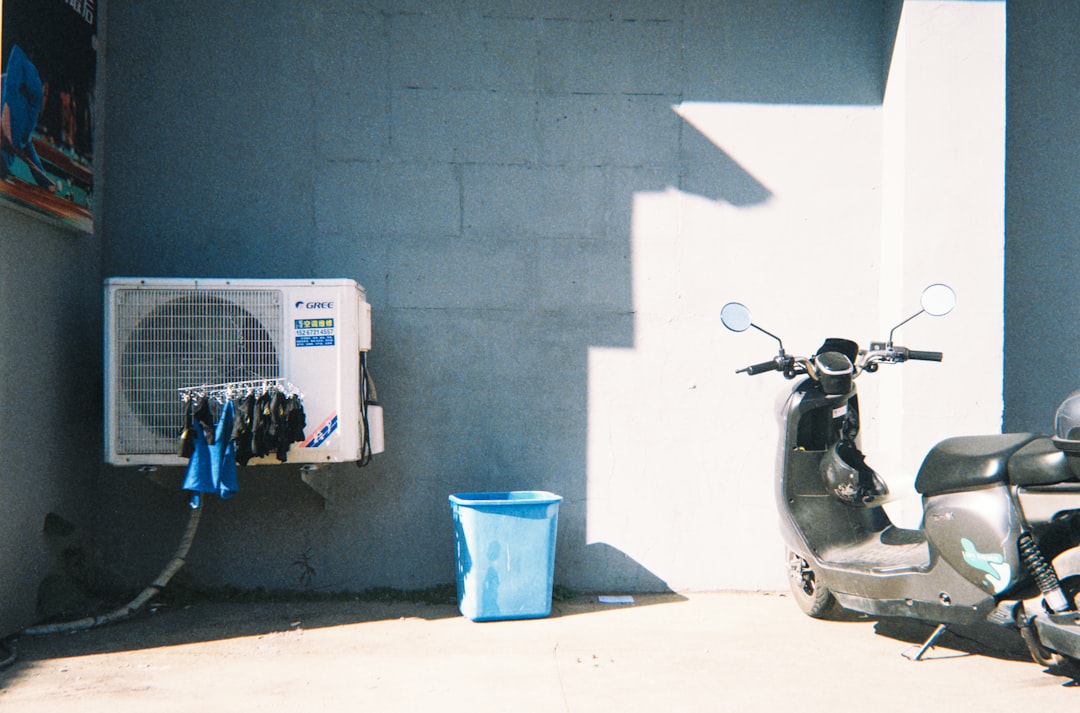
When your system starts failing, it usually doesn't happen in total silence. Identifying the signs you need immediate HVAC help early can be the difference between a simple part replacement and needing a whole new unit. One of the most visual red flags is ice buildup on your outdoor condenser or indoor evaporator coil. If you see ice in May, something is very wrong—usually a refrigerant leak or a severe airflow restriction.
If you notice 5 Warning Signs Your Air Handler Needs Repairs, such as weak airflow or short cycling (where the unit turns on and off every few minutes), your system is under immense stress. Short cycling is especially dangerous because it rapidly wears out the compressor and skyrockets your energy bills. This constant "stop-and-go" often signals that the system is overheating or that a safety sensor is forcing a shutdown to prevent a fire.
Furthermore, if you find Possible Reasons Your Air Conditioner Isn't Cooling Your Home Properly, you shouldn't just turn the thermostat down lower. Forcing a struggling system to work harder is like driving a car with an empty radiator—you’re going to cause permanent damage.
Unusual Noises and Signs You Need Immediate HVAC Help
Your HVAC system should hum along quietly. If it starts sounding like a drumline or a haunted house, it’s time to worry. Specific sounds point to specific failures:
• Banging or Clanking: This usually means a part has come loose, like a blower wheel or a connecting rod. If left alone, that loose part can act like a piece of shrapnel inside your unit.
• Screeching or Squealing: This often indicates a fan belt is slipping or a motor bearing has failed.
• Grinding: This is a "shut it down now" sound. Metal-on-metal grinding means the motor bearings are gone, and the motor is about to seize.
If you hear these and then find your 3 Reasons Why Your Air Conditioning Unit Won't Turn On, the mechanical failure has likely progressed to a total system lockout.
Visible Leaks and Signs You Need Immediate HVAC Help
Leaks come in two dangerous varieties: refrigerant and water. Refrigerant leaks are often accompanied by a hissing or bubbling sound. Because refrigerant is a chemical that requires EPA-certified handling, this is never a DIY fix. Low refrigerant levels cause the compressor to run hot, leading to a total burnout that is incredibly expensive to fix.
Water leaks, on the other hand, are usually caused by a clogged condensate drain. While it might just look like a puddle, that water can quickly back up, damaging your furnace's electrical components or causing your ceiling to collapse if the unit is in the attic. Understanding What Causes HVAC Emergencies often starts with realizing that moisture and electricity are a terrible mix.
Safety Hazards and Weather Extremes That Demand Urgent Action
In the Rogue Valley, we experience some of the most dramatic temperature swings in Oregon. When the mercury hits the 90s, an HVAC failure moves from "annoying" to "dangerous" very quickly. This is especially true for vulnerable populations, including infants, the elderly, and pets, who cannot regulate their body temperatures as effectively as healthy adults.
If your system fails during a heatwave, you need to use Staying Cool in an HVAC Emergency: Tips and Tricks, such as closing all blinds and staying on the lowest floor of the home, while you wait for a technician. But beyond the weather, safety hazards like electrical sparks or the smell of burning plastic should lead to an immediate system shutdown at the breaker.
Detecting Gas Leaks and Signs You Need Immediate HVAC Help
For those with gas furnaces, a "rotten egg" smell is the ultimate red flag. Natural gas is odorless, so utility companies add a chemical called mercaptan to give it that distinct, sulfur-like scent. If you smell this, do not flip any light switches, do not use your phone inside, and evacuate everyone immediately.
Once you are safely outside, call for help. A gas leak is a severe fire and explosion risk. Similarly, if you find What to Do If You Notice Your Furnace Blowing Cold Air, it could be a simple pilot light issue, but it could also be a cracked heat exchanger—a dangerous defect that can leak carbon monoxide into your home.
The 40/90 Rule in the Rogue Valley
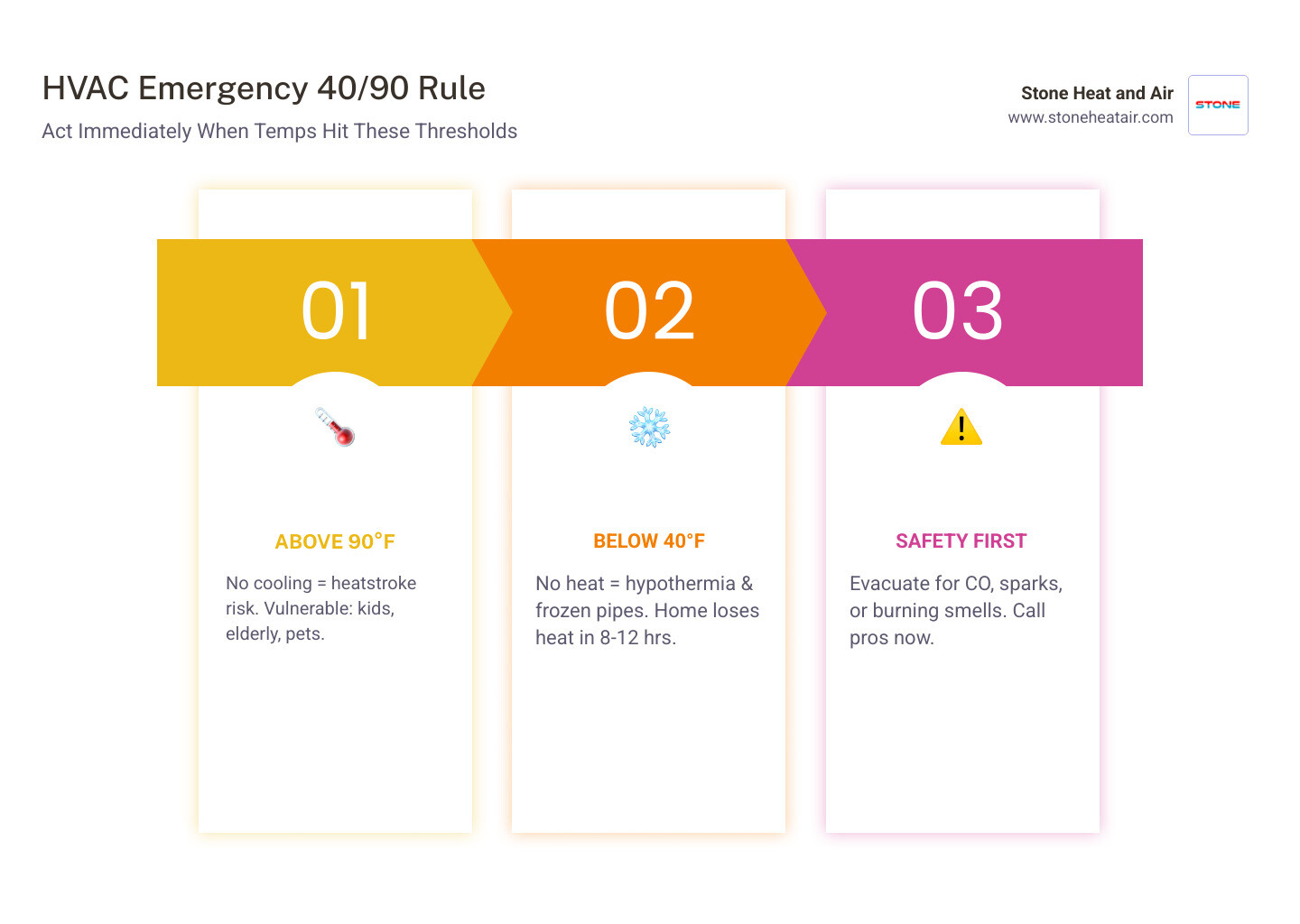
We use the "40/90 Rule" to help our neighbors in Central Point and Roseburg determine urgency:
• The 90-Degree Threshold: If it is over 90°F outside and your AC fails, it is a health emergency. Indoor temperatures can rise to dangerous levels within hours, putting residents at risk of heat exhaustion or stroke.
• The 40-Degree Threshold: If it is below 40°F and your heat fails, your home’s plumbing is at risk.
If you have a Heat Pump Blowing Cold Air in Grants Pass OR during a cold snap, the system may be stuck in defrost mode or have a failed reversing valve. Either way, you shouldn't wait for the pipes to freeze before calling for help.
Troubleshooting Before Calling for Emergency Service
Before you pick up the phone for an emergency dispatch, there are a few "sanity checks" you can perform. We see many Common Reasons for HVAC Service Calls that could have been solved in two minutes by the homeowner.
1. Check the Thermostat: Is it on? Are the batteries fresh? Is it set to "Cool" (or "Heat") and not just "Fan"? About 40% of emergency calls are actually thermostat-related.
2. Inspect the Breaker Box: Did a power surge trip the HVAC circuit? If it’s tripped, flip it back once. If it trips again immediately, stop—you have an electrical short and need a pro.
3. Look at the Air Filter: A filter clogged with dust acts like a chokehold on your system. It can cause the unit to overheat and shut down. Dirty filters can increase energy usage by 15% and are a leading cause of frozen coils.
4. Clear the Outdoor Unit: Ensure there are at least two feet of clearance around your outdoor condenser. Leaves, tall grass, or debris can "suffocate" the unit, leading to a system-wide failure.
Frequently Asked Questions about HVAC Emergencies
What should I do if I smell burning plastic from my vents?
Turn off your HVAC system at the thermostat and the circuit breaker immediately. This smell usually indicates electrical wiring is overheating or a motor is burning out. Continuing to run the system could lead to a house fire. Once the power is off, call for emergency service to locate the short circuit or failed component.
How long can a home stay safe without heat in May 2026?
In the Rogue Valley, May nights can still be quite chilly. Generally, a well-insulated home will remain safe for about 8 to 12 hours. However, if you have infants or elderly family members, the "safety window" is much shorter. If the outdoor temperature is dropping below 40°F, you should seek help immediately to prevent hypothermia risks and potential pipe damage.
Is a hissing sound from my AC unit dangerous?
Yes, a hissing sound usually indicates a high-pressure refrigerant leak. Refrigerant is a hazardous chemical that can cause respiratory issues if inhaled in high concentrations and is harmful to the environment. Furthermore, running a system low on refrigerant will quickly destroy the compressor, leading to a much more expensive repair.
Conclusion
At Stone Heat and Air, we know that HVAC emergencies don't stick to a 9-to-5 schedule. Whether you are in Medford, Brookings, or Klamath Falls, a sudden system failure is stressful. By recognizing the signs you need immediate HVAC help—like those strange noises, smells, or the 40/90 weather thresholds—you can act fast to protect your home.
We pride ourselves on honest, fair dealings and a commitment to treating your home like ours. If you’re ever in doubt about whether a noise or a smell is a true crisis, don't hesitate to reach out. Our team provides 24/7 Emergency Service throughout the Rogue Valley to ensure your family stays safe and comfortable, no matter what the Southern Oregon weather throws your way. For even more peace of mind, ask us about our Stone Comfort Membership Club, which helps prevent these emergencies before they ever start.