

Why Knowing the Signs Your Ducts and Dryer Vent Need Cleaning Could Protect Your Home
The signs your ducts and dryer vent need cleaning are easy to miss — until your energy bills spike, your clothes stop drying properly, or worse, a fire hazard develops behind your walls.
Here's a quick look at the most common warning signs:
Air Duct Warning Signs:
• Dust blowing out of vents when your HVAC runs
• Musty or stale odors from the system
• Uneven heating or cooling between rooms
• Energy bills rising without a clear reason
• Air filters clogging faster than usual
• Worsening allergy or asthma symptoms indoors
Dryer Vent Warning Signs:
• Clothes taking more than one cycle to dry
• Dryer exterior or laundry room feels unusually hot
• Burning smell during or after a cycle
• Lint collecting around the vent or behind the dryer
• Exterior vent flap not opening during operation
• Musty smell on freshly dried clothes
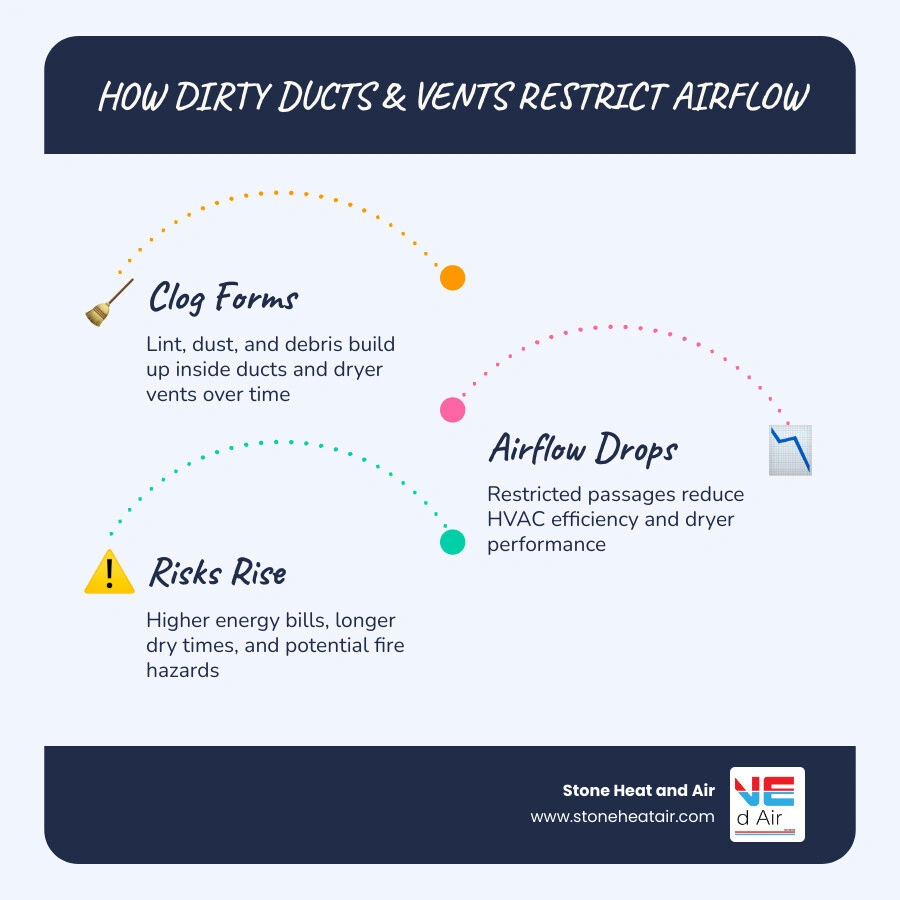
Most homeowners in the Rogue Valley never think about their ducts or dryer vent until something goes wrong. But your HVAC system circulates the air in your home five to seven times every single day — and your dryer vent quietly accumulates lint with every load. According to the U.S. Fire Administration, failure to clean is the leading cause of dryer fires, responsible for roughly 31% of all residential dryer fires. Meanwhile, dirty air ducts can quietly reduce your HVAC system's efficiency and push allergens, dust, and mold spores into every room.
The good news? Both systems give you clear signals before things get serious. Knowing what to look for puts you in control.
Red Flags: Signs Your Ducts and Dryer Vent Need Cleaning
Recognizing when your home is trying to tell you something is the first step to maintaining a safe, comfortable, and energy-efficient living space. Because ductwork and dryer exhaust lines are hidden behind drywall, in crawlspaces, or up in the attic, we have to rely on secondary indicators to gauge their condition.
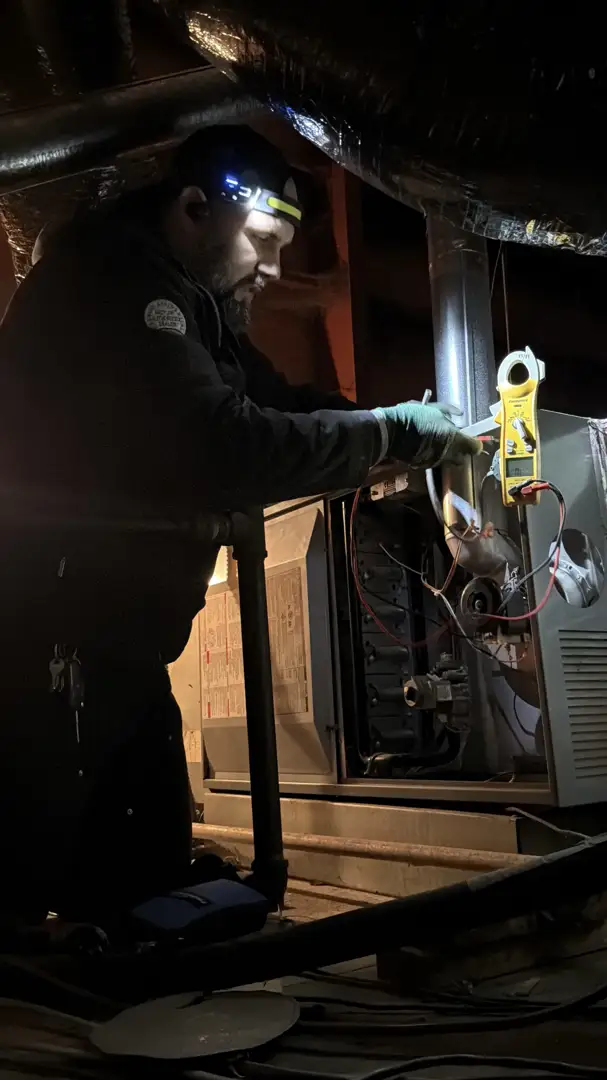
Many homeowners ask us how they can distinguish between normal daily dust and a serious ventilation issue. It is completely normal for a home to accumulate a light layer of dust over a week. However, when you start noticing dark, velvety rings of dust around your supply registers, or if a thick layer of gray particles settles on your coffee table just hours after you finished dusting, your ductwork is likely overloaded.
When your HVAC system turns on, a heavily contaminated duct system will blast these accumulated particles back into your living spaces. If you've noticed these symptoms, it's highly recommended to look into Signs You Need to Schedule Professional Duct Cleaning to get a clearer picture of what is happening inside your walls.
Similarly, your clothes dryer will drop subtle hints when its exhaust line is choked with lint. If a standard load of laundry that used to dry in 40 minutes now requires two full cycles or upwards of 90 minutes, your dryer isn't necessarily reaching the end of its lifespan. More often than not, it is simply suffocating because it cannot vent the hot, moisture-laden air outside. When this happens, the dryer's exterior shell will feel incredibly hot to the touch, and you might notice a heavy, humid atmosphere in your laundry room.
To help you quickly evaluate your home's systems, we’ve put together a comparison table outlining the differences between everyday wear and tear and a serious ventilation blockage:
• HVAC Air Vents — Normal Home Behavior: Light dust on grilles that wipes away easily — Serious Blockage / Cleaning Required: Dark, sticky dust streaks on the wall or ceiling around the vent
• Dust Accumulation — Normal Home Behavior: Gentle settling on furniture over a week's time — Serious Blockage / Cleaning Required: Heavy gray dust reappearing on surfaces within hours of cleaning
• Indoor Odors — Normal Home Behavior: Temporary smells from cooking or cleaning — Serious Blockage / Cleaning Required: Persistent musty, stale, or earthy odors whenever the HVAC fan runs
• Dryer Cycle Times — Normal Home Behavior: 30 to 50 minutes for a standard, full load — Serious Blockage / Cleaning Required: 60 to 120+ minutes; clothes remain damp after a full cycle
• Dryer Exterior Temp — Normal Home Behavior: Warm to the touch during operation — Serious Blockage / Cleaning Required: Unusually hot or scorching to touch; laundry room feels like a sauna
• Exterior Exhaust Vent — Normal Home Behavior: Flap opens easily; warm air blows out steadily — Serious Blockage / Cleaning Required: Flap stays closed or barely flutters; little to no airflow felt
Airflow Obstructions: Signs Your Ducts and Dryer Vent Need Cleaning in Your HVAC System
When dust, pet dander, and construction debris clog your ductwork, they create physical barriers that restrict the smooth flow of conditioned air. This restriction forces your heating and cooling system to work significantly harder to maintain your desired indoor temperature. One of the first physical signs of this struggle is uneven temperatures throughout your home. You might find that your living room feels like an icebox while your bedroom remains uncomfortably warm, or vice versa.
When air cannot circulate freely, the system cannot distribute heating or cooling evenly. This continuous strain directly translates to rising utility bills. If you notice your energy costs climbing month-over-month without a corresponding change in outdoor temperatures or local utility rates, your HVAC system is likely burning extra electricity to fight its way through restricted ducts.
Furthermore, restricted airflow can sometimes be a symptom of structural issues within your ventilation. For instance, air leaks can pull dirty crawlspace or attic air directly into your breathing zones. Understanding Why Are Ductwork Leaks Bad for Indoor Air Quality highlights how physical gaps and heavy dirt accumulation work hand-in-hand to degrade your home's air. If you suspect your system is pulling in outside contaminants, learning How to Tell If You Have an Air Duct Leak can help you determine whether you need a simple cleaning or structural repairs.
Another telltale sign of heavily loaded ducts is the state of your air filters. Standard pleated filters are designed to last anywhere from four to six weeks under normal conditions. If you pull out your filter after just two or three weeks and find it completely caked in a thick, dark layer of felt-like debris, your return ducts are likely filled with accumulated dust that is continuously overloading the filter.
Laundry Room Warning Signs Your Ducts and Dryer Vent Need Cleaning Immediately
Your laundry room should be a place of clean, fresh scents. If it starts smelling like a campfire or a damp cave, you have an immediate safety issue on your hands. A faint burning smell during a drying cycle is an absolute emergency. This odor occurs when highly flammable lint escapes the dryer's internal trap and accumulates near the heating element. As the element heats up, it begins to scorch the nearby lint. If you ever smell burning while doing laundry, stop the cycle immediately, unplug the appliance, and call in a professional.
High humidity is another major warning sign. Your dryer's job is to extract moisture from wet clothes and push it outside through the exhaust vent. If that vent is clogged, the damp air has nowhere to go but back into your dryer drum and your laundry room. This creates a muggy, humid environment where condensation may drip down the walls or pool behind the appliance.
Over time, this trapped moisture leads to musty clothes that never quite smell clean, even right out of the dryer. You may also notice heavy lint accumulation piling up on the floor behind the dryer, on nearby shelving, or clinging to the walls.
Finally, take a quick walk outside while your dryer is running to perform the "flap test." A properly functioning dryer vent will push enough air to blow the exterior vent hood flap wide open, releasing a strong, warm draft of air. If the flap remains closed, barely flutters, or is physically blocked by built-up lint or bird nests, your vent is heavily restricted and requires immediate professional attention.
Health, Safety, and Efficiency Risks of Neglected Ventilation
Neglecting your home's ventilation pathways does more than just make your housekeeping more difficult; it introduces serious risks to your family's health, safety, and monthly budget. The most alarming of these risks is the danger of a residential structure fire. According to national fire safety data, clothes dryers and washing machines are responsible for an estimated 15,970 to 16,800 home fires every single year in the United States.
The leading cause of these devastating incidents is a simple failure to clean the dryer vent lines, which accounts for roughly 31% of all residential dryer fires. Lint is composed of tiny, highly combustible synthetic and natural fibers. When restricted airflow causes the dryer's internal chamber to overheat, this accumulated lint can ignite at temperatures as low as 210°F, quickly spreading fire through your laundry room walls and into the rest of your home.
Aside from fire hazards, a clogged dryer vent can pose a severe carbon monoxide risk if you own a gas-powered dryer. When exhaust gases cannot escape to the outdoors, toxic carbon monoxide can backdraft directly into your living spaces, posing a silent, odorless, and potentially lethal threat to your household.
On the air duct side of your home, neglected ventilation directly impacts the air you breathe. Over time, moisture from high seasonal humidity or minor system condensation can settle within dusty ductwork, creating the perfect dark breeding ground for mold spores, mildew, and bacteria. Every time your heating or cooling system kicks on, these biological contaminants are circulated throughout your home, worsening symptoms for family members who suffer from allergies, asthma, or other respiratory conditions.
Investing in regular maintenance is a great way to safeguard your family's health. Reading about How Duct and Dryer Vent Cleaning Improve Your Home provides a comprehensive look at how clear pathways lead to a cleaner, safer indoor environment.
From an economic perspective, restricted airflow is an absolute budget-killer. When your HVAC system has to fight through dirty ducts, its overall operating efficiency can drop significantly. According to the National Air Duct Cleaners Association (NADCA), dirt and debris buildup can reduce HVAC system efficiency by up to 40%, which directly inflates your monthly utility bills.
Your clothes dryer suffers a similar fate: testing shows that dryers fighting restricted ducts run 20 to 30 minutes longer per load, adding an extra 100 to 150 run hours annually for a typical household doing just five loads of laundry per week. This extra strain can shorten your appliance's lifespan from a healthy 10 to 13 years down to a mere 5 to 7 years, forcing you into an expensive premature replacement.
How Often Should You Schedule Professional Cleaning?
Determining the ideal maintenance schedule for your home's ventilation systems depends on several unique household factors. While there are general industry baselines, a one-size-fits-all approach doesn't account for the realities of busy family lives, shedding pets, or regional environmental conditions.
For air ducts, the standard recommendation is to have a professional inspection and cleaning performed every three to five years. However, you should adjust this frequency based on your specific living situation. If you want to dive deeper into the ideal timeline for your specific system, you can read our guides on How Often Should You Have Your Air Ducts Cleaned and When Should I Clean My Air Ducts to help tailor your maintenance plan.
For dryer vents, the baseline is much more frequent: you should have your dryer exhaust line professionally cleaned at least once a year.
Several key factors will influence how often you should schedule these services:
• Shedding Pets: Dogs and cats shed fur and dander constantly. This airborne hair is pulled directly into your HVAC return vents and slips past your dryer's lint trap, leading to rapid buildup. If you have multiple furry family members, consider cleaning your dryer vents every 6 to 9 months and your air ducts every 2 to 3 years.
• Household Size & Laundry Frequency: A large family running five or more loads of laundry per week will accumulate lint at a much faster rate than a single occupant. High-volume households should stick to a strict annual or semi-annual dryer vent cleaning schedule.
• Home Renovations: If you have recently completed a remodeling project, your ducts are likely holding a significant amount of fine drywall dust, sawdust, and masonry particles. This heavy construction debris should be professionally cleaned out immediately following the project to prevent it from circulating through your system.
• Rogue Valley Pollen Seasons: Here in Southern Oregon, our beautiful spring and summer seasons bring exceptionally high pollen counts. This fine outdoor pollen easily finds its way indoors, settling deep inside your ductwork and aggravating seasonal allergies unless it is professionally removed.
Professional Service vs. DIY: Why Expert Care Matters
It can be tempting to browse the internet, purchase a cheap duct brush attachment for your cordless drill, and attempt to clean your ventilation systems yourself. However, DIY cleaning often does far more harm than good.
Without the proper training and commercial-grade equipment, homeowners frequently wind up compacting lint and dust deeper into their ductwork, turning a loose restriction into a rock-solid, impenetrable plug. Even worse, aggressive DIY brushing can easily puncture flexible ductwork or disconnect hidden joints behind your walls, leading to massive conditioned air loss and expensive structural repairs.
Professional technicians utilize specialized, high-velocity rotary brushes and powerful negative-pressure HEPA vacuums that exhaust all captured particles completely outside your living spaces. This ensures that none of the dislodged dust, mold spores, or pet dander escapes into your indoor air during the process.
Furthermore, professional technicians have the training to inspect the structural integrity of your entire system. They can identify hidden issues like cracked plenums, disconnected lines, or pest infestations that a DIY brush kit would completely miss.
Understanding The Importance of Having Ductwork Inspected by HVAC Pros highlights how a trained eye can catch minor issues before they spiral into system failures. If you want to know exactly what a professional visit entails from start to finish, our comprehensive Guide to Duct Cleaning outlines the meticulous steps we take to ensure your home's air pathways are completely restored.
How To Prevent Future Contamination and Maintain Clear Airflow
Once your air ducts and dryer vents are sparkling clean, taking proactive steps will keep them operating at peak efficiency for as long as possible. The most effective way to protect your newly cleaned air ducts is to practice consistent filter maintenance.
Always use the highest-efficiency air filter recommended by your HVAC manufacturer, and establish a strict routine to inspect and replace your filters every 4 to 6 weeks. High-quality pleated filters act as a reliable shield, trapping airborne dust, pollen, and pet dander before they can enter your supply and return lines.
To keep your system running smoothly between professional visits, explore our practical tips on How to Keep Your HVAC Ducts Cleaner for Longer.
For your dryer, the absolute golden rule of preventative maintenance is to clean the lint screen after every single load of laundry. Letting lint pile up on the screen even for a second consecutive load forces the exhaust system to bypass the trap, pushing those highly flammable fibers directly into the wall vent.
Additionally, avoid using dryer sheets with every load, as they leave behind a waxy, invisible residue that coats the lint screen and makes the exhaust duct walls sticky, causing lint to accumulate much faster. Periodically wash your lint screen with warm soapy water and a soft brush to remove this stubborn chemical buildup.
Finally, if your ductwork is older or has suffered physical wear, simple cleaning might not be enough to keep contaminants out. Over time, small cracks and loose joints can pull dirty air from your crawlspace directly into your home. In these cases, investing in professional Duct Repair is essential to seal those pathways, cut down on dust intrusion, and keep your heated or cooled air flowing exactly where it belongs.
Frequently Asked Questions About Duct and Vent Maintenance
Does air duct cleaning include dryer vent cleaning?
No. Air duct cleaning and dryer vent cleaning are almost always treated as two completely separate services. Air duct cleaning focuses entirely on your home's central heating, ventilation, and air conditioning (HVAC) system, which includes the supply registers, return grilles, main plenums, and the network of ductwork that circulates air throughout your living spaces.
Dryer vent cleaning, on the other hand, deals exclusively with the independent exhaust duct that routes hot, moisture-filled air from your clothes dryer to the outside of your home. Because they require entirely different tools, access points, and safety protocols, they are handled as distinct maintenance tasks, though they can often be scheduled together for your convenience.
Can a clogged dryer vent really cause a house fire?
Yes, absolutely. In fact, clogged dryer vents are one of the most common and overlooked fire hazards in modern residential homes. Lint is composed of highly flammable synthetic and cotton fibers that escape your dryer's internal trap.
When lint accumulates inside the exhaust line, it restricts the airflow, causing the dryer's heating element to run hotter and longer to dry your clothes. If the internal temperature reaches the ignition point of the dry lint, a fire can spark instantly inside the vent line, quickly spreading through your laundry room walls and into the structure of your home. Regular annual cleaning is the single most effective way to eliminate this serious safety risk.
What should I look for when choosing a reputable cleaning service in the Rogue Valley?
When searching for a trustworthy provider in Southern Oregon, look for an established local HVAC company that employs certified, licensed, and insured technicians. A reputable provider will adhere to the strict standards set by the National Air Duct Cleaners Association (NADCA) and will perform a comprehensive visual inspection of your entire system before starting any work.
Avoid "blow-and-go" operations that offer suspiciously cheap rates only to perform a superficial vacuuming of your vent covers. Instead, choose a company with deep roots in the community, Carrier-certified expertise, a reputation for honest recommendations, and a commitment to treating your home with the utmost respect.
Conclusion: Keep Your Rogue Valley Home Safe and Efficient
Paying attention to the signs your ducts and dryer vent need cleaning is one of the simplest, most effective ways to protect your family's health, prevent devastating house fires, and keep your hard-earned money from escaping through high energy bills. Whether you are dealing with persistent indoor dust, uneven room temperatures, or a dryer that takes hours to complete a single load, these warning signs should never be ignored.
At Stone Heating & Air, we are proud to serve our neighbors throughout Central Point, OR, and the entire Rogue Valley with honest, reliable, and professional maintenance. Our team is dedicated to treating your home just like our own, offering the peace of mind that comes with skilled workmanship and 24/7 emergency service.
If you suspect your home's ventilation systems are overdue for some professional attention, don't wait for a minor warning sign to turn into a costly emergency. Explore our specialized Air Duct Cleaning Services Rogue Valley or schedule a comprehensive Duct Service with our friendly team today to restore your home's comfort, safety, and efficiency!