

Why Every Rogue Valley Homeowner Needs a Solid HVAC Maintenance Plan
The best HVAC tips for rogue valley homeowners start with one simple truth: Southern Oregon's climate is harder on heating and cooling systems than most people realize. Scorching summers push air conditioners to their limits. Cold snaps demand reliable heat. And wildfire smoke season adds a layer of stress that most other regions never face. Without a solid maintenance plan, your system works overtime — and eventually, it shows.
Here are the essential HVAC maintenance tips every Rogue Valley homeowner should know:
1. Replace air filters regularly — monthly during peak cooling and wildfire smoke season
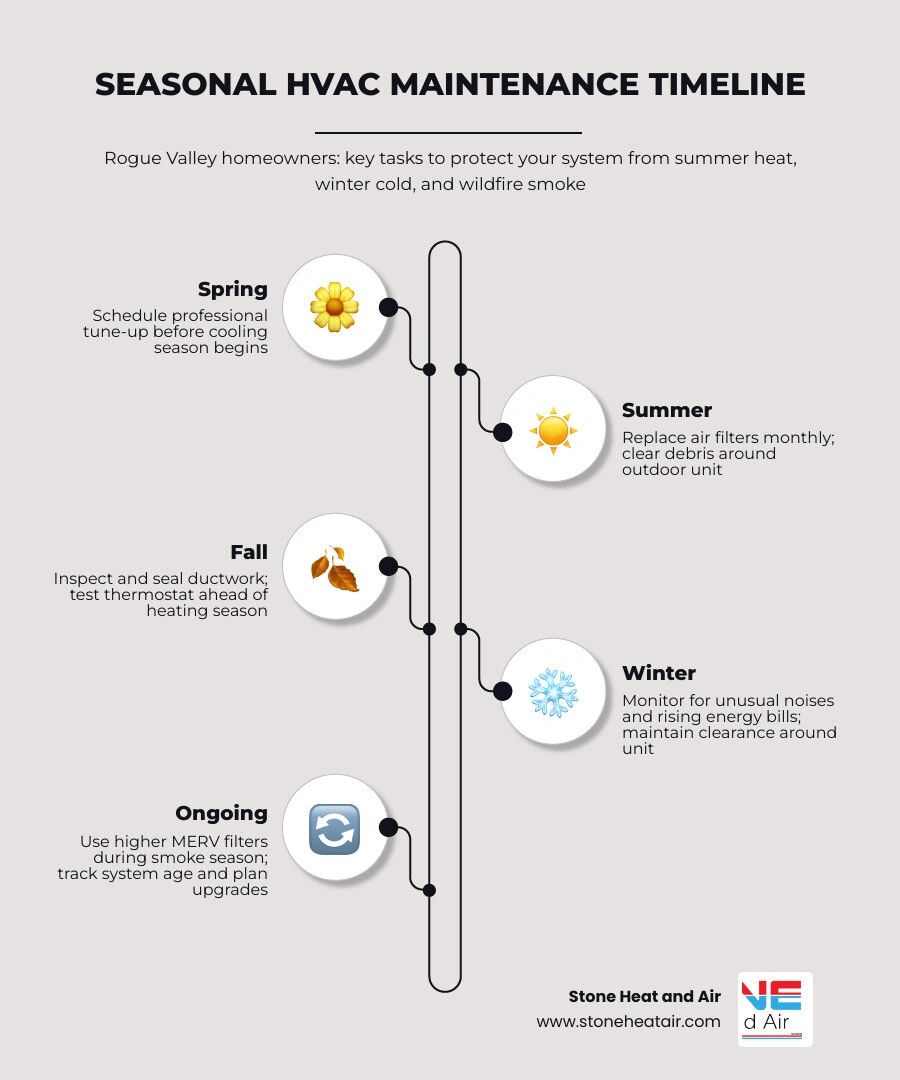
2. Schedule professional tune-ups twice a year — once in spring before cooling season, once in fall before heating season
3. Inspect and seal ductwork — leaky ducts waste 20–30% of conditioned air
4. Clear debris around your outdoor unit — maintain at least two feet of clearance
5. Test your thermostat before each season — catch problems before you need the system most
6. Watch for warning signs — unusual noises, uneven temperatures, or rising energy bills
7. Upgrade to a high-efficiency system — systems rated 16+ SEER can meaningfully cut annual energy costs
8. Protect indoor air quality — use higher MERV-rated filters during smoky conditions
9. Check vents and registers — keep them unobstructed for proper airflow
10. Know your system's age — most AC units last 10–15 years; plan ahead before a breakdown catches you off guard
Regular HVAC maintenance can improve system efficiency by 15–20% and extend equipment lifespan by 5–10 years. For Rogue Valley homeowners dealing with seasonal extremes and smoky summers, that kind of reliability isn't a luxury — it's a necessity. This checklist walks you through everything you need to keep your home comfortable year-round.
Hvac tips for rogue valley homeowners basics:
• how southern oregon climate affects your hvac system
• how wildfire smoke affects your hvac performance
Essential HVAC Tips for Rogue Valley Homeowners to Beat the Heat and Cold
Living in Southern Oregon means experiencing a beautiful but demanding climate. From the hot, dry summer afternoons in Central Point to the crisp, snowy winter mornings in Klamath Falls or the damp coastal breezes in Brookings, our home comfort systems have to be incredibly versatile.
Because our local weather swings from one extreme to the other, understanding how southern oregon climate affects your hvac system is the first step toward long-term comfort. When temperatures soar past 90 or 100 degrees in the summer, or drop below freezing in the winter, your heating and cooling setup works under immense pressure. Combine these temperature swings with our annual wildfire season, and it is easy to see why routine care is so critical to prevent unexpected system strain.
Seasonal Transitions: Preparing Your System for Fall and Winter
As the summer heat fades and the leaves start turning in the Rogue Valley, it is time to shift our focus from cooling to heating. Preparing your furnace or heat pump before the first true cold snap hits is the best way to ensure you are not left shivering.
We always recommend starting with a simple system test in early autumn. Turn your thermostat to heating mode and set it a few degrees higher than the current room temperature. Listen closely as the system starts up. Do you hear any unusual rattles, squeals, or thumps? Is there a brief dusty smell? A faint burning smell is normal for the first few minutes as accumulated dust burns off the heating elements, but if that smell persists or if you hear strange noises, it is time to call in the professionals.
For a detailed step-by-step breakdown of how to prepare for the colder months, check out our guide on tips for preparing your hvac for winter. Taking these small steps early in the season prevents the sudden system failures that often happen on the coldest day of the year.
Beyond basic testing, clearing the area around your heating equipment is vital. Ensure that no storage boxes, holiday decorations, or cleaning supplies are crowded around your indoor furnace or heat pump unit. To dive deeper into the transition process, read about the best way to prep your hvac system for fall/winter to make sure your system operates safely and efficiently all winter long.
Spring and Summer Readiness: Keeping Cool in Southern Oregon
When spring arrives in the Rogue Valley, we get a brief, beautiful window to prep our homes before the intense summer heat rolls in. Skipping spring preparation can lead to poor cooling efficiency, high energy bills, and a system that struggles to keep up when the outdoor thermometer climbs.
Start your spring prep by walking outside and inspecting your outdoor condenser unit. Over the winter, leaves, twigs, and weeds can accumulate around the base. Clear away any vegetation, and maintain at least a two-foot clearance around the entire unit. This simple step ensures that heat can dissipate properly, preventing your compressor from overheating.
Optimizing indoor airflow is just as important. Make sure all supply vents and return registers are open and completely unobstructed by furniture, rugs, or drapes. Closing off vents in unused rooms actually increases pressure within the ductwork, which can reduce system efficiency and even cause your cooling coils to freeze. For more practical advice on getting your cooling system ready, check out our comprehensive list of hvac maintenance tips for southern oregon homeowners.
Maximizing Efficiency and Indoor Air Quality
A well-maintained HVAC system does more than just regulate the temperature in your home; it also controls the quality of the air you breathe and directly impacts your monthly utility expenses. In Southern Oregon, where dust, pollen, and seasonal wildfire smoke are common, focusing on air filtration and system efficiency is essential.
To keep your system running smoothly and safely, you must protect it from the elements. Dust and dirt are the primary enemies of sensitive HVAC components, leading to restricted airflow and premature wear. You can learn more about how to safeguard your equipment by reading our guide on how to protect your hvac system from dust and dirt.
Air Quality and Wildfire Smoke HVAC Tips for Rogue Valley Homeowners
Wildfire smoke has unfortunately become a regular part of our summers in the Rogue Valley. During smoky days, the air is filled with fine particulate matter that can easily find its way into your home, affecting your health and putting extreme stress on your heating and cooling system.
To keep your indoor air clean, we recommend upgrading to a high-efficiency air filter with a Minimum Efficiency Reporting Value (MERV) rating of 11 or 13. These filters are dense enough to trap fine smoke particles without restricting the airflow of most modern HVAC systems. During active wildfire events, keep your windows and doors firmly closed, and set your thermostat fan setting to "On" or "Circulate" rather than "Auto." This keeps the air continuously moving through your high-efficiency filter, cleaning your indoor air even when the system isn't actively heating or cooling.
For a complete strategy on managing your home comfort during the worst of the summer smoke, read our detailed article on how to keep your hvac running during smoky days.
Reducing Energy Consumption with Smart HVAC Tips for Rogue Valley Homeowners
Heating and cooling make up the largest portion of the average home's energy use. Fortunately, there are several highly effective ways to reduce your energy consumption without sacrificing your comfort:
• Install a Smart Thermostat: Programmable and smart thermostats allow you to set schedules that automatically adjust temperatures when you are asleep or away from home.
• Seal Your Ductwork: In a typical home, duct leaks can waste 20% to 30% of conditioned air. Sealing these leaks ensures that the air you pay to heat or cool actually reaches your living spaces.
• Optimize Seasonal Settings: Adjust your thermostat settings to align with the changing seasons. For example, during autumn, setting your thermostat a few degrees lower when you are under the covers can lead to noticeable savings. Discover more ideas on how to run your hvac efficiently in the fall.
Professional Maintenance vs. Routine Homeowner Care
While there are plenty of tasks you can handle on your own, a truly reliable HVAC system requires a balance of regular DIY care and professional expertise. Think of it like owning a car: you can check the oil and wash the windshield yourself, but you still need a professional mechanic for safety inspections and complex tune-ups.
Scheduling annual professional maintenance is one of the smartest investments you can make. It helps prevent major breakdowns, keeps your system running at peak efficiency, and is often required by manufacturers to keep your equipment warranty valid. To understand the long-term benefits of these check-ups, explore our guide on how to extend the life of your hvac system.
To help you stay on top of your system's needs, we recommend reviewing our pre-fall and winter hvac maintenance tips you need to know. To see how these responsibilities break down, refer to the comparison table below:
• Replace air filters monthly or quarterly — Professional Maintenance (By Us): Measure and adjust refrigerant charge
• Clear debris from around the outdoor unit — Professional Maintenance (By Us): Inspect and tighten electrical connections
• Keep indoor vents and registers unobstructed — Professional Maintenance (By Us): Clean and calibrate burner assemblies
• Monitor the home for uneven heating or cooling — Professional Maintenance (By Us): Clean evaporator and condenser coils
• Test thermostat batteries and basic functions — Professional Maintenance (By Us): Clear and flush condensate drain lines
• Clean dust from return air grilles — Professional Maintenance (By Us): Perform comprehensive safety and carbon monoxide checks
Warning Signs Your System Needs Professional Repair
Even with diligent maintenance, HVAC systems can occasionally experience issues. Catching these problems early can mean the difference between a quick adjustment and a major, stressful system replacement. Watch for these common warning signs:
• Strange Noises: Squealing, grinding, rattling, or banging noises are clear indicators that a component is loose, worn out, or failing.
• Uneven Temperatures: If your living room is freezing while your bedroom is stifling, your system is struggling to distribute air properly.
• Short Cycling: If your heater or air conditioner turns on and off rapidly without ever finishing a full cycle, it is placing extreme wear on the compressor and motor.
• Spiking Utility Bills: A sudden, unexplained jump in your monthly energy bills usually means your system is working much harder than it should to keep up with demand.
Frequently Asked Questions About Rogue Valley HVAC Care
How often should I replace my HVAC air filters?
For most Rogue Valley homes, we recommend replacing your air filters every 60 to 90 days. However, during peak usage seasons—like the hottest weeks of summer or the coldest stretches of winter—you should check them monthly. If you have pets, or if our region is experiencing heavy wildfire smoke, you will need to replace them every 30 days to prevent restricted airflow and maintain healthy indoor air quality.
What are the benefits of upgrading to a high-efficiency heat pump?
Upgrading to a high-efficiency heat pump is an excellent option for our local climate. Unlike traditional systems, heat pumps transfer heat rather than creating it, making them incredibly energy-efficient. Modern heat pumps operate beautifully in both our hot summers and cold winters, providing quiet, consistent comfort while significantly lowering your monthly utility bills.
How does wildfire smoke affect my heating and cooling system?
Wildfire smoke is packed with ash, soot, and fine particulate matter. When your system pulls this smoky air in, these particles quickly clog your air filter. A heavily clogged filter restricts airflow, forcing your system to work much harder to circulate air. This extra strain can cause your system to overheat, increase your energy bills, and potentially lead to blower motor failure.
Conclusion
Keeping your home comfortable through every Southern Oregon season does not have to be a source of stress. By staying consistent with simple DIY tasks and partnering with a trusted local team for professional maintenance, you can enjoy absolute peace of mind year-round.
At Stone Heating & Air, we are proud to serve families throughout Central Point, the Rogue Valley, and our surrounding Southern Oregon communities. We believe in honest, fair dealings, meticulous attention to detail, and treating your home just like we would treat our own. For uninterrupted comfort and extra savings, we invite you to learn about our exclusive Stone Comfort Membership Club, which includes regular tune-ups, priority scheduling, and discounts on repairs. And should you ever face a sudden system failure, our dependable team is standing by with 24/7 emergency service to get your home back to the perfect temperature.
Ready to get your heating and cooling system in peak condition? Schedule your professional HVAC service with Stone Heating & Air today!