

Why Southern Oregon's Climate Is Unusually Hard on HVAC Systems
How southern oregon climate affects your hvac system comes down to one simple reality: your equipment has to work harder, in more extreme conditions, than almost anywhere else in the Pacific Northwest.
The Rogue Valley swings from freezing, moisture-heavy winters to summers that regularly push past 90°F — and increasingly beyond 100°F. The 2021 heat dome brought temperatures as high as 116–118°F across Oregon, killing over 100 people, many of them in homes without working cooling. That event wasn't a fluke. It was a preview.
Here's a quick look at the key ways the local climate puts stress on your heating and cooling equipment:
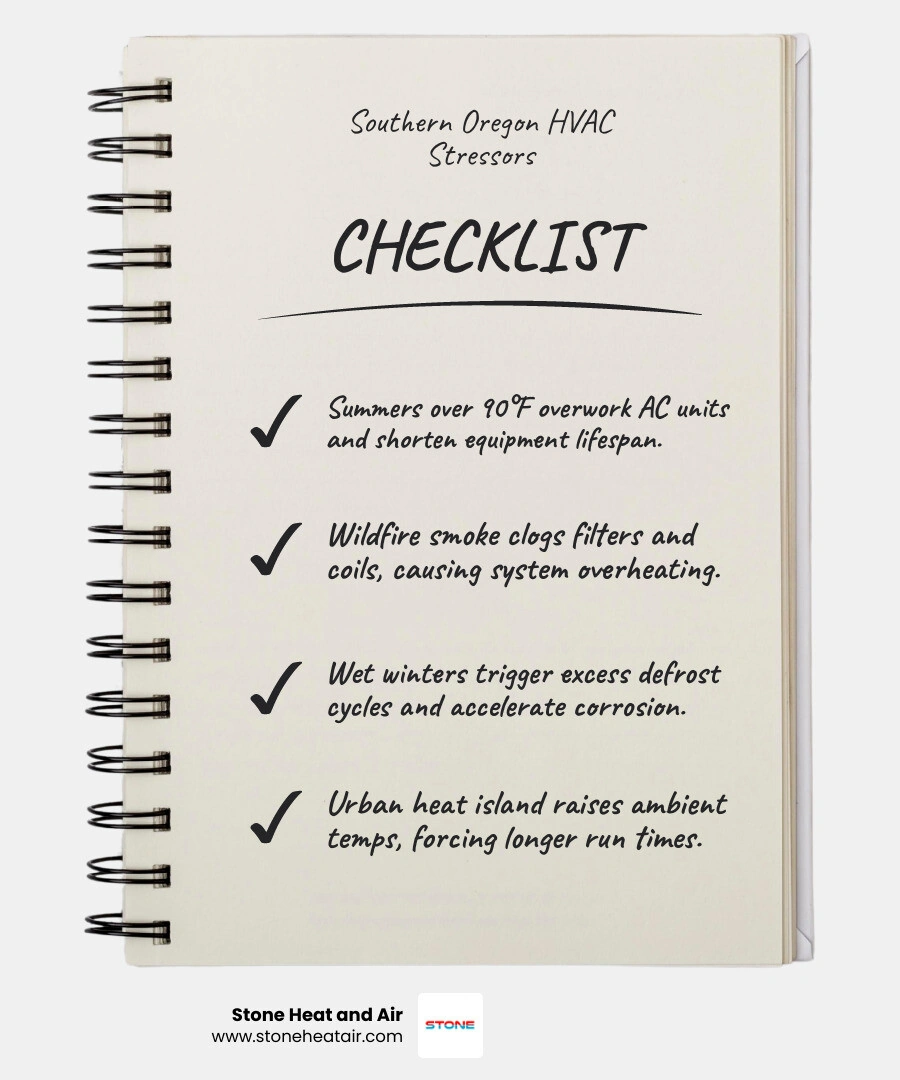
• Summers over 90°F (rising fast) — Impact on Your HVAC System: Overworks AC units, shortens equipment lifespan
• Wildfire smoke and ash — Impact on Your HVAC System: Clogs filters and coils, causes overheating
• Wet, mild winters with frost — Impact on Your HVAC System: Triggers excess defrost cycles in heat pumps, accelerates corrosion
• Urban heat island (Medford) — Impact on Your HVAC System: Raises ambient temps, forces systems to run longer
• Older and manufactured housing — Impact on Your HVAC System: Poor insulation means systems strain even harder to keep up
• Power outages from wildfires — Impact on Your HVAC System: Leaves residents without cooling during the most dangerous days
By mid-century, Southern Oregon is projected to see anywhere from 25 to 48 days per year over 90°F — up from a historical average of just 13. The Medford area is expected to be hit especially hard. That's not a distant problem. It's already reshaping what homeowners here need from their HVAC systems right now, in April 2026 and beyond.
Whether you have a heat pump, central AC, or a ductless mini-split, understanding how this region's weather works against your equipment is the first step to staying comfortable year-round — without getting caught off guard by a breakdown on the hottest or coldest day of the year.
How southern oregon climate affects your hvac system during summer extremes
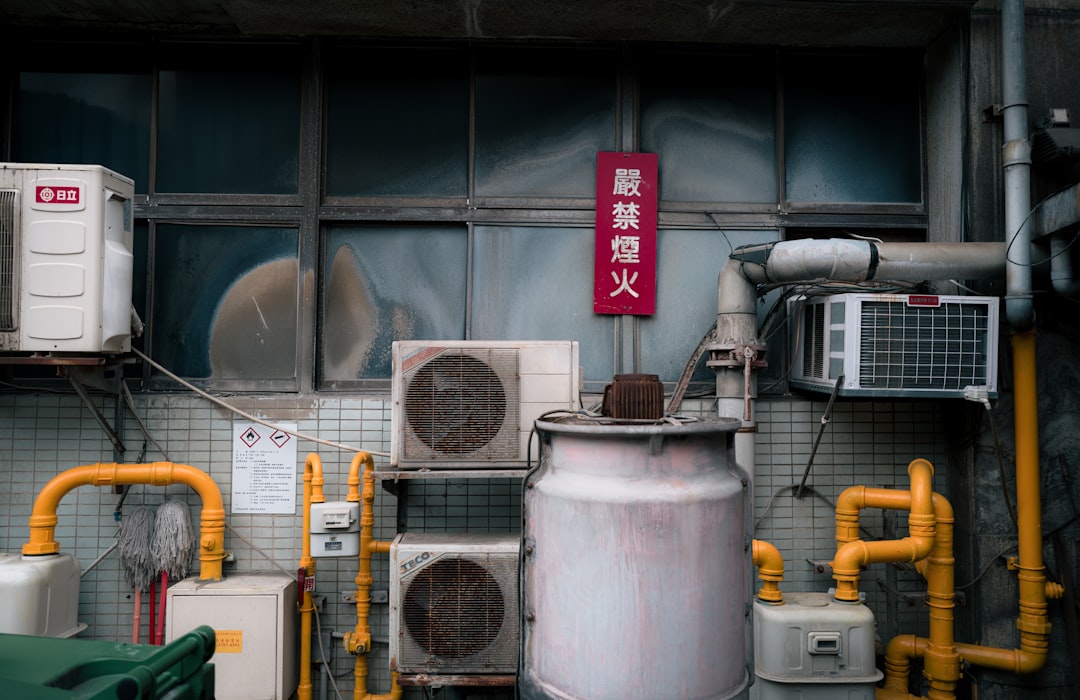
When we talk about summer in the Rogue Valley, we aren't just talking about a few warm afternoons. We are talking about sustained, intense heat that pushes mechanical systems to their absolute limits. In areas like Medford, the "urban heat island" effect makes things even tougher. Buildings, roads, and parking lots absorb heat during the day and radiate it back at night. This means your air conditioner doesn't get the "nightly break" it might get in a more rural, shaded part of Southern Oregon.
Historically, Oregon's mean summer maximum temperature was around 79.1°F. However, we are seeing projections of a 5.6°F to 7.5°F increase statewide. In Medford and Central Point, this translates to more frequent "triple-digit" days. When it’s 105°F outside, your AC unit has to work significantly harder to maintain a 72°F indoor temperature. This creates a massive "temperature delta" that puts immense pressure on the compressor and the refrigerant levels.
This constant high-speed operation is exactly How Your Air Conditioner Gets Stressed During The Summer. The internal components wear down faster, and any small existing issue—like a tiny refrigerant leak or a worn capacitor—will quickly turn into a total system failure when the sun is beating down. We often see systems that were "fine" in May suddenly give up the ghost in July because they simply weren't prepared for the Environmental Factors Impacting Hvac Maintenance that define our local summers.
How southern oregon climate affects your hvac system during wildfire season
Wildfires have unfortunately become a seasonal reality in Southern Oregon. While we all worry about the air we breathe, we often forget that our HVAC systems are breathing that same air. During a heavy smoke event, the air is thick with PM2.5 particles—microscopic bits of ash, soot, and charred organic material.
Your air filter is your first line of defense, but during wildfire season, a filter that usually lasts three months might clog in three days. When the filter is packed with ash, your system can’t "inhale." This causes the motor to work overtime to pull air through the blockage, leading to overheating and potential motor burnout.
It isn't just the indoor filter, either. Ash and dust settle on your outdoor condenser coils. These coils are responsible for releasing the heat from your home into the outside air. If they are coated in a layer of gray ash, they act like a thermal blanket, trapping the heat inside the system. This is a major reason why we emphasize the need to Protect Your Hvac System From Dust And Dirt.
Additionally, Southern Oregon deals with Cottonwood Fluff in the late spring. This white, sticky fuzz acts like a sweater for your outdoor unit, further complicating airflow just as the temperatures start to climb. Understanding How Cottonwood Season Can Affect Your Air Conditioner and How Wildfire Smoke Impacts Hvac Maintenance Needs is essential for anyone living in the Rogue Valley or Roseburg areas.
How southern oregon climate affects your hvac system in manufactured homes
Manufactured and mobile homes are a vital part of the housing landscape in Jackson and Josephine Counties, but they face unique HVAC challenges. These homes often have thinner walls, less attic insulation, and "leaky envelopes" where air escapes easily.
For residents in these homes, the energy burden is disproportionately high. Because the home loses cool air so quickly, the HVAC system almost never cycles off. This constant "short cycling" or non-stop running leads to premature equipment death. Furthermore, older manufactured homes may have electrical limitations that make installing high-powered central AC difficult without significant upgrades.
In Josephine County, surveys have shown that a high percentage of residents in these housing types lack adequate permanent cooling. This is why we often recommend specialized services like ductless mini-splits for these homes. They are highly efficient, don't require bulky ductwork that often leaks in mobile home crawlspaces, and can handle the extreme heat of a Southern Oregon summer much more effectively than a window unit or an aging central system.
Winter moisture and freezing cycles in the Rogue Valley
While our summers are famous for heat, our winters bring a different kind of stress: moisture and "freeze-thaw" cycles. In places like Ashland, we see an average of 13 inches of snow, but more commonly, we see cold, wet rain that hovers just above or below freezing.
For those using heat pumps—which are incredibly popular in the Rogue Valley—this moisture is a challenge. When it’s 35°F and raining, that moisture can freeze onto the outdoor coils. Your heat pump is designed to handle this by entering a "defrost mode," where it temporarily reverses its operation to melt the ice. However, in our damp climate, a system might enter defrost mode far more often than it would in a dry, cold climate like Eastern Oregon.
Excessive defrost cycles can wear on the reversing valve and reduce the overall efficiency of your heating. Furthermore, for our friends in coastal-influenced areas like Brookings, the salt-heavy moisture can accelerate corrosion on electrical terminals and metal components. This is why it’s so important to understand the Common Types Of Winter Storm Damage To Hvac Systems and How Snow Ice Can Damage Your Hvac System.
Even though it’s wet outside, you might notice that the air inside your home feels incredibly dry during the winter. We often get asked, Why Is Winter Air Drier? Cold air simply can't hold as much moisture as warm air. When that cold air leaks into your home and is heated up, the relative humidity drops, which can irritate your skin and sinuses and actually make you feel colder than you really are, tempting you to crank the heat even higher.
Structural strains and housing vulnerabilities
The efficiency of your HVAC system is only as good as the box it’s sitting in. Southern Oregon has a wide variety of housing stock, from historic homes in Medford and Ashland to newer developments in Central Point.
The Heat Vulnerability Index helps us identify areas where residents are at the highest risk. This index takes into account things like tree canopy cover, the age of the housing, and the local "micro-climate." For example, a home in a shaded part of the Rogue Valley will have a much lower cooling demand than a home in a sun-drenched, uninsulated manufactured home park in Josephine County.
• Manufactured Homes — Typical Cooling Challenge: Poor insulation, leaky ducts, high "envelope" loss — Energy Intensity: Very High
• Older Residential — Typical Cooling Challenge: Electrical limitations, lack of modern ductwork — Energy Intensity: High
• Multifamily Housing — Typical Cooling Challenge: Shared walls help with heat, but "Urban Heat Island" effect is high — Energy Intensity: Medium
• Modern Construction — Typical Cooling Challenge: Better sealing, but often oversized systems that short-cycle — Energy Intensity: Low-Medium
Beyond the structure, we also have to consider the environment. Our region is Dustier During Different Times of the year, particularly during the dry "shoulder" seasons. This dust, combined with the lack of weatherization in older homes, means your HVAC system isn't just fighting the temperature—it's fighting the very air around it.
Peak demand during heatwaves also puts a strain on the electrical grid. In Southern Oregon, we've seen how wildfires can lead to power outages or "Public Safety Power Shutoffs." When the power goes out during a 110°F day, your HVAC system obviously stops working, but the real danger is how quickly an uninsulated home can reach life-threatening temperatures.
Proactive solutions for year-round comfort
So, how do we fight back against the how southern oregon climate affects your hvac system? We look for equipment and strategies that are specifically designed for high-variability environments.
1. Ductless Heat Pumps (Mini-Splits): These are the "gold standard" for many Southern Oregon homes. They are incredibly efficient at both heating and cooling. Because they don't rely on ducts, you don't lose 20-30% of your energy to leaks in the attic or crawlspace. They are ideal for manufactured homes and older residences where adding ductwork is impossible.
2. Weatherization: Before you buy a bigger AC, seal your home. Adding insulation and sealing air leaks can reduce the load on your HVAC system by up to 30%. This makes the system's job much easier during those 100-degree Medford afternoons.
3. Passive Cooling: Your yard plays a huge role. Planting deciduous trees on the south and west sides of your home provides shade in the summer but allows sun through in the winter. Just remember that How Can Yard And Lawn Maintenance Affect Your Hvac System matters—keep shrubs at least two feet away from your outdoor unit to ensure it can "breathe."
4. Smart Thermostats: These allow you to manage your home's temperature more precisely. In a climate where it might be 50°F in the morning and 95°F by 4:00 PM, a smart thermostat can adapt to these swings automatically.
5. Spring Maintenance: Don't wait for the first heatwave. We often see that How Do Spring Rains Affect My Acs Performance can include debris buildup and moisture issues that need to be cleared out before the summer stress begins.
Frequently Asked Questions about Southern Oregon HVAC Performance
Why does my heat pump enter defrost mode so often in winter?
In the Rogue Valley, our winter air is often very damp. When that moisture hits the cold coils of your heat pump, it turns to frost. The system must enter defrost mode to melt that ice so it can continue to pull heat from the outside air. If it's doing this every 30-60 minutes during a cold snap, it's usually normal, but if it stays in defrost mode or doesn't clear the ice, it’s time to call in the pros.
How does the Medford urban heat island affect my cooling bills?
Because Medford has a high concentration of asphalt and concrete, the "ambient" temperature around your home can be 5–10 degrees higher than in the surrounding countryside. This means your AC has to run longer into the night to reach your thermostat setting, leading to higher energy consumption compared to a home in a more rural area like Applegate or outside Klamath Falls.
What are the best ways to protect my system from wildfire smoke?
First, upgrade to a high-quality pleated filter (MERV 11 or 13, if your system can handle it). Second, keep your windows and doors closed. Third, check your filter every two weeks during a smoke event—you'll be surprised how quickly it turns black. Finally, once the smoke clears, give your outdoor unit a gentle rinse with a garden hose to remove ash from the coils.
Conclusion
At Stone Heat Air, we live and work in the same climate you do. We know exactly what a 110-degree day in Central Point feels like, and we know the stress it puts on your family and your equipment. Whether you are in the heart of the Rogue Valley, over in Roseburg, or dealing with the unique coastal conditions of Brookings, we are here to help.
Our mission is to provide honest, fair dealings and the kind of reliability you can only get from a local expert. We offer 24/7 emergency service because we know that HVAC systems don't wait for "business hours" to break down during a heatwave. For the ultimate peace of mind, we invite you to join our Stone Comfort Membership Club, which ensures your system gets the proactive care it needs to survive the Southern Oregon climate year-round.
Want to learn more about our team and our commitment to your comfort? Check out our About Us page, or see if we’re in your neighborhood by visiting our Service Areas list. If you're ready to upgrade your home's resilience against the elements, let's talk about the best hvac solutions for your specific needs. Stay cool, stay warm, and let us treat your home like ours.