
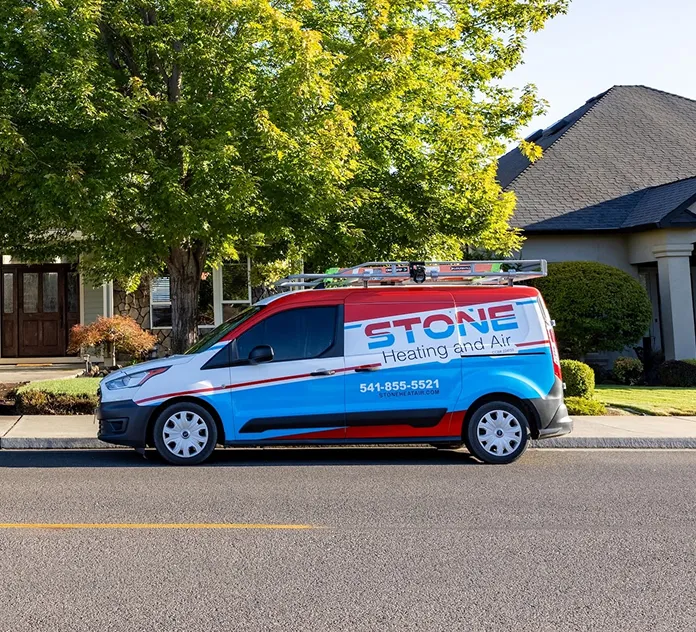
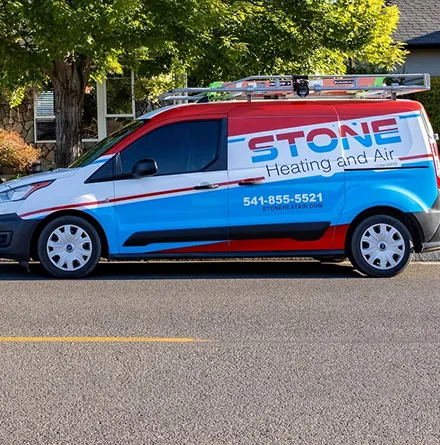

If your AC refuses to turn on, blows warm air, or cycles on and off nonstop, you need a fast and accurate diagnosis — not a guessing game. A malfunctioning air conditioner turns your home into an oven and only gets worse with delays. Stone Heating & Air provides expert AC repair in White City, OR, to pinpoint the problem and fix it right the first time.
Our technicians arrive ready to solve it on the spot:
- Complete system diagnostics to identify the exact failure point.
- Compressor, capacitor, and refrigerant leak repairs with upfront pricing.
- Evaporator and condenser coil cleaning and replacement.
- Emergency service available for after-hours cooling failures. Call Stone Heating & Air at (541) 855-5521 or schedule AC repair in White City today.
Immediate Response and Comprehensive Diagnostics
When you request service for a broken cooling unit, the goal is to minimize downtime. The process begins with dispatching a qualified technician to your location in White City or the surrounding areas. Unlike general handymen, professional HVAC technicians arrive in vehicles stocked with common parts, including capacitors, contactors, and refrigerant, which allows most repairs to be completed during the initial visit.
The diagnostic phase is the most critical part of the appointment. A technician does not guess; they use calibrated tools to measure pressures, temperatures, and electrical voltage. This ensures that the part being replaced is actually the source of the problem, rather than a symptom of a deeper issue. For example, a blown capacitor might be caused by an overheating compressor or a dirty coil. Simply changing the capacitor without addressing the underlying cause will only lead to another breakdown a few days later.
Stone Heating and Air prioritizes a thorough inspection of the entire system. This includes checking the thermostat communication, inspecting the ductwork for major leaks that compromise efficiency, and ensuring the outdoor condensing unit is free of debris that restricts airflow. Once the assessment is complete, you receive a clear explanation of the issue and a fixed quote for the necessary repairs.

The AC Repair Process: From Assessment to Airflow
Restoring your cooling system involves a methodical procedure designed to ensure safety and efficiency. We adhere to strict protocols to ensure every repair meets local codes and manufacturer specifications.
- Initial System Assessment: The technician begins by listening to the unit and checking the thermostat settings. They will gauge the temperature difference between the supply and return air to determine how well the system is removing heat.
- Electrical and Mechanical Testing: Using multimeters and gauges, the technician tests safety switches, the compressor’s amp draw, and the condition of the fan motor. This identifies if the failure is electrical or mechanical.
- Leak Detection and Refrigerant Check: If the system is low on refrigerant, it indicates a leak. Technicians use electronic sniffers or dye tests to locate the escape point before recharging the system, as simply adding fluid without fixing the leak is a violation of environmental regulations.
- Component Replacement: Once the issue is isolated and approved, the faulty component is removed and replaced. This may involve soldering lines, replacing electrical relays, or cleaning fouled coils.
- System Validation: After the repair is made, the system is run through a full cycle. The technician verifies that the system cycles on and off correctly and that the output temperature is within the optimal range.
Common Cooling System Failures
Understanding what often goes wrong helps in recognizing why professional intervention is necessary — visit our FAQs for help. In the dry, hot climate of Southern Oregon, systems work harder and longer, leading to specific types of wear and tear.
- Refrigerant Leaks: The refrigerant is the lifeblood of your AC. It is not consumed like gas in a car; it circulates in a closed loop. Low levels mean there is a leak that must be sealed.
- Frozen Evaporator Coils: This is usually caused by restricted airflow due to dirty air filters or low refrigerant levels. When the coil freezes, the system cannot absorb heat, and the ice can damage the compressor.
- Electrical Control Failure: Compressors and fan controls can wear out, especially when the system cycles on and off frequently during oversized or undersized operation. Corrosion on terminals is also a common culprit.
- Sensor Problems: Room air conditioners feature a thermostat sensor located behind the control panel. If the sensor is knocked out of position, the unit could cycle constantly or behave erratically.
- Drainage Issues: The condensate drain removes moisture from the air. In humid conditions or if the line is clogged with algae, the drain can back up, triggering a safety float switch that shuts the entire system down to prevent water damage.
Deciding When to Repair vs. Replace
Homeowners often struggle with the decision of whether to pour more money into an aging unit or invest in a new system — read our blog for advice. While our primary goal is to repair your existing equipment, there are mathematical and practical thresholds where replacement becomes the smarter financial move.
- The 5,000 Rule: A common industry benchmark involves multiplying the age of the unit by the cost of the repair. If the total exceeds $5,000, replacement is generally the better investment. For example, a $500 repair on a 12-year-old unit (12 x 500 = 6,000) suggests replacement is wise.
- Refrigerant Type: If your system uses R-22 (Freon), which has been phased out due to environmental regulations, repair costs involving refrigerant will be astronomically high. Upgrading to a system that uses R-410A or newer refrigerants is more cost-effective.
- Frequency of Breakdowns: If you have required repairs more than twice in the last two years, the system is likely approaching the end of its reliable lifespan. A new system offers the security of a manufacturer’s warranty.
- Energy Efficiency (SEER Ratings): Older units likely have a SEER rating of 10 or 12. Modern standards require higher efficiency. Replacing an old unit can drop monthly energy bills significantly, offsetting the monthly cost of financing a new system.
Local Considerations: Utilities, Permits, and Climate
Operating an air conditioner in White City requires attention to specific regional factors. The local climate, characterized by wet, mild winters and hot, dry summers, places unique stress on outdoor units. During the transition from the rainy spring to the dry summer, outdoor condenser coils often become clogged with pollen, dust, and dried mud, which drastically reduces efficiency before the peak heat arrives.
- Permitting and Codes: Significant repairs, particularly those involving the replacement of a compressor or the installation of a new outdoor unit, may require adherence to local building codes. Professional technicians ensure that all electrical connections meet safety standards and that refrigerant handling complies with EPA regulations.
- Electrical Stability: During heatwaves, the local grid experiences high demand. Ensuring your unit has a "hard start kit" or proper capacitor support can protect the compressor from voltage drops or surges that occur during peak usage hours.
- Utility Incentives: Local utility providers often offer rebates or incentives for upgrading to high-efficiency systems or performing specific maintenance tasks that reduce load on the grid. We stay updated on these programs to help you maximize savings.
Why Professional Service Matters
Attempting DIY repairs on high-voltage equipment is dangerous and often voids manufacturer warranties. Modern HVAC systems are complex machines that integrate advanced electronics with high-pressure gas systems. Professional service ensures that your property is respected and that the job is done right the first time — see our reviews for proof.
Technicians undergo rigorous training to stay current with the latest technology, from variable-speed compressors to smart thermostat integration. When Stone Heating and Air performs a service, we utilize drop cloths and shoe covers to protect your flooring, and we leave the workspace as clean as we found it. The difference between a quick fix and a professional repair lies in the attention to detail—checking not just the broken part, but the health of the entire system to prevent future failures.
Restore Your Comfort Today
You do not have to endure another hour of uncomfortable heat. A broken air conditioner disrupts your sleep, your productivity, and your peace of mind. By choosing a professional repair service, you are investing in the longevity of your home’s cooling system and the comfort of your family. Whether it is a simple electrical fix or a complex compressor issue, we provide the expertise needed to get your system running efficiently again.
Stop sweating out the summer and get the professional help your home needs. Contact us today to schedule your AC repair service.
- Book Expert Service Or Contact Us