

When your HVAC system stops heating, won't cool, or starts making alarming noises, you need a technician who can diagnose the actual problem — not someone who replaces parts until something works. Misdiagnosis wastes your money and leaves you uncomfortable. Stone Heating & Air provides accurate, efficient HVAC repair in Jacksonville, OR, for all system types and brands.
We find the problem fast and fix it right:
- Detailed diagnostics using pressure testing and electrical analysis.
- Heating and cooling component repair and replacement.
- Thermostat, airflow, and ductwork troubleshooting.
- Emergency HVAC repair for urgent failures. Call Stone Heating & Air at (541) 855-5521 or schedule HVAC repair in Jacksonville today.
What Our HVAC Repair Includes: Speed, Efficiency, Reliability
When you request a repair service, you are looking for a comprehensive solution that addresses the root cause of the failure, not just a bandage on the symptom. Our service protocol is designed to be thorough, identifying mechanical, electrical, and airflow issues that plague systems in Jacksonville. The primary goal is restoring your unit to factory specifications, ensuring it can handle the heavy latent heat load required to dehumidify your home effectively.
Comprehensive System Diagnostics
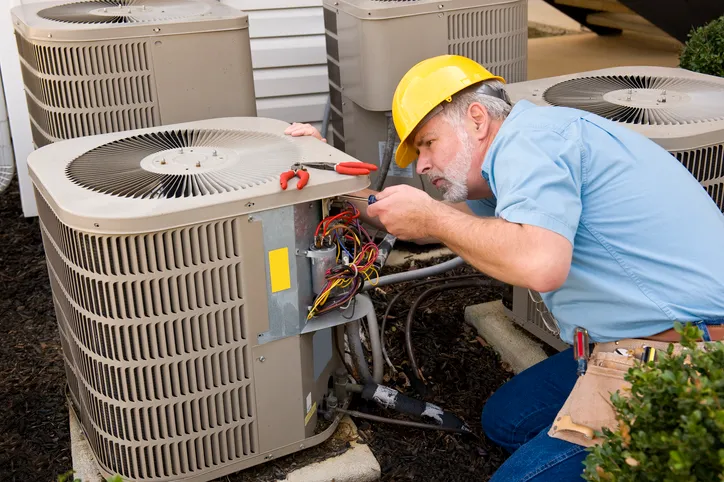
The repair process begins with a total system evaluation. We do not guess; we measure. Technicians utilize advanced diagnostic tools to test static pressure, refrigerant levels, and electrical voltage. This granular approach allows us to pinpoint issues such as micro-leaks in the evaporator coil or intermittent failures in the capacitor. By identifying these issues early, we prevent catastrophic compressor failure down the road.
Component Repair and Replacement
An HVAC system is a complex assembly of moving parts. Our service covers the repair and replacement of critical components including:
- Compressor Units: We diagnose hard starts, grounding issues, and mechanical seizing to determine if the heart of your system can be salvaged.
- Blower Motors: We address airflow restrictions caused by failing motors, ensuring conditioned air reaches every room in your house.
- Refrigerant Management: If your system is low on refrigerant, simply adding more is illegal and ineffective. We locate the leak, repair the seal, and recharge the system to the precise manufacturer specifications.
- Electrical Controls: From contactors to circuit boards, we replace faulty wiring and controls that cause intermittent shut-offs.
Airflow and Ductwork Optimization
A working unit is useless if the air cannot travel efficiently. Part of our repair scope involves checking the integrity of your ductwork and the cleanliness of your coils. In humid climates, biological growth on coils can severely restrict airflow. We clean and sanitize these components to ensure your system isn't working harder than necessary, which directly translates to lower energy consumption and extended equipment life.
Streamlined Process from Diagnosis to Solution
We recognize that when your HVAC system is down, time is of the essence. We have refined our operational workflow to minimize downtime and maximize transparency. You will never be left wondering about the status of your repair or the arrival time of your technician.
- First, Initial Assessment: Upon arrival, the technician conducts a visual and mechanical inspection. This involves checking the thermostat calibration, inspecting the outdoor condenser unit for debris or damage, and assessing the indoor air handler. This step creates a baseline for performance and safety.
- Next, Detailed Proposal: Once the problem is isolated, you receive a detailed explanation of the failure. We present a clear scope of work that outlines the necessary parts, the labor required, and the total cost. You approve the work before any tool touches your equipment. There are no surprise billings or unauthorized repairs.
- Then, Execution and Repair: With your approval, the technician proceeds with the repair using OEM (Original Equipment Manufacturer) or high-quality equivalent parts. Our trucks are stocked with common components to facilitate same-day repairs whenever possible. We adhere to strict safety protocols, ensuring all electrical connections are secure and refrigerant is handled according to EPA regulations.
- Finally, System Testing and Validation: After the repair is complete, we do not simply leave. The system is cycled through multiple operational modes to ensure it maintains temperature, controls humidity, and cycles off correctly. We measure the temperature split between supply and return air to verify cooling or heating efficiency. Only when the system performance is validated do we consider the job complete.
Deciding Between Repair and Replacement: A Cost-Benefit Approach
One of the most difficult decisions a homeowner faces is whether to invest in a repair or commit to a full system replacement. This decision should be based on data and financial logic, not emotional pressure. Stone Heating and Air acts as a consultant in this process, helping you weigh the variables to make the most cost-effective choice for your property.
The 50% Rule and Age Factor
A standard industry benchmark is the "50% Rule." If the cost of the repair approaches 50% of the value of the system, or 50% of the cost of a new unit, replacement is often the smarter financial move. This is particularly true if your system is over 10 to 12 years old. In Jacksonville, the heavy usage of air conditioning year-round accelerates the aging process of HVAC units compared to milder climates. A 12-year-old unit here has seen significantly more runtime than a similar unit in the north.
Frequency of Breakdowns
Consider the history of the unit. Is this the first major repair, or have you required service calls every six months for the past two years? "Nickel and diming" a dying system is a drain on your finances. If a system has suffered a major component failure—like a compressor or heat exchanger—and has a history of smaller issues, a new system offers the benefit of a clean slate and a manufacturer’s warranty, eliminating repair costs for the foreseeable future.
Efficiency Ratings (SEER)
Older systems often have SEER (Seasonal Energy Efficiency Ratio) ratings of 10 or 12. Modern standards require a minimum of SEER 14 or higher in southern regions, with many high-efficiency units exceeding SEER 20. Replacing an aging, inefficient unit with a modern system can result in immediate energy savings of 20% to 40%. While a repair fixes the immediate mechanical issue, it does not improve the inherent efficiency of the design. If your energy bills have been steadily climbing, the return on investment for a new system may outweigh the cost of a temporary repair.
Adapting to Jacksonville: Climate Considerations for Your HVAC System
Operating an HVAC system in this region requires specific attention to environmental factors. The local climate is characterized by high heat and pervasive humidity, which creates a distinct set of challenges for residential and commercial systems.
Combatting High Humidity
The primary function of your AC in the summer is not just cooling, but dehumidification. High rainfall from June to September creates a moisture-rich environment. If your system is short-cycling (turning on and off too quickly) due to a need for repair or improper sizing, it fails to remove moisture from the air. This leads to a clammy indoor environment and promotes mold growth in ducts and on surfaces. Our repairs focus on ensuring long, steady run times that effectively pull moisture out of the air, protecting your home’s structure and indoor air quality.
Handling Mild Winters
While summers are intense, the winters are mild, with temperatures ranging from the mid-40s to mid-60s. This often leads to "disuse atrophy" for the heating components of your system. Homeowners may not turn on their heat strips or furnaces for months, only to find they have corroded or accumulated dust when finally needed. We ensure your system’s reversing valves (for heat pumps) and auxiliary heat sources are functional, ensuring seamless transitions between seasons.
Regulatory Compliance and Permits
Local building codes regarding HVAC work are stringent to ensure safety and energy conservation. Major repairs and replacements often require adherence to specific electrical and mechanical codes. We handle all compliance aspects, ensuring that your system meets current local standards. This is vital not only for safety but also for the resale value of your home; unpermitted HVAC work can cause significant issues during a property inspection.
Why Choose Us? Experience, Expertise, and Local Commitment
Selecting a service provider is about trust and technical competency. You need a team that understands the specific thermal dynamics of homes in this area and treats your property with respect.
- Technical Excellence: Our technicians undergo rigorous training and hold certifications that validate their expertise in modern HVAC technology. We stay updated on the latest diagnostic techniques and repair protocols for all major brands.
- Inventory and Preparedness: We understand that every minute your system is down is a minute of discomfort. Our service vehicles are stocked with a wide inventory of universal parts, filters, and refrigerants. This preparation allows us to resolve a high percentage of service calls on the very first visit, eliminating the wait for ordered parts.
- Respect for Your Home: We treat your property as if it were our own. Technicians use drop cloths, wear shoe covers, and maintain a clean workspace. We ensure that the only evidence of our visit is a perfectly working HVAC system.
When your comfort is on the line, you need a partner who delivers results, not excuses. Stone Heating and Air is dedicated to providing high-quality, reliable repair services that stand the test of time and the elements.
Restore Comfort Quickly and Confidently
A failing HVAC system can bring your home to a halt, especially during Jacksonville’s extreme heat and humidity. With rapid diagnostics, transparent pricing, and precision repairs, Stone Heating and Air ensures your system is restored to dependable performance as quickly as possible. Whether you need emergency service, long-term efficiency improvements, or expert guidance on repair vs. replacement, our team is ready to protect your comfort.
Don't let a broken HVAC system disrupt your life—contact us today to schedule your repair and restore your home's comfort immediately.
- Book Expert Service Or Contact Us