

If your AC refuses to turn on, blows warm air, or cycles on and off nonstop, you need a fast and accurate diagnosis — not a guessing game. A malfunctioning air conditioner turns your home into an oven and only gets worse with delays. Stone Heating & Air provides expert AC repair in Gold Hill, OR, to pinpoint the problem and fix it right the first time.
Our technicians arrive ready to solve it on the spot:
- Complete system diagnostics to identify the exact failure point.
- Compressor, capacitor, and refrigerant leak repairs with upfront pricing.
- Evaporator and condenser coil cleaning and replacement.
- Emergency service available for after-hours cooling failures. Call Stone Heating & Air at (541) 855-5521 or schedule AC repair in Gold Hill today.
Immediate Response and Comprehensive System Diagnostics
When you request service, the objective is to move from "broken" to "operational" with minimal friction. We do not offer vague time windows or temporary patch jobs. Our approach to air conditioning repair is rooted in forensic diagnostics. We do not simply swap parts until the unit works; we identify the root cause of the failure to prevent it from happening again next week.
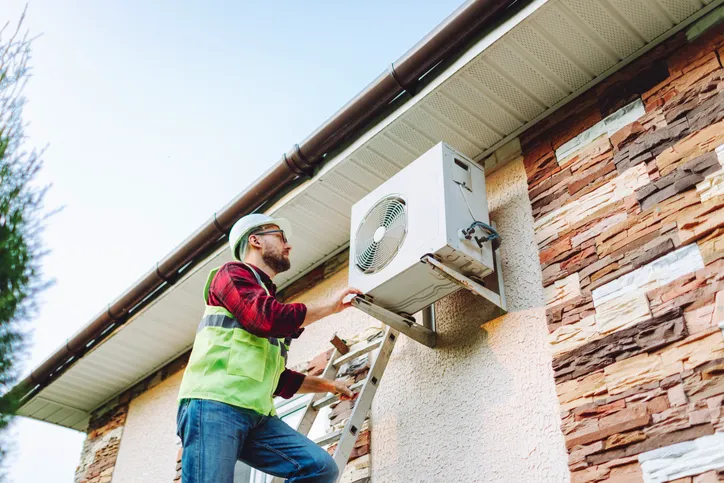
Upon arrival, a technician performs a systematic evaluation of your cooling infrastructure. This goes beyond checking the thermostat. We analyze the entire refrigeration cycle and electrical circuit.
- Airflow Analysis: We check static pressure and filter condition to ensure proper air volume is moving across the evaporator coil. Restricted airflow is a primary cause of compressor failure and frozen coils.
- Electrical Testing: We measure voltage and amperage on all motors and the compressor. Loose connections, pitted contactors, or weak capacitors are identified and replaced before they cause catastrophic component failure.
- Refrigerant Charge Verification: We check superheat and subcooling levels to ensure the refrigerant charge is to manufacturer specifications. Low refrigerant usually indicates a leak, which we locate and repair rather than just "topping it off."
- Condensate Drain Inspection: We ensure the condensate line is clear of algae and debris. A clogged drain can trigger safety switches that shut down the entire system or cause water damage to your home.
- Safety Control Testing: We verify that high-pressure switches, low-pressure switches, and internal overloads are functioning correctly to protect your expensive equipment.
Our Air Conditioning Repair Protocol
Transparency is the cornerstone of our service process. You will never receive a bill for work you did not authorize. We follow a strict operational protocol to ensure you are informed and in control at every stage of the repair.
- Arrival and Assessment: The technician arrives on time, wearing shoe covers and using drop cloths to protect your property. They listen to your observations regarding the unit's recent performance and any unusual sounds or smells.
- Diagnostic Findings: Once the inspection is complete, we present a detailed report of the findings. We explain exactly what part failed, why it failed, and what is required to fix it.
- Upfront Quoting: We provide a flat-rate price for the repair. The price includes parts, labor, and taxes. You know the final cost before any wrench is turned.
- Execution of Repair: With your approval, we proceed with the repair using OEM (Original Equipment Manufacturer) or high-quality equivalent parts. Our trucks carry a vast inventory of common components like contactors, capacitors, fan motors, and control boards to facilitate same-day completion.
- System Validation: After the repair, we do not just leave. We cycle the system, monitor the temperature drop (delta T) across the coil, and ensure the unit is running at peak efficiency.
- Site Cleanup: We remove all old parts, packaging, and debris. We leave your utility area exactly as we found it.
Deciding Between AC Repair and System Replacement
One of the most difficult decisions a homeowner faces is knowing when to stop repairing an aging unit and when to invest in a new system. While our primary goal is always to repair your existing equipment, there are mathematical and practical limits where repair becomes sunk cost.
We help you evaluate the viability of repair using the following specific criteria:
- The 50% Rule: If the cost of the repair approaches or exceeds 50% of the value of a new system, replacement is generally the wiser financial move.
- Equipment Age: Most air conditioners in our region last between 10 and 15 years. If your unit is over 12 years old and requires a major component like a compressor or condenser coil, replacement offers better long-term value.
- Refrigerant Type: Older systems use R-22 (Freon), which has been phased out and is exponentially expensive to replenish. If you have an R-22 system with a refrigerant leak, retrofitting or repairing is rarely cost-effective compared to installing a modern R-410A or R-32 system.
- Frequency of Breakdowns: If you have required repairs more than twice in the last two years, the system is likely entering its end-of-life phase. Continuing to repair it is simply paying for a system on the installment plan without getting a new warranty.
- Energy Efficiency: Modern systems typically start at 13 or 14 SEER (Seasonal Energy Efficiency Ratio) and go up to 20+. If your current unit is 10 SEER or lower, the energy savings from a new unit can help offset the monthly financing cost of a replacement.
If Stone Heating and Air determines that your system is unsafe or beyond economical repair, we will provide a no-pressure assessment of replacement options that fit your specific ductwork and cooling load requirements.
Local Climate Considerations and Efficiency Factors
Operating an AC unit in this region requires specific attention to environmental factors. The hot, dry summers place a significant thermal load on your condenser. Unlike humid climates where moisture removal is the primary energy drain, our local climate demands high sensible cooling capacity.
- High Ambient Temperatures: When the outdoor temperature spikes into the 90s, your AC unit works significantly harder to reject heat. A dirty condenser coil, which acts as the heat exchanger, can cause the head pressure to skyrocket, leading to compressor overheating. We emphasize coil cleaning as a critical repair and maintenance step.
- Dust and Debris: The dry environment often leads to increased dust and organic debris accumulating on the outdoor unit. This creates a "blanket" effect that insulates the coil and reduces efficiency.
- Ductwork Integrity: In many local homes, ductwork runs through unconditioned attics or crawlspaces. If your AC is running but the house isn't cooling, the issue might be heat gain through the ducts rather than a mechanical failure of the AC unit itself. Our diagnostics include checking for major duct leaks or disconnection.
- Electrical Grid Fluctuations: Summer storms and high demand on the local grid can cause voltage fluctuations. We often recommend and install hard start kits and surge protectors to shield your compressor from electrical damage.
Why Homeowners Trust Our Cooling Expertise
In a market saturated with options, reliability and technical competence are the only metrics that matter. We do not rely on gimmicks; we rely on results. Our team is composed of career technicians who view HVAC service as a skilled trade, not a sales opportunity.
- Technical Certification: Our staff undergoes continuous training on the latest inverter-driven compressors, communicating thermostat systems, and variable-speed air handlers. We can troubleshoot modern, complex systems just as effectively as older, single-stage units.
- Inventory Management: A technician is only as good as the parts they have on hand. Our fleet is stocked based on historical data of common failures in the area, ensuring we have the right capacitor, relay, or motor to get your system running immediately.
- Permit and Code Compliance: When a repair requires significant alteration to the system or electrical modifications, we ensure all work adheres to local building codes and safety standards. This protects your home’s value and ensures your insurance coverage remains valid.
- Respect for Property: We treat your home with absolute respect. From using floor savers to cleaning up every scrap of wire insulation, we ensure the only evidence of our visit is a cool, comfortable home.
Restore Your Comfort Now
A broken air conditioner is an emergency that affects your quality of life. Delaying repairs can lead to more extensive damage to the compressor or water damage from melting ice. You need a partner who responds with urgency, diagnoses with accuracy, and repairs with integrity.
Do not endure another hour of heat. Let us restore the performance and efficiency of your cooling system today.
Contact Stone Heating and Air now to schedule your AC repair service.
- Book Expert Service Or Contact Us