

If your AC refuses to turn on, blows warm air, or cycles on and off nonstop, you need a fast and accurate diagnosis — not a guessing game. A malfunctioning air conditioner turns your home into an oven and only gets worse with delays. Stone Heating & Air provides expert AC repair in Cave Junction, OR, to pinpoint the problem and fix it right the first time.
Our technicians arrive ready to solve it on the spot:
- Complete system diagnostics to identify the exact failure point.
- Compressor, capacitor, and refrigerant leak repairs with upfront pricing.
- Evaporator and condenser coil cleaning and replacement.
- Emergency service available for after-hours cooling failures. Call Stone Heating & Air at (541) 855-5521 or schedule AC repair in Cave Junction today.
Immediate Diagnostics and Repair Scope
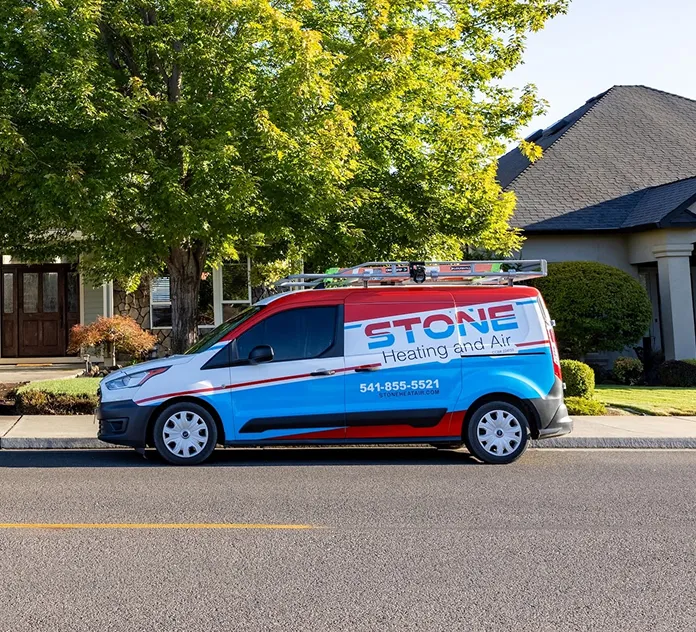
When an air conditioning system fails during a heatwave, the priority is accurate identification of the fault followed by a swift resolution. Our service focuses on minimizing downtime. Technicians arrive in vehicles stocked with universal parts, including capacitors, contactors, and motors, which allows for the completion of most repairs during the initial visit. The diagnostic process involves a systematic evaluation of the electrical components, refrigerant levels, and airflow dynamics.
Homeowners in Cave Junction often face specific issues related to the dry summer heat. Systems work harder to combat high ambient temperatures, leading to component fatigue. You receive a clear, written explanation of the issue and a flat-rate quote before any work begins. This approach eliminates hourly billing uncertainty and ensures you understand exactly what is required to get the system running again.
.webp)
Understanding Common Cooling System Failures
Air conditioning systems are complex machines where a failure in one component often triggers symptoms elsewhere. Understanding what is happening inside the unit helps in making informed decisions about repairs.
Compressor Malfunctions
The compressor acts as the heart of the system, pumping refrigerant between the indoor and outdoor units. If the compressor fails to start, it is often due to a failed start capacitor or a "hard start" kit requirement rather than a dead compressor. However, if the compressor is grounding out or experiencing mechanical lockup, it requires major repair or replacement. Symptoms include loud buzzing noises at the outdoor unit or the breaker tripping immediately upon startup.
Refrigerant Leaks
Refrigerant is not a fuel; it is not consumed during operation. If a system is low on refrigerant, a leak exists. Simply "topping off" the system is a temporary fix that wastes money and harms the environment. The correct protocol involves locating the leak using electronic detectors or nitrogen pressure tests, brazing the leak, and then recharging the system to the manufacturer’s specifications. Low refrigerant often manifests as ice building up on the copper lines or the evaporator coil.
Electrical Component Failure
The most frequent service calls involve electrical issues. Capacitors store and release energy to start motors. Heat degrades these components over time. When a capacitor fails, the fan or compressor may hum but fail to turn, eventually overheating. Contactors, which act as the switch for the high-voltage power, can become pitted or burnt, preventing electricity from reaching the motor. These are standard repairs that restore function immediately.
Fan Motor Issues
There are two fans in a central AC system: the blower motor inside and the condenser fan outside. If the outdoor fan fails, the compressor cannot dissipate heat, causing the system to overheat and shut down on thermal overload. If the indoor blower fails, air cannot circulate, leading to a frozen coil. Stone Heating and Air technicians verify amperage draw and winding resistance to determine if a motor needs replacement.
The Repair Workflow and Protocols
We utilize a strict operational workflow to ensure safety and system longevity. This process guarantees that no step is overlooked and that the repair addresses the root cause, not just the symptom.
- Site Protection and Safety Check: The technician begins by ensuring the workspace is safe. This includes turning off high-voltage power at the disconnect box and laying down drop cloths to protect the flooring if indoor access is required.
- Comprehensive System Analysis: Using digital gauges and multimeters, the technician measures superheat and subcooling. These metrics tell us exactly how the refrigerant is changing state inside the coils. Static pressure readings are taken to ensure the ductwork is not restricting airflow, which is a common cause of premature component failure.
- Presentation of Options: Once the data is collected, the technician presents the findings. If a part has failed, you will see the failed component and receive a quote for the repair. If the system is aging or the repair cost is high, you may receive a comparison between repair and replacement, though the goal is always to fix the existing unit whenever viable.
- Execution of Repairs: Upon approval, the repair is performed using OEM or high-quality aftermarket parts. Electrical connections are tightened, and components are secured. If the refrigerant system was opened, a vacuum is pulled to remove moisture before recharging.
- Performance Verification: The job is not complete when the part is installed. The system is run through a full cycle. The technician measures the temperature split—the difference in temperature between the air entering the return vent and the air leaving the supply vent. A healthy system typically shows a 16 to 20-degree split.
Deciding Between Repair and Replacement
Determining whether to invest in a repair or opt for a new system is a financial calculation based on the age of the unit, the cost of the repair, and the type of refrigerant used.
- The 50% Rule: A general industry standard suggests that if the cost of the repair approaches 50% of the value of a new system, replacement is the more prudent financial choice. This is particularly true if the warranty on the existing unit has expired.
- Refrigerant Type (R-22 vs. R-410A): Older systems utilizing R-22 (Freon) are becoming prohibitively expensive to repair if the issue involves the refrigerant circuit. Production of R-22 has ceased, making the supply scarce and costly. If an older R-22 unit develops a leak or suffers a compressor failure, upgrading to a modern system using R-410A or newer refrigerants is often the only logical path.
- Frequency of Breakdowns: If a system requires multiple repairs within a single cooling season, it indicates that the unit is reaching the end of its service life. Continually replacing components on a dying system leads to diminishing returns.
- Efficiency Ratings: Modern air conditioners have much higher SEER2 (Seasonal Energy Efficiency Ratio) ratings compared to units manufactured just ten years ago. Replacing a 10 SEER unit with a 16 SEER unit can result in significant reduction in monthly energy bills, which helps offset the installation cost over time. Stone Heating and Air provides data on estimated energy savings to help homeowners make this calculation.
Local Considerations and Technical Factors
Operating an air conditioner in this region requires specific attention to environmental factors and local regulations. The specific climate conditions dictate how systems should be calibrated for maximum efficiency.
- High Ambient Temperatures: With summer highs frequently reaching the 90s, the "heat load" on residential structures is significant. Systems must be charged correctly to handle these peak loads. An undercharged unit will run continuously without satisfying the thermostat, driving up utility bills and shortening the equipment's lifespan.
- Airflow and Filtration: The dry, dusty conditions during summer can clog filters and condenser coils rapidly. A dirty outdoor coil cannot release heat effectively. We recommend checking filters monthly during peak usage. Our technicians also inspect ductwork for leaks, which can draw hot attic air into the system, drastically reducing cooling capacity.
- Permitting and Code Compliance: Any significant repair involving the refrigerant circuit or electrical modifications must adhere to Oregon’s mechanical and electrical codes. While minor repairs do not always require a permit, major component replacements often do. Ensuring compliance protects the homeowner’s insurance validity and ensures the work meets safety standards.
- Electrical Stability: During heatwaves, the local grid experiences high demand. Voltage fluctuations can damage sensitive compressor windings. Installation of hard start kits or surge protectors is often recommended for local homes to protect the AC unit from "dirty power" or brownouts that can occur during peak demand hours.
Why Professional Diagnosis Matters
DIY attempts at AC repair often lead to further damage or safety hazards. Air conditioning systems operate with high-voltage electricity and high-pressure refrigerant.
- Accurate Troubleshooting: A symptom like a frozen coil can be caused by five different issues: low refrigerant, a dirty filter, a bad blower motor, collapsed ductwork, or closed vents. A professional identifies the exact cause, preventing unnecessary parts replacement.
- Warranty Preservation: Most equipment manufacturers require proof of professional maintenance and repair to keep warranties valid. DIY repairs often void these warranties, leaving the homeowner liable for future costs.
- Safety Protocols: Handling refrigerant requires EPA certification (Section 608). Venting refrigerant into the atmosphere is illegal and harmful. Professionals use recovery machines to handle these chemicals safely. Furthermore, working with 240-volt electrical circuits poses a risk of severe shock or arc flash without proper training and tools.
Restoring Your Comfort
A broken air conditioner disrupts your life and threatens the safety of vulnerable family members during extreme heat. The focus is on providing a seamless, professional solution that gets your home back to a livable temperature quickly. From the moment the technician arrives, the goal is to provide a definitive answer and a lasting fix.
We prioritize clear communication, technical excellence, and respect for your property. Whether it is a simple capacitor swap or a complex compressor replacement, the work is performed to the highest industry standards. Trust Stone Heating and Air to handle your cooling emergencies with the urgency and expertise required. Don't let the heat compromise your comfort—schedule your AC repair service today.
- Book Expert Service Or Contact Us