
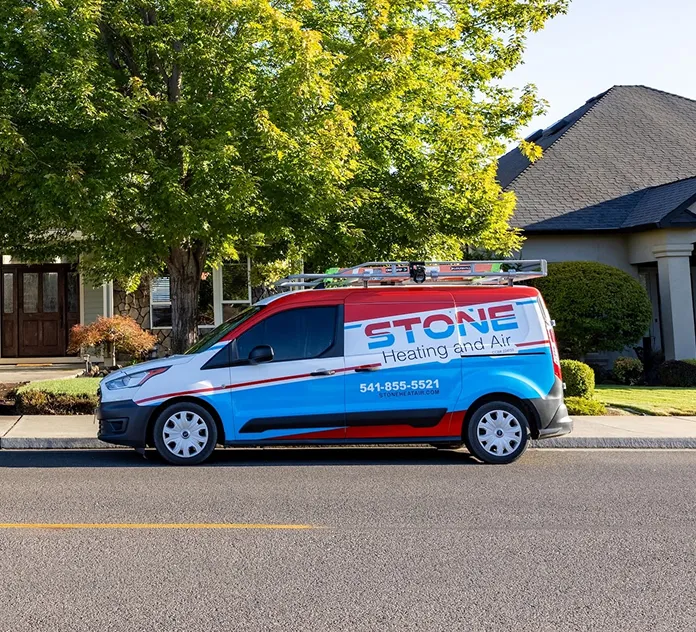

A malfunctioning HVAC system in your commercial space affects productivity, customer experience, and your bottom line. Employees can't focus in a hot office, and customers won't linger in a freezing retail space. Stone Heating & Air provides commercial HVAC services in Phoenix, OR, for businesses that need reliable climate control without downtime.
We keep your business comfortable and running:
- Commercial AC and heating repair for rooftop and split systems.
- Preventative maintenance contracts to minimize disruptions.
- Multi-zone system balancing for consistent temperatures throughout.
- Emergency commercial HVAC service for urgent failures. Call Stone Heating & Air at (541) 855-5521 to schedule commercial HVAC service in Phoenix today.
Securing Operational Continuity Through Advanced Climate Control
Commercial buildings in the Valley require more than just cold air; they demand consistent, regulated climate control to protect assets, employees, and customers. When a rooftop unit fails in July, the internal temperature of a warehouse or office building can spike to dangerous levels within hours. Securing professional service means addressing the immediate thermal load requirements of your facility while planning for long-term energy management.
Commercial systems operate under much higher stress than residential units due to the sheer volume of space and the constant battle against the urban heat island effect found in metropolitan areas like Phoenix. Whether you manage a sprawling logistics center, a retail storefront, or a multi-story office complex, the equipment must run at peak efficiency to prevent skyrocketing utility bills.
Service covers a wide spectrum of commercial needs:
- Emergency Diagnostics and Repair: Technicians analyze airflow restrictions, electrical faults, and refrigerant leaks that cause system paralysis.
- System Retrofitting: Upgrading older infrastructure to accommodate modern, high-efficiency units without altering the entire building footprint.
- New Construction Design-Build: collaborating with general contractors to design ductwork and load capacities for new facilities.
- Server Room Cooling: Specialized dedicated systems to protect sensitive data infrastructure from overheating.
Minimizing Downtime During System Installation
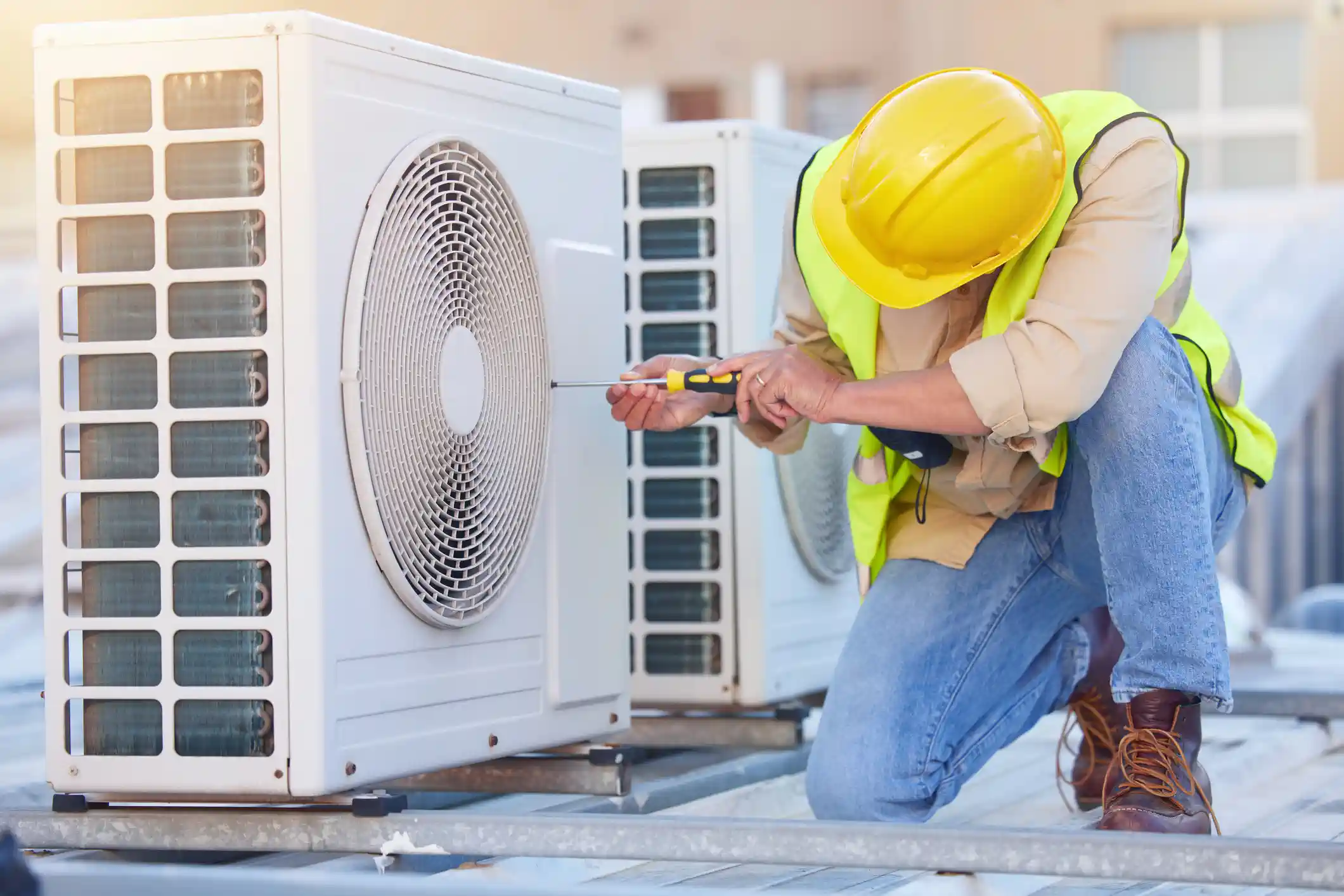
Replacing or installing a commercial HVAC system is a major logistical operation. The goal is always to minimize the disruption to your daily business activities. Professional teams coordinate every aspect of the project, from permitting to crane operations, ensuring the transition happens smoothly.
The process begins with a comprehensive load calculation. Unlike simple square footage estimates, commercial load calculations consider occupancy rates, heat-generating equipment (like servers or manufacturing machinery), lighting loads, and the thermal properties of the building envelope. This ensures the new unit is perfectly sized—neither too small to keep up with the heat nor too large, which leads to short-cycling and humidity issues.
The installation sequence follows a strict protocol:
- Site Assessment and Staging: Technicians verify structural integrity for rooftop units (RTUs) and establish safety perimeters for crane lifts.
- Recovery and Disposal: Existing refrigerant is reclaimed according to EPA standards, and old equipment is removed and recycled.
- Curb and Adapter Installation: For rooftop replacements, custom curb adapters may be fabricated to fit the new unit to the existing roof opening, preventing leaks and ensuring a watertight seal.
- Connection and Commissioning: Electrical lines, condensate drains, and gas lines are connected. The system is then "commissioned," a testing phase where technicians verify static pressure, airflow, and amperage to ensure the unit meets manufacturer specifications.
- Final Inspection: Verification that all work meets local building codes and safety regulations.
Determining the Right Path for Your Aging Equipment
Facility managers frequently face the dilemma of whether to approve a costly repair or invest in a full system replacement. Making the wrong choice can drain your operational budget. In the intense climate of Arizona, HVAC equipment generally has a shorter lifespan than in milder regions, often degrading faster due to extreme thermal cycling and dust.
A systematic approach helps clarify this decision. If a unit is over 15 years old and requires a repair that costs more than 50% of the price of a new system, replacement is generally the financially sound choice. Newer units offer significantly higher SEER (Seasonal Energy Efficiency Ratio) and IEER (Integrated Energy Efficiency Ratio) ratings, which can lower electricity overhead by a substantial margin.
Consider replacement if you observe the following:
- Frequent Component Failures: If you are replacing compressors, blower motors, or control boards multiple times a year, the system has likely become a liability.
- Inconsistent Temperatures: Hot and cold spots throughout the building indicate that the system can no longer effectively distribute air or maintain pressure.
- Rising Energy Costs: A sudden, unexplained increase in utility bills often points to a system working overtime to maintain setpoints due to internal wear.
- R-22 Refrigerant Dependency: Older units utilizing phased-out refrigerants are becoming prohibitively expensive to service due to supply scarcity.
Stone Heating and Air can provide a detailed cost-benefit analysis, comparing the projected cost of continued repairs against the ROI of a modern, energy-efficient installation.
Navigating Local Requirements and Climate Challenges
Operating in the desert presents unique challenges that standard HVAC advice fails to address. The "Heat Island Effect" in dense urban areas causes evening temperatures to remain high, meaning commercial units rarely get a chance to "rest." This necessitates robust maintenance schedules and equipment designed for high-ambient operations.
Compliance is another major factor. Commercial HVAC work involves strict adherence to local building codes and regulations set forth by entities like the Arizona Corporation Commission. Improperly permitted work can lead to fines, insurance issues, and complications when selling or leasing the property.
Key local considerations include:
- Economizer Calibration: In dry climates, economizers can utilize cool night air to reduce mechanical cooling loads. However, they must be properly calibrated to close during the heat of the day to prevent bringing in hot air.
- Rebate Incentives: Local utility providers often offer substantial rebates for upgrading to high-efficiency equipment. Professional providers assist in documenting and filing these claims to offset capital expenditures.
- Dust and Filtration: The prevalence of dust storms (haboobs) requires specialized filtration strategies to prevent coil clogging and maintain Indoor Air Quality (IAQ).
- Water Management: Condensate management is critical. In dry heat, evaporation is rapid, but blockages can lead to significant water damage. Proper trapping and drainage are essential.
Enhancing Indoor Air Quality and Employee Productivity
Commercial HVAC is not just about temperature; it is about the quality of the air your employees and customers breathe. Poor Indoor Air Quality (IAQ) can lead to "Sick Building Syndrome," resulting in reduced productivity, increased absenteeism, and potential liability.
Modern commercial systems function as the lungs of your building. They must effectively filter out particulates, manage humidity, and introduce fresh outdoor air to dilute internal contaminants like CO2 and Volatile Organic Compounds (VOCs) from furniture or cleaning supplies.
Strategies for IAQ improvement include:
- High-Efficiency Filtration: upgrading from standard filters to MERV 13 or higher to capture smaller particles, including smoke and allergens.
- UV-C Light Sanitization: Installing ultraviolet lights within the ductwork or near the coils to neutralize bacteria, mold, and viruses before they circulate through the building.
- Demand-Controlled Ventilation: Using CO2 sensors to modulate the intake of fresh air based on actual occupancy, saving energy while maintaining air quality standards.
- Humidity Control: While the local climate is dry, internal sources (kitchens, manufacturing processes) can add moisture. Proper dehumidification prevents mold growth in ductwork.
Why Operational Efficiency Matters for Your Bottom Line
Selecting a commercial service partner is a strategic business decision. The efficiency of your HVAC system directly correlates to your operational overhead. An ignored system is a silent budget killer, consuming excess energy and risking catastrophic failure that forces business closure.
Professional service ensures that your capital equipment retains its value and operates as intended. This involves a shift from reactive "break-fix" mentalities to proactive asset management. By maintaining clean coils, calibrated controls, and tight electrical connections, you extend the lifecycle of the equipment and predict expenses rather than being blindsided by them.
Differentiators to look for in a service provider include:
- NATE-Certified Technicians: Ensuring that the individuals working on your expensive equipment have undergone rigorous testing and certification.
- Comprehensive Safety Protocols: Adherence to OSHA standards to protect your property and personnel during all service operations.
- Detailed Reporting: Receiving digital logs of all work performed, including photos and readings, allows for transparent asset tracking.
- Customized Maintenance Agreements: Tailoring service frequency to the specific usage patterns of your facility, whether it is a 24-hour data center or a standard 9-to-5 office.
Need Reliable Commercial HVAC Support? Get Professional Help Now
Your commercial facility requires a partner that views your HVAC system as a critical asset. From emergency repairs in the height of summer to strategic replacement planning, the right expertise ensures your doors stay open and your environment stays comfortable. Stone Heating and Air is ready to secure your facility's comfort and efficiency.
Contact us today to schedule your commercial system assessment.
- Book Expert Service Or Contact Us