

Why Skipping HVAC Maintenance Always Costs You More in the End
What happens if you skip HVAC maintenance is something too many Rogue Valley homeowners find out the hard way — usually on the hottest afternoon in July or the coldest night in January, when their system stops working and every HVAC company in Central Point is slammed with emergency calls.
Here is a quick look at what you risk when routine maintenance gets skipped:
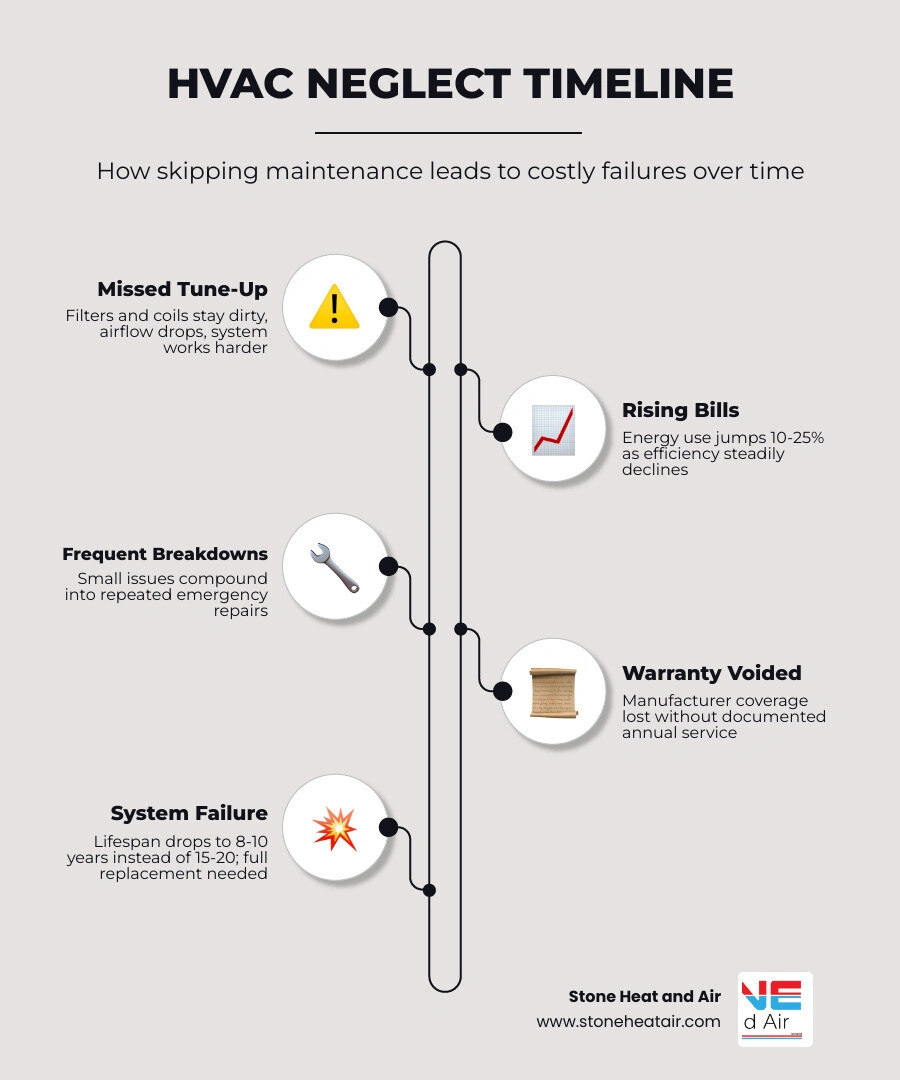
• Higher energy bills — dirty filters and coils force your system to work harder, raising energy use by 10–25%
• More frequent breakdowns — over 80% of summer AC emergency calls are for problems that routine maintenance would have caught
• Shorter system lifespan — a neglected system may last only 8–10 years instead of the typical 15–20
• Voided warranties — most manufacturers require documented annual service to keep warranties valid
• Poor indoor air quality — dust, mold, and allergens build up when maintenance is skipped
• Safety hazards — cracked heat exchangers in neglected furnaces can leak carbon monoxide
• Cascading failures — small, cheap problems compound into expensive repairs or full replacements
The tricky part is that none of this happens overnight. Skipping maintenance feels harmless at first because the system keeps running. But each season without a professional tune-up, your system quietly loses efficiency, accumulates wear, and moves closer to an expensive failure. Think of it like skipping oil changes on your car — nothing dramatic happens immediately, but the damage is building up the whole time.
Below, we cover all seven consequences in detail so you know exactly what is at stake.
Common what happens if you skip hvac maintenance vocab:
• annual hvac maintenance is it worth it
• how often should you service your hvac system
• what does an hvac maintenance visit include
The Real Risks: What Happens If You Skip HVAC Maintenance
When your heating and cooling system runs month after month without professional attention, it undergoes a slow, invisible decline. In Southern Oregon, our systems work incredibly hard. From the dry, scorching summer afternoons in Roseburg to the freezing, snow-dusted winter nights in Klamath Falls, our climate demands a lot from heat pumps, furnaces, and air conditioners.
Without regular tune-ups, small issues that are incredibly easy and inexpensive to fix begin to compound. A layer of fine dust on your indoor coils might seem harmless, but it restricts heat transfer. This restriction forces the system to run longer cycles to meet your thermostat settings. Longer run cycles mean more wear and tear on the blower motor and compressor.
Before you know it, a simple issue like a dirty filter or a loose electrical connection cascades into a major mechanical failure. This transition from preventive to reactive service is where homeowners end up spending the most money. Instead of scheduling a convenient, budget-friendly tune-up in the spring or fall, you find yourself facing a sudden system shutdown during an extreme weather event.
Understanding the importance of regular HVAC maintenance is the first step toward protecting your wallet. When you stay ahead of routine service, you can easily prevent HVAC emergencies with maintenance, ensuring your family stays comfortable all year long without unexpected interruptions.
How Neglect Destroys Efficiency and Spikes Utility Bills
The financial impact of skipping maintenance shows up first on your monthly utility bills. When an HVAC system is neglected, it loses roughly 5% of its operating efficiency every single year. That means after just three years of skipped maintenance, your system is consuming up to 15% more electricity or gas to deliver the exact same amount of heating or cooling.
To put this into perspective, let us look at how a well-maintained system compares to a neglected one over time:
• Average Lifespan — Well-Maintained HVAC System: 15 to 20 Years — Neglected HVAC System: 8 to 10 Years
• Annual Efficiency Loss — Well-Maintained HVAC System: 0% to 1% — Neglected HVAC System: Roughly 5% Per Year
• Energy Consumption Increase — Well-Maintained HVAC System: Baseline — Neglected HVAC System: 10% to 25% Higher
• Emergency Repair Risk — Well-Maintained HVAC System: Extremely Low (Under 20%) — Neglected HVAC System: High (Over 80% preventable calls)
• Manufacturer Warranty Status — Well-Maintained HVAC System: Fully Protected & Valid — Neglected HVAC System: Voided (No service records)
• Airflow & Comfort — Well-Maintained HVAC System: Consistent & Balanced — Neglected HVAC System: Weak airflow, hot & cold spots
This drop in efficiency is primarily driven by airflow restriction and dirty components. When dust accumulates on the blower wheel blades, it reduces the system's ability to push air through your home. To learn how to keep your system running at peak performance, check out our Annual HVAC Maintenance Guide 2026.
What Happens If You Skip HVAC Maintenance on Your Air Conditioner
On the cooling side, your air conditioner relies on a delicate balance of airflow and refrigerant pressure to extract heat from your indoor air. When you skip maintenance, dust coats the indoor evaporator coil. Dust acts as an insulating blanket, preventing the cold refrigerant inside the coil from absorbing heat from the air passing over it.
This insulation effect causes the temperature of the coil to drop below freezing, leading to frozen evaporator coils. Once the coil freezes, airflow is completely blocked, and the system can no longer cool your home. Worse, trying to run an air conditioner with a frozen coil places immense compressor strain on your outdoor unit. The compressor is the heart of your AC, and replacing a failed compressor is one of the most expensive repairs in the industry. Additionally, issues can worsen what happens when your ac coils don't match, creating further operational imbalances that lead to early system failure.
What Happens If You Skip HVAC Maintenance for Your Furnace
Your heating system faces equally severe risks when neglected. During the winter, furnaces accumulate dust on critical safety and ignition components. One of the most common issues technicians encounter is a dirty flame sensor. The flame sensor is a safety device that detects whether a flame is present when the gas valve is open. If the sensor is coated in carbon buildup or dust, it cannot detect the flame, causing your furnace to shut down immediately after lighting.
Clogged burners are another major consequence of skipped maintenance. When burners become dirty, they cannot mix gas and oxygen efficiently, leading to incomplete combustion. This not only wastes fuel but also causes soot buildup and uneven heating. To understand how our technicians clean and inspect these vital parts, you can read about what happens during a furnace tune-up to see how we keep your heating system safe and reliable.
Safety Hazards and Premature System Failure
Beyond the financial costs, skipping HVAC maintenance poses genuine safety risks to your household. Your heating and cooling system moves thousands of cubic feet of air through your home daily. If the internal components are dirty, your indoor air quality will rapidly decline.
When dust, pet dander, and pollen accumulate in the system, they bypass dirty filters and settle inside the ductwork and on the wet surfaces of your AC evaporator coil. This combination of moisture and organic dust creates a breeding ground for mold growth and mildew. As the system cycles on, these spores and allergens are distributed throughout your living spaces, leading to increased allergy symptoms, respiratory irritation, and headaches. Keeping these systems clean does more than protect your health; clean, balanced air also keeps your household feeling energetic and focused, as HVAC maintenance increases productivity by maintaining a healthy, comfortable environment.
Carbon Monoxide Risks and Cracked Heat Exchangers
The most serious safety hazard associated with skipped furnace maintenance is a cracked heat exchanger. The heat exchanger is a metal chamber that keeps the toxic combustion byproducts (like carbon monoxide) separate from the clean air being circulated into your home.
Over years of operation, the metal of the heat exchanger expands and contracts every time the furnace heats up and cools down. If the system has restricted airflow due to dirty filters or clogged blowers, the heat exchanger is subjected to extreme thermal stress because it cannot dissipate heat quickly enough. This excess heat causes the metal to crack. A cracked heat exchanger allows deadly, odorless carbon monoxide gas to leak directly into your home's airstream. Because carbon monoxide is virtually undetectable without specialized equipment, professional heating inspections are absolutely essential for your family's safety.
Voided Manufacturer Warranties and Shorter Lifespan
Many homeowners do not realize that nearly all major HVAC manufacturers require documented annual professional maintenance to keep their warranties valid. If your system experiences a major component failure—such as a cracked heat exchanger or a seized compressor—the manufacturer will likely ask for service records before approving a replacement part under warranty. If you cannot provide proof of annual maintenance, your claim will be denied, leaving you to pay for the replacement entirely out of pocket.
Furthermore, skipping maintenance significantly shortens the overall lifespan of your equipment. While a well-maintained system can easily keep your home comfortable for 15 to 20 years, a neglected system often fails completely after just 8 to 10 years. This means you could be forced to buy a brand-new system twice as fast as necessary. Recognizing the signs your HVAC is reaching end of life can help you plan ahead, but learning how to extend the life of your HVAC system through routine care is always the most cost-effective strategy.
Frequently Asked Questions About HVAC Neglect
We hear many questions from local homeowners in Central Point, Rogue Valley, and Southern Oregon regarding how to manage their heating and cooling systems. Here are the answers to the most common questions about skipped maintenance.
How often should HVAC systems be professionally serviced?
For optimal performance, safety, and efficiency, your HVAC system should be professionally serviced at least twice a year. We recommend scheduling a spring cooling tune-up to prepare your air conditioner for the summer heat, and a fall heating tune-up to ensure your furnace or heat pump is ready for winter. If you use a heat pump system for both heating and cooling, biannual service is especially critical because these systems run year-round without a seasonal break.
What are the early warning signs that my HVAC system has been neglected?
If your system has been neglected, it will usually let you know before it shuts down completely. Watch out for these early warning signs:
• Weak airflow coming from your supply registers
• Strange noises, such as squealing, rattling, or clicking when the system starts
• Uneven temperatures or hot and cold spots throughout your home
• Frequent cycling, where the system turns on and off rapidly without reaching your set temperature
• Unexplained spikes in your monthly utility bills
What steps should I take if I have already skipped maintenance for years?
If you have skipped maintenance for several years, the best thing you can do is schedule a comprehensive professional inspection as soon as possible. Our technicians can perform a deep clean, check all safety controls, inspect electrical connections, and establish a baseline for your system's performance.
If you are worried about the cost of getting back on track, we recommend checking out our guide on budgeting for HVAC maintenance. To make ongoing care simple and affordable, you can also explore whether an HVAC maintenance plan is worth it for your home.
Conclusion
Skipping HVAC maintenance is never a true money-saving strategy. It simply shifts a small, predictable expense today into a massive, unexpected emergency repair bill or an early system replacement tomorrow.
At Stone Heating & Air, we are dedicated to helping our neighbors throughout Central Point, the Rogue Valley, Roseburg, Brookings, and Klamath Falls enjoy reliable, energy-efficient comfort. As a Carrier-certified team, we pay meticulous attention to detail and always provide honest, fair recommendations. We treat your home just like our own, and we are available 24/7 for emergency services when you need us most.
To keep your heating and cooling systems running perfectly and enjoy complete peace of mind, consider joining our exclusive Stone Comfort Membership Club. Visit our Stone Comfort Membership Club page today to find the perfect plan for your home, or contact us to schedule your seasonal tune-up!