

Why HVAC Maintenance Mistakes Cost Rogue Valley Homeowners More Than They Realize
The most common hvac maintenance mistakes homeowners make include neglecting air filter changes, skipping seasonal tune-ups, blocking vents, mismanaging thermostat settings, ignoring the outdoor condenser unit, attempting DIY repairs, and overlooking early warning signs like strange noises or rising energy bills.
Quick answer — the top HVAC maintenance mistakes to avoid:
1. Not changing air filters regularly — dirty filters restrict airflow and can raise energy use by 5–15%
2. Skipping professional seasonal tune-ups — missed inspections lead to faster wear and voided warranties
3. Closing or blocking vents — creates pressure imbalances that strain your whole system
4. Misusing the thermostat — extreme settings or poor placement causes unnecessary short cycling
5. Neglecting the outdoor condenser unit — debris and obstructions can increase energy use by up to 20%
6. Attempting complex DIY repairs — risks safety, damages components, and can void manufacturer warranties
7. Ignoring early warning signs — strange noises, odd smells, or uneven temperatures that go unchecked turn into expensive failures
8. Forgetting the condensate drain — a clogged drain line can cause water damage and shut your system down entirely
Your HVAC system runs quietly in the background every day, keeping your home comfortable through Southern Oregon's hot summers and cold winters. Most homeowners only think about it when something goes wrong — and by then, a small, preventable problem has often grown into a costly repair or an early system replacement. As one industry insight puts it, lack of maintenance is the number one problem with HVAC systems, and it's 100% preventable. Most systems last between 8 and 10 years on average, but well-maintained units can go significantly longer. The habits you build today — or neglect — directly determine how long your system lasts, how much you pay each month in energy bills, and how comfortable your home stays year-round.
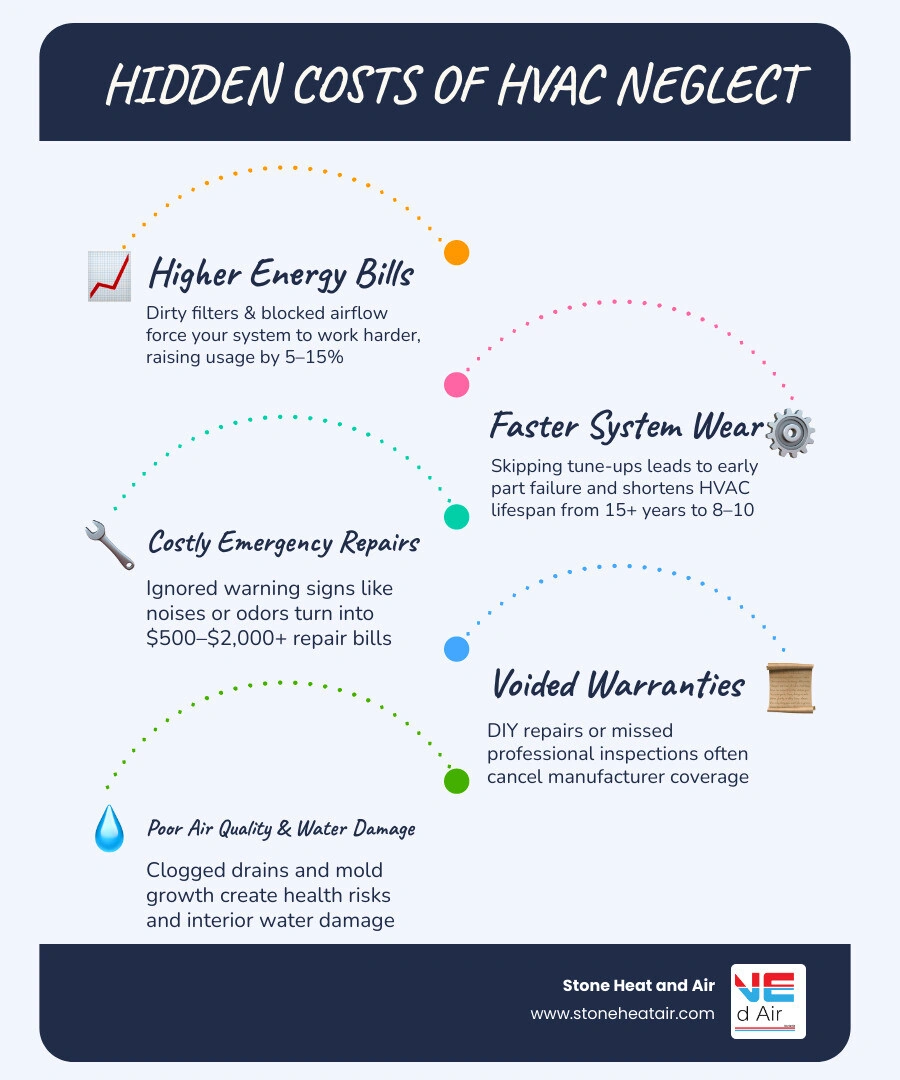
Quick look at hvac maintenance mistakes homeowners make:
• benefits of regular hvac maintenance
• hvac maintenance tips for southern oregon homeowners
The Most Common HVAC Maintenance Mistakes Homeowners Make
To keep your home running smoothly, it helps to understand how simple, everyday habits can quietly damage your heating and cooling equipment. When we ignore basic upkeep, we force our systems to work twice as hard to deliver the same level of comfort.
In Southern Oregon, our climate brings a unique set of challenges. From hot, dusty summer afternoons in Central Point to damp, chilly winter mornings in Roseburg and Klamath Falls, our heating and cooling systems face heavy usage year-round. When airflow is restricted by neglect, the system experiences high static pressure. This is the HVAC equivalent of high blood pressure; it strains the blower motor, forces the system to consume significantly more energy, and accelerates wear on every moving part.
Neglecting Air Filters: The King of HVAC Maintenance Mistakes Homeowners Make
If your HVAC system could talk, its very first request would be: "Please change my filter." Neglecting the air filter is arguably the most common mistake homeowners make, and it is also the easiest to fix.
Air filters act as your system's shield, capturing dust, pet dander, pollen, and other airborne particles before they can settle on sensitive internal components like the evaporator coil. When you allow dust to build up, the filter becomes a solid wall, choking off the airflow. This forces your system to run longer cycles to keep your home comfortable, which can increase your energy consumption by 5% to 15%.
For most homes, we recommend checking your air filter every 30 days and replacing or cleaning it at least every 90 days. However, if you have pets, live in a dusty area, or suffer from seasonal allergies, you may need to swap it out every 20 to 60 days.
When choosing a replacement, pay attention to the Minimum Efficiency Reporting Value (MERV) rating. While it is tempting to buy the highest MERV-rated filter available, filters with extremely high ratings can actually restrict airflow in residential systems that aren't designed for them. For most homes, a filter rated between MERV 8 and MERV 11 offers the perfect balance of excellent filtration and healthy airflow. To learn more about common filter blunders, check out our guide on HVAC Maintenance Mistakes You Should Avoid in 2024.
Skipping Seasonal Tune-Ups and Professional Inspections
It is easy to assume that if your heater or air conditioner is blowing air, everything is perfectly fine. However, waiting for a total system failure before calling for help is one of the most expensive choices a homeowner can make.
Just like your car needs routine oil changes to prevent engine failure, your heating and cooling system requires professional seasonal tune-ups to stay reliable. Ideally, you should schedule a cooling tune-up in the spring and a heating inspection in the fall.
During a professional maintenance visit, a trained technician does far more than just look at the unit. They inspect electrical connections, measure refrigerant levels, clean the outdoor and indoor coils, test safety controls, and lubricate moving parts. This proactive care helps identify worn components — like a failing capacitor — before they cause a complete mid-season breakdown.
Furthermore, many manufacturers explicitly state in their fine print that their warranties are only valid if the system receives regular professional maintenance. Skipping these visits can leave you paying out of pocket for a major repair that would have otherwise been covered. For an in-depth look at what happens during these visits, read about What Does an HVAC Maintenance Visit Include and explore The Importance of Regular HVAC Maintenance. If you are preparing for the colder months, you can also read our detailed breakdown on What Happens During a Furnace Tune-Up.
Restricting Airflow by Blocking Vents and Registers
A widespread myth in home energy savings is that closing vents in unused rooms will lower your heating or cooling bills. In reality, this practice does the exact opposite and can severely damage your system.
Your HVAC system is designed to distribute air evenly based on a precise balance of pressure. When you close supply vents or block return air grilles with furniture, rugs, or drapes, you disrupt this balance. The air that would normally flow into those rooms is trapped, creating high pressure inside your ductwork.
This pressure imbalance can:
• Force conditioned air to leak out of unsealed duct joints (up to 30% of conditioned air can be lost through leaky ductwork).
• Strain the blower motor, causing it to overheat and fail prematurely.
• Restrict airflow across the evaporator coil, causing the temperature of the coil to drop below freezing. This leads to frozen evaporator coils, which can destroy your compressor.
Keep at least 15 to 20 inches of clear space around all supply and return registers, and keep all interior doors slightly open to maintain healthy air circulation. For seasonal tips on keeping your airflow balanced, take a look at What Are the HVAC Maintenance Mistakes to Avoid This Fall.
Operational and Thermostat Errors That Strain Your System
The way you interact with your thermostat on a daily basis plays a massive role in your system's overall efficiency and operational lifespan.
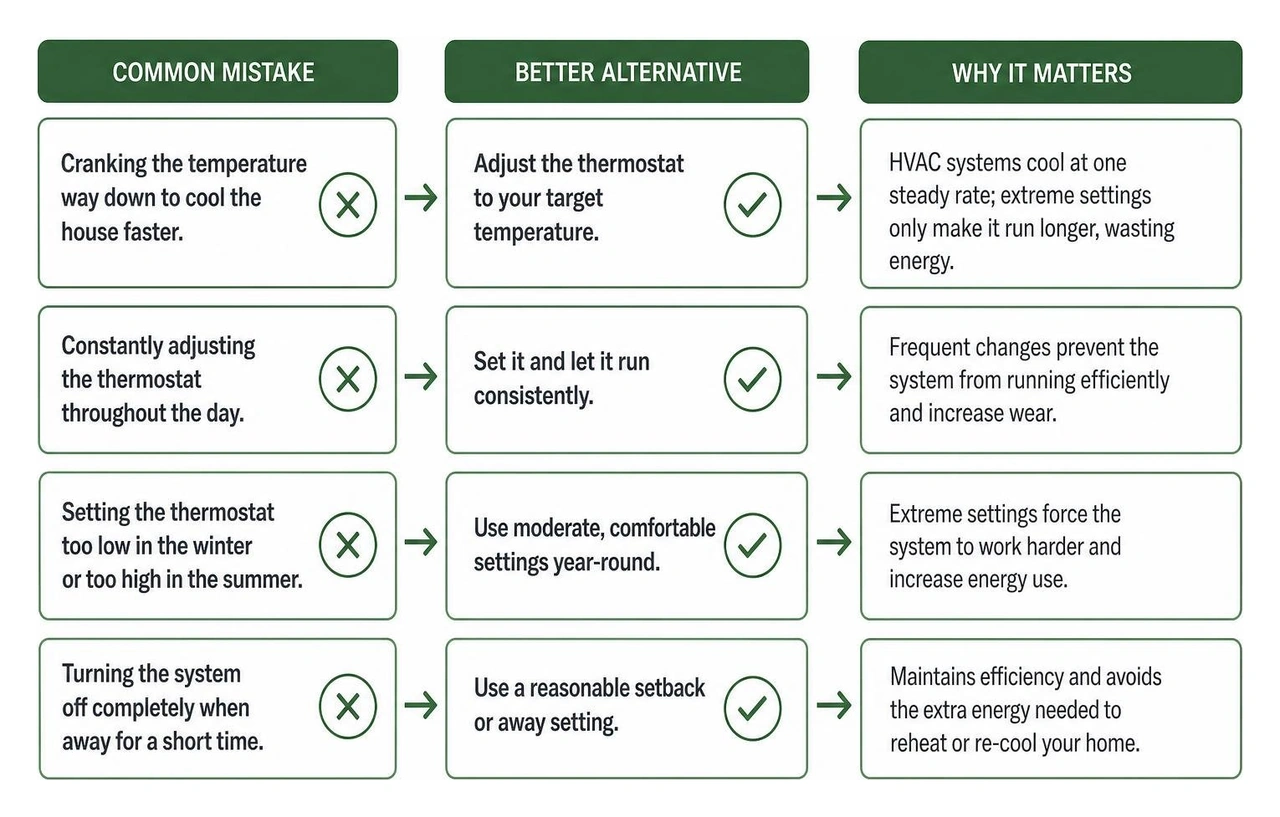
Let's look at how common operational habits stack up against efficient best practices:
• Cranking the temperature way down to cool the house faster. — Better Alternative: Adjust the thermostat to your target temperature. — Why It Matters: HVAC systems cool at one steady rate; extreme settings only make it run longer, wasting energy.
• Frequently switching between heating and cooling modes. — Better Alternative: Use the "Auto" changeover setting or wait for the weather to settle. — Why It Matters: Rapid mode switching strains the compressor and electrical relays.
• Placing the thermostat near a sunny window or drafty door. — Better Alternative: Install the thermostat on a central, interior wall. — Why It Matters: Poor placement causes "ghost readings," leading to constant short cycling.
• Leaving the system running at the same temperature when away. — Better Alternative: Use a smart thermostat to set moderate setbacks (7–10°F). — Why It Matters: Reduces unnecessary runtime and can save up to 10% on annual energy costs.
Mismanaging Thermostat Settings and Placement
Your thermostat is the brain of your home comfort system, but if it is placed in the wrong spot or programmed incorrectly, it will make poor decisions.
One of the most frequent operational errors is playing "thermostat whack-a-mole" — constantly turning the temperature up and down throughout the day. Your system operates most efficiently when it can run steady, consistent cycles.
Additionally, the physical placement of your thermostat is critical. If it is installed near a heat source, such as a sunny window, a fireplace, or near kitchen appliances, it will read the room as much warmer than it actually is. This causes your air conditioner to run constantly while your bedrooms remain freezing. Conversely, placing it near drafty doors or windows will cause your furnace to cycle on and off rapidly (a process known as short cycling).
Upgrading to a smart or programmable thermostat is an excellent way to eliminate these human errors. These devices allow you to set automatic setbacks when you are asleep or away from home, reducing unnecessary wear and tear. For more advice on managing your home's climate during seasonal transitions, see our Pre-Fall and Winter HVAC Maintenance Tips You Need to Know.
Ignoring the Outdoor Condenser Unit and Environmental Hazards
The outdoor condenser unit is half of your split air conditioning or heat pump system, and it has a tough job. It is responsible for releasing the heat collected from inside your home out into the open air. To do this effectively, it needs room to breathe.
Unfortunately, many homeowners treat their outdoor unit like an eyesore, hiding it behind thick shrubs, decorative fences, or allowing weeds to grow directly around the metal cabinet. When vegetation blocks the unit, heat gets trapped, forcing the system to work much harder to cool your home. This simple obstruction can increase your energy usage by up to 20%.
To protect your outdoor condenser:
• Maintain a minimum of two feet (24 inches) of clear space all the way around the unit.
• Clear away fallen leaves, twigs, grass clippings, and pine needles monthly.
• Be mindful of pets; dog urine is highly acidic and can quickly corrode the delicate aluminum fins and copper coils, leading to expensive refrigerant leaks.
The Dangers of DIY Repairs and Ignoring Warning Signs
In the age of online video tutorials, it is tempting to try and fix home appliances yourself. However, when it comes to your heating and cooling system, attempting DIY repairs can be incredibly dangerous and costly.
Attempting Complex DIY Fixes Instead of Calling a Professional
While tasks like changing air filters, clearing debris around the outdoor unit, and dusting supply vents are perfectly safe for homeowners, anything involving the internal mechanics of your system should be left to licensed professionals.
HVAC systems run on high-voltage electricity and contain complex electrical components like dual capacitors, which can store a lethal electrical charge even after the power is turned off. Additionally, air conditioners and heat pumps rely on chemical refrigerants to transfer heat. Under federal law, it is illegal for anyone without an EPA certification to handle, handle, or purchase refrigerant.
Trying to perform your own repairs often leads to secondary damage. A simple mistake like wiring a contactor incorrectly can fry your entire control board or destroy the compressor — turning a minor service call into a complete system replacement. When you hire a professional, they bring specialized diagnostic tools to safely and accurately identify the root cause of the issue. To understand how professional care protects your home, read about How to Prevent HVAC Emergencies with Maintenance.
Overlooking Early Warning Signs of System Trouble
Your HVAC system rarely fails without warning. Usually, it will drop hints that something is wrong long before it stops working entirely. Ignoring these early warning signs is a major mistake that can cut your system's lifespan short by several years.
Be on the lookout for these performance red flags:
• Strange Noises: Squealing, grinding, rattling, or loud banging sounds usually indicate a loose belt, a failing motor bearing, or an unbalanced fan blade.
• Unusual Odors: A musty smell points to mold or mildew in your ductwork or drain pan. A burning or metallic odor suggests electrical overheating, while a sulfur (rotten egg) smell is a critical warning sign of a gas leak.
• Uneven Temperatures: If some rooms are freezing while others are stifling, you could be dealing with duct leaks, a failing blower, or an improperly sized system.
• Rising Utility Bills: A sudden, unexplained spike in your monthly energy costs means your system is losing its efficiency and struggling to keep up.
Addressing these minor issues promptly prevents them from cascading into catastrophic failures. For more tips on maximizing your system's lifespan, read our guide on How to Extend the Life of Your HVAC System.
Why Neglecting Condensate Drains is One of the HVAC Maintenance Mistakes Homeowners Make
When your air conditioner or heat pump cools your home, it also dehumidifies the air. As warm air passes over the cold evaporator coil, moisture condenses on the metal, dripping down into a condensate drain pan and exiting your home through a small PVC drain line.
Because this drain line is dark, warm, and constantly damp, it is the perfect breeding ground for algae, mold, and sludge. If you do not clean this line regularly, a clog will eventually form.
When the line clogs, the water has nowhere to go. It will back up and overflow the drain pan, leading to:
• Severe water damage to your ceilings, drywall, and flooring.
• Mold growth inside your home's structure, compromising your indoor air quality.
• System shutdowns, as modern units are equipped with safety float switches that shut the system down completely when water backs up to prevent flooding.
Flushing your condensate line with a cup of simple household vinegar every few months is an easy way to keep it clear. To learn more about how proper moisture management keeps your home safe, read about the Benefits of Regular HVAC Maintenance in the Northwest.
Frequently Asked Questions About HVAC Care
How often should I change my home's air filters?
For most standard homes, you should replace your air filter every 3 months (90 days). However, if you have pets or family members with asthma or severe allergies, you should check the filter monthly and replace it every 30 to 60 days. Always make sure you are using the correct filter size and that it is installed in the correct direction of airflow.
Why shouldn't I close vents in unused rooms?
Closing vents does not save energy; instead, it increases static pressure inside your ductwork. This pressure forces air to leak out of your duct joints, strains the blower motor, and can cause your evaporator coil to freeze. Keep all supply and return vents open to maintain the system's engineered airflow balance.
What are the signs that my HVAC system needs immediate professional attention?
You should call a professional immediately if you hear loud grinding, squealing, or banging noises; notice unusual odors like burning plastic or sulfur; experience persistent short cycling; or notice a sudden, dramatic drop in airflow or heating/cooling capacity.
Conclusion
Avoiding these common hvac maintenance mistakes homeowners make is the single best way to protect your investment, lower your monthly utility bills, and ensure your home remains a comfortable haven all year long. By staying on top of simple tasks like changing your air filters, keeping your outdoor unit clear, and scheduling regular professional tune-ups, you can extend the life of your system and enjoy total peace of mind.
At Stone Heating & Air, we are proud to serve our local communities throughout Central Point, OR, the Rogue Valley, Roseburg, Brookings, and Klamath Falls. Our team is committed to providing honest recommendations, meticulous workmanship, and reliable 24/7 emergency service.
To make seasonal maintenance completely stress-free, we invite you to join our exclusive Stone Comfort Membership Club. As a member, you will receive regular precision tune-ups, priority scheduling, and discounts on repairs, ensuring your heating and cooling systems are always ready for whatever the Southern Oregon weather brings. For help planning your home upkeep budget, check out our guide on Budgeting for HVAC Maintenance, and contact us today to learn more about the Stone Comfort Membership Club.