

When a winter storm or power grid failure knocks out your electricity, your home goes dark, your heating shuts down, and your refrigerator starts warming up. Relying on the utility company to restore power quickly is a gamble — especially in rural Southern Oregon. Stone Heating & Air provides professional whole-home generator installation in Talent, OR, for automatic backup power when the grid fails.
Never lose power to your home again:
- Precise load calculations to size your generator correctly.
- Automatic transfer switch installation for seamless switchover.
- Natural gas and propane fuel line connection and setup.
- Permitting, code compliance, and post-install testing included. Call Stone Heating & Air at (541) 855-5521 to schedule a generator consultation in Talent today.
Protecting Your Home Against Unpredictable Weather Patterns
Residents in Talent and the surrounding Rogue Valley are no strangers to the Mediterranean climate that brings distinct seasonal challenges. While summers are warm and dry, the fall and winter months frequently introduce significant rainfall, wind storms, and occasional snowfall. These weather events are the primary drivers of power grid instability. When lines go down due to wind or heavy branches, homes can be left without heat, lights, or refrigeration for extended periods.
Relying on the grid alone is becoming increasingly risky as weather patterns shift. A backup power system is not just a convenience; it is a safety necessity, particularly during the cooler months when keeping a home warm is vital. Stone Heating and Air provides the expertise required to assess your specific vulnerability to outages based on your location and energy dependency. We understand that equipment installed in this region must be resilient against moisture and capable of starting reliably in colder temperatures.
Comprehensive Generator Installation Solutions
Choosing the right standby generator involves more than picking a unit off a shelf. It requires a technical understanding of your home’s electrical infrastructure and gas plumbing. We provide a range of solutions tailored to total home backup or essential circuit coverage.
Whole-Home Standby Generators
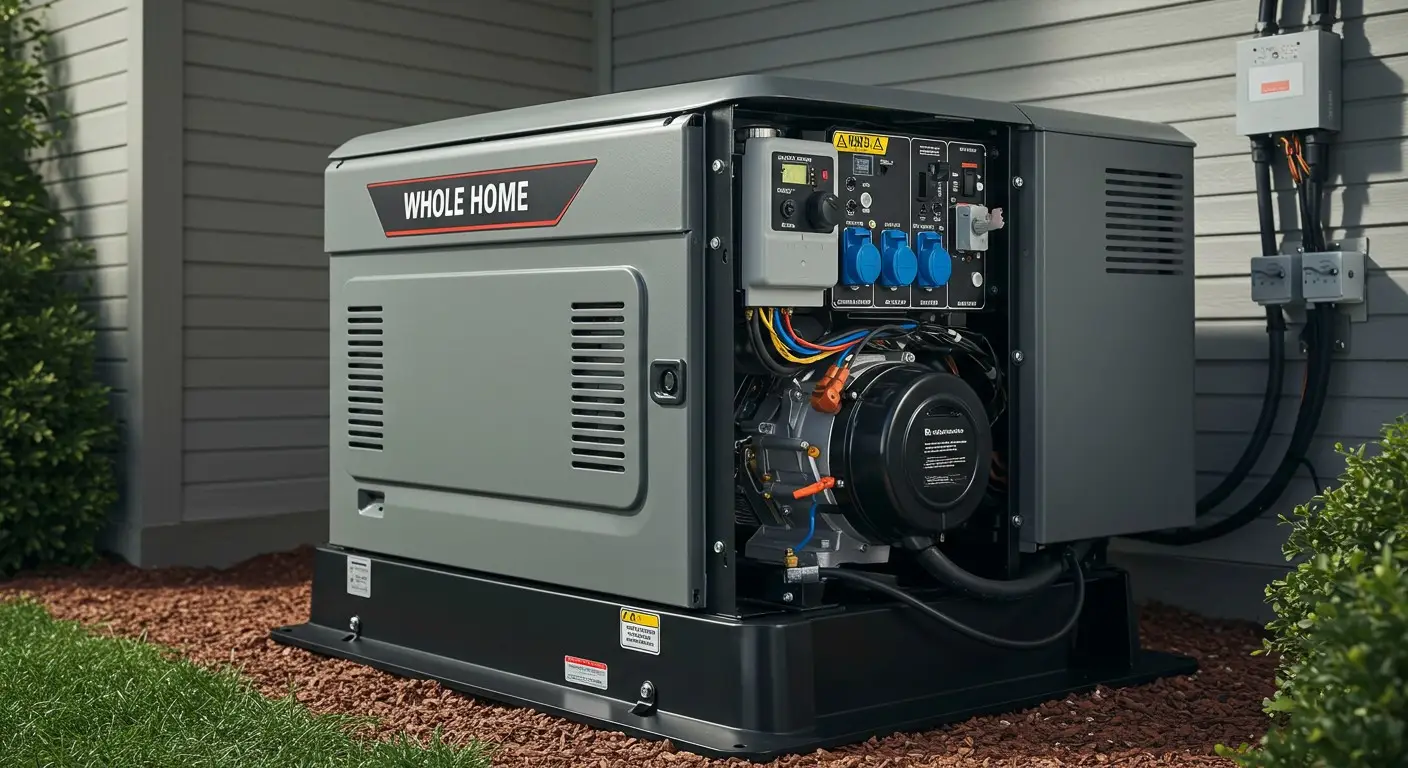
For homeowners who require complete normalcy during an outage, a whole-home standby generator is the standard solution. These units are permanently installed outside the home, much like a central air conditioning unit. They are sized to carry the electrical load of the entire house, including high-demand appliances like HVAC systems, electric ovens, and well pumps.
- Runs on existing fuel supplies, typically natural gas or liquid propane (LP), eliminating the need for manual refueling.
- Delivers seamless power transition, allowing you to continue daily activities without interruption.
- Adds significant resale value to the property by modernizing the home’s utility profile.
Essential Circuit Coverage
If the goal is to maintain only critical systems—such as the refrigerator, medical equipment, lights, and the furnace—we can design a system that targets specific circuits. This approach often allows for a smaller, more fuel-efficient unit while still protecting the home from freezing pipes or food spoilage.
Automatic Transfer Switches (ATS)
The brain of any standby generator system is the Automatic Transfer Switch. This device monitors utility power 24/7. When it detects a voltage drop or a complete outage, it signals the generator to start. Once the generator reaches the proper speed and voltage, the ATS disconnects the utility line and connects the generator feed.
- Ensures safety by preventing "backfeed," which occurs when generator power flows back into the grid, posing a lethal threat to utility workers repairing lines.
- Handles the switch automatically, meaning you do not need to be home or go outside in a storm to activate the power.
- Restores utility power automatically once the grid is stable, shutting down the generator after a cool-down cycle.
The Installation Process: From Assessment to Power
A professional installation is a multi-stage construction project involving electrical work, gas plumbing, and site preparation. We manage every aspect of this process to ensure strict adherence to safety standards and manufacturer specifications.
- Site Assessment and Load Calculation: The process begins with a detailed audit of your electrical panel. We calculate the "startup wattage" and "running wattage" of your appliances. Motors in air conditioners and refrigerators require a surge of power to start, which dictates the size of the generator required. We also evaluate the gas meter capacity to ensure it can supply enough fuel for both the home and the generator simultaneously.
- Permitting and Compliance: Before any physical work begins, we secure the necessary electrical and mechanical permits required by local authorities in Talent and Jackson County. This step is non-negotiable for insurance purposes and future property sales.
- Site Preparation: We prepare a level, stable surface for the generator. This usually involves pouring a concrete pad or installing a prefabricated composite pad that rests on a bed of compacted gravel. Proper placement is critical to prevent sinking or vibration issues and to ensure adequate drainage away from the unit.
- Plumbing and Gas Connection: Our team extends the high-pressure gas line to the generator location. This involves sizing the pipe correctly to maintain pressure over the distance of the run. We install sediment traps and shut-off valves as required by code to ensure the fuel supply is clean and safe.
- Electrical Integration: We mount the Automatic Transfer Switch near your main electrical panel. Heavy-gauge wiring is run from the generator to the ATS and from the ATS to the main breaker. This integration involves separating neutral and ground wires where necessary to comply with the National Electrical Code (NEC).
- Commissioning and Testing: Once physical installation is complete, we simulate a power outage. We verify that the generator starts within the specified timeframe (usually 10 to 20 seconds), the transfer switch engages correctly, and the voltage remains stable under load. We also set the unit's exercise schedule, causing it to self-test weekly or bi-weekly.
Determining When to Install a New Unit vs. Repairing an Old One
If you have an existing generator that is acting up, the decision to repair or replace depends on several technical factors. Generators are mechanical engines paired with complex electronics; eventually, the cost of upkeep outweighs the value of the asset — visit our blog for more insights.
- Age and Hours of Operation: Most air-cooled standby generators have a lifespan of 1,500 to 3,000 running hours, or roughly 10 to 15 years depending on maintenance. If your unit is approaching this age range and faces a major component failure, replacement is often the more distinct financial choice.
- Parts Availability: Older models may suffer from obsolete parts. If a control board or rotor assembly is no longer manufactured, sourcing refurbished parts can be expensive and unreliable. Upgrading to a modern unit ensures access to readily available components and warranty coverage.
- Increased Power Needs: Homes evolve over time. If you have added central air conditioning, an electric vehicle charging station, or a hot tub since your original generator was installed, your current unit is likely undersized. Attempting to draw more power than the generator is rated for can damage both the generator and your sensitive electronics. Installing a new, properly sized unit eliminates this risk.
- Fuel Efficiency: Modern generators are designed with better fuel mapping and engine technology. A new installation can reduce fuel consumption during outages, lowering the operational cost of running the system during prolonged emergencies.
Navigating Local Codes and Environmental Standards
Compliance is a major differentiator between a professional installation and a DIY attempt. In Talent and the broader region, specific codes dictate where a generator can be placed and how it must operate. Failing to meet these codes can result in fines, forced removal of the unit, or voided homeowner’s insurance policies.
- Distance Requirements: Building codes mandate minimum distances from the home’s structure. Generators typically must be placed at least 18 inches from the house and five feet away from any opening, such as windows, doors, or vents. This prevents carbon monoxide (CO) from entering the living space.
- Noise Regulations: Local noise ordinances limit the decibel level a unit can produce at the property line. We select and site generators to minimize acoustic impact, often utilizing landscaping or barriers to deflect sound away from neighbors while maintaining adequate airflow for the engine.
- Environmental Guidelines: The Oregon Department of Environmental Quality (DEQ) sets standards for emissions. We install units that are EPA and CARB compliant, ensuring that your backup power solution meets current environmental stewardship standards.
Why Professional Qualifications Matter
Generator installation sits at the intersection of dangerous electrical currents and combustible fuels. It requires dual-trade expertise. Hiring a licensed professional ensures that every connection is torque-tested, leak-checked, and code-compliant.
- Licensing and Certification: We hold the necessary electrical and plumbing credentials to perform this work legally. Our technicians undergo factory training to stay updated on the latest control modules and engine designs.
- Warranty Preservation: Manufacturers of standby generators explicitly state that warranties are void if the unit is not installed by a certified professional. Professional installation activates the full warranty coverage, protecting your investment for years to come.
- Safety Protocols: Incorrect wiring can lead to fire hazards or electrocution. Incorrect gas plumbing can lead to leaks. We utilize strict safety protocols, including pressure testing gas lines and verifying ground fault protection, to ensure the system is safe for your family and the community.
Ensuring Long-Term Energy Security
Securing your home with a backup generator is a definitive step toward energy independence and safety. It eliminates the anxiety of storm seasons and ensures that your heating, security, and communication systems remain operational regardless of grid conditions. At Stone Heating and Air, we deliver precise, code-compliant installations that are built to last.
Don't wait for the next blackout to realize you need backup power. Call us today to schedule your consultation and secure your home’s energy future.
- Book Expert Service Or Contact Us