
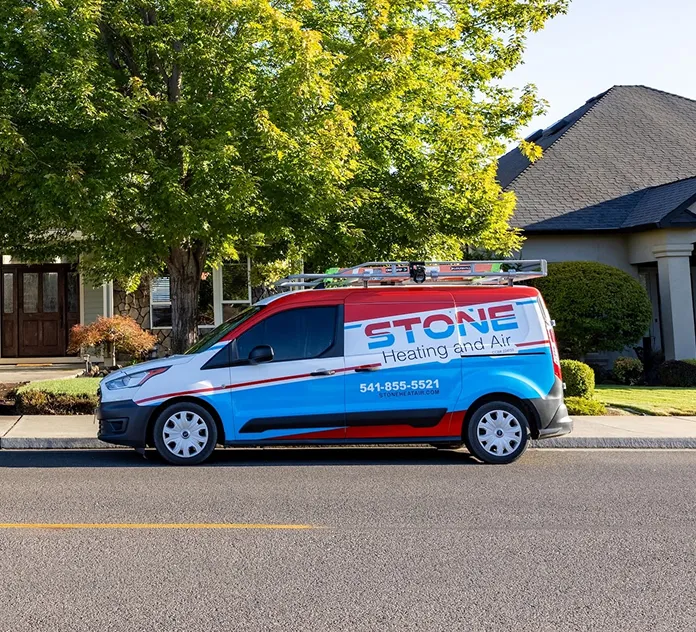
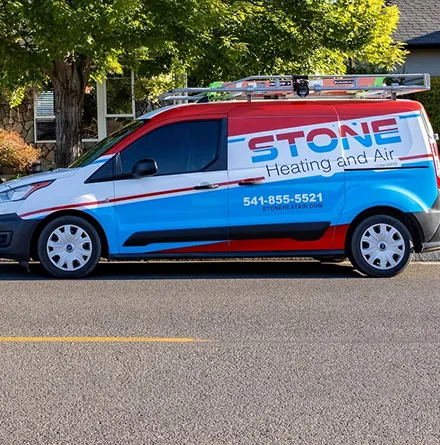

When your furnace quits during a freezing night or your AC dies on a 100-degree afternoon, waiting until business hours isn't an option. A total HVAC failure puts your family at risk and can cause serious property damage from frozen pipes or extreme heat. Stone Heating & Air provides 24/7 emergency HVAC service in Trail, OR, with fast response times when you need help most.
We're available around the clock for urgent situations:
- 24/7 emergency dispatch for complete heating and cooling failures.
- Fully stocked trucks for common repairs on the first visit.
- Upfront diagnosis and pricing — no surprise emergency surcharges.
- Fast response for both residential and commercial emergencies. Call Stone Heating & Air now at (541) 855-5521 for emergency HVAC service in Trail.
What to Expect From Emergency Service Visits
When you request emergency service, the primary goal is to stabilize your indoor climate and ensure the safety of your household. Unlike routine maintenance visits, an emergency call focuses strictly on diagnosing the root cause of the failure and implementing an immediate solution. Technicians arrive with fully stocked trucks containing universal parts, which allows for the completion of most common repairs on the first visit.
Upon arrival, the technician immediately assesses the critical components of your heating or cooling system. This includes checking electrical connections, testing safety switches, and measuring refrigerant levels or gas pressure. The objective is to identify whether the issue is a minor component failure, such as a blown capacitor, or a major system breakdown, like a seized compressor. You receive a clear explanation of the problem and a breakdown of the costs involved before any work begins.
In the Trail area, where weather conditions can shift rapidly, speed and accuracy are paramount. The service focuses on getting the system running again to prevent secondary damage, such as frozen pipes during a furnace failure or humidity damage during an AC outage. If a specific proprietary part is required that is not on hand, the technician provides temporary solutions or expedites part delivery to minimize downtime.
The Emergency Repair and Restoration Process
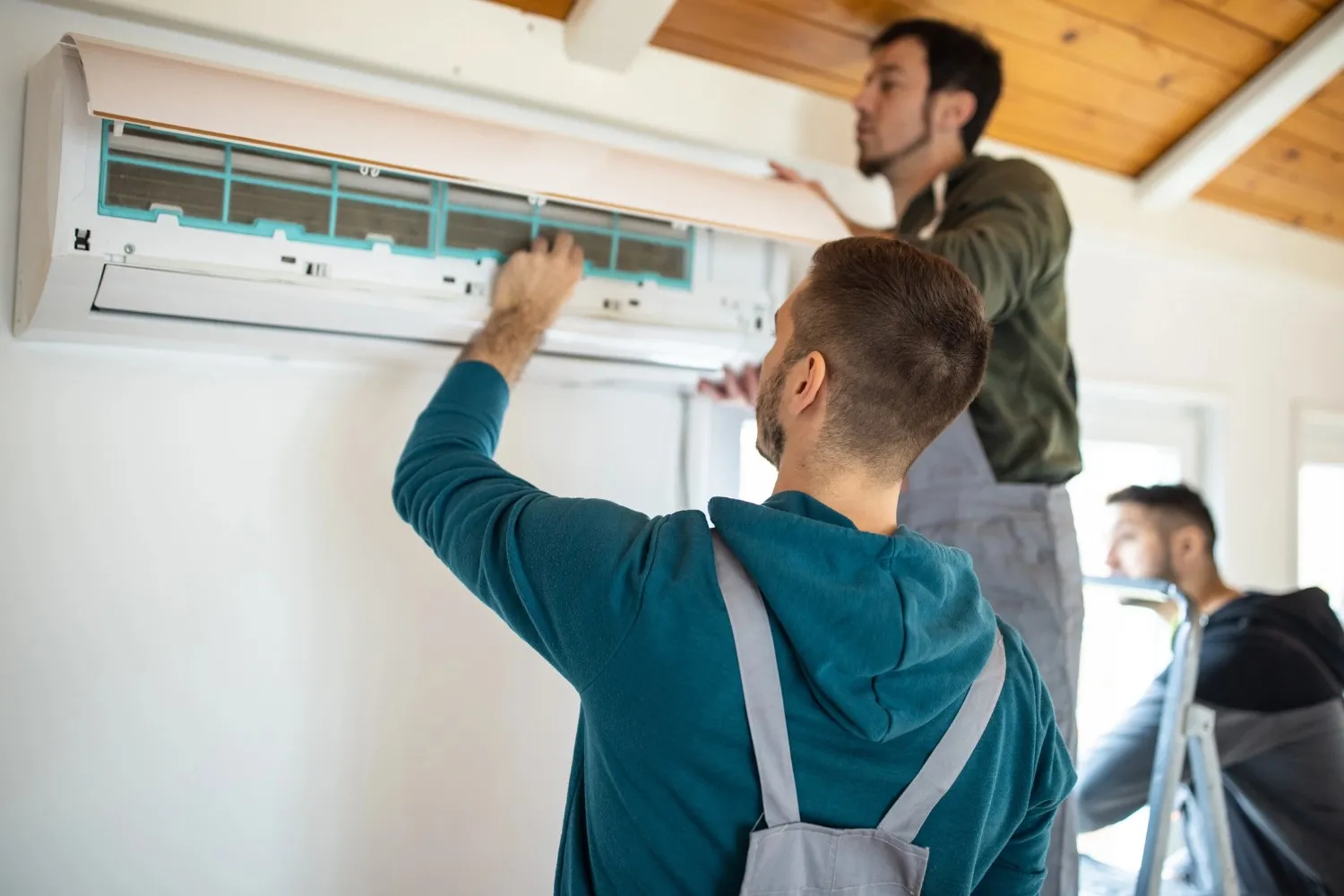
Professional HVAC restoration follows a systematic approach to ensure that repairs are not just quick, but permanent and safe. While every system varies, the workflow remains consistent to ensure no diagnostic steps are missed.
- System Diagnostics and Safety Check: The process begins with a comprehensive safety inspection. For furnaces, this involves checking for carbon monoxide leaks, cracked heat exchangers, and gas line integrity. For air conditioners and heat pumps, technicians check for electrical shorts, refrigerant leaks, and compressor health. This step ensures that turning the system back on will not pose a fire hazard or health risk.
- Root Cause Identification: Technicians use specialized tools, such as multimeters and manometers, to pinpoint the exact failure. It is not enough to know that a fan stopped spinning; the technician must determine if the motor burned out, the capacitor failed, or the control board stopped sending voltage. Accurate identification prevents recurring issues.
- Transparent Quoting and Authorization: Once the issue is isolated, you are presented with repair options. This includes a direct quote for the necessary repair and, if applicable, options for preventative upgrades. Work only proceeds after you understand the scope and approve the service.
- Execution of Repairs: The technician performs the repair using OEM or high-grade universal parts. This involves removing faulty components, wiring in new parts, brazing refrigerant lines, or cleaning flame sensors. The focus is on precision to ensure the new components integrate perfectly with the existing system assembly.
- System Validation and Calibration: After the repair is physically complete, the system is not just turned on; it is calibrated. Technicians measure temperature differentials (the difference between supply and return air) to verify cooling or heating capacity. They also check static pressure and airflow to ensure the repair holds up under load.
- Site Cleanup and Reporting: The service concludes with a clean workspace. Old parts and packaging are removed from your property. You receive a digital or physical report detailing what was fixed, the condition of the rest of the system, and any recommendations for future maintenance.
When to Repair vs. Replace in an Emergency
Making the decision to replace a system during an emergency is stressful, but sometimes it is the most financially prudent choice. Pouring money into a dying unit can lead to sunk costs where the repair bill approaches the price of a down payment on a new, more efficient system.
- The 50% Rule: A common industry standard regarding repair costs involves the 50% rule. If the cost of the emergency repair equals or exceeds 50% of the value of the system (or the cost of a new unit), replacement is generally the better investment. Major failures like a cracked heat exchanger or a blown compressor often fall into this category.
- Equipment Age and R-22 Availability: HVAC systems typically last between 10 and 15 years. If your unit is approaching or past this age range, a major breakdown is often a signal that the system has reached the end of its lifecycle. Additionally, older AC units may utilize R-22 refrigerant, which has been phased out and is prohibitively expensive to restock. Upgrading to a modern system eliminates this recurring cost.
- Frequency of Breakdowns: If this is the second or third time you have called for repairs in the last two years, the system is likely unreliable. Frequent breakdowns indicate that internal components are wearing out in succession. Stone Heating and Air can help evaluate the repair history of your unit to determine if a replacement will offer lower long-term ownership costs.
- Safety Concerns: In some cases, repair is not an option due to safety. If a furnace has a cracked heat exchanger, it cannot be safely repaired and must be replaced to prevent carbon monoxide poisoning. Similarly, severe electrical issues that have compromised the unit's internal wiring harness may render the system unrepairable.
Navigating HVAC Requirements in Trail, OR
Operating HVAC equipment in Trail requires an understanding of the specific local climate and regulatory environment. The region experiences distinct seasonality that puts stress on different parts of your system throughout the year.
- Climate-Specific Stressors: The Trail area sees significant temperature drops in winter and dry heat in summer. This dual extreme makes heat pumps a popular choice, but they must be properly sized to handle the heating load without excessive reliance on expensive auxiliary heat strips. Furthermore, the region is prone to wildfire smoke during late summer. Emergency calls often result from clogged filters and evaporator coils due to smoke and ash particulate, which restricts airflow and freezes up units.
- Permitting and Retroactive Compliance: When an emergency replacement is necessary, local building codes still apply. While immediate restoration of heat is prioritized for safety, permits are often required for the installation of new furnaces or air conditioners. Professional contractors handle the application for these permits, sometimes retroactively in true emergency situations, ensuring that your new installation is code-compliant and recognized by home insurance providers.
- Utility Considerations: Homeowners should be aware of the fuel sources available in their specific part of Trail, whether it is natural gas, propane, or strictly electric. Emergency replacements must match the existing infrastructure unless a fuel conversion is planned. Additionally, upgrading to high-efficiency heat pumps or furnaces may qualify homeowners for local utility rebates or federal tax incentives. Your technician can verify if your new equipment meets the SEER2 or HSPF2 ratings required for these financial benefits.
- Winterization and Defrost Cycles: In winter, heat pumps will naturally go into a "defrost cycle" to melt ice off the outdoor coil. Homeowners often mistake the steam and temporary noise for a breakdown. However, if the unit remains encased in solid ice or fails to switch back to heating mode, this constitutes a mechanical failure requiring professional intervention.
Why Professional Diagnostics Are Critical
Attempting DIY repairs on HVAC systems during an emergency often leads to higher costs and increased danger. Modern heating and cooling equipment involves high-voltage electricity, combustible gases, and high-pressure refrigerants.
- Accurate Electrical Troubleshooting: A system failure often presents as a generic symptom, such as the unit not turning on. Without professional knowledge of low-voltage control circuits versus line-voltage power circuits, it is easy to misdiagnose a bad thermostat as a bad control board. Professionals trace the voltage drop accurately to replace only the failed part.
- Warranty Preservation: Most equipment manufacturers require proof that repairs and maintenance were performed by a licensed contractor. DIY repairs or handling by unlicensed handymen can void the manufacturer’s warranty, leaving you liable for the full cost of future replacements like compressors or coils.
- Refrigerant Handling: Handling refrigerant requires EPA Section 608 certification. Venting refrigerant is illegal and harmful to the environment. Professionals use recovery machines to manage refrigerant levels safely and ensure the system is charged to the precise subcooling or superheat targets required for efficiency.
- Safety verification: Combustion analysis is a critical step in furnace repair that requires expensive digital analyzers. This tool measures the oxygen and carbon dioxide levels in the flue gas to ensure the fuel is burning cleanly. A DIY repair cannot verify that the unit is not producing dangerous levels of carbon monoxide.
Common Emergency Scenarios Resolved
HVAC systems are complex machines with hundreds of moving parts. While every situation is unique, several common scenarios frequently trigger the need for urgent service.
- Frozen Evaporator Coils: When airflow is restricted due to dirty filters or low refrigerant, the indoor coil can freeze into a block of ice. This completely stops cooling and can damage the compressor. Technicians must thaw the system safely and address the underlying airflow or leak issue.
- Furnace Blowing Cold Air: This often indicates a failure in the ignition sequence. It could be a dirty flame sensor, a failed ignitor, or a limit switch that has tripped due to overheating. Diagnosing which part of the safety chain halted the burners is essential for restoring heat.
- Water Leaks: Clogged condensate drains can cause water to back up and overflow, potentially damaging flooring and ceilings. In high-efficiency furnaces and AC units, clearing these unexpected leaks is a common emergency request.
- Electrical Burning Smells: A sharp, acrid smell coming from the vents usually indicates an electrical short or a burning motor winding. This is a fire risk and requires the system to be shut down immediately at the breaker until a professional can inspect the wiring.
- Thermostat Communication Errors: Modern communicating systems rely on complex data signals between the thermostat and the unit. If this communication fails, the system will not run. Technicians troubleshoot the low-voltage wiring and software configurations to re-establish control.
Restoring Comfort to Your Home
When your HVAC system fails, the safety and comfort of your home are compromised. Delaying service can lead to frozen plumbing, heat stress, or poor indoor air quality. Professional intervention ensures that the problem is resolved correctly, efficient operation is restored, and the lifespan of your equipment is protected. Stone Heating and Air is dedicated to providing the responsive, technical expertise required to handle these critical situations.
Do not wait for the temperature to become unbearable. Secure your appointment for emergency repair services today to ensure your home remains safe and comfortable.
- Book Expert Service Or Contact Us