

A new heating system is a major investment — and getting the installation wrong means poor performance, higher bills, and a shorter equipment lifespan. Oversized furnaces short-cycle and waste fuel, while undersized units run constantly without warming your home. Stone Heating & Air provides professional heating installation in Sams Valley, OR, with proper sizing and expert setup.
We make sure your new system delivers from day one:
- Heat load calculations to match the right system to your home.
- Furnace and heat pump installation for all major brands.
- Ductwork evaluation and modification for optimal airflow.
- Full system testing and performance verification after install. Call Stone Heating & Air at (541) 855-5521 or schedule your free estimate in Sams Valley today.
What to Expect From Professional Heating Installation
Investing in a new heating system is about more than just swapping out a box; it is about engineering a solution that matches the specific thermal envelope of your home. When you move forward with an installation today, the focus is on immediate reliability and long-term efficiency. The goal is to eliminate the uncertainty of a breakdown and replace it with consistent, even heating that reaches every corner of your living space.
Modern heating equipment, whether it is a high-efficiency furnace or a dual-fuel heat pump, offers significantly better performance than units manufactured just a decade ago. You receive a system that modulates output based on the actual demand of the home rather than blasting heat in short, inefficient bursts. This results in quieter operation and lower monthly energy consumption.
The scope of a professional installation includes a full assessment of your current infrastructure. This means evaluating existing ductwork to ensure it can handle the airflow of a new, more powerful unit, and upgrading thermostats or control systems to maximize the equipment's potential. You are not just buying a product; you are securing a service that includes the removal of old equipment, safe disposal, and the precise calibration of the new unit.
Timeline is a critical factor for homeowners in the Sams Valley area, especially as winter approaches. Professional teams prioritize efficiency without cutting corners. Most standard replacements are scheduled and completed within a tight timeframe, ensuring your home is not left without heat for an extended period. The service includes handling all logistical challenges, from navigating tight crawl spaces to managing electrical connections, providing you with a turnkey solution that functions perfectly from the moment it is turned on.
The Installation Process Step-by-Step
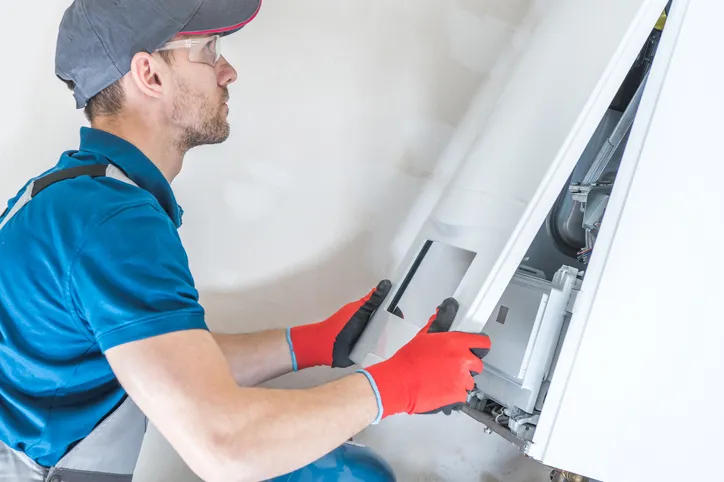
A high-quality heating installation follows a rigorous, standardized workflow to ensure nothing is overlooked. This systematic approach guarantees that the system operates at peak efficiency and adheres to manufacturer specifications.
- Load Calculation and Sizing: The process begins with a Manual J load calculation. This technical assessment measures the square footage, insulation levels, window types, and orientation of your home. It determines exactly how much heating power is required. An oversized unit will short-cycle and wear out prematurely, while an undersized unit will run constantly without satisfying the thermostat.
- Site Preparation and Protection: Technicians prepare the workspace to protect your property. This involves laying down drop cloths and ensuring a clear path to the installation site. Safety switches and gas lines are shut off to ensure a secure working environment before any demolition begins.
- Removal of Existing Equipment: The old furnace or heat pump is disconnected and removed. This step requires care to avoid damaging surrounding pipes or ductwork. Hazardous materials, such as old refrigerant or compromised electrical components, are handled according to environmental regulations.
- System Positioning and Connection: The new unit is positioned and leveled. Proper leveling is essential for drainage and vibration reduction. Technicians then connect the supply and return plenums, ensuring an airtight seal to prevent air leakage.
- Utility Connections: Gas lines, electrical wiring, and flue pipes are connected. For gas furnaces, leak testing is performed immediately to ensure safety. For electric systems and heat pumps, voltage and amperage are checked against the unit’s data plate to prevent electrical overload.
- Thermostat and Control Setup: The interface that controls your heating is installed or updated. This may involve wiring new smart thermostats that allow for remote temperature management and zoning capabilities, giving you granular control over your home's climate.
- System Commissioning and Testing: Once physically installed, the system is fired up. Technicians measure static pressure, temperature rise, and airflow. This "commissioning" phase is where the system is fine-tuned to ensure it delivers the rated efficiency.
- Final Walkthrough: The lead technician walks you through the operation of the new system, explains maintenance requirements, and demonstrates how to change filters and program the thermostat.
Repair vs. Replace: Making the Financial Decision
Deciding between repairing an existing unit and investing in a new installation is often a matter of economics and reliability. While repairs can solve immediate issues, there is a tipping point where sinking money into an old system becomes a financial drain.
- The 50% Rule: A common industry benchmark is the 50% rule. If the cost of the repair approaches or exceeds 50% of the value of the system (or the cost of a new unit), replacement is generally the smarter financial move. Major component failures, such as a cracked heat exchanger or a blown compressor, often fall into this category.
- System Age: Heating systems have a finite lifespan. Furnaces typically last 15 to 20 years, while heat pumps may last 10 to 15 years depending on usage. If your system is within this age range and requires a significant repair, replacement is usually recommended. New parts installed in an old system can put stress on other aging components, leading to a cascade of failures.
- Frequency of Breakdowns: If you find yourself calling for service multiple times a season, those costs add up quickly. Beyond the financial cost, the inconvenience of unreliable heat during a freeze is a significant factor. A new installation eliminates the "repair treadmill" and provides peace of mind.
- Energy Efficiency Ratings: Older units often have AFUE (Annual Fuel Utilization Efficiency) ratings of 60% to 70%. Modern units often exceed 90% or even 98%. The monthly savings on utility bills can help offset the monthly cost of financing a new installation. If your energy bills have been steadily climbing despite normal usage, the equipment has likely lost its efficiency.
- Safety Concerns: Older gas furnaces run a higher risk of developing cracks in the heat exchanger, which can lead to carbon monoxide leaks. If a safety inspection reveals any compromise in the combustion chamber, immediate replacement is the only safe option.
Local Considerations for Heating in the Pacific Northwest
Operating a heating system in Southern Oregon involves specific considerations regarding utilities, climate, and local regulations. The specific microclimate of the region impacts the type of equipment that performs best.
- Permitting and Codes: Installation projects in the region require adherence to specific building codes. This ensures that electrical connections meet safety standards and that gas lines are pressure-tested. Permits are generally required for new installations to verify that the work meets county and state safety requirements. Professional installers handle the acquisition of these permits and schedule the necessary inspections.
- Utility Providers and Incentives: Depending on your location, you may be serviced by Pacific Power, NW Natural, Cascade Natural Gas, or Avista. These entities often partner with the Energy Trust of Oregon or the Oregon Department of Energy to offer incentives for upgrading to high-efficiency equipment. Rebates can significantly lower the upfront cost of heat pumps or high-efficiency gas furnaces.
- Climate-Specific Equipment: The winters here are wet and cold, but rarely sub-zero for long periods. This climate is ideal for modern heat pumps, which can extract heat from the outside air even in low temperatures. However, for homes that rely on natural gas, a high-efficiency furnace remains a powerful option for combating the damp chill typical of the Rogue Valley.
- Tax Credits and Rebates: Federal tax credits under the Inflation Reduction Act have made heat pump installation more attractive financially. Homeowners should check eligibility for credits that apply to specific SEER2 and HSPF2 ratings. Local installers are familiar with which specific models qualify for these financial benefits.
Why Technical Precision Matters in Heating
The longevity of your heating system depends heavily on the quality of the installation. A premium unit installed poorly will perform worse than a budget unit installed perfectly. At Stone Heating and Air, the emphasis is on technical precision that ensures the equipment delivers the comfort you paid for.
- Airflow Management: Improper airflow is the leading cause of premature system failure. If the ductwork is not matched to the blower's capacity, the system may overheat or freeze up. Adjusting plenums and sealing leaks ensures that the heated air actually reaches your living rooms rather than leaking into the crawl space or attic.
- Refrigerant Charge: For heat pumps, the refrigerant charge must be precise. An incorrect charge reduces heating capacity and increases electricity usage. Technicians use digital gauges to verify sub-cooling and superheat levels are within the manufacturer's strict tolerances.
- Venting Safety: For gas furnaces, proper venting is non-negotiable. Modern high-efficiency furnaces produce condensation that must be drained properly, and exhaust gases must be vented using PVC piping rather than traditional metal flues. Ensuring these runs are sloped correctly prevents water damage and carbon monoxide buildup.
- Noise Reduction: A proper installation includes vibration isolation. This keeps the mechanical noise of the unit from transferring into the structure of the home, ensuring that your heating system is felt but not heard.
Secure Your Comfort With Professional Installation
Waiting for a total system failure puts your home and family at risk of exposure to the elements. Proactive replacement allows you to choose the best system for your needs rather than settling for whatever is available during an emergency. By upgrading now, you secure lower energy bills, improved indoor air quality, and the reliability required to navigate the winter season.
Stone Heating and Air is dedicated to providing high-performance heating solutions that stand up to the demands of the local climate. Whether you need a high-efficiency furnace or a modern heat pump, the focus remains on quality craftsmanship and long-term customer satisfaction.
Don't let the cold dictate your comfort level this year. Take control of your home's temperature and ensure consistent warmth.
Contact us today to schedule your heating installation estimate.
- Book Expert Service Or Contact Us