

That First Chilly Night: Why Your Heater Suddenly Smells
You step over to the thermostat on that first chilly September night, switch the system from cool to heat, and wait for the warmth. But within minutes of the blower kicking on, you are frantically searching for the answer to a very specific question: why does my furnace smell like burning dust when I turn it on? The sudden, campfire-like odor spreading through your vents is enough to make anyone pause and look for smoke. However, before you assume the worst, it is important to understand exactly what is happening inside your ductwork.
At Stone Heating and Air, our team typically fields dozens of calls about this exact issue during the first chilly week of the fall season. That initial blast of dusty air is a common seasonal occurrence. While a brief dusty odor is usually normal, keeping up with routine furnace maintenance for your heating systems is the best way to prevent it from becoming severe.
During the long summer months, your heating equipment sits completely inactive. Even if you run your air conditioner daily, the specific components responsible for generating heat remain cold and dormant. Over time, these inactive parts become a resting place for airborne debris. When the temperatures finally drop in Central Point, OR, and you call for heat, those components rapidly heat up, incinerating whatever has settled on them.
The immediate decision point for any homeowner is distinguishing between this harmless seasonal dust burn-off and a genuine emergency. A dusty smell that fades quickly is a normal physical reaction. An acrid, electrical, or plastic smell is a warning sign. By understanding the mechanics behind your HVAC system, you can safely monitor your equipment and know exactly when it is time to call our team for professional help.
The Science Behind the Seasonal Dust Burn-Off
To understand why your house smells like a dusty radiator, you have to look at the core of your heating system: the heat exchanger. The heat exchanger is a series of metal coils or tubes that get incredibly hot when the burners ignite. Air from your home blows over this hot metal, warms up, and travels back through your vents.
Because the heat exchanger sits idle from spring until early fall, its cold metal surface acts like a shelf. As air circulates through your home all summer, microscopic particles bypass the filter and settle directly onto the metal. When the burners finally fire up on a chilly September night, the heat exchanger rapidly reaches temperatures of several hundred degrees. The settled layer of debris instantly vaporizes. This is a literal, physical burn-off process, which is why it produces such a distinct, campfire-like or dusty odor.
How Summer Air Quality Affects Your Furnace
The intensity of that burning dust smell is directly tied to the local environment. In our years of servicing HVAC systems throughout the Rogue Valley, we've noticed that our dry summers and frequent wildfire seasons significantly increase the amount of particulate matter in the air.
• Wildfire smoke: Ash and fine particulate matter (PM2.5) infiltrate homes easily, bypassing standard filters and clinging to internal HVAC components.
• Dry, dusty winds: Extended periods without rain allow fine dirt and dust to remain airborne longer, eventually finding their way into your return ducts.
• Indoor allergens: Pet dander, dead skin cells, and fabric fibers circulate year-round, adding to the layer of debris on the heat exchanger.
Because Central Point, OR, experiences these specific climate factors, local heating systems often collect a thicker layer of summer dust than systems in wetter regions. Higher particulate matter means a stronger, more noticeable initial burn-off smell in the fall. While the odor might be strong enough to make you open a window, it is simply the heat exchanger doing its job and clearing its surface.
How Long Should a Furnace Smell Like Burning Dust?
Knowing that the smell is normal is only half the battle; knowing how long it should last is what keeps you safe. A standard dust burn-off has a very predictable timeline we tell all our customers to follow.
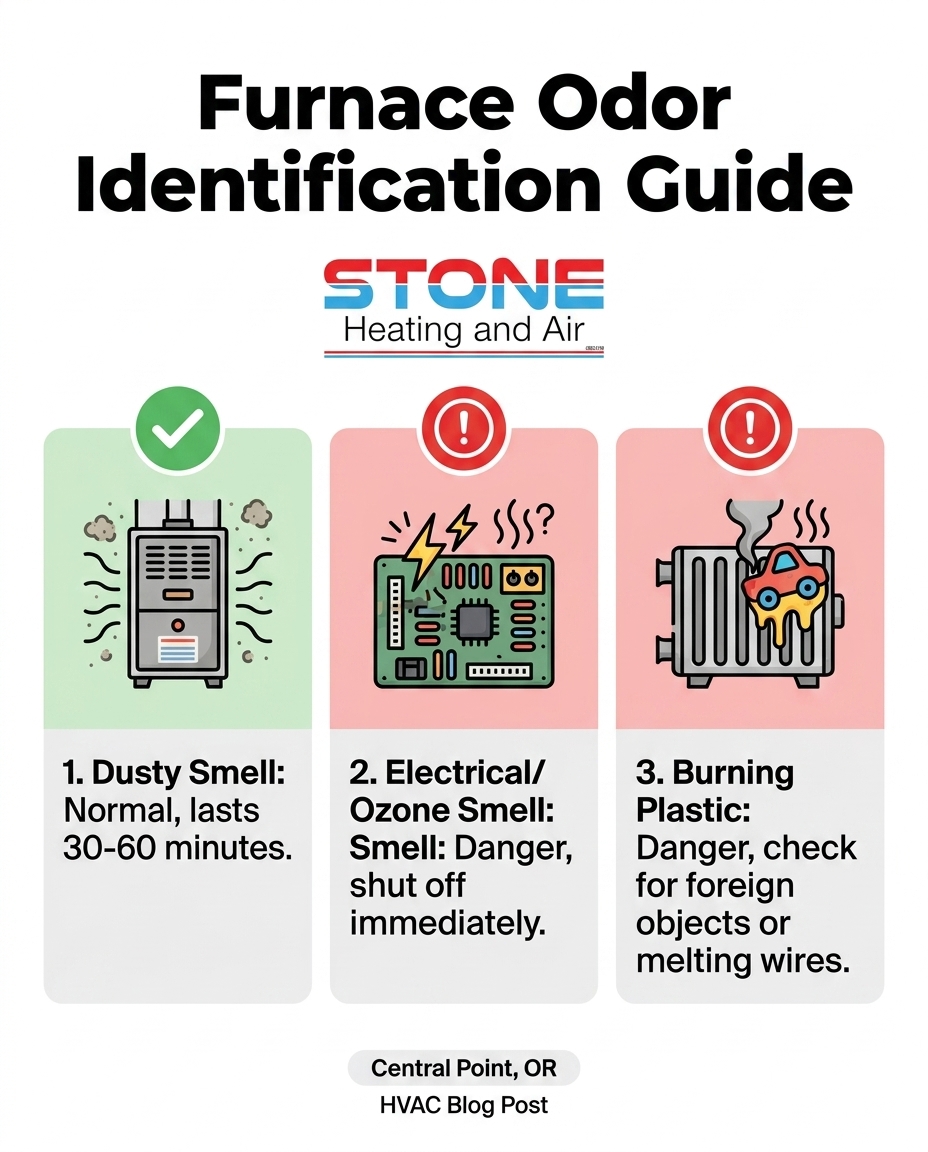
1. The Initial Blast (0 to 10 minutes)
The smell will be strongest right after the blower motor kicks on and pushes the first wave of warm air into the rooms. This is when the bulk of the settled dust vaporizes.
2. The Steady Decline (10 to 30 minutes)
As the heating cycle continues, the odor should steadily decrease in intensity. You will still smell it, but it should no longer feel overwhelming or concentrated.
3. The Final Clearing (30 to 60 minutes)
By the one-hour mark, the smell should be completely gone, or so faint that you only notice it if you stand directly over a floor vent.
If you want to clear the harmless odor faster, open a few windows or run your ceiling fans to encourage cross-ventilation. This helps push the vaporized dust particles out of the house. However, you must monitor the situation closely. If the smell persists beyond an hour, grows stronger, or causes your smoke alarms to go off, the system is no longer just burning off dust. At that point, shut the system down at the thermostat immediately. To minimize this hour-long odor in the future, following a fall furnace tune-up checklist before the weather turns cold ensures the heat exchanger is professionally cleaned before the first ignition.
When the Odor Is Not Dust: Warning Signs of an Emergency
While burning dust is harmless, other odors signal immediate danger. Your heating system relies on high-voltage electricity, spinning motors, and intense combustion. When these components fail, they emit distinct, toxic smells that should never be ignored.
At Stone Heating and Air, we are committed to your safety and peace of mind. Our local experts are available 24/7 to resolve dangerous electrical smells on the spot, ensuring you never have to guess whether your home is safe.
Electrical and Ozone Smells
An electrical fire or a failing motor produces a sharp, metallic odor that often smells like ozone, melting wires, or even a faint fishy scent.
• Failing Blower Motors: If the bearings in the blower motor wear out, the motor has to work twice as hard to spin the fan. This causes the motor to overheat, melting the protective coating on its internal copper wiring.
• Frayed Wiring: Loose connections or chewed wires can cause electrical arcing, which produces a distinct ozone smell (similar to the air after a severe lightning storm).
• Overheated Capacitors: A failing electrical component will often emit a harsh, chemical odor right before it stops working entirely.
If you detect an electrical smell, shut down the system immediately at the thermostat. Never attempt DIY electrical diagnostics. High-voltage HVAC components require a licensed professional. When severe electrical failures require a full system replacement, local homeowners rely on our experienced crews. For example, during a recent difficult installation where air handlers had to be hung properly in a tight space, our technicians went above and beyond to educate the customer on system safety and operation, ensuring the new equipment ran safely without dangerous odors. If you smell ozone, schedule emergency HVAC service right away.
Burning Plastic Odors
A burning plastic smell is highly toxic and indicates a severe mechanical or external issue.
• Foreign Objects in the Ductwork: Children's toys, plastic wrappers, or fallen debris can make their way into the floor vents and melt against the hot ductwork.
• Melting Internal Components: A cracked heat exchanger or a misaligned burner flame can direct intense heat toward plastic casing or rubber belts inside the cabinet.
Never ignore a chemical or plastic burning smell. Turn the system off, open your windows to ventilate the toxic fumes, and call us for emergency support.
The Role of Your Air Filter in Furnace Odors
Sometimes, the burning smell is not just settled dust on the heat exchanger—it is the result of a neglected air filter. Your air filter is the primary defense mechanism for your HVAC system, catching the airborne debris before it can reach the sensitive internal components.
When an air filter becomes severely clogged with dirt, pet dander, and wildfire ash, it acts like a wall. It restricts the vital airflow that the blower motor relies on to push air through the home. Because the heat exchanger needs a constant flow of cool air moving over it to keep its temperature regulated, restricted airflow causes the heat exchanger to overheat rapidly.
An overheating system produces a harsh, hot metal or burning smell that is easily confused with standard dust burn-off. If the system gets too hot, a safety mechanism called the high-limit switch will trip, shutting the burners down to prevent a fire. However, relying on the limit switch puts immense strain on your equipment.
Proper airflow is so critical that during a recent new HVAC unit installation our team completed in the area, our technicians went beyond expectations to ensure the correct filters were changed and installed properly, educating the homeowner to guarantee clean, odor-free operation from day one. To prevent overheating and minimize odors, check and replace your filter before the first heating cycle of the year. A clean filter traps the airborne dust before it reaches the burners, significantly reducing the intensity of the fall burn-off.
4 Steps to Safely Monitor Your Heating System at Startup
When you turn on the heat for that first chilly September night, do not just set the thermostat and walk away. We recommend following these steps to ensure your system starts up safely and efficiently.
1. Identify the exact type of odor: Take a moment to smell the air coming from the vents. Confirm that it smells like dry, burning dust or a faint campfire. If it smells like melting plastic, electrical ozone, or fish, shut the system off immediately.
2. Check and replace the air filter: Go to your return vent or air handler. If the filter is gray, clogged, or covered in a thick layer of dust, replace it with a fresh one. This ensures the heat exchanger receives the airflow it needs to prevent overheating.
3. Time the odor for 30 to 60 minutes: Keep an eye on the clock. The dusty smell should peak within the first ten minutes and steadily dissipate. Open a window or turn on a ceiling fan to help clear the air faster.
4. Shut off the system if the smell persists: If the odor lasts longer than an hour, grows noticeably stronger, or is accompanied by visible smoke, turn the thermostat to the "OFF" position. Do not wait to see if it improves. Schedule a professional HVAC system inspection to diagnose the underlying issue safely.
Frequently Asked Questions
How long does the burning dust smell last from a furnace?
The burning dust smell typically lasts between 30 and 60 minutes during the first heating cycle of the season. The odor will be strongest in the first ten minutes as the initial layer of settled dust vaporizes off the heat exchanger. After an hour, the smell should completely dissipate. If it lasts longer, shut the system down and call a professional.
Is it safe to run the furnace if it smells like burning?
It is safe to run the furnace if the smell is strictly burning dust and it occurs during the first few uses of the fall season. This is a normal physical process of clearing summer debris. However, if the smell resembles burning plastic, electrical ozone, or hot metal, it is not safe to run the system and it should be turned off immediately.
Why does my heater smell like burning plastic?
A burning plastic smell usually means a foreign object, like a toy or wrapper, has fallen into the ductwork and is melting against the hot metal. It can also indicate that an internal component, such as a wire casing or rubber belt, is overheating and melting. This is a toxic hazard and requires immediate professional attention.
Can a dusty furnace cause a fire?
While the light layer of summer dust burning off the heat exchanger will not cause a fire, severe neglect can be dangerous. A heavily clogged air filter restricts airflow, causing the system to overheat significantly. Modern systems have safety switches to prevent fires, but relying on them damages the equipment over time.
What does an electrical fire in a furnace smell like?
An electrical fire or failing motor in a furnace smells sharp, metallic, and acrid. Many homeowners describe it as smelling like ozone (similar to the air after a lightning storm), melting wire insulation, or even a faint fishy chemical odor. This smell means a component is actively failing and requires an emergency shutdown.
When should I turn off my furnace if it smells?
You should turn off your furnace immediately if the smell is electrical, chemical, or resembles melting plastic. If you are experiencing the normal burning dust smell, you should turn the system off if the odor persists for more than 60 minutes, grows stronger over time, or if you see any visible smoke.
Does a dirty air filter make a furnace smell bad?
Yes, a dirty air filter can make a furnace smell bad by restricting vital airflow. When the system cannot pull in enough cool air, the heat exchanger overheats, producing a harsh, hot metal smell. Additionally, a dirty filter allows more particulate matter to bypass into the system, making the initial dust burn-off much stronger.
Ready for a Safe, Warm Winter?
Understanding why your furnace smells like burning dust when you turn it on provides peace of mind on that first cold night of the year. While a brief dusty odor is perfectly normal, you never want to guess whether an unusual smell is harmless or hazardous. If you are unsure about the odors coming from your vents, or if you simply want to start the season with a clean, efficient system, our team at Stone Heating and Air is here to help. Reach out today to schedule a thorough inspection and ensure your home stays safe and warm all winter long.