

Is That Burning Smell Normal When Turning On the Heat?
When you notice a strange, harsh odor coming from your vents, knowing whether to worry is one of the most common homeowner questions answered during the fall transition. You walk over to the thermostat, switch your system from cooling to heating for the first chilly evening of the year, and within minutes, a distinct burning smell fills your hallways. It is a moment that immediately triggers alarm for almost anyone who owns a home. You might wonder if a wire is melting, if a motor is burning out, or if you need to shut everything down immediately.
If you are experiencing this during your October heating startup, you are not alone. While our team at Stone Heating and Air frequently helps local residents with their air conditioning services throughout the hotter months, our most common fall inquiries revolve entirely around this sudden, alarming odor. The good news is that this specific smell is a highly predictable part of transitioning your home for winter. However, as a homeowner, you face a critical decision point: you must accurately distinguish between harmless seasonal burn-off and a dangerous electrical hazard. Understanding exactly how your system operates, what causes these seasonal odors, and how routine professional care prevents them is the most effective way to keep your home safe and comfortable all winter long.
Why Your Heating System Smells Like Burning Dust in the Fall
To understand why your vents are producing a burning odor, you have to look at what happens inside your HVAC equipment during the long months it sits unused. Throughout the summer cooling season, the components responsible for heating your home—specifically the heat exchanger in a gas furnace or the heating strips in a heat pump—remain completely dormant. They sit quietly in the dark cabinet of your indoor air handler, doing absolutely nothing while the air conditioner does all the heavy lifting.
The Accumulation Phase: During this dormant period, your system continually circulates indoor air. Even with a high-quality air filter in place, microscopic airborne particles, pet dander, lint, and household dust inevitably slip through and settle directly onto these stationary heating components. In our years of servicing the Rogue Valley, our technicians consistently see how our hot, dry summers lead to significantly heavier airborne dust and agricultural particulate accumulation inside dormant HVAC units. By the time autumn arrives, your heat exchanger is wearing a fine, invisible blanket of summer debris.
The Burn-Off Phase: When you finally adjust your thermostat for the October heating startup, those dormant components activate. A heat exchanger can reach temperatures well over 140 degrees Fahrenheit almost instantly. The sudden introduction of high heat causes the accumulated debris to physically incinerate. What you are smelling is the literal burning of months of settled dust and dander.
A Normal Physical Reaction: This process is a completely normal physical reaction. It happens in almost all forced-air systems to some degree, regardless of the brand or age of the equipment. The heavier the dust accumulation over the summer, the more pronounced the fall burn-off smell will be when the system finally wakes up.
How Long Should the Dust Burn-Off Odor Last?
While the smell of incinerating dust is normal, it should never be a permanent feature of your winter heating experience. Providing a specific timeframe helps you diagnose whether your system is behaving normally or crying out for professional help. Based on the hundreds of fall heating tune-ups our team performs across Central Point, if your equipment is functioning safely, the odor will follow a very predictable timeline.
1. The Initial Blast: The odor will be strongest during the first five to ten minutes of operation. As the blower motor pushes the newly heated air through your ductwork, the smell will rapidly spread throughout the house.
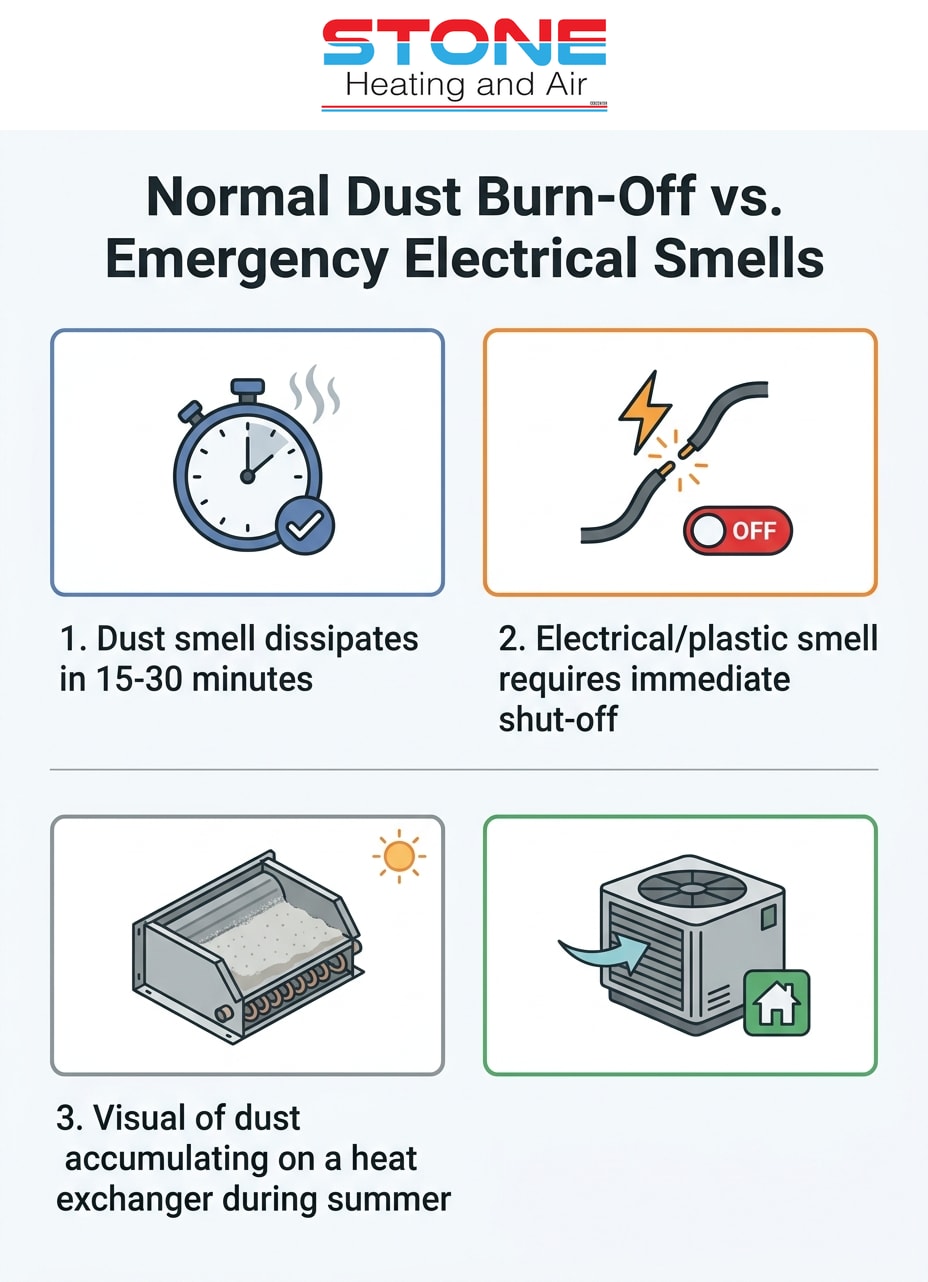
2. The Fading Period: Once the system reaches its steady operating temperature, the available dust burns away entirely. You should notice the smell dissipating within 15 to 30 minutes of continuous operation.
3. The Clear Out: To help clear your indoor air quality faster during this transition, you can open a few windows or run your ceiling fans. This ventilates the harmless but irritating odors out of your living spaces quickly.
4. The Warning Window: If the smell persists beyond this short 30-minute window, or if it returns just as strongly the next time the heater kicks on, the situation escalates from a normal symptom to a potential warning sign of mechanical trouble.
Paying close attention to this timeline is your best diagnostic tool. A healthy system clears its throat quickly and gets back to work. A struggling system will continue to produce odors long after the initial dust has burned away.
Normal Burn-Off vs. Emergency Electrical Smells
Safety always comes first when dealing with high-voltage heating equipment. While dust burn-off is harmless, our dispatchers at Stone Heating and Air know firsthand that other odors indicate severe component failure or fire risks. You must be able to tell the difference immediately. If you are addressing burning smells during startup, use the sensory details below to guide your next steps.
• Normal Dust Burn-Off — What It Smells Like: Musty, dusty, similar to a hot clothing iron or a warm hairdryer. — Duration & Behavior: Smell dissipates within 15 to 30 minutes. Only happens on the first few startups. — Required Homeowner Action: Monitor the system. Open windows to ventilate the home. No immediate danger.
• Electrical Fire / Arcing — What It Smells Like: Sharp, fishy, or a distinct metallic "ozone" smell. — Duration & Behavior: Persists continuously. May occur randomly in the middle of the winter season. — Required Homeowner Action: Shut off the system at the thermostat immediately. Call a professional.
• Melting Plastic / Rubber — What It Smells Like: Harsh, toxic chemical smell, like burning tires or melting wire casing. — Duration & Behavior: Grows stronger the longer the system runs. Does not fade over time. — Required Homeowner Action: Shut off the system immediately. Turn off the breaker if necessary. Call for emergency service.
Behavior of Emergency Smells: The most important distinction is how the odor behaves over time. Dust burn-off gets weaker as the system runs. Electrical and melting plastic smells grow sharper, more toxic, and more pervasive the longer the blower motor operates. If you detect an electrical odor, do not wait to see if it clears up. Shutting the system down immediately prevents further damage to your expensive control boards and eliminates the risk of an active fire inside the cabinet.
What Actually Happens During an AC Check Up and Fall Maintenance?
Many homeowners wonder how to prevent this startling odor from happening in the first place. The answer lies in professional preventative care. Connecting your end-of-summer cooling checks with your pre-winter heating preparation is the smartest way to avoid seasonal surprises. A comprehensive check-up goes far beyond simply swapping out a dirty air filter; it involves deep, physical cleaning of the internal components that cause these odors.
When you invest in a routine maintenance plan, our technicians perform a rigorous series of tasks designed to prepare your equipment for the demanding months ahead:
1. Deep Cleaning the Heat Exchanger: Technicians open the secure cabinet and physically clean the heat exchanger, coils, and burner assemblies. By removing the heavy summer dust manually, they eliminate the fuel source before it ever has a chance to burn off and smell up your home.
2. Electrical Inspections: Professionals meticulously inspect all electrical connections, wiring harnesses, and capacitors. They ensure every connection is tight and secure, preventing the dangerous arcing and melting wire issues that cause toxic electrical smells.
3. Airflow Verification: The blower motor and fan blades are cleaned and calibrated to ensure they are pushing the correct volume of air over the heating elements, preventing the system from overheating during operation.
4. Safety Control Testing: Technicians test the high-limit switches and safety sensors to guarantee the system will automatically shut down if temperatures ever exceed safe operating parameters.
Relying on local Rogue Valley expertise means you receive transparent, comprehensive maintenance that specifically targets our regional wear-and-tear. At Stone Heating and Air, we understand exactly how much heavy seasonal dust accumulates in our local climate, and our preventative approach ensures your system transitions smoothly from cooling to heating without alarming odors or unexpected mid-season breakdowns.
When to Skip Troubleshooting and Call a Professional
While understanding how your system works empowers you as a homeowner, it is equally important to recognize the strict boundaries of DIY troubleshooting. Modern HVAC systems utilize high-voltage electricity, pressurized gases, and complex circuitry. Attempting to diagnose internal problems yourself can quickly lead to severe injury or catastrophic equipment damage.
Never Open the Cabinet: You should never attempt to open the furnace cabinet or inspect internal electrical wiring yourself. Removing access panels bypasses safety switches and exposes you to live voltage. This level of inspection always requires a licensed professional with the correct diagnostic tools.
When to Call for Service: Reach out for professional AC repair services and heating diagnostics if the burning smell lasts longer than the standard 15 to 30-minute window. Furthermore, if the odor completely disappears but then returns strongly the next day, your system is not experiencing normal dust burn-off; it is likely overheating a component.
Immediate Red Flags: Seek immediate professional help if your system repeatedly trips the circuit breaker on your electrical panel. A tripping breaker is a designed safety mechanism indicating a serious electrical short. Additionally, if you ever see visible smoke coming from your vents, or hear loud grinding and screeching noises accompanying a burning smell, shut the unit off immediately. Prioritizing safety over DIY diagnostics protects your family, your home, and the long-term lifespan of your heating equipment.
Frequently Asked Questions About Heating Startup Smells
Why does my heater smell like burning dust?
The smell is caused by the incineration of airborne particles that settled inside your system over the summer. While your heating components sit dormant during the cooling season, household dust and pet dander accumulate directly on the heat exchanger. When you activate the heat for the first time, the sudden high temperatures literally burn this dust away, creating a distinct, temporary odor.
How long does the furnace burning smell last?
Under normal operating conditions, the smell dissipates within 15 to 30 minutes. The odor will be strongest during the first five minutes as the initial layer of dust incinerates, and then it should fade rapidly. If the smell persists for hours or returns strongly on subsequent days, it is no longer normal burn-off and requires professional attention.
Is a burning smell from the heater dangerous?
A dusty, musty burn-off smell during the first startup of the season is harmless, though it can be slightly irritating to breathe. However, sharp odors that smell like melting plastic, burning rubber, or electrical ozone indicate a serious hazard. These toxic smells mean components are failing or wiring is melting, requiring an immediate system shutdown.
What does an electrical fire smell like in HVAC?
An electrical issue produces distinctly sharp, acrid odors that are very different from burning dust. You may notice a smell resembling melting plastic, burning tires, or a fishy ozone scent caused by electrical arcing. Unlike dust odors that fade quickly, electrical smells grow stronger and more pervasive the longer the HVAC unit continues to run.
Can a professional check-up prevent my heater from smelling in the fall?
Yes, a comprehensive pre-season inspection can largely eliminate this issue. During a professional check-up, technicians physically clean the internal heating components, including the heat exchanger and burner assembly. By removing the accumulated summer debris manually, there is nothing left to incinerate when you finally turn on the heat.
Enjoy a Safe, Odor-Free Home This Winter
A brief burning dust smell during your October heating startup is a perfectly normal part of the fall transition, but persistent or toxic odors should never be ignored. Understanding the difference between harmless seasonal burn-off and a dangerous electrical issue gives you the confidence to operate your system safely as the temperatures drop. You do not have to cross your fingers and hope for the best every time you adjust the thermostat.
Routine professional maintenance eliminates the guesswork entirely, keeping your internal components clean, safe, and operating at peak efficiency. If you want to ensure your home is fully prepared for the colder months ahead without any alarming surprises, scheduling AC maintenance in Central Point and a thorough heating inspection with our team at Stone Heating and Air is the smartest step you can take. Protect your equipment, improve your indoor air quality, and enjoy a warm, comfortable home all season long.