

The November Panic: Is Your Heat Pump Smoking or Steaming?
You step outside on a freezing morning, and your heart sinks. There is a thick cloud of what looks like smoke billowing directly out of your outdoor heating unit. Getting common homeowner questions answered quickly is critical when you suspect an equipment fire, but before you rush to the breaker box in a panic, take a closer look. What you are likely seeing is not smoke at all, but rather a completely normal, safe operational phase known as the winter defrost cycle.
For comprehensive air conditioning services and reliable AC maintenance in Central Point, understanding your system's normal behavior is the first step to ensuring consistent comfort. During the November first freeze, our team at Stone Heating and Air receives a surge of urgent phone calls from worried residents reporting that their outdoor units are on fire. Recognizing the difference between harmless water vapor and a genuine mechanical failure saves you the stress and expense of an unnecessary emergency service call, while also giving you confidence that your equipment is functioning exactly as designed.
The Science Behind the Heat Pump Defrost Cycle
To understand why your outdoor unit appears to be steaming, it helps to look at the basic physics of how a heat pump operates. Unlike traditional gas furnaces that burn fuel to create heat, heat pumps transfer existing heat from one place to another. Even when outdoor temperatures drop near or below 32°F, there is still ambient thermal energy in the air. The outdoor unit's job is to extract that energy and pump it inside your house.
As the system pulls heat from the frigid outdoor air, the refrigerant inside the outdoor coils drops to extremely low temperatures. Any moisture present in the air immediately condenses onto these freezing coils. When the outdoor temperature is low enough, this condensation rapidly turns into a layer of frost or solid ice. If left unchecked, this ice would eventually encase the entire unit, completely blocking the airflow required for the system to function. To prevent this, the system must periodically stop heating your home and start heating itself.
The Role of the Reversing Valve
When the system's sensors detect a significant buildup of ice, the control board initiates a defrost cycle. The core component responsible for this shift is the reversing valve. This heavy-duty electromagnetic valve physically shifts the flow of pressurized refrigerant within the copper lines. By reversing the flow, the heat pump temporarily switches into air conditioning mode.
Instead of sending hot, pressurized refrigerant inside to warm your living room, the system redirects that intense heat back into the outdoor coils. As the hot refrigerant floods the frozen outdoor unit, the accumulated ice rapidly melts away. This sudden interaction between the hot coils and the freezing ambient air produces a large volume of water vapor—which looks exactly like white smoke rising from the top of the machine.
Why the Outdoor Fan Stops
During a defrost cycle, you will notice that the large fan blade at the top of the outdoor unit completely stops spinning. Many homeowners assume this means the motor has failed, but our technicians always explain that this is an intentional and highly necessary design feature. If the fan continued to run, it would constantly blow freezing outdoor air across the coils, actively cooling them down and fighting the defrosting process.
By stopping the fan, the system traps the generated heat directly around the frozen coils, allowing the ice to melt as quickly and efficiently as possible. A standard defrost cycle typically lasts between 5 to 15 minutes. Once the sensors detect that the coils are clear of ice, the reversing valve shifts back, the fan restarts, and the system resumes heating your home.
Visual and Auditory Clues of Normal Winter Operation
When the late fall first freeze arrives, knowing exactly what to look and listen for can instantly alleviate your worries. A normal defrost cycle presents a very specific set of sensory clues that distinguish it from an actual mechanical breakdown.
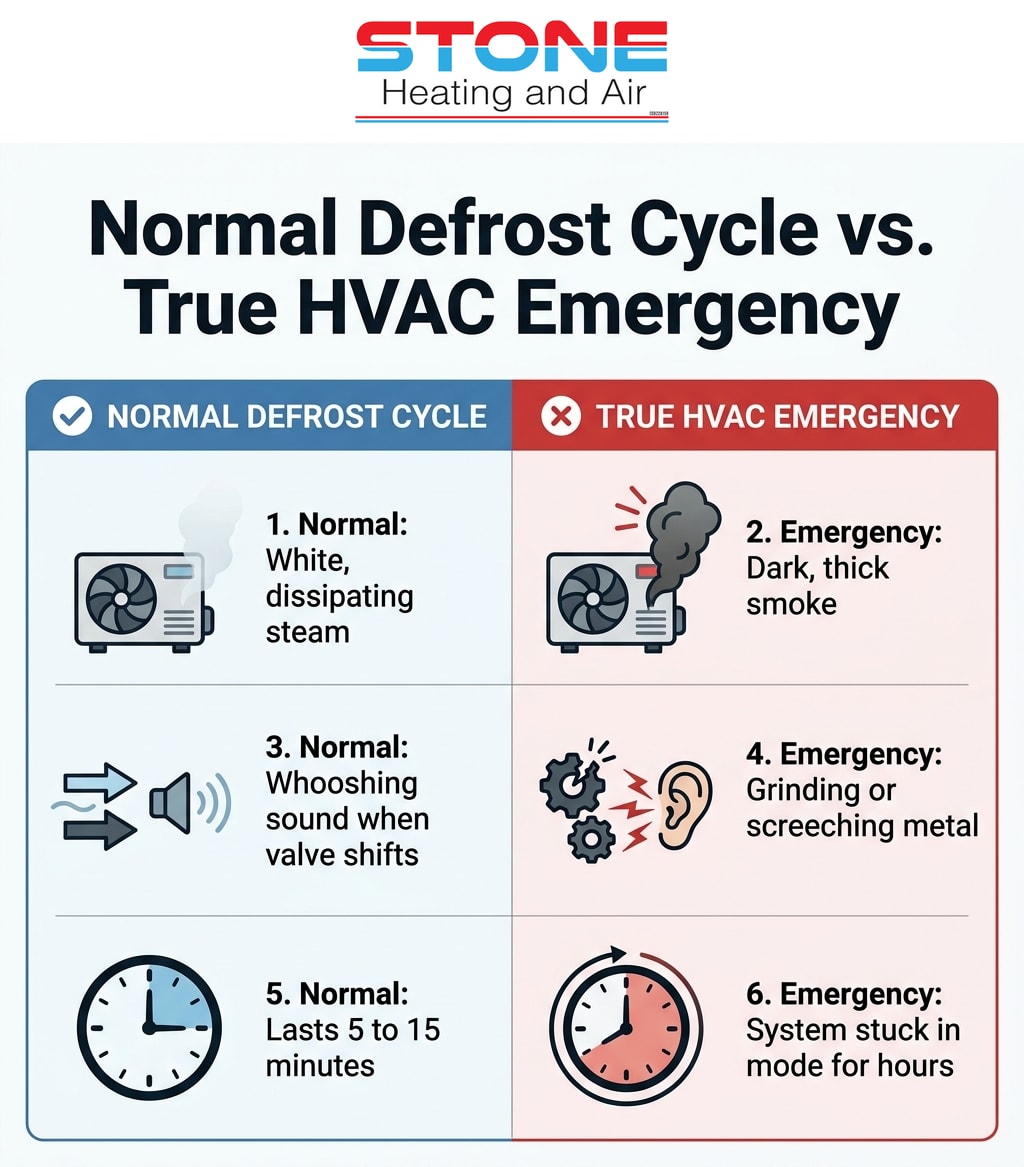
• Visible, dissipating steam: The "smoke" rising from the unit should be pure white and behave like a cloud of water vapor. It will drift upward and quickly dissipate into the surrounding air, leaving no lingering haze.
• The sudden "whoosh" sound: When the reversing valve shifts the flow of high-pressure refrigerant, you will hear a distinct, loud whooshing or hissing sound. This is simply the internal pressure equalizing as the system changes direction.
• Clicking relay noises: You may hear sharp clicking sounds coming from the electrical panel on the side of the outdoor unit. These are the contactors and relays safely opening and closing to redirect power.
• Water pooling underneath: As the ice melts off the coils, a significant amount of water will drain out of the bottom of the unit. Puddles forming around the concrete pad during cold weather are completely normal.
• Auxiliary heat activation: Because the heat pump temporarily switches to cooling mode to defrost the outdoor coils, it would normally blow cold air into your house. To prevent this, the system automatically activates your indoor auxiliary heat strips (backup electric resistance heat) to keep you warm until the cycle finishes.
When to Worry: Spotting a True HVAC Emergency
While steam and a stationary fan are standard behaviors, heat pumps are complex machines that can experience genuine failures. Knowing how to spot a true emergency ensures you get professional help before minor issues escalate into catastrophic damage.
During a late evening service call last summer, one of our Stone Heating and Air technicians responded to a customer whose AC unit stopped working properly. After fixing the system, our technician took the time to demonstrate how to properly maintain the unit, educating the homeowner on the clear differences between normal operation and a genuine mechanical failure. The same principles apply during winter. If you notice dark, thick smoke that smells like burning plastic, melting rubber, or scorched electrical wires, this is a genuine emergency. Shut off the power to the unit immediately at your main breaker panel and contact our professionals for AC repair services.
Identifying Electrical Burning Smells
It is important to distinguish between the harmless "burning dust" smell that often occurs the first time you turn on your auxiliary heat strips for the season, and toxic electrical smoke. Dust burning off the indoor heating elements will smell slightly toasted but will fade within an hour. Acrid, chemical smells coming from the outdoor unit, however, indicate melting wire insulation or a failing capacitor.
Additionally, pay attention to the sounds your system makes. While a whoosh or click is normal, loud grinding, screeching, or metal-on-metal banging indicates a failing compressor or a seized fan motor bearing. Finally, monitor the ice buildup. A light coating of white frost is expected when outdoor temperatures are dropping near or below 32°F. However, if your entire unit is encased in a solid, thick block of clear ice that never melts, your system has likely suffered a refrigerant leak, a failed defrost control board, or a bad sensor, and requires immediate repair from our team.
How Late Fall Temperature Drops Trigger Frequent Defrosting
The frequency of your system's defrost cycles depends heavily on the specific weather patterns in your region. In our years of keeping local families comfortable, we've noticed that Central Point's late fall temperature drops, frequently dipping into the 30s and 20s, create the exact environmental conditions necessary for rapid frost accumulation.
Frost forms fastest not during the absolute coldest days of winter, but rather when the temperature hovers just above freezing (between 35°F and 40°F) while the outdoor humidity remains high. In these conditions, the air holds a significant amount of moisture. As the heat pump pulls heat from this damp air, the refrigerant drops the coil temperature below the dew point, causing massive amounts of condensation that quickly freezes as the evening temperatures plummet.
This transition from mild, damp autumn days to freezing nights catches many homeowners off guard, as the system suddenly begins defrosting multiple times a day. Just last winter, our team assisted a homeowner new to the area with routine filter replacements. Our technicians arrived on time, changed the house filters, and explained how crucial a clean filter is for preventing excessive frost buildup. When an indoor air filter is clogged, it restricts the airflow across the indoor coils. This disruption alters the refrigerant pressures throughout the entire system, causing the outdoor coils to drop to unnaturally low temperatures and freeze over much faster than normal. Understanding what happens during an AC check up highlights why maintaining proper airflow is critical to managing these frequent defrost cycles.
The Role of Proactive AC Maintenance in Winter Reliability
A common misconception we see among homeowners is that air conditioning and winter heating are entirely separate systems. In reality, a heat pump is simply an air conditioner equipped with a reversing valve that allows it to run backward. Because of this, the care and attention you give your system during the warmer months directly dictates how reliably it will heat your home when the November first freeze arrives.
During a routine service call last fall, one of our Stone Heating and Air technicians thoroughly explained the necessary maintenance steps to a homeowner. By the end of the visit, the system was optimized to work at peak performance, ensuring it was fully prepared for the upcoming winter workload. This level of service highlights a core truth about our approach to HVAC care: our experts don't just fix broken parts; we provide thorough maintenance and educate homeowners, ensuring peak system efficiency and preventing false-alarm panic when the weather changes.
Transitioning from Summer Cooling to Winter Heating
Neglecting your system during the summer has severe consequences in the winter. If your outdoor coils are caked with dirt, grass clippings, and summer debris, they cannot effectively absorb heat from the winter air. This forces the compressor to work harder, run longer, and freeze over more frequently. Similarly, if your system developed a slow refrigerant leak during the cooling season, it will lack the necessary pressure to generate enough heat to adequately defrost itself in the winter, leading to a solid block of ice.
Enrolling in our comprehensive preventative maintenance plan ensures that a qualified technician inspects these critical components before the seasons change. We will verify the exact refrigerant charge, clean the microchannel coils, test the defrost control board, and ensure the reversing valve shifts smoothly. Catching a weak sensor or a failing relay during a fall tune-up prevents you from waking up to a freezing house and a severely iced-over unit in the middle of December.
Answering Your Most Urgent Heat Pump Questions
When the weather turns hostile and your equipment starts acting strangely, you need clear, direct answers. Here are the most common questions our customers ask when outdoor temperatures are dropping near or below 32°F.
Why is smoke coming from my heat pump in winter?
The "smoke" you see is actually harmless water vapor. When your heat pump enters a defrost cycle, it sends hot refrigerant to the frozen outdoor coils to melt accumulated ice. As the ice rapidly turns to water and hits the freezing ambient air, it creates a thick cloud of steam that looks remarkably like white smoke.
Is it normal for my heat pump to steam?
Yes, steaming is a completely normal and necessary part of winter operation. Without this regular defrosting process, your outdoor unit would become completely encased in a solid block of ice, cutting off all airflow and causing the system to shut down entirely.
How long does a heat pump defrost cycle last?
A typical defrost cycle lasts anywhere from 5 to 15 minutes. The exact duration depends on the outdoor temperature, the humidity level, and how much frost has built up on the coils. Once the internal sensors detect that the ice has melted, the system will automatically return to normal heating mode.
Should I turn off my heat pump if it's smoking?
If the "smoke" is white, dissipates quickly, and is accompanied by a whooshing sound, do not turn off the system—it is just defrosting. However, if you see dark, thick smoke, smell burning plastic or electrical wires, or hear loud grinding noises, shut off the power at the breaker immediately and call our professionals.
Does skipping AC maintenance cause winter heating problems?
Absolutely. Because a heat pump uses the exact same compressor, coils, and refrigerant for both cooling and heating, summer neglect directly impacts winter performance. Dirty coils or low refrigerant levels from a skipped summer tune-up will cause the unit to struggle, freeze over excessively, and fail to keep your home warm.
How often should I schedule an AC check up for year-round efficiency?
We recommend scheduling professional maintenance twice a year: once in the spring before the heavy cooling season begins, and once in the fall to prepare the reversing valve, sensors, and heating components for the freezing temperatures ahead.
Keep Your System Running Safely Through the Cold
Seeing a massive cloud of white mist rising from your outdoor unit during the late fall first freeze is startling, but it rarely points to a disaster. Understanding that steam, a whooshing sound, and a stopped outdoor fan are safe, normal signs of a system protecting itself empowers you to handle winter weather with confidence. By familiarizing yourself with these operational quirks, you can save yourself the stress of an unnecessary emergency call.
Always monitor your system if you suspect a true issue, paying close attention to thick, dark smoke, strange burning smells, or a unit that remains frozen solid for hours. Proactive care is the best defense against winter breakdowns. Reach out to our team at Stone Heating and Air to schedule a comprehensive inspection. We will ensure your coils are clean, your refrigerant is balanced, and your defrost sensors are ready to keep your home comfortable and efficient all season long—and keeping your equipment properly maintained may even help you qualify for generally applicable energy rebates and utility incentives.