

Facing System Struggles During the First Chilly Weeks
That strange rattling noise from your furnace isn't going away on its own, and reviewing objective options comparisons for homeowners is the smartest next step when your aging heating system struggles to keep up. As the November pre-winter temperature drops begin to settle over the region, relying on a failing HVAC setup becomes a daily source of frustration. At Stone Heating and Air, we frequently see Central Point homeowners dealing with rooms that stay stubbornly cold while others overheat, or finding themselves constantly adjusting the thermostat just to feel comfortable. These are the classic signs of an older unit losing its capacity to heat your home effectively.
This brings you to a critical decision point: do you keep pouring resources into repairing a dying unit, upgrade to a high-efficiency gas furnace, or transition entirely to an electric heat pump? Evaluating the wear-and-tear from heavy summer cooling alongside your upcoming winter heating demands is essential for building a reliable, comfortable home. Making this choice now, rather than waiting for a complete breakdown in the middle of a winter freeze, allows you to take an objective, expert-guided approach to pre-winter readiness. For immediate help ensuring your current system is safe to operate, scheduling AC maintenance in Central Point gives you a clear baseline of your equipment's health.
The Link Between Late-Season AC Maintenance and Winter Readiness
You might wonder why we are talking about cooling systems when the weather is turning cold. The reality is that summer and fall wear and tear directly impacts your overall HVAC system's ability to transition into heavy heating use. Late-summer dust and regional wildfire smoke in Central Point, OR, create heavy particulate loads that severely compromise system filters, blower motors, and indoor coils. If you use a heat pump, that system relies on the exact same refrigeration cycle for both cooling and heating. In our experience, neglecting routine service leaves these hardworking systems highly vulnerable to sudden breakdowns just as the weather turns freezing.
Recently, a local homeowner reached out to our Stone Heating and Air team during the fall for a routine service call, unsure of how to properly maintain their system for peak performance. Our visiting technician took the time to explain the correct maintenance procedures step-by-step, ensuring the customer knew exactly how to keep their system working properly through the changing seasons. Taking these proactive steps is what separates a reliable system from an unpredictable one.
Critical Maintenance Steps for Seasonal Transitions
Professional technicians perform a series of fundamental checks to ensure your system is ready for the shift in weather:
1. Clearing particulate buildup: Technicians remove the dense layers of dust and debris from the blower motor and coils, ensuring proper, unrestricted airflow for heating.
2. Testing electrical connections: Summer heat causes wiring to expand and contract. Tightening these connections prevents mid-winter electrical failures and keeps the system running safely.
3. Calibrating the thermostat: Ensuring your thermostat accurately reads the indoor temperature prevents your system from overworking and wearing out prematurely.
4. Checking refrigerant levels: For heat pumps, proper refrigerant charge is absolutely vital for extracting heat from the outdoor air during the colder winter months.
5. Inspecting condensate drains: Clearing out algae and blockages from the summer months prevents water damage and system lockouts when you switch to heating.
Keeping up with comprehensive air conditioning services in the late summer and fall is the absolute foundation of a reliable winter heating season.
Evaluating Your Aging HVAC System's Reliability
The shift toward November pre-winter temperature drops often reveals the hidden weaknesses in an older HVAC unit. You turn on the heat, but instead of steady warmth, you experience inconsistent temperatures, unusual banging or grinding noises, and a system that turns on and off every five minutes. This frequent cycling is a major red flag that your equipment is struggling to keep up with the demands of the house.
These symptoms usually point to a system that is structurally at the end of its lifespan, rather than one suffering from a simple, isolated component failure. Over years of use, heat exchangers crack, blower motors lose their torque, and internal sensors degrade. You need a framework for deciding when to stop investing in upkeep for an obsolete unit. Our team regularly warns homeowners that relying on an unreliable system as deep freezes approach puts your property at risk of pipe damage and severe discomfort. If your system requires frequent air conditioning repair or furnace patching just to limp through the season, it is time for a full replacement evaluation.
When to Repair vs. When to Replace
Making the right call comes down to looking closely at your system's history and current performance metrics.
• Assess recent service calls: If you have called a technician more than twice in the past year for different breakdowns, your system is signaling a downward spiral of component failures.
• Evaluate the overall age: Most traditional systems last 10 to 15 years. If your unit is older than that, it is falling far behind modern efficiency standards and is likely costing you excess energy.
• Monitor energy consumption: A sudden, unexplained spike in your monthly utility usage often indicates that the system is working twice as hard to produce the same amount of heat.
• Consider ductwork and internal components: Sometimes the unit itself runs, but degraded ductwork or failing internal blower fans mean the heat never actually reaches your living spaces.
High-Efficiency Gas Furnaces: Consistent Heat for Cold Nights
For many homeowners in Central Point, OR, traditional gas heating remains a familiar and powerful option. We frequently install high-efficiency gas furnaces because they are engineered to deliver rapid, consistent heat even on the absolute coldest nights of the year. Unlike older models that wasted a massive amount of energy by venting usable heat right out the chimney, modern gas furnaces capture and utilize almost all the fuel they consume.
The combustion process in these advanced units utilizes secondary heat exchangers. After the primary combustion creates heat, the exhaust gases are routed through a second exchanger, extracting the last remaining bits of thermal energy before the cooled exhaust is safely vented outside. This dual-stage process is what makes modern units so incredibly effective at heating large spaces quickly.
When it comes to lifespan and routine upkeep, gas-powered systems require specific attention. Because they rely on controlled combustion, regular professional inspections of the heat exchanger, burners, and venting systems are mandatory to prevent safety hazards like carbon monoxide leaks. The installation logistics also require careful planning, as high-efficiency models often need dedicated PVC venting and specific ductwork configurations to handle the increased airflow safely.
Understanding AFUE Ratings
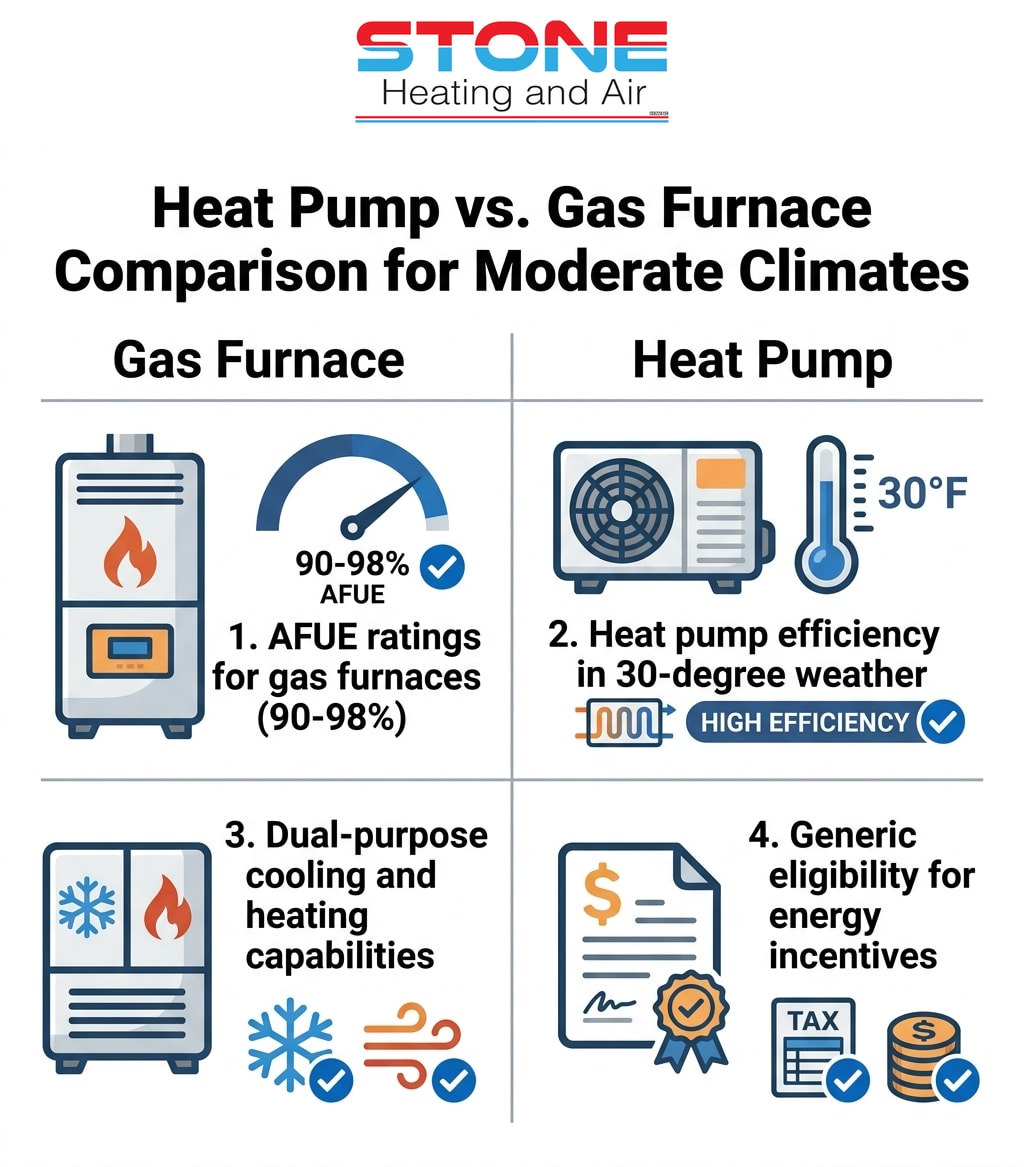
When comparing gas furnaces, the most important metric to look at is the Annual Fuel Utilization Efficiency (AFUE) rating. This percentage measures exactly how much of the fuel consumed is converted directly into usable heat for your home.
• Modern efficiency standards: Today's high-efficiency systems achieve AFUE ratings between 90% and 98%. This means that nearly all the fuel you pay for goes directly toward heating your rooms, with minimal waste.
• The cost of older models: Older, standard-efficiency furnaces often operate at 60% to 70% AFUE, meaning they lose significant heat through the exhaust, forcing the system to burn far more fuel to achieve the same indoor temperature.
• Environmental considerations: Higher AFUE ratings mean less fuel is burned overall, which translates to fewer local emissions and a more responsible approach to home heating.
Electric Heat Pumps: Dual-Purpose Cooling and Heating
If you are looking to move away from fossil fuels, electric heat pumps offer incredible versatility and efficiency. Instead of generating heat through combustion, a heat pump works by transferring ambient heat from the outside air into your home. Yes, even during November pre-winter temperature drops, there is still thermal energy in the outdoor air that these advanced systems can capture and compress into usable indoor warmth.
Central Point's moderate winter lows, which mostly hover in the 30s, make heat pumps exceptionally viable and efficient here. We often recommend heat pumps to our clients because our region generally avoids the extreme, prolonged sub-zero drops that challenge older models, allowing a modern system to handle our seasonal demands without relying heavily on backup heating strips. Modern cold-climate technology allows these advanced units to operate with high efficiency even when temperatures do briefly dip below freezing.
Beyond efficiency, heat pumps significantly lower your home's environmental impact and reduce your overall carbon footprint by utilizing electricity rather than direct fossil fuel combustion. Perhaps the biggest everyday advantage, however, is having a single, unified system for both summer cooling and winter heating. You only have to maintain one piece of primary equipment year-round, simplifying your home maintenance schedule.
Navigating Energy Incentives
Transitioning to high-efficiency electric heating often comes with valuable financial benefits designed to encourage energy conservation and modernize residential heating infrastructure.
• Generic federal and local programs: Federal tax credits and local utility rebates may apply to qualifying high-efficiency heat pump installations, helping offset the initial investment of upgrading your system.
• Professional verification: Because energy programs change frequently and have specific equipment requirements, we strongly advise homeowners to consult with a tax professional or their local utility provider to verify current generic program eligibility before making a final decision.
Objective Heating Options Comparisons for Homeowners
Making a definitive choice between a high-efficiency gas furnace and an electric heat pump requires a clear, unbiased look at how each system aligns with your specific household priorities in Central Point, OR. You must weigh the operational efficiency of gas combustion against the steady electric heat transfer of a heat pump. Pre-winter readiness is also a major factor; transitioning from an old gas system to a new heat pump technology may require a longer installation timeline to update electrical panels, whereas swapping a furnace is often a faster process.
Long-term reliability heavily depends on proper orientation and understanding how to use your new equipment. For example, one of our local customers scheduled a post-installation walk-through with our team this past spring to get guidance on operating their newly installed system. Our technicians took the time to thoroughly explain and demonstrate all system operations, ensuring the customer felt completely confident running their new equipment. Education is just as vital as the hardware itself when it comes to maximizing efficiency and comfort.
Long-Term Value and Reliability
When evaluating these systems, consider the long-term impact of local climate trends. Central Point's moderate winters heavily favor the high efficiency of heat pumps, but homes with existing, robust gas infrastructure might still find excellent value in a 98% AFUE furnace. Some homeowners even opt for dual-fuel capabilities, pairing a heat pump with a backup gas furnace for the absolute best of both worlds, ensuring maximum efficiency in mild weather and maximum power during deep freezes.
• Primary Function — High-Efficiency Gas Furnace: Heating only (requires separate AC unit for summer) — Electric Heat Pump: Dual-purpose cooling and heating in one system
• Efficiency Metric — High-Efficiency Gas Furnace: AFUE (up to 98% efficiency in modern models) — Electric Heat Pump: HSPF (high efficiency in moderate cold weather)
• Climate Suitability — High-Efficiency Gas Furnace: Excellent for extreme, deep freezes and rapid heating — Electric Heat Pump: Perfect for moderate 30-degree winters in Oregon
• Energy Source — High-Efficiency Gas Furnace: Natural gas or propane combustion — Electric Heat Pump: Electricity (heat transfer technology)
• Installation Needs — High-Efficiency Gas Furnace: Requires dedicated venting and gas line access — Electric Heat Pump: May require electrical panel upgrades for older homes
• Environmental Impact — High-Efficiency Gas Furnace: Produces localized exhaust emissions during operation — Electric Heat Pump: Lower carbon footprint, no local exhaust produced
Why Preventative Care Protects Your Investment
Regardless of whether you choose the steady combustion of a gas furnace or the dual-action efficiency of a heat pump, ongoing professional maintenance is what guarantees long-term peace of mind. As November pre-winter temperature drops put your system to the test, preventative strategies are the only reliable way to prevent unexpected failures during peak seasonal demands. Waiting for a system to break down before calling for help is a surefire way to experience discomfort and costly emergency repairs.
Thorough diagnostics and regular filter changes are mandatory for both system types. Professional technicians perform comprehensive checks, measuring electrical draws, testing safety limit switches, and calibrating blower motors to ensure everything is operating within safe parameters. Just as importantly, they explain ongoing care steps so you know exactly what to watch for between visits, empowering you to take better care of your home's infrastructure.
During a busy schedule this past season, one of our customers needed a thorough explanation of their maintenance needs. Our technicians arrived early for the appointment and explained every maintenance step thoroughly, ensuring the homeowner gained a clear understanding of the work being done and how to care for their unit moving forward. This level of communication is essential for long-term equipment health.
Understanding system care is just as important as selecting the right equipment. That is why Stone Heating and Air offers a comprehensive preventative maintenance plan, designed specifically to extend your equipment's life, improve daily efficiency, and guarantee your comfort before harsh weather hits.
Frequently Asked Questions About Heating Options and Maintenance
Homeowners in Central Point, OR, often have specific questions about preparing their homes for the colder months and choosing the right equipment. Before diving into the answers below, it can be helpful to understand what actually happens during an AC check-up and how those seasonal transitions impact your heating reliability.
Is a heat pump better than a gas furnace?
There is no single "better" option; it depends entirely on your home's infrastructure and the local climate. Heat pumps are incredibly efficient in moderate climates and offer the bonus of summer cooling in a single unit. Meanwhile, gas furnaces provide rapid, high-temperature heat that excels in extreme cold. Choosing the right system means matching the technology to your local weather patterns and long-term energy goals.
At what temperature does a heat pump become inefficient?
Older heat pumps typically began losing efficiency when temperatures dropped below 40 degrees Fahrenheit. However, modern cold-climate heat pumps are engineered to extract heat and operate efficiently even when outside temperatures fall well below freezing. In moderate winter regions like Southern Oregon, they maintain excellent performance and reliability year-round.
Should I replace my gas furnace with a heat pump?
Replacing a gas furnace with a heat pump is an excellent choice if you want to reduce your carbon footprint, eliminate localized exhaust emissions, and consolidate your heating and cooling into one system. You will need to have a professional evaluate your home's electrical panel and existing ductwork to ensure they can support the transition. Many homeowners find the switch highly beneficial for long-term energy management.
How do heat pumps perform in Oregon winters?
Heat pumps perform exceptionally well in Southern Oregon's winter climate. Because the region typically experiences moderate lows in the 30s rather than prolonged, extreme sub-zero freezes, heat pumps remain in their optimal operating range. This allows them to deliver highly efficient comfort throughout the season without constantly relying on supplemental heating strips.
What is the difference between a high-efficiency furnace and a heat pump?
A high-efficiency furnace generates heat by burning combustible fuel (like natural gas or propane) and capturing almost all the resulting thermal energy through secondary heat exchangers. A heat pump does not generate heat at all; instead, it uses electricity and refrigerant to transfer existing ambient heat from the outdoors into your home. This fundamental difference in operation dictates their efficiency ratings and installation requirements.
How does late-season AC maintenance impact winter heating reliability?
Late-season AC maintenance is crucial because it addresses the wear and tear accumulated over the summer, such as clogged filters, dirty coils, and stressed electrical components. For heat pumps, the exact same components used for cooling are used for heating, meaning summer neglect directly translates to winter breakdowns if left unchecked. A clean, well-maintained system transitions smoothly into the heating season.
Making the Right Choice for Your Home's Comfort
Navigating November pre-winter temperature drops doesn't have to be a stressful or overwhelming experience. By understanding the core differences between high-efficiency gas furnaces and electric heat pumps, you can make a confident, informed decision before deep winter arrives. Gas furnaces offer rapid, powerful heating through efficient combustion, making them a steadfast choice for immediate warmth. On the other hand, heat pumps provide an eco-friendly, dual-purpose solution that thrives in our moderate local climate while streamlining your year-round comfort.
We encourage you to carefully explore these heating options comparisons for homeowners and consider how each system aligns with your long-term comfort, reliability needs, and energy goals. Don't wait for your aging system to fail on the absolute coldest night of the year. Take the time to evaluate your current equipment and schedule a professional evaluation with our team today to ensure your home is equipped with the right system to keep your family warm, safe, and perfectly comfortable all winter long.