

The September Dilemma: Blower Motor Repair vs. Proactive Replacement
When the early chill arrives, weighing the pros and cons of repairing a 15-year-old furnace vs. pre-winter replacement becomes a pressing priority for many homeowners. September brings crisp mornings to the Pacific Northwest, but discovering your heating equipment is failing is a stressful way to start the fall season. At Stone Heating and Air, we see this exact scenario play out every year in Central Point. You might notice a strange grinding noise from the utility closet, or perhaps the vents are blowing lukewarm air. Suddenly, you are facing a major component failure right before the cold weather sets in permanently.
This timing creates a difficult dilemma. Do you invest in fixing an aging blower motor just to get through one more winter, or do you start fresh with new equipment? Making this choice during the September pre-heating season is critical. If you wait until the seasonal rush begins, contractor availability drops sharply, and our dispatchers often have to tell homeowners there will be a wait for emergency service while their house grows colder.
Before you invest heavily in a temporary band-aid fix, it helps to step back and evaluate your heating services options objectively. A major repair on an aging system is rarely just a one-time event; in our experience, it is often the first domino to fall in a series of cascading mechanical issues. The purpose of this guide is to provide a clear, objective framework for this specific scenario. By looking at lifespan, efficiency, and long-term reliability, you can make an informed decision that protects your home and your peace of mind.
Evaluating the Lifespan and Efficiency of an Aging Heating Unit
To make a logical decision about your equipment, you first need to establish the baseline reality of operating a unit that has reached the decade-and-a-half mark. A 15-year-old furnace has already processed millions of cubic feet of air, ignited its burners countless times, and endured significant thermal stress. Our technicians at Stone Heating and Air evaluate hundreds of these older systems, and understanding how this wear and tear impacts performance is the first step in deciding whether to repair or replace your HVAC equipment.
The Reality of Furnace Life Expectancy
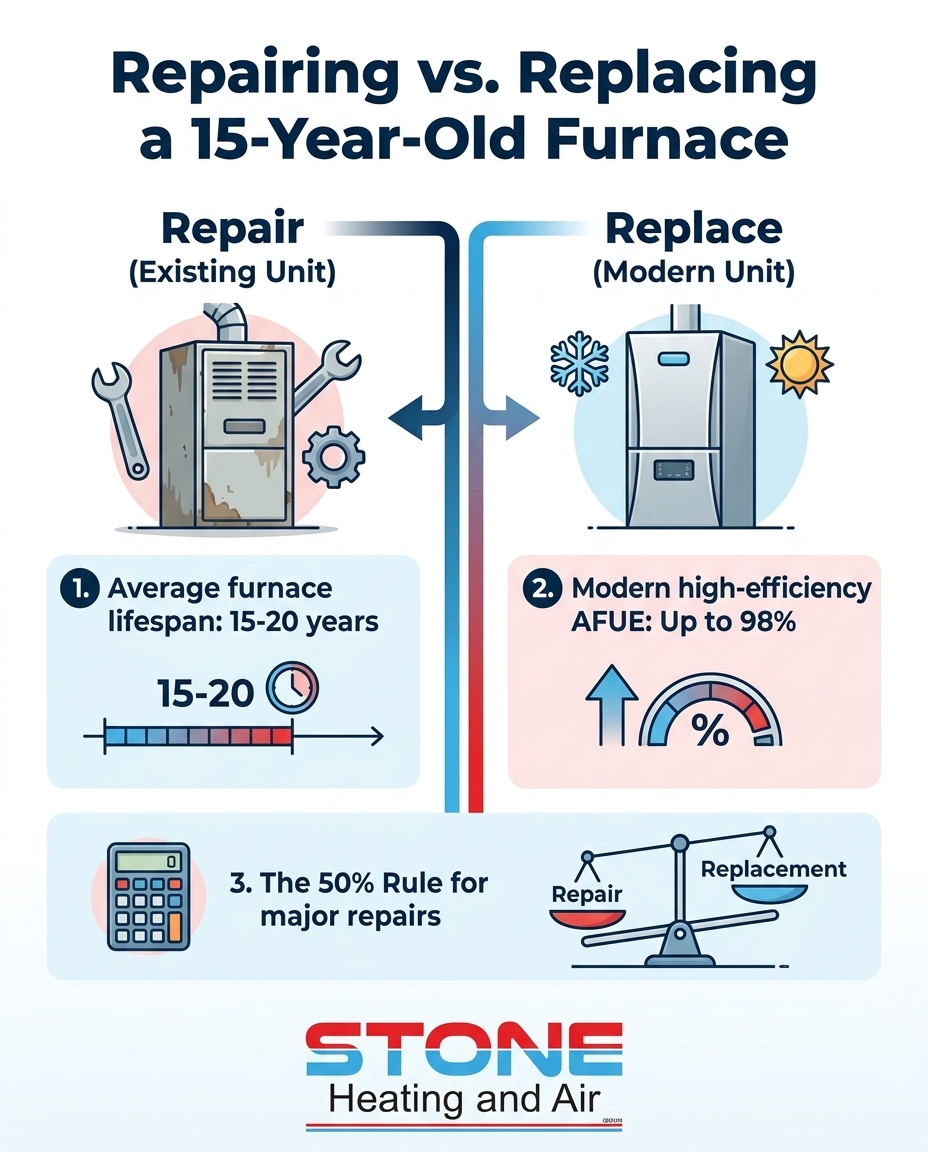
The U.S. Department of Energy notes that the average lifespan of a well-maintained residential furnace is typically 15 to 20 years. Once your system enters this window, it is officially operating on borrowed time. Even with meticulous annual tune-ups, the physical components simply degrade over time. A pattern we see often includes:
1. Heat exchanger fatigue: Years of expanding and contracting from intense heat cause the metal in the heat exchanger to weaken, increasing the risk of dangerous cracks.
2. Blower motor wear: The bearings and electrical components inside the blower motor degrade after years of continuous spinning, leading to reduced airflow and eventual failure.
3. Ignition system unreliability: Older electronic ignitors or pilot systems become less responsive, causing intermittent heating issues or complete system lockouts.
4. Sensor degradation: Flame sensors and limit switches lose their calibration, which can cause the furnace to short-cycle or shut down unexpectedly.
The Efficiency Gap
Beyond mechanical wear, you must also consider the technological gap between old and new systems. Furnaces manufactured 15 years ago typically maxed out at much lower Annual Fuel Utilization Efficiency (AFUE) ratings. A standard unit from that era might convert only 80% of its fuel into usable heat, sending the remaining 20% straight up the exhaust flue.
In contrast, modern high-efficiency standards have pushed AFUE ratings up to 98%. This means nearly every drop of fuel is converted directly into warmth for your home. As a 15-year-old furnace ages, its original efficiency rating drops even further due to dirt buildup and worn parts. The compounding effect of minor wear and tear means your aging unit is likely costing you significantly more in monthly energy consumption than it did when it was newly installed.
The 50% Rule: Weighing Major Component Failures Without the Price Tag
The Problem: When a technician diagnoses a major component failure on a 15-year-old furnace, the immediate reaction is often sticker shock. Whether it is a seized blower motor, a cracked heat exchanger, or a failed control board, major repairs require significant labor and expensive replacement parts. Homeowners often struggle to decide if the repair is "worth it" without getting bogged down in specific financial quotes.
The Cause: The hesitation stems from the fear of throwing good money after bad. Fixing one major part does not reset the clock on the rest of the system. The original draft inducer, gas valve, and heat exchanger are still 15 years old and equally prone to failure in the near future.
The Solution: Our team at Stone Heating and Air relies on the "50% rule" as a reliable, percentage-based framework for evaluating repair viability. If the cost to repair your aging system equals or exceeds half the value of a proactive replacement, we generally advise that the repair is a poor investment. This rule helps you weigh the decision conceptually, focusing on percentages rather than getting lost in the exact price tags.
Applying this rule requires stepping back and looking at the hidden costs of repairing an old unit. If you replace the blower motor today, what happens if the heat exchanger cracks next month? You will have paid for a major repair on a system that still needs to be replaced.
Getting a transparent evaluation is critical here. Our commitment to honest, transparent evaluations empowers you to make the right choice for your home, rather than pushing a hard sell. We provide multiple, no-pressure options so you can see exactly how a repair stacks up against a replacement. For example, one local Central Point homeowner reached out to us during a recent fall season regarding a failing 1950s wall heater that had finally given out. They needed the old unit removed quickly and hauled away safely. Our team handled the removal professionally and walked them through their modern heating options without any pressure, allowing them to choose the path that made the most sense for their property.
The True Cost of Mid-Winter Breakdowns in Southern Oregon
Making a decision in September is vastly different from making a decision in January. The urgency of local weather patterns drastically changes the stakes of a heating failure. In Central Point, Oregon, a broken furnace is not just a minor inconvenience—it quickly becomes a property emergency.
Severe Regional Conditions:
During the peak of winter, average lows in the region regularly dip into the 20s and 30s. When your heating system fails in these freezing conditions, the internal temperature of your home drops rapidly. Without a functional HVAC system, you are suddenly racing against the clock.
Property and Safety Risks:
The most immediate threat during a mid-winter breakdown is frozen pipes. If your home's internal temperature drops too low, water lines in uninsulated walls, crawlspaces, or attics can freeze and burst, causing catastrophic water damage. Additionally, relying on temporary space heaters overloads electrical circuits and introduces significant fire hazards to your home.
The Logistical Nightmare:
In our years providing emergency services, waiting for a 15-year-old furnace to fail mid-winter guarantees you will be dealing with a logistical nightmare. During freezing weather, our schedules—and those of every local contractor—are fully saturated. You may find yourself waiting days for an available technician. If your aging unit requires a specialized part that is out of stock, that wait time extends even further.
Framing a pre-season replacement as an investment in safety changes the perspective. You are not just buying an equipment upgrade; you are purchasing the peace of mind that comes with knowing your home is protected against freezing temperatures before the severe weather actually arrives.
Side-by-Side Comparison: Repairing vs. Proactive Replacement
To help you weigh your options logically during the September pre-heating season, it helps to look at the differences side-by-side. The choice between fixing a 15-year-old furnace and installing a new one impacts your comfort, your schedule, and your long-term reliability.
• Reliability — Repairing a 15-Year-Old Unit: Short-term relief. Fixes the immediate symptom but leaves aging parts in place. — Proactive Pre-Winter Replacement: Long-term reliability. A brand-new system designed to run flawlessly for years.
• Warranty Coverage — Repairing a 15-Year-Old Unit: Only the specific replaced part is covered (usually for a short period). — Proactive Pre-Winter Replacement: Comprehensive manufacturer warranties covering all parts for up to 10 years.
• Energy Efficiency — Repairing a 15-Year-Old Unit: Stagnant or declining performance. Continues to waste fuel at older AFUE rates. — Proactive Pre-Winter Replacement: Modern high-efficiency performance, converting up to 98% of fuel into heat.
• Installation Stress — Repairing a 15-Year-Old Unit: High stress. Often occurs mid-season while you wait in a cold house for parts. — Proactive Pre-Winter Replacement: Low stress. A scheduled, controlled installation process on your timeline.
When to Choose the Repair
Repairing an older system makes sense in a few specific scenarios. If the unit has been meticulously maintained since installation, has a clean service record, and this is its very first mechanical issue, our technicians might suggest a repair as a viable option. Additionally, if the repair is minor—such as replacing a standard capacitor or a basic flame sensor—and does not involve the blower motor or the heat exchanger, fixing it can buy you a little more time to plan for an eventual upgrade.
When to Choose Replacement
Proactive replacement is the smarter path if the unit is a decade and a half old and facing a major component failure. During a recent fall installation, a homeowner needed a new system fitted into a notoriously difficult, tight utility space. The Stone Heating and Air crew went above and beyond to install the new equipment carefully, educating the customer along the way about their new high-efficiency features. That level of careful, scheduled workmanship is only possible when you replace proactively. If you want guaranteed reliability before the freezing weather hits, starting fresh is the safest choice.
Navigating Financing, Efficiency Gains, and Rebates
Addressing the financial aspect of a replacement means looking beyond the initial installation and focusing on long-term savings. A 15-year-old furnace operates at a significant disadvantage compared to modern technology. When you upgrade, the significant leap in AFUE ratings translates directly to lower monthly energy consumption. Because the new unit extracts more heat from the same amount of fuel, it runs for shorter cycles and dramatically reduces utility waste.
Furthermore, proactive upgrades often qualify for various incentives that soften the investment. General utility rebates and federal tax credits may be available for qualifying high-efficiency installations. Because these programs change frequently based on local regulations and energy initiatives, we always advise our clients to consult with their utility provider or a qualified tax professional for the most current incentive details.
Finally, you do not have to drain your emergency savings to secure a warm home for the winter. Exploring flexible financing options makes proactive upgrades highly accessible. By breaking the investment into predictable monthly payments, you can enjoy the immediate comfort and safety of a reliable new system while keeping your household budget firmly intact.
Frequently Asked Questions About Aging Furnaces
Is it worth repairing a 15-year-old furnace?
Generally, investing in a major repair on a 15-year-old furnace is not recommended. Because the average lifespan of these units is 15 to 20 years, a major failure usually signals that other components will soon break down. Applying the 50% rule helps clarify the decision: if the repair approaches half the value of a new system, replacement is the better long-term investment.
What is the life expectancy of a residential furnace?
The U.S. Department of Energy states that a well-maintained residential furnace typically lasts between 15 and 20 years. Once a unit crosses the 15-year threshold, it enters the end of its serviceable life. At this stage, efficiency drops, and the risk of critical component failure increases significantly.
Should I proactively replace my furnace before winter?
Yes, replacing an aging, problematic furnace before winter arrives is highly advisable. Proactive replacement allows you to schedule the installation at your convenience, avoiding the stress of emergency mid-winter breakdowns. It also protects your home from the severe risks of freezing pipes during sudden heating failures.
What is the rule of thumb for replacing a furnace?
The most common industry guideline is the 50% rule. If the cost of a repair is equal to or greater than 50% of the cost of a new system, you should replace the furnace. Additionally, if the unit is over 15 years old and requires frequent minor repairs, it is usually time to upgrade.
How much does a new high-efficiency furnace save on energy bills?
A new high-efficiency furnace can significantly reduce monthly energy consumption by utilizing up to 98% of the fuel it consumes. Compared to a 15-year-old unit that may only operate at 70% to 80% efficiency due to age and wear, the modern system wastes far less energy, translating to noticeable utility savings over the heating season.
What are the signs that a furnace blower motor is failing?
Common signs of a failing blower motor include strange grinding or screeching noises, weak airflow from your vents, and a system that frequently overheats and shuts down. If you notice a burning smell or if the motor feels excessively hot to the touch, it requires immediate professional evaluation.
Making the Smart Choice Before the First Freeze
Investing heavily in a unit nearing the end of its life is rarely the safest bet for your home. As we have seen, a 15-year-old furnace is already operating on borrowed time, and pouring resources into an aging blower motor or heat exchanger only delays the inevitable. Relying on an objective framework like the 50% rule helps you separate the stress of a breakdown from the logic of a long-term investment.
The September pre-heating season is the optimal time to secure your home's comfort. By taking action now, you avoid the chaos of mid-winter emergencies and the danger of freezing temperatures. Before the seasonal rush limits your options, contact our team at Stone Heating and Air to schedule a thorough evaluation. We will help you get a free replacement estimate and find the perfect high-efficiency solution for your home.