

Why Gas Furnace Maintenance in Jacksonville, OR Keeps Your Home Safe and Warm

Gas furnace maintenance in Jacksonville, OR is something every homeowner here should take seriously — especially before the Rogue Valley's cold season hits.
Here's a quick summary of what you need to know:
• Schedule maintenance once a year, ideally in the fall before temperatures drop
• A professional tune-up includes filter replacement, heat exchanger inspection, burner cleaning, thermostat calibration, and safety checks
• Watch for warning signs like uneven heating, strange noises, frequent cycling, or a yellow pilot light
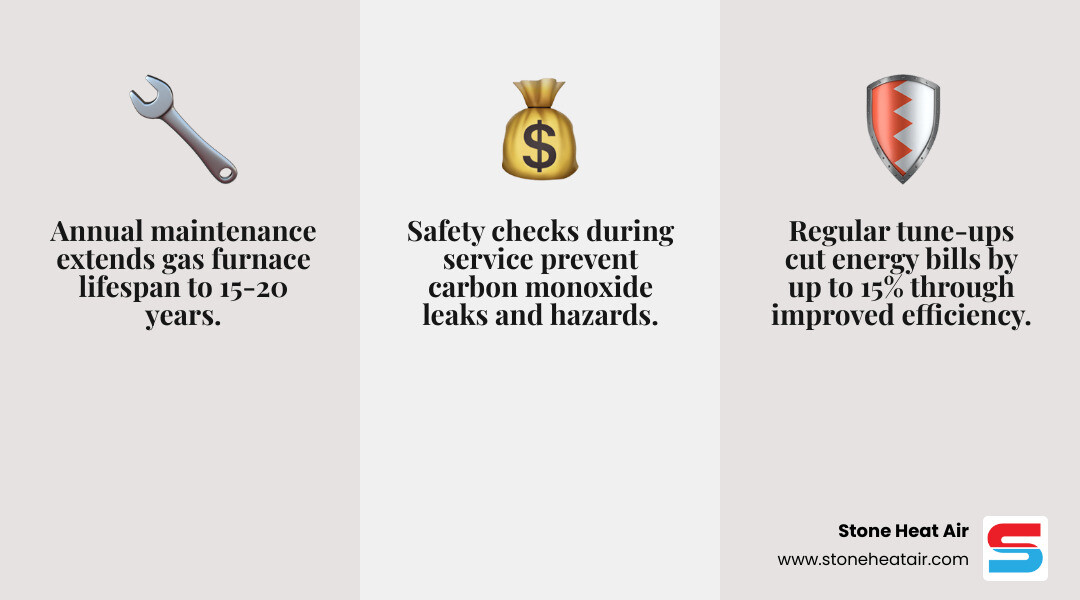
• Regular maintenance extends furnace life to 15-20 years and reduces the risk of costly breakdowns
• Carbon monoxide safety checks are part of every professional gas furnace service visit
Jacksonville, OR sits in the Rogue Valley, where winters can bring genuine cold snaps and freezing overnight temperatures. Your furnace works hard here. And like any hardworking system, it needs regular attention to stay safe, efficient, and reliable.
Neglecting annual maintenance doesn't just mean higher energy bills. It can mean unexpected breakdowns on the coldest nights of the year — or worse, undetected safety hazards like carbon monoxide leaks. According to industry data, furnaces that receive consistent care can last 15 to 20 years. Those that don't often fail well before that.
The good news? Staying ahead of problems is straightforward when you know what to look for and when to call a professional.
The Importance of Gas Furnace Maintenance in Jacksonville, OR
Living in Jacksonville, OR, means enjoying the beautiful transition of seasons, but it also means preparing for the Rogue Valley winters. When the temperatures drop below freezing, your gas furnace isn't just a luxury; it’s a critical piece of home infrastructure. Because our local climate can be unpredictable, ensuring system reliability is the top priority for any homeowner.
The primary reason to prioritize gas furnace maintenance in Jacksonville, OR is efficiency. A furnace that is clogged with dust or struggling with worn-out components has to work twice as hard to produce the same amount of heat. This extra effort translates directly into higher utility bills. By keeping the system clean and calibrated, you ensure that every therm of natural gas is used effectively, keeping your costs down.
Furthermore, Jacksonville has specific local climate considerations. The humidity and temperature fluctuations in Southern Oregon can lead to minor corrosion or dampness issues within HVAC systems if they aren't checked regularly. Following a gas-furnace-maintenance-in-talent-or approach—which is similar to our needs here in Jacksonville—ensures your system meets all safety and environmental regulations while minimizing your home's carbon footprint.
When to Schedule Gas Furnace Maintenance in Jacksonville, OR
Timing is everything. We strongly recommend an annual frequency for your furnace tune-up. The absolute best time to schedule this is during the fall. By getting your system checked before the first frost, you avoid the "winter rush" when HVAC companies are buried under emergency repair calls.
If you missed the fall window, don't worry. Even late-season maintenance is better than none at all. You can also look into furnace-spring-maintenance-tips to ensure your system is properly shut down or transitioned if you use a hybrid setup. Additionally, many manufacturers require proof of annual professional service to keep your warranty valid. Skipping a year could mean paying out of pocket for a major component failure that would have otherwise been covered. Getting your hvac-serviced-for-spring or fall ensures you are always one step ahead of the weather.
Professional Gas Furnace Maintenance in Jacksonville, OR: What’s Included?
When we perform a professional tune-up, we don't just "look" at the unit. A comprehensive service involves a technical deep dive into the machinery. Here is what a typical professional visit includes:
• Heat Exchanger Inspection: This is the most critical safety step. We check for cracks or holes that could allow carbon monoxide to leak into your home.
• Burner Cleaning: Dirt and soot can cause "delayed ignition" or poor combustion. We clean these to ensure a clean, blue flame.
• Thermostat Calibration: We make sure your thermostat is actually telling the furnace the right temperature, preventing energy waste.
• Electrical Connection Tightening: Vibrations over time can loosen wires, leading to shorts or fire hazards.
• Blower Motor Lubrication: Reducing friction extends the life of the motor and makes the system run quieter.
• Fuel Line Testing: We check for any leaks in the gas lines or loose fittings.
• Safety Control Testing: We verify that all limit switches and sensors are working so the furnace shuts down safely if it overheats.
For those interested in the technical side, professional-inspections-of-your-gas-furnace provide a much deeper level of security than a simple visual check. We also perform basic-troubleshooting-for-a-malfunctioning-furnace-sensor during these visits to prevent the common "no-heat" calls that plague homeowners in mid-January.
Recognizing Warning Signs and Safety Risks
Your furnace usually tries to tell you it’s in trouble before it finally gives up. Being aware of these signs can save you from a cold night and a hefty repair bill.
One of the most immediate concerns with gas furnaces is safety. Carbon monoxide (CO) is an odorless, colorless gas that can be fatal. During maintenance, we use specialized equipment for gas leak detection and CO monitoring. If you ever notice a yellow or flickering pilot light instead of a steady blue flame, call us immediately—this is a sign of improper combustion.
You should also listen to your heater. Unusual banging, whistling, or groaning noises often point to mechanical issues. If you find your system is "short cycling"—turning on and off every few minutes—it’s a major red flag. This puts immense strain on the components and is often caused by something as simple as a clogged filter or as complex as a failing sensor. If your heater-wont-turn-on at all, or if you notice 5-warning-signs-your-air-handler-needs-repairs, such as weak airflow or icy patches, it’s time for professional intervention.
Lastly, pay attention to smells. While a faint "dusty" smell is normal the first time you turn the heat on in October, a sulfur or "rotten egg" smell indicates a gas leak. If you're wondering why-your-furnace-smells, it’s always better to play it safe and have it inspected.
DIY Maintenance vs. Professional Expertise
Many homeowners ask what they can do themselves to help their furnace. While gas systems require a licensed pro for the "heavy lifting," there are several tasks you can safely handle.
The most important DIY task is air filter replacement. A dirty filter is the number one cause of furnace breakdowns. In Jacksonville, we recommend checking your filter every month during the winter and replacing it at least every 90 days. You should also ensure that exterior vents (where the furnace "breathes") are clear of snow, bird nests, or debris.
Check out these gas-furnace-maintenance-medford-tips for a good baseline of what you can manage at home. However, it is vital to know where the DIY line is drawn.
• Replace Air Filter — Homeowner: Yes — Professional: Yes
• Check Thermostat Batteries — Homeowner: Yes — Professional: Yes
• Clean Around Exterior Vents — Homeowner: Yes — Professional: Yes
• Inspect Heat Exchanger — Homeowner: No — Professional: Yes
• Clean Burners & Sensors — Homeowner: No — Professional: Yes
• Test Gas Pressure — Homeowner: No — Professional: Yes
• Lubricate Internal Motors — Homeowner: No — Professional: Yes
Choosing a licensed technician is about more than just fixing a part; it’s about liability and safety. We offer 24/7 emergency availability because we know furnaces don't always break down between 9 and 5. If you're in a pinch, dont-get-left-in-the-cold-expert-gas-furnace-repair-in-talent-oregon is a reminder that expert help is just a phone call away in the Rogue Valley.
Maximizing Lifespan: Repair vs. Full Replacement
A well-maintained gas furnace typically has a lifespan of 15 to 20 years. However, as your unit ages, you’ll eventually face the "repair or replace" dilemma.
If your furnace is under 10 years old and the repair is minor, fixing it is almost always the right choice. But if you are seeing a rising frequency of repairs or your energy bills are skyrocketing despite regular maintenance, a replacement might be more cost-effective. Modern furnaces are significantly more efficient than models from even a decade ago, often paying for themselves over time through energy savings.
Whether you need a gas-furnace-repair-in-medford-or or a full system upgrade, we can help you weigh the options. We also understand the differences between systems, such as how electric-furnace-component-failures differ from gas issues, ensuring you get the right advice for your specific setup. For those in neighboring areas, our gas-furnace-maintenance-central-point-guide offers additional insights into local system longevity.
One of the best ways to maximize your furnace's life is by joining our Stone Comfort Membership Club. This program provides regular tune-ups, priority service, and peace of mind, ensuring you never miss a maintenance window.
Frequently Asked Questions about Furnace Care
How often should I change my furnace filter in Jacksonville?
In the Jacksonville and Rogue Valley area, you should check your filter once a month during the peak heating season. If you have pets or allergies, you may need to change it every 30 to 60 days. At a minimum, change it every 90 days to prevent airflow restriction and system overheating.
What are the dangers of a cracked heat exchanger?
The heat exchanger is the metal wall that separates the combustion process (and its toxic exhaust) from the air being blown through your home. If it cracks, carbon monoxide can leak directly into your living spaces. Because CO is tasteless and odorless, this is a life-threatening situation. Annual inspections are the only reliable way to catch these cracks early.
What should I do if my furnace fails after hours?
First, check your thermostat batteries and your circuit breaker. If those aren't the issue, do not attempt to take the furnace apart yourself. Stone Heat Air provides 24/7 emergency service for exactly this reason. Give us a call, and we will get a technician to your Jacksonville home as quickly as possible to restore your heat.
Conclusion
At Stone Heat Air, we take pride in serving the Jacksonville, OR community with honest, fair, and expert HVAC services. We know how much you rely on your heating system during our chilly Oregon winters, and we are dedicated to ensuring your home stays a sanctuary of warmth.
Whether you are looking for a one-time tune-up or want the ongoing protection of our Stone Comfort Membership Club, our team is ready to help. With our 24/7 emergency support and commitment to excellence, you can rest easy knowing your comfort is in good hands.
Schedule your professional gas furnace maintenance today and ensure your family stays warm all winter long!