

Why Regular Furnace Maintenance is Crucial for Central Point Homes
Gas furnace maintenance in Central Point, OR keeps your home warm, safe, and efficient through Oregon's chilly winters. Without regular care, your furnace works harder and risks breaking down when you need it most. Many homeowners wait until their heating system fails on the coldest night of the year. Regular maintenance helps prevent these emergencies, improves energy efficiency, and can extend your furnace's lifespan.
A well-maintained furnace operates at peak performance, which can lead to improved efficiency. It also delivers more consistent heating, preventing cold spots and ensuring reliable warmth. Proactive tune-ups allow technicians to catch small issues before they become major breakdowns, helping you avoid unexpected repairs. Furthermore, clean filters and ducts lead to better indoor air quality for your family.
For comprehensive year-round system care, check out our guide on the importance of regular HVAC maintenance, and when you're ready to schedule professional service, visit our heating and air conditioning services page.
Extending Your Furnace's Lifespan and Protecting Your Warranty
A furnace is a significant investment, and you want it to last. The typical lifespan of a gas furnace can range from 15 to 20 years, but this is significantly impacted by how well it's maintained. Consistent professional maintenance is the best way to help your unit run properly and last as long as possible. Our article, How long can a furnaHVAC service appointments: when should you schedule them?ce last?, digs deeper into this topic.
Regular gas furnace maintenance in Central Point, OR reduces wear and tear on critical components, preventing the cumulative stress that can lead to premature failure. This proactive approach helps you get the most value out of your heating system.
Another crucial aspect of maintenance is its role in protecting your furnace's warranty. Many manufacturers require annual professional maintenance to keep the warranty valid. Neglecting these tune-ups could mean that if a major component fails, the manufacturer might deny your claim. When our technicians perform maintenance, we keep detailed records of the service, providing you with the documentation needed to satisfy warranty requirements. This peace of mind is invaluable, ensuring your investment remains protected.
Warning Signs: When Your Furnace Needs Attention
Even with regular maintenance, your furnace might show signs of trouble. Recognizing these warning signs early can help you avoid a complete system breakdown and potentially unsafe situations. For homeowners in Central Point, OR, paying attention to your furnace's behavior is key to ensuring comfort and safety. If you notice any of these issues, consult our guide on common reasons for HVAC service calls.
Sounds and Smells You Shouldn't Ignore
When your furnace starts making strange noises, it's trying to tell you something.
• Banging or Popping: Loud banging can indicate a delayed ignition of gas due to dirty burners or a more serious issue.
• Squealing or Grinding: A high-pitched squeal often points to a belt issue or motor bearings that need lubrication. A grinding sound suggests a more serious problem with the motor's bearings.
• Clicking: Continuous clicking before ignition could be an issue with the ignitor or gas valve.
• Rattling: This can be caused by loose panels, screws, or debris in the system.
Your nose can also be a powerful diagnostic tool.
• Burning Smells: A faint burning smell is normal when you first turn on your furnace for the season as dust burns off. However, a persistent smell of burning plastic or electrical components could indicate an overheated motor or faulty wiring. Our blog, Why Your Furnace Smells, can help you pinpoint the issue.
• Rotten Egg Smell: This is an immediate warning sign of a natural gas leak. Utility companies add a chemical to give gas this distinct smell. If you smell this, evacuate your home immediately, do not use any electronics, and call your gas company and 911 from a safe distance. For more on this, read our guide on 4 Gas Furnace Hazards You Should Avoid.
Performance Issues to Watch For
Subtle performance issues can also indicate that something is wrong.
• Furnace Short Cycling: This is when your furnace turns on and off frequently. This leads to inconsistent heating and accelerated wear on the system. Common causes include a dirty air filter or a malfunctioning flame sensor. Learn more by reading How to tell if your furnace is short cycling.
• Thermostat Malfunction: If your home isn't reaching the set temperature or the furnace doesn't respond to adjustments, the thermostat could be the problem. Try changing the batteries or check its reading against a separate thermometer.
• Blowing Cold Air: This could be due to a clogged air filter, a faulty ignitor, or an issue with the flame sensor. Our article, What to do if you notice your furnace blowing cold air, provides helpful troubleshooting steps.
• Pilot Light Problems (for older furnaces): If your pilot light frequently goes out, it could indicate a draft or a malfunctioning thermocouple.
• Yellow Furnace Flame: The flame in your burner should be blue. A yellow or flickering flame can indicate incomplete combustion, which can produce carbon monoxide. This is a serious safety concern that requires immediate professional attention. Learn more about what your flame color means in Furnace Tips: Recognizing Flame Colors.
Your Essential Gas Furnace Maintenance Checklist for Central Point, OR
Keeping your gas furnace running smoothly in Central Point, OR, involves a combination of simple DIY tasks and essential professional services. By tackling what you can and leaving the rest to us, you ensure your system's longevity, efficiency, and safety. For a general overview, you might find our HVAC Maintenance Checklist for 2022 helpful.
DIY Gas Furnace Maintenance in Central Point, OR You Can Perform
These straightforward tasks can make a big difference in your system's performance.
1. Change the Air Filter: A dirty filter restricts airflow, forcing your furnace to work harder. Change flat filters monthly and pleated filters every one to three months. Change more frequently if you have pets or allergies.
2. Clean Around the Unit: Keep the area around your furnace clear of clutter, dust, and flammable materials to ensure proper airflow and safety.
3. Inspect Vents and Ducts: Ensure all air vents are open and unblocked by furniture or rugs. Visually inspect accessible ductwork for any obvious issues.
4. Test the Thermostat: Check that your thermostat is responding correctly and displaying an accurate temperature. Ensure it's set to "Heat" to start a heating cycle.
5. Check for Visible Issues: Look for any signs of corrosion, water leaks, or frayed wiring around the unit.
6. Safety Shut-Off Switch: Know the location of your furnace's safety shut-off switch in case of an emergency.
Why Professional Gas Furnace Maintenance in Central Point, OR is a Must
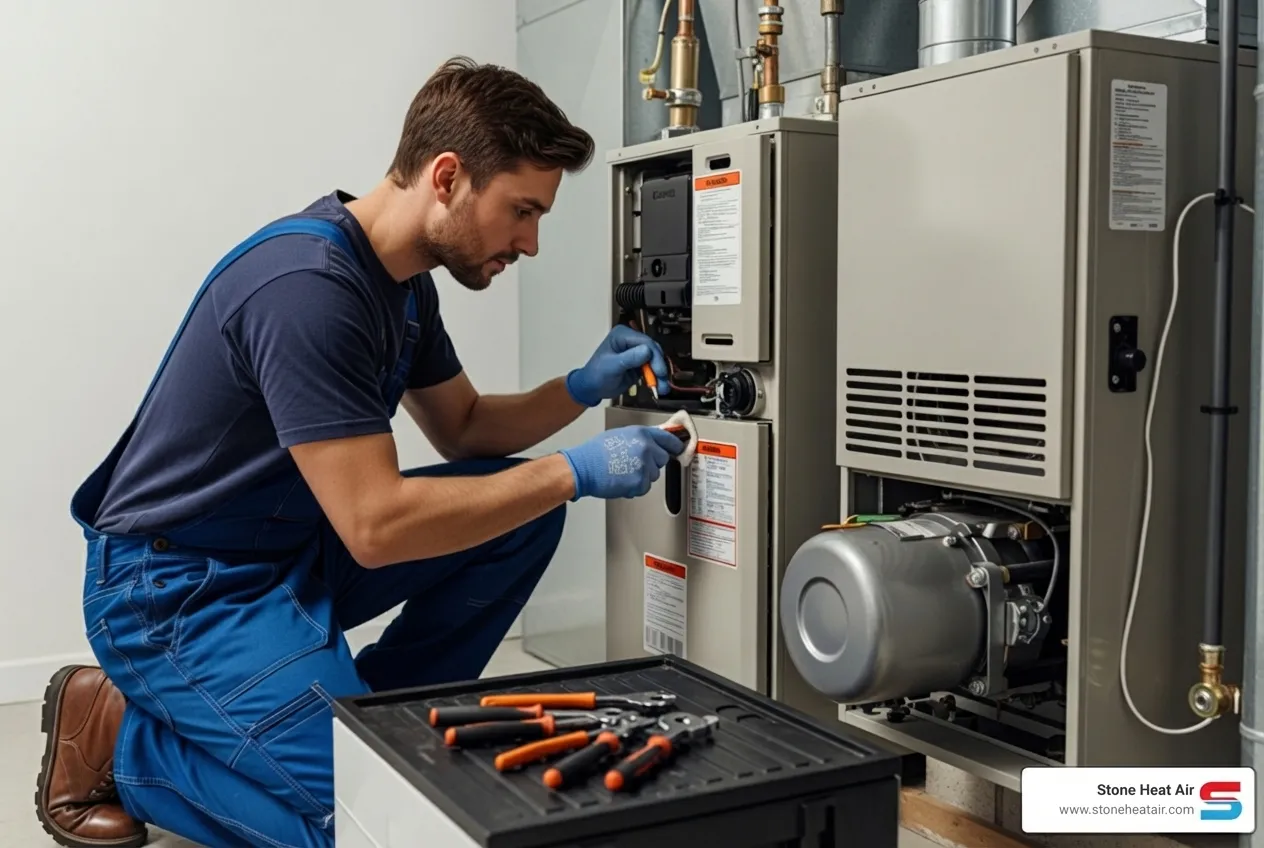
While DIY tasks are important, professional gas furnace maintenance in Central Point, OR addresses the intricate workings of your system. Our technicians have the expertise and specialized tools to identify and address issues you can't see or safely reach, ensuring optimal performance and safety.
Here's what our professional tune-ups typically include:
1. Heat Exchanger Inspection: This is a critical safety check for cracks that could leak carbon monoxide. For more details, see our guide on professional inspections of your gas furnace.
2. Burner and Flame Sensor Cleaning: We clean these components to ensure proper operation, efficient combustion, and safety.
3. Gas Pressure and Electrical Check: We verify correct gas pressure and tighten all electrical connections to prevent system failures.
4. Blower Motor and Component Check: We lubricate the blower motor, inspect the ignition system, and clean the condensate drain line on high-efficiency models.
5. Safety Control Testing: We test all safety controls to ensure they function correctly.
This comprehensive service is an investment in your home's comfort, your family's safety, and your furnace's long-term health. Find more about what happens during a furnace tune-up?.
Understanding Your Furnace: Types, Efficiency, and Replacement
Understanding the basics of furnace types and efficiency ratings empowers you to make informed decisions for your Central Point home. Knowing your system, or what kind of system might be right for you, is essential. When it comes to sizing a new furnace, our guide on how we estimate the right size furnace for your home can help.
Decoding Furnace Types and Efficiency Ratings
Gas furnaces come in several configurations, each offering different levels of comfort and energy efficiency:
• Single-Stage Furnaces: These have a simple "on" or "off" setting, meaning they run at full capacity whenever heat is needed. This can lead to noticeable temperature swings.
• Two-Stage Furnaces: These furnaces can operate at two levels: full capacity and a lower, partial capacity. They run at the lower setting most of the time, providing more consistent heating and quieter operation.
• Variable-Speed Furnaces: These are the top-tier for precise comfort and efficiency. They continuously adjust their heat output and fan speed to match your home's exact needs, resulting in even temperatures and superior humidity control.
The AFUE (Annual Fuel Utilization Efficiency) rating is a key metric for furnace efficiency. It tells you how much of the fuel consumed is converted into usable heat. High-efficiency models typically have AFUE ratings of 90% or higher, which can improve your home's overall energy usage.
Repair or Replace? Knowing When It's Time for an Upgrade
Deciding whether to repair your furnace or invest in a new one is a common dilemma. While we offer expert repairs, there comes a point when replacement is the more sensible option.
Here are key indicators it might be time for an upgrade:
• Age of Furnace: If your furnace is over 15 years old, it's likely operating with reduced efficiency and reliability compared to newer models.
• Frequency of Repairs: If your furnace requires frequent service calls, it may be more practical to consider a new, more reliable unit.
• Poor Performance: An aging furnace may struggle to heat your home evenly, working harder and consuming more fuel.
• Cracked Heat Exchanger: This is a serious safety concern, as it can allow carbon monoxide to leak into your home. Due to the safety implications, this often necessitates a full furnace replacement.
• Inconsistent Heating: If some rooms are always cold or the furnace struggles to maintain a set temperature, its capacity may be diminished.
• Loud Noises: Persistent banging, grinding, or squealing can indicate major mechanical problems.
A new furnace is an investment in your home's comfort and can offer improved efficiency with modern features. If you're weighing your options, we can provide a thorough assessment to help you make an informed decision.
Frequently Asked Questions about Furnace Maintenance
We often hear similar questions from homeowners in Central Point, OR, regarding their furnace maintenance. Here are some of the most common ones, along with our expert insights.
How often should I have my furnace serviced in Central Point?
For optimal performance, safety, and efficiency, we recommend scheduling professional gas furnace maintenance in Central Point, OR at least once a year. The ideal time for this annual tune-up is in the fall, before the colder weather sets in. This allows a technician to identify and address potential issues before you need your furnace the most, preventing inconvenient breakdowns. For more insights on scheduling, check out HVAC service appointments: when should you schedule them?.
If your furnace is older or if you've noticed any warning signs, you might consider an additional check-up.
What should I do if I smell gas near my furnace?
A distinct rotten egg odor indicates a natural gas leak, which is a serious safety hazard. Act immediately.
1. Evacuate Immediately: Get everyone, including pets, out of the house.
2. Do NOT Use Electronics or Switches: Do not turn lights on or off, use cell phones inside, or operate any appliances. A spark could ignite the gas.
3. Call from a Safe Distance: Once you are a safe distance away, call your natural gas provider's emergency line and 911.
4. Do Not Re-Enter: Do not go back inside until emergency personnel have declared it safe.
5. Professional Inspection: After the immediate danger is addressed, your furnace will need a thorough professional inspection to find the source of the leak.
We also highly recommend installing carbon monoxide detectors on every level of your home, especially near sleeping areas.
How do I find a qualified HVAC technician?
Finding a reliable HVAC technician for your gas furnace maintenance in Central Point, OR is essential for quality service. Here are some key qualities to look for:
• Local Reviews and Reputation: Check online reviews and ask for recommendations from neighbors or friends in the Central Point area. A company with a strong local reputation is a good sign.
• Insurance and Licensing: Verify that the company is properly licensed and insured. This protects you in case of accidents or damage during service.
• Clear Communication: A qualified technician should be able to clearly explain the work needed and answer your questions.
• Customer Service Focus: Look for a company that prioritizes customer satisfaction and offers responsive service, especially for emergencies.
• Service Agreements: Reputable companies often offer maintenance plans that include annual tune-ups and other benefits, showing a commitment to long-term customer relationships.
Our guide on the key quality traits of a reliable HVAC company offers more detailed advice on what to look for.
Ensure Year-Round Comfort in Your Central Point Home
As we've explored, proactive gas furnace maintenance in Central Point, OR is about ensuring the safety, efficiency, and longevity of your home's heating appliance. By understanding the benefits, recognizing warning signs, and following a balanced approach of DIY care and professional tune-ups, you can help your furnace operate reliably year after year.
Regular maintenance contributes to improved efficiency, cleaner indoor air, fewer unexpected breakdowns, and the assurance that your manufacturer's warranty remains valid. It's an investment that provides comfort and peace of mind for your family in Central Point, the Rogue Valley, and throughout Southern Oregon.
At Stone Heat Air, we are committed to providing honest and fair dealings, ensuring your home remains a haven of comfort. We offer 24/7 emergency service because we know furnace issues don't keep business hours. Consider joining our exclusive "Stone Comfort Membership Club" for uninterrupted comfort and peace of mind, knowing your system is always in expert hands. Learn more about the benefits of a service contract by reading Do I Need an HVAC Service Contract?.
For expert heating and air conditioning services you can trust, contact our team today. We're here to keep your Central Point furnace happy and your home perfectly warm. Visit our heating and air conditioning services page to schedule your next maintenance appointment.