

Why Jacksonville, OR Homeowners Count on Reliable Gas Furnace Repair
Gas furnace repair in Jacksonville, OR is something no homeowner wants to deal with mid-winter — but in the Rogue Valley, a working furnace isn't optional. Jacksonville's cold snaps can hit hard and fast, and when your heating system starts struggling, comfort and safety are both on the line.
Here are the most common reasons Jacksonville homeowners call for gas furnace repair:
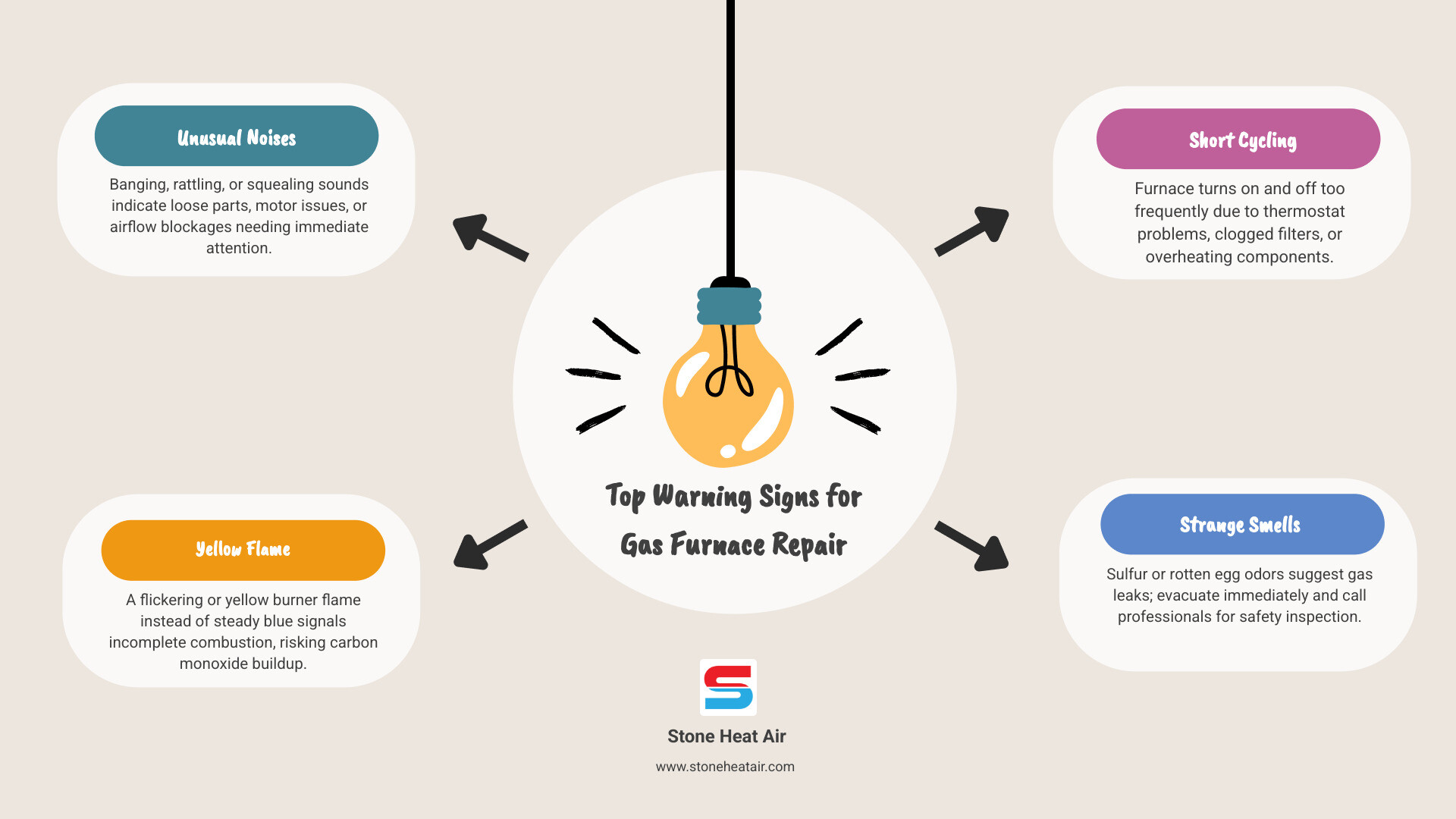
1. Unusual noises - banging, rattling, or squealing from the unit
2. Inconsistent heating - some rooms warm, others cold
3. Short cycling - furnace turns on and off too frequently
4. Yellow or flickering burner flame - should always be blue
5. Rising energy bills - without a change in usage habits
6. Strange smells - especially sulfur or rotten egg odors
7. Furnace won't start - ignition or pilot light failure
If you're noticing any of these signs, it's time to get a professional out to take a look before a small problem turns into a costly breakdown.
Jacksonville's historic homes and Rogue Valley winters create a unique set of demands on residential heating systems. Older homes can be harder to heat evenly, and furnaces that sit dormant through mild stretches often struggle when temperatures finally drop. Staying ahead of issues with regular service is the smartest way to keep your home warm all season long.
Recognizing the Need for Gas Furnace Repair in Jacksonville, OR
When the temperatures drop in Southern Oregon, your furnace becomes the heart of your home. However, like any hardworking mechanical system, it eventually shows signs of wear. Recognizing these symptoms early can be the difference between a quick fix and a total system failure during a freezing night.
One of the most obvious signs that something is wrong is the sound. While no furnace is silent, you shouldn't hear banging, whistling, or groaning. These often point to loose belts, motor issues, or even a cracked heat exchanger. Another visual cue is the color of your burner flame. A healthy gas furnace should always have a steady, crisp blue flame. If you see a yellow or flickering flame, it’s a sign of incomplete combustion, which can lead to dangerous carbon monoxide buildup.
Short cycling—where the furnace turns on and off every few minutes without reaching the desired temperature—is another major red flag. This often happens because the system is overheating or the thermostat is malfunctioning. If you are experiencing similar issues in nearby areas, you might find our guide on gas-furnace-repair-in-medford-or helpful for understanding regional heating trends.
Identifying Performance Issues
Beyond the mechanical "clunks" and "bangs," performance issues often manifest in your monthly utility statements. If your gas bills are skyrocketing but you haven't changed your heating habits, your furnace is likely working harder than it should to produce the same amount of heat. This inefficiency is often caused by internal grime or aging components that are reaching their limit.
Weak airflow is another common complaint in Jacksonville’s historic neighborhoods. If you feel only a faint breeze coming from your vents, or if some rooms are sweltering while others remain chilly, your blower motor or ductwork may need attention. To ensure you aren't left shivering, check out our tips on how to dont-get-left-in-the-cold-expert-gas-furnace-repair-in-talent-oregon.
When to Call for Gas Furnace Repair in Jacksonville, OR
There is a fine line between a minor annoyance and a heating emergency. If your furnace refuses to start at all, the culprit is often a failed ignition system or a faulty pilot light. Modern furnaces use electronic ignitions that are more reliable than old-fashioned standing pilots, but they can still fail due to electrical issues or sensor soot.
When your system starts acting up, you have to decide if it's a routine fix or an urgent matter. For help making that choice, see our article on emergency-or-routine-navigating-gas-furnace-repair-in-central-point. Generally, if you have no heat, smell gas, or hear loud mechanical screaming, you need a professional immediately.
Prioritizing Safety: Gas Leaks and Carbon Monoxide
Safety is the number one priority when dealing with gas furnace repair in Jacksonville, OR. Gas furnaces are incredibly safe when maintained, but because they burn fuel to create heat, they carry two inherent risks: natural gas leaks and carbon monoxide (CO) poisoning.
Natural gas is naturally odorless, but utility companies add a chemical called mercaptan to give it a distinct "rotten egg" or sulfur smell. If you catch a whiff of this in your home, do not ignore it. Additionally, keep an ear out for hissing sounds near the furnace or gas lines, even when the unit isn't running. This can indicate gas escaping under pressure.
The "silent killer," carbon monoxide, is even more deceptive because it has no smell, taste, or color. It is typically vented safely outside, but a cracked heat exchanger can allow CO to leak into your home’s air supply. This is why professional-inspections-of-your-gas-furnace are so critical. A technician can use specialized tools to find microscopic cracks that the naked eye would miss.
Emergency Protocols for Gas Furnace Repair in Jacksonville, OR
If you suspect a gas leak or a carbon monoxide issue, follow these steps immediately:
• Evacuate: Get everyone, including pets, out of the house immediately.
• Don't Touch Switches: Do not turn lights on or off, and do not use your phone inside the house, as a tiny spark could ignite leaking gas.
• Shut Off the Gas: If you know how to do so safely at the exterior meter, shut off the main valve.
• Call for Help: Once you are a safe distance away, call the gas company or emergency services.
After the immediate danger is cleared, you will need a licensed technician to perform a safety check and repairs. You can learn more about what these safety checks involve by reading about professional-inspections-of-your-gas-furnace.
Maximizing Efficiency and Lifespan in the Rogue Valley
Jacksonville is famous for its beautiful Victorian architecture and historic charm. However, these older homes often present challenges for modern heating systems. Between high ceilings and original windows, your furnace has to work a bit harder here than it might in a modern subdivision.
The best way to protect your investment is through annual maintenance. Much like changing the oil in your car, your furnace needs a "tune-up" to clear out the dust and grime that accumulates during the off-season. One of the simplest things you can do yourself is changing the air filter. A clogged filter restricts airflow, forcing the motor to work overtime and eventually leading to a breakdown. For more localized advice, check out our gas-furnace-maintenance-medford-tips.
Preventive Care Strategies
A professional maintenance visit is much more than just a quick look. We focus on:
• Cleaning: Removing soot from burners and dust from the blower fan.
• Lubrication: Ensuring all moving parts have the oil they need to reduce friction.
• Calibration: Testing the thermostat and safety controls to ensure they are accurate.
• Tightening: Checking electrical connections and gas lines for snugness.
Consistent care is the secret to a long-lasting system. Residents in nearby Talent often follow similar gas-furnace-maintenance-in-talent-or routines to stay ahead of the winter rush.
Long-Term Reliability
How long can you expect your furnace to last in the Rogue Valley? On average, a well-maintained gas furnace has a lifespan of 15 to 20 years. Once a unit passes the 12-to-15-year mark, you may notice that repairs become more frequent and parts become harder to source.
If your system is over a decade old, it is wise to start planning for the future. Older units often have an AFUE (Annual Fuel Utilization Efficiency) rating of around 80%, meaning 20% of the energy you pay for is wasted. Modern high-efficiency units can reach 95% or higher. For a deeper dive into how maintenance impacts longevity, read our gas-furnace-maintenance-central-point-guide.
• AFUE Rating — Standard Furnace (Older): 80% or lower — High-Efficiency Furnace (Modern): 90% to 98.5%
• Ignition — Standard Furnace (Older): Standing Pilot Light — High-Efficiency Furnace (Modern): Electronic Ignition
• Heat Exchanger — Standard Furnace (Older): Single Stage — High-Efficiency Furnace (Modern): Dual Heat Exchangers
• Blower Motor — Standard Furnace (Older): Single Speed — High-Efficiency Furnace (Modern): Variable Speed (Quieter)
Frequently Asked Questions about Jacksonville Heating
How long does a typical furnace repair take?
Most common repairs, such as replacing a thermocouple, cleaning a flame sensor, or swapping out a blower motor, can be completed in 1 to 4 hours. The timeline usually depends on the availability of parts. We keep our service trucks well-stocked with common components to get your heat back on as quickly as possible. If a specialized part needs to be ordered, it may take an extra day or two, but we always prioritize getting our customers back to a comfortable temperature.
When should I consider replacing my furnace instead of repairing it?
A good rule of thumb is the "50% Rule." If the cost of the repair is more than 50% of the value of a new system, it’s usually time to replace it. You should also consider replacement if your furnace is between 12 and 17 years old and has needed multiple repairs in the last two seasons. While a repair might fix the immediate issue, an older unit will continue to be less efficient and more prone to failing again during the next cold snap.
How can I reduce my heating bills after a repair?
Once your furnace is back in top shape, you can keep your bills low by:
• Installing a Programmable Thermostat: Lower the heat automatically when you're sleeping or at work.
• Sealing Leaks: Use weatherstripping on those beautiful historic Jacksonville windows.
• Adding Insulation: Many older homes lack sufficient attic insulation, which allows heat to escape through the roof.
• Duct Sealing: Ensuring your heated air actually reaches the rooms instead of leaking into the crawlspace.
Conclusion
At Stone Heat Air, we understand that a broken furnace is more than an inconvenience — it’s a disruption to your family’s peace and comfort. We are proud to serve the Jacksonville community with honest, fair dealings and expert technical skill. Whether you need a midnight emergency fix or a routine seasonal tune-up, our team is ready to help.
For total peace of mind, many of our neighbors join the Stone Comfort Membership Club, which provides priority service and regular maintenance to ensure your system never skips a beat. We are committed to our Southern Oregon roots and look forward to keeping your home cozy for many winters to come.
Contact us today for professional gas furnace repair in Jacksonville, OR