

How Long Does an HVAC System Last in Southern Oregon?
How long does an hvac system last in southern oregon depends on the system type, how well it's maintained, and the unique demands of the Rogue Valley climate — but most homeowners can expect anywhere from 10 to 25 years of reliable service.
Here's a quick breakdown by system type:
• Gas Furnace — Typical Lifespan: 15-20 years — With Excellent Maintenance: Up to 30 years
• Central Air Conditioner — Typical Lifespan: 15-20 years — With Excellent Maintenance: Up to 20+ years
• Heat Pump — Typical Lifespan: 10-15 years — With Excellent Maintenance: Up to 20 years
• Ductless Mini-Split — Typical Lifespan: 15-20 years — With Excellent Maintenance: Up to 20+ years
• Boiler — Typical Lifespan: 20-35 years — With Excellent Maintenance: Up to 50 years (cast iron)
Southern Oregon's climate is genuinely easier on HVAC equipment than harsh desert or humid coastal environments. Mild, wet winters and hot, dry summers mean your system faces less year-round stress than systems in more extreme climates — which can translate to an 8-12% longer lifespan compared to hotter or colder regions.
That said, "easier" doesn't mean "effortless." The Rogue Valley's summer heat spikes, seasonal wildfire smoke, and sharp temperature swings between day and night all add up over time. A system that never gets a tune-up, runs with dirty filters, or was improperly sized for your home can fail years — even decades — before its time.
Think of your HVAC system like your car. You wouldn't skip oil changes for 10 years and expect it to run perfectly. The same logic applies here: the difference between a system that dies at 12 years and one that reaches 22 years often comes down to how well it was cared for along the way.

Average Lifespans for Heating and Cooling Systems
When we talk about the longevity of your home comfort system, we have to look at the individual components. A furnace has a very different mechanical life than an air conditioner, and understanding these differences helps you plan for the future without any nasty surprises on a 100-degree Medford afternoon.
Gas Furnaces: The Long-Distance Runners
If you are asking How Long Can A Furnace Last, you might be pleasantly surprised. In our neck of the woods, a well-maintained gas furnace can easily cruise past the 20-year mark. Because they don't have as many moving parts exposed to the elements as an outdoor AC unit, they tend to be the most durable part of your HVAC setup.
Modern high-efficiency furnaces can reach up to 97% efficiency, but that complexity means they need a little more TLC than the "set it and forget it" models of the 1990s. Generally, we tell our neighbors in Central Point and Roseburg to start keeping a closer eye on their furnace once it hits year 15.
Central Air Conditioners
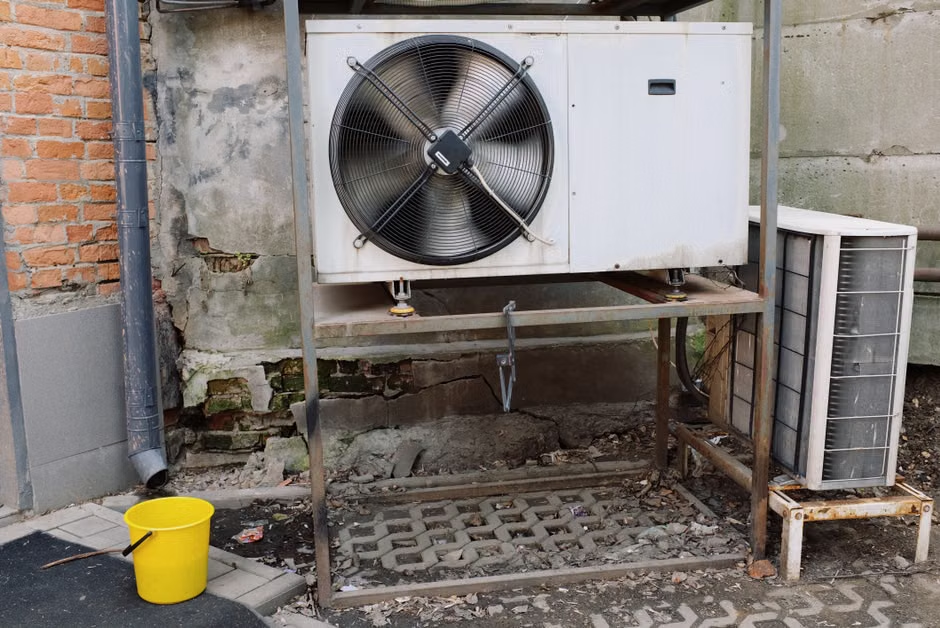
The Lifespan Of A Carrier Air Conditioner or similar high-quality central units usually falls between 15 and 20 years. Unlike the furnace, which sits safely inside your garage or attic, the AC condenser lives outside. It battles the Southern Oregon sun, dust, and the occasional curious squirrel.
Older units often fail because of compressor issues or refrigerant leaks. Since the R-22 Freon phase-out was completed years ago (it’s now April 2026, and R-22 is essentially a relic), an older AC unit that springs a leak is often more expensive to "patch up" than it is to replace with a modern, eco-friendly model.
Heat Pumps and Mini-Splits
Heat pumps are the workhorses of the Rogue Valley. Because they provide both heating and cooling, they run almost year-round. This double duty means they often have a slightly shorter lifespan than a dedicated furnace — typically 10 to 15 years. However, with the mild Pacific Northwest climate, we often see these units push toward 20 years if they aren't overworked.
Ductless mini-splits are incredibly popular in places like Brookings and Klamath Falls because they don't rely on leaky ductwork. These systems generally last 15 to 20 years. Because they don't lose energy through ducts, the compressor doesn't have to work quite as hard, which preserves its lifespan.
Boilers
While less common in newer Southern Oregon builds, boilers are the champions of longevity. A standard gas boiler can last 20 to 35 years. If you have an old-school cast iron boiler, those things are built like tanks — some have been known to provide heat for 50 years or more!
How long does an hvac system last in southern oregon?
The specific answer to how long does an hvac system last in southern oregon is shaped by our unique geography. We don't have the salt air of the Atlantic or the 115-degree humidity of the South, but we do have our own set of challenges.
The Rogue Valley Weather Rollercoaster
Our region is famous for "thermal cycling." You know those spring days where it’s 35 degrees when you wake up in Medford and 75 degrees by 3:00 PM? That requires your HVAC system to switch gears quickly. This constant expansion and contraction of metal components (like your heat exchanger) puts more stress on the system than a climate where the temperature stays relatively steady.
The Wildfire Factor
As we head into the mid-2020s, wildfire smoke has become a seasonal reality. Smoke isn't just bad for your lungs; it’s a silent killer for HVAC systems. Fine particulate matter clogs air filters and coats the delicate fins of your outdoor condenser. When these fins are coated in ash and dust, the system can't "breathe," causing the motor to overheat and shortening its life by several years.
April 2026 Technology Standards
As of today, in April 2026, the technology inside your home is smarter than ever. New SEER2 regulations and the move toward more sustainable refrigerants mean that systems installed today are built to be more resilient. However, these high-tech systems are also more sensitive to poor installation. A "budget" install in 2026 can lead to a system failure by 2032, whereas a professional installation ensures you get the full 20-year potential.
Climate factors affecting how long does an hvac system last in southern oregon
• Hot, Dry Summers: Our summers are getting longer and hotter. When the Rogue Valley hits a string of 100-degree days, your AC runs for 12+ hours straight. This "heavy load" usage is the primary driver of wear and tear.
• Mild, Wet Winters: Humidity isn't usually a major issue here, but the dampness of a Roseburg or Brookings winter can lead to corrosion if the unit isn't properly drained or elevated.
• Seasonal Transitions: The heavy use of both heating and cooling in the same 24-hour period increases the number of "starts and stops" for the compressor, which is when the most wear occurs.
Critical Factors That Influence Equipment Longevity
There are 5 Factors That Can Affect Your Air Conditioners Lifespan that every homeowner should know. While you can't control the weather in Klamath Falls, you can control how your system is treated.
1. Installation Quality: The Foundation of Comfort
We cannot stress this enough: the most expensive, high-end HVAC unit in the world will fail prematurely if it isn't installed correctly. Industry data shows that improper installation can reduce system efficiency by up to 30%. If the refrigerant charge is slightly off or the airflow isn't balanced, the system will struggle from day one. We treat your home like ours, ensuring every bolt is tightened and every line is tested, because we want that system to last you two decades, not ten years.
2. Routine Maintenance and Air Filters
The simplest way to extend the life of your system is to change your air filters every 90 days (or more often during smoke season). A clogged filter forces the blower motor to work twice as hard to move air. It’s like trying to run a marathon while breathing through a straw.
Professional tune-ups are the other half of the equation. During a precision tune-up, we clean the coils, check the electrical connections, and lubricate moving parts. This prevents small, cheap problems from turning into big, expensive catastrophes.
3. Duct Sealing and Insulation
Did you know that leaky ductwork can make your HVAC system work 20% harder? If your ducts are leaking conditioned air into your attic or crawlspace, your furnace has to run longer to reach the temperature set on your thermostat. By sealing those leaks and ensuring your Southern Oregon home has proper insulation, you reduce the "run time" of your equipment, adding years to its life.
4. System Sizing
Bigger isn't always better. If an HVAC system is too large for your home, it will "short cycle" — turning on and off rapidly. This constant starting and stopping is incredibly hard on the compressor. Conversely, a system that is too small will run constantly without ever cooling the house. Proper sizing via a professional load calculation is essential for maximizing how long does an hvac system last in southern oregon.
Maximizing how long does an hvac system last in southern oregon
To get the most out of your investment, we recommend:
• Smart Thermostats: These help regulate run times and prevent unnecessary usage when you aren't home.
• Stone Comfort Membership Club: Our exclusive club provides uninterrupted comfort and peace of mind through regular maintenance, ensuring your system stays in peak condition year-round.
• Airflow Optimization: Keeping vents unblocked and ensuring the outdoor unit has at least two feet of clear space around it.
Knowing When to Repair or Replace Your Unit
Eventually, every system reaches the end of its road. The trick is knowing when to stop pouring money into repairs and start looking at an upgrade.
The $5,000 Rule
A great rule of thumb we use in the Rogue Valley is the "$5,000 Rule." Take the age of your system and multiply it by the cost of the repair. If the total is more than $5,000, it’s usually time to replace.
• Example: A 12-year-old AC needs a $600 repair. (12 x 600 = 7,200). Since 7,200 is over 5,000, replacement is likely the smarter financial move.
Efficiency and Technology
How Long Does It Usually Take To Replace A Furnace is a common question, and while the physical install takes about a day, the decision-making process should take longer. If your system is 15 years old, even if it’s still running, a new high-efficiency model could save you 20-40% on your monthly utility bills. Over five or six years, those savings can actually pay for a significant portion of the new system.
Commercial vs. Residential
The Life Expectancy Of Commercial Hvac Systems is often shorter than residential ones (usually 10-15 years) because they work much harder in a business environment. If you own a shop in Central Point or an office in Roseburg, your replacement timeline will be more aggressive than your home system.
Red Flags for Replacement:
• R-22 Refrigerant: If your unit still uses the old "Freon," any major leak is a sign to replace.
• Frequent Repair Cycles: If we’re seeing you more than once a year for repairs, your system is "limping" along.
• Inconsistent Temperatures: If the upstairs is a sauna and the downstairs is a fridge, your system’s ability to move air is likely failing.
Frequently Asked Questions
What are the signs that my HVAC system is failing?
Watch out for rising energy bills that can't be explained by a rate hike. Strange noises like grinding, squealing, or banging are also major red flags. If your system is "short cycling" (turning on and off every few minutes) or if you notice a significant drop in air quality and dust levels, it's time for a professional assessment.
How often should I schedule maintenance in the Rogue Valley?
We recommend bi-annual tune-ups — once in the spring for your AC and once in the fall for your furnace. This ensures that the system is ready for the upcoming extreme season. In Southern Oregon, where we have distinct seasons, this "pre-season" check is the best way to avoid a breakdown on the coldest or hottest day of the year.
Does wildfire smoke shorten the life of my air conditioner?
Yes, significantly. Smoke carries heavy oils and particulates that coat the outdoor condenser coils. This acts as an insulator, trapping heat inside the system and forcing the compressor to work at higher pressures and temperatures. If we’ve had a bad smoke season, we highly recommend a professional coil cleaning to prevent long-term motor strain.
Conclusion
At Stone Heat and Air, we believe that an informed homeowner is a happy homeowner. While the answer to how long does an hvac system last in southern oregon is generally 15 to 20 years, your personal experience will depend on the care you give your system today.
Whether you are in Central Point, Klamath Falls, or anywhere in the Rogue Valley, we are here to provide honest, fair dealings and expert service. From 24/7 emergency repairs to our Stone Comfort Membership Club, we are dedicated to your long-term comfort. Don't wait for your system to quit on a freezing January night or a scorching July afternoon.
Schedule your Southern Oregon HVAC assessment today and let us help you get the most out of your home comfort system. We’ll treat your home like ours!