

Is Your Furnace Turning Off Too Quickly This Fall?
Why is my furnace short-cycling right after I turn it on? If you are asking yourself this question, you are certainly not alone. The September early fall transition brings the first chilly evenings of the year, prompting homeowners to finally switch their thermostats from cooling to heating. You expect a comforting rush of warm air, but instead, the furnace fires up, runs for just a few minutes, and abruptly shuts down. This frustrating start-and-stop behavior is a specific mechanical symptom known as short-cycling.
Short-cycling is not just a random glitch or a minor annoyance. It is a deliberate, protective action taken by your equipment's internal computer to prevent catastrophic damage or a potential safety hazard. While a furnace that refuses to stay on leaves your home uncomfortably cold, the good news is that the system is doing exactly what it was designed to do: protecting itself. Before you assume you need a total replacement, there are safe, simple initial checks you can perform.
Whether you eventually need professional heating services or you find yourself requiring emergency heating repair, understanding why your equipment is shutting down is the first step toward restoring reliable warmth to your home.
Defining the Problem: What Exactly Is Furnace Short-Cycling?
To accurately diagnose what is happening in your utility closet or basement, you first need to distinguish between a normal heating cycle and a problematic short cycle. Furnaces are designed to run in distinct, predictable phases to maintain the temperature you set on the thermostat. When those phases are interrupted prematurely, the system fails to heat the home evenly.
The Anatomy of a Normal Heating Cycle
Under normal conditions in Central Point, Oregon, a properly functioning furnace will run for about 10 to 15 minutes at a time. During this cycle, the burners ignite, the heat exchanger warms up, and the blower motor pushes that heated air through your ductwork. Once the ambient temperature in your living room matches the target temperature on your thermostat, the system gracefully powers down and waits for the house to cool off again before starting the next cycle.
Recognizing the Symptoms of a Short Cycle
Short-cycling occurs when the system abruptly shuts down after just a few minutes—often less than five minutes—long before the thermostat's target temperature is ever reached. This rapid on-and-off sequence means your home never actually gets warm, but your equipment is working twice as hard. The critical thing to understand is that short-cycling is usually a symptom of a larger safety intervention within the unit, rather than a failure of the heating element itself.
• Cycle Duration — Normal Heating Cycle: 10 to 15 minutes per cycle. — Short-Cycling Symptom: 2 to 5 minutes before shutting down.
• Temperature Goal — Normal Heating Cycle: Reaches the thermostat's target easily. — Short-Cycling Symptom: Fails to reach the target temperature.
• System Wear and Tear — Normal Heating Cycle: Standard, expected mechanical wear. — Short-Cycling Symptom: Accelerated wear on motors and ignitors.
• Energy Consumption — Normal Heating Cycle: Efficient, steady energy usage. — Short-Cycling Symptom: High energy spikes from constant restarting.
The Hidden Culprit: How Summer AC Usage Clogs Your Heating Airflow
When a furnace short-cycles during the very first cold snap of the year, the root cause is almost always tied to what happened during the preceding months. Most homeowners do not realize that their HVAC system uses the exact same air filter for both heating and cooling modes. The filter that protects your furnace in December is the same one that protected your air conditioner in July.
The Heavy Toll of Summer Cooling
We see distinct seasonal shifts here in the valley. Heavy summer cooling leaves filters heavily caked with dust, pollen, pet dander, and wildfire smoke particulates right when the first chilly September early fall transition nights arrive. Throughout the long, hot summer months, your system moves massive volumes of air, pulling airborne debris into the return vents. All of that debris gets trapped in the filter media. If that filter is not replaced at the end of the cooling season, it essentially becomes a solid wall of dirt.
Suffocating the Furnace on Day One
Switching your thermostat to heating mode with a summer-clogged filter immediately restricts the necessary airflow. A furnace requires a massive, continuous volume of cool return air flowing over its internal components to operate safely. When that airflow is choked off by a dirty filter, the furnace is suffocated from its very first cycle.
One homeowner recently found themselves dealing with the aftermath of an old, struggling unit. Their existing equipment could not keep up with the summer heat, and despite widespread supply chain issues, our team worked hard to secure the necessary components and installed a brand-new Bryant/Carrier system for them. Whether you have a brand-new, high-efficiency setup like theirs or an older, legacy model, your system's air filter works overtime during those hot months. Neglecting to swap out that hard-working filter before fall arrives is the single most common reason a furnace will refuse to run properly on its first day back on the job.
How Restricted Airflow Triggers the High-Limit Safety Switch
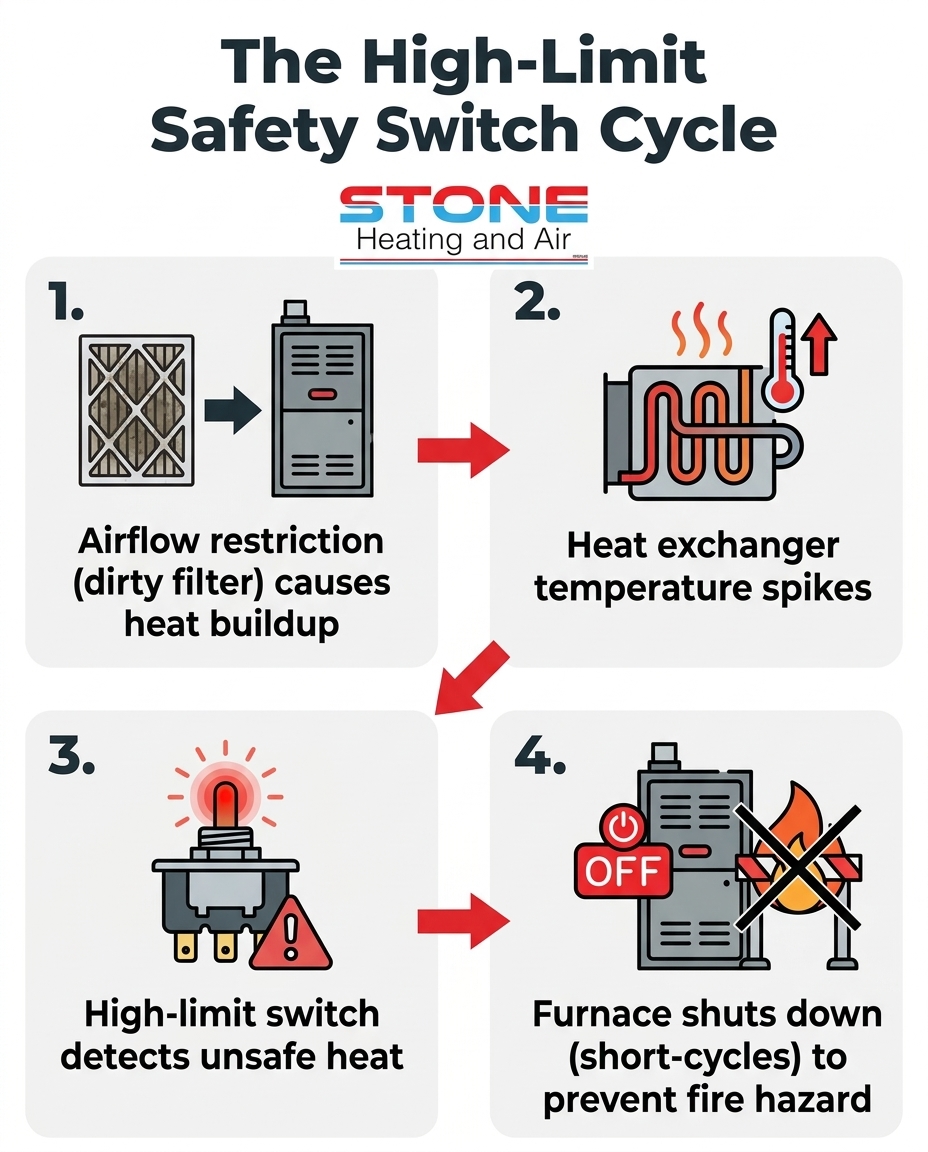
The quick answer: A dirty air filter severely restricts the flow of cool return air over the furnace's heat exchanger, causing the internal temperature to spike rapidly. The high-limit safety switch detects this dangerous overheating and immediately trips, forcing the furnace to shut down rapidly to prevent a fire hazard. This sudden, forced shutdown is what causes the short-cycling behavior.
The Chain Reaction of Overheating
To truly understand why your system is behaving this way in Central Point, Oregon, it helps to look at the step-by-step mechanical process happening behind the metal cabinet doors. The high-limit switch is a small, temperature-sensitive probe located just above the heat exchanger. It is constantly monitoring the ambient air temperature inside the furnace.
1. Ignition and Heating: The thermostat calls for heat, the burners ignite, and the metal heat exchanger begins getting incredibly hot.
2. Airflow Restriction: The blower motor tries to pull cool air from your home through the return ducts to blow over the hot heat exchanger, but the clogged filter blocks the air.
3. Rapid Temperature Spike: Because there is no cool air flowing over the metal to absorb and carry away the heat, the temperature inside the furnace cabinet skyrockets in a matter of minutes.
4. Safety Intervention: The high-limit safety switch detects that the internal temperature has exceeded the safe operational threshold (usually around 200°F).
5. Emergency Shutdown: The switch trips, instantly cutting power to the gas valve and burners. The blower motor may continue to run for a few minutes to cool the unit down, but the heating cycle is officially aborted.
Fire Prevention Over Annoyance: What Happens When a Furnace Overheats
It is incredibly easy to view short-cycling as nothing more than a frustrating nuisance, especially when your house is cold during the September early fall transition. However, it is vital to reframe this behavior for what it actually is: your furnace successfully protecting your household from severe damage and potential tragedy. The high-limit switch is not a convenience feature; it is a primary fire-prevention mechanism.
The Threat of a Cracked Heat Exchanger
The heat exchanger is the metal heart of your furnace. It contains the toxic combustion gases (like carbon monoxide) while simultaneously allowing the clean air from your home to pass over its hot exterior. Metal naturally expands when it gets hot and contracts when it cools down. If a furnace is constantly overheating due to restricted airflow, the metal of the heat exchanger is subjected to extreme, unnatural thermal stress.
Over time, this repeated overheating will cause the metal to warp, fatigue, and eventually crack. A cracked heat exchanger is one of the most severe failures a heating system can suffer, often requiring a complete system replacement.
Dangerous Carbon Monoxide Leaks
The consequences of a cracked heat exchanger go far beyond financial cost. If the metal barrier cracks, the toxic combustion gases inside can escape and mix with the clean air being blown into your living spaces. This creates a severe carbon monoxide hazard. By shutting the system down before the metal reaches its breaking point, the high-limit safety switch prevents these dangerous cracks from forming in the first place.
Safe Troubleshooting: Check the Filter First
Because the high-limit switch is a critical safety device, troubleshooting a short-cycling furnace must be done with caution. The absolute first fix—and the only one a homeowner should attempt before calling a professional—is swapping out the summer air filter for a clean one. According to U.S. Department of Energy data, replacing a dirty, clogged filter with a clean one can improve system efficiency by 5% to 15%, and it is equally critical for preventing furnace heat exchanger overheating.
Your Immediate Action Plan
• Turn off the power: Always switch your thermostat to the "off" position before inspecting your equipment.
• Locate the filter slot: This is usually found where the return duct meets the main furnace cabinet in your basement, attic, or utility closet.
• Inspect the media: Pull the filter out and hold it up to a light source. If you cannot see light shining through the pleats, it is heavily restricted and must be thrown away.
• Install the replacement: Slide a brand-new filter into the slot, ensuring the airflow arrows printed on the cardboard frame point toward the furnace unit.
We see this simple oversight frequently in Central Point, Oregon. Recently, when new homeowners moved into the area and needed assistance getting familiar with their setup, one of our primary steps during the initial service call was providing knowledgeable service on their equipment and changing out heavily soiled filters that the previous owners had neglected. It is a small, inexpensive step that consistently exceeds expectations for restoring system performance.
A Strict Warning on DIY Repairs
DO NOT open the furnace cabinet or attempt to reset internal safety switches manually. The high-limit switch is an automatic reset device; once the internal temperature drops back to a safe level, it will reset itself. Bypassing, wiring around, or manually tampering with this switch removes the only safety net preventing a house fire. If a clean filter resolves the airflow issue, your system will return to normal operation on its own. If it does, scheduling a routine HVAC maintenance plan is the best next step to ensure peak performance for the rest of the season.
Beyond the Filter: When to Call a Diagnostic Expert
If you have installed a brand-new filter, waited for the system to cool down, and the furnace still shuts off after just a few minutes, the issue requires professional attention. A continuously tripping high-limit switch may eventually trigger a "hard lockout," where the system's control board refuses to ignite the burners at all until a technician clears the error codes.
When the filter is not the culprit, a licensed technician will need to investigate several secondary causes to determine exactly why your furnace turns off after a few seconds:
• A Dirty Flame Sensor: The flame sensor tells the control board that the burners have successfully ignited. If it is coated in carbon buildup, it cannot sense the flame and will shut the gas valve off within seconds to prevent raw gas from flooding your home.
• Thermostat Malfunctions: A thermostat that is failing, improperly wired, or located too close to a heat source (like a sunny window or an active heat register) will misread the room temperature and send premature shutdown signals to the furnace.
• Blocked Exhaust Vents: High-efficiency furnaces use PVC pipes to vent exhaust gases outside. If these pipes are blocked by bird nests, leaves, or heavy snow, pressure switches inside the unit will detect the backup and force a shutdown.
• An Oversized Furnace: If the unit installed in your home is too large for the square footage, it will heat the immediate space too rapidly, satisfy the thermostat quickly, and shut down before the rest of the house warms up.
Working with Stone Heating and Air means you have access to 24/7 diagnostic experts who can safely resolve complex high-limit switch issues. If a simple filter swap does not fix the short-cycling in your Central Point, Oregon home, our technicians have the specialized tools and training to isolate the exact electrical or mechanical failure without compromising your family's safety.
Restore Your Comfort Safely This Fall
Dealing with a furnace that refuses to stay running during the September early fall transition is incredibly stressful, but it is important to remember that your system is actively trying to keep you safe. A clean air filter is your first, safest, and most effective defense against restricted airflow and short-cycling. By swapping out that summer-caked filter, you give your equipment the breathing room it needs to operate safely.
Always prioritize safety over quick fixes, and avoid bypassing any internal switches or opening the main cabinet yourself. If a fresh filter does not solve the problem, do not let your home stay cold. Reach out for professional diagnostics to ensure your heating system is safe, reliable, and ready to handle whatever the colder months ahead have in store.
Frequently Asked Questions
Why does my furnace run for 5 minutes then shut off?
If your furnace runs for only five minutes before shutting down, it is likely short-cycling due to an internal safety mechanism tripping. The most common cause is a dirty air filter restricting airflow, which causes the internal temperature of the furnace to spike rapidly. When the system detects this dangerous heat buildup, it aborts the heating cycle prematurely to prevent damage. Other potential causes include a dirty flame sensor or a malfunctioning thermostat.
Can a dirty filter cause a furnace to short cycle?
Yes, a dirty air filter is the leading cause of furnace short-cycling. The filter traps dust, dirt, and debris, and when it becomes heavily clogged, it acts like a wall that blocks cool return air from entering the system. Without that cool air flowing over the heat exchanger to absorb the heat, the furnace quickly overheats. The unit's safety sensors detect this extreme temperature and shut the system down to prevent a fire hazard.
What happens when a furnace overheats?
When a furnace overheats, the metal heat exchanger is subjected to extreme thermal stress. The high-limit safety switch is designed to detect this and immediately shut off the gas burners to allow the system to cool down. If a furnace is allowed to overheat repeatedly over a long period, the expanding and contracting metal can warp, fatigue, and eventually crack. A cracked heat exchanger is highly dangerous because it can allow toxic carbon monoxide gases to leak into your home's air supply.
What trips a furnace high limit switch?
A furnace high-limit switch trips when the ambient air temperature inside the furnace cabinet exceeds a safe operational threshold, usually around 200 degrees Fahrenheit. This excessive heat is almost always caused by a lack of airflow moving through the system. Clogged air filters, blocked return vents, closed supply registers, or a failing blower motor can all prevent air from circulating properly, leading directly to a tripped high-limit switch.
How do you fix a short cycling furnace safely?
The safest and most effective first step to fix a short-cycling furnace is to turn off the power at the thermostat and replace the air filter with a brand-new one. Ensure all supply and return vents in your home are fully open and unblocked by furniture or rugs to maximize airflow. If replacing the filter and opening the vents does not resolve the short-cycling, you must call a licensed HVAC professional to diagnose the internal components, as further DIY troubleshooting can be dangerous.
Can I manually reset a furnace high-limit switch?
No, you should never attempt to manually reset, bypass, or wire around a furnace high-limit switch. These switches are typically designed to reset automatically once the internal temperature of the furnace drops back to a safe level. If the switch continues to trip, it means the underlying overheating problem has not been resolved. Tampering with this critical safety device removes the primary mechanism preventing your furnace from causing a devastating house fire.