

When to Repair vs Replace Your HVAC System: A Straight-Forward Answer for Rogue Valley Homeowners
Knowing when to repair vs replace your HVAC system is one of the most stressful decisions a homeowner can face — especially when the heat goes out on a cold Southern Oregon morning or the AC quits during a Rogue Valley summer. The stakes feel high, the costs are real, and most people have to make the call fast, often without much information to go on.
Here is a quick answer to help you decide:
Repair your HVAC system if:
• The system is under 10 years old (AC or heat pump) or under 15 years old (furnace)
• The repair cost is less than 30–50% of what a new system would cost
• You have had only one or two service calls in the past few years
• The issue is minor and isolated — like a capacitor, thermostat, or clogged filter
• Your system is still under manufacturer warranty
Replace your HVAC system if:
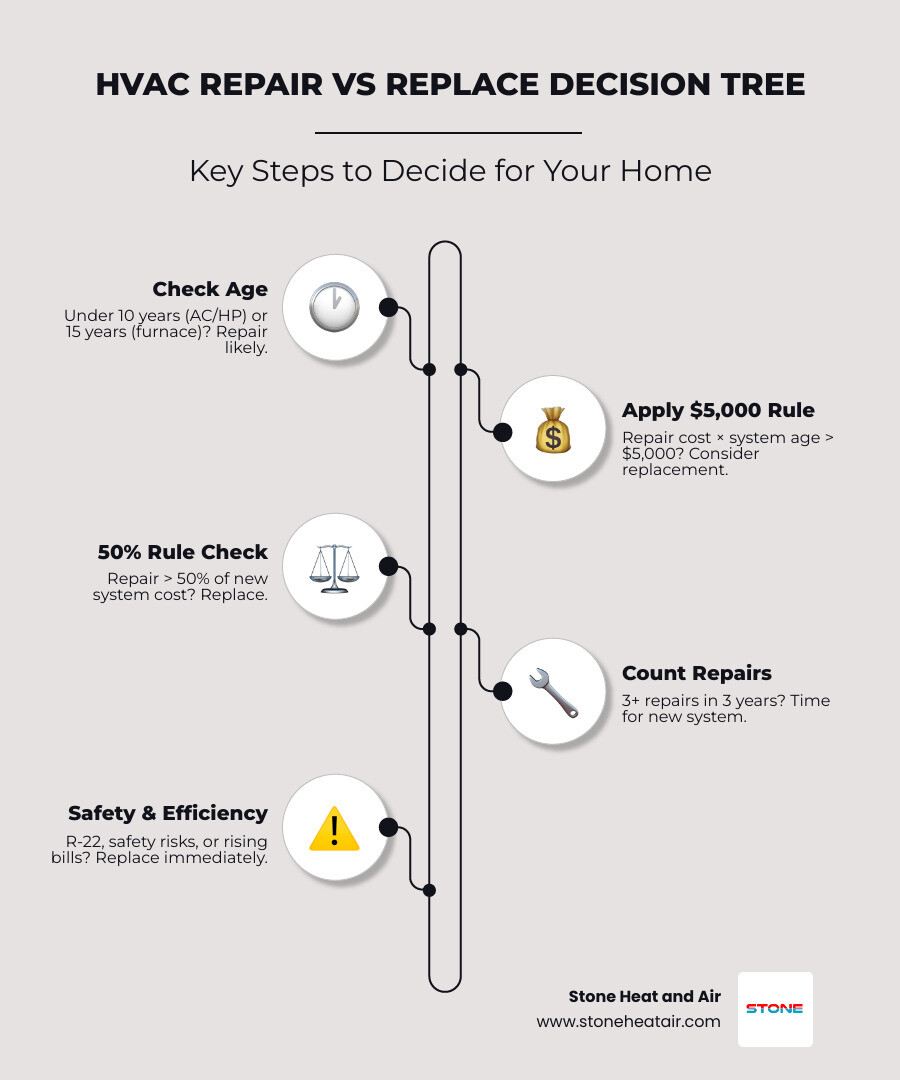
• Your AC or heat pump is over 10 years old, or your furnace is over 15 years old
• Repair costs multiplied by the system's age exceed $5,000 (the industry standard "$5,000 Rule")
• A single repair would cost more than 50% of what a new system is worth
• You have had three or more repairs in the last three years
• Your system uses R-22 (Freon) refrigerant, which is no longer produced in the U.S.
• You are facing a safety issue like a cracked heat exchanger or carbon monoxide risk
• Your energy bills keep climbing without a clear reason
The sections below walk you through each of these factors in detail, so you can make a confident, well-informed decision for your home.
Understanding the Typical Lifespan of Your Heating and Cooling Equipment
When we think about our homes in places like Central Point or Klamath Falls, we often expect our appliances to last forever. Unfortunately, HVAC systems have a biological clock. Understanding how long can a furnace last or when an air conditioner has reached its golden years is the first step in the decision-making process.
In the Rogue Valley, our systems work hard. We deal with smoky summers that clog filters and chilly winters that keep furnaces running around the clock. Generally, you can expect the following lifespans:
• Air Conditioners: 10 to 15 years.
• Furnaces: 15 to 20 years.
• Heat Pumps: Approximately 15 years (these often have shorter lifespans than furnaces because they work year-round for both heating and cooling).
If you are asking yourself, is it time to replace my air conditioning, look at the manufacture date on the unit’s nameplate. If your AC is celebrating its 12th birthday, it is likely operating at a fraction of its original efficiency. Even if it’s still "running," an older unit is often just a "tape deck in an iPod world"—it might play the music, but it’s nowhere near as efficient or reliable as modern technology.
When to Repair vs Replace Your HVAC System: The Financial Rules of Thumb
Deciding when to repair vs replace your HVAC system shouldn't be based on a "gut feeling." We prefer using math. It removes the emotion from the situation and helps you see the long-term ROI.
• System Age — Favor Repair: Under 10 years — Favor Replacement: Over 12–15 years
• Repair Cost — Favor Repair: Less than 30% of new system — Favor Replacement: More than 50% of new system
• $5,000 Rule — Favor Repair: Total is under $5,000 — Favor Replacement: Total exceeds $5,000
• Repair History — Favor Repair: First or second repair — Favor Replacement: 3+ repairs in 3 years
• Refrigerant — Favor Repair: R-410A or newer — Favor Replacement: R-22 (Freon)
• Energy Bills — Favor Repair: Stable — Favor Replacement: Rising significantly
Using the $5,000 Rule to Decide When to Repair vs Replace Your HVAC System
The "$5,000 Rule" is an industry-standard formula that provides a mathematical baseline for your decision. It’s simple: multiply the age of your unit by the cost of the repair. If the result is more than $5,000, it is usually time to consider time to get a new furnace or AC.
Example A: Your AC is 12 years old, and the repair quote is $600.12 x 600 = 7,200. Since 7,200 is greater than 5,000, replacement is the smarter financial move.
Example B: Your furnace is 8 years old, and the repair is $300.8 x 300 = 2,400. Since 2,400 is less than 5,000, repairing the unit is a sound investment.
The 50% Rule for Major Component Failures
Another rule we live by is the 50% Rule. If a single repair costs more than 50% of the value of a brand-new system, we almost always recommend replacement. Spending half the price of a new unit on a system that is already halfway through its life is rarely a good deal.
Major component failures—like a cracked heat exchanger or a dead compressor—are the most common triggers for this rule. When you start looking at HVAC installation costs to prepare for, you’ll realize that a new system comes with a fresh warranty, higher efficiency, and peace of mind that a patched-up old unit simply cannot provide.
Critical Warning Signs That It’s Time for a Full Replacement
Beyond the math, your system will often tell you when it’s finished. If you notice any of these signs, it’s time to stop the "repair spiral."
Comfort Issues and Uneven Temperatures
Are you constantly playing "thermostat wars"? If your kitchen is an icebox while your bedroom feels like a sauna, your system is likely struggling to distribute air correctly. This could be due to systemic fatigue or an improperly sized unit.
Furthermore, if you notice signs your AC needs a tune up like excessive humidity or short cycling (turning on and off rapidly), it may be failing to dehumidify your home. Modern systems with variable-speed technology are much better at maintaining a consistent "personal degree of perfection" in every room.
Safety Concerns and Obsolete Technology
Safety is non-negotiable. If a technician finds a cracked heat exchanger in your furnace, this is a "red alert" situation. A cracked heat exchanger can leak carbon monoxide into your home, which is lethal. In these cases, you should know when to call for emergency HVAC services and prioritize immediate replacement.
Another major red flag is the use of R-22 refrigerant (often called Freon). The EPA has phased out R-22 because it depletes the ozone layer. This means R-22 is now incredibly scarce and expensive. If your old AC has a refrigerant leak and uses R-22, repairing it is like trying to find parts for a car that hasn't been made in 40 years. It’s better to invest that money into a modern system that uses eco-friendly refrigerants.
Benefits of Upgrading to a High-Efficiency System in 2026
As of May 2026, the technology available for home comfort is lightyears ahead of what was installed just a decade ago. When you receive understanding HVAC replacement service quotes, you aren't just looking at a price tag; you're looking at a massive upgrade in lifestyle and efficiency.
Energy Savings and Environmental Impact
Modern systems are significantly more efficient. Replacing a SEER 9 air conditioning unit with a SEER 14 or 16 unit can reduce your energy consumption by more than 35%. If you opt for an ENERGY STAR qualified furnace, you’re looking at 95% to 98% AFUE (Annual Fuel Utilization Efficiency). This means 98 cents of every dollar you spend on gas goes directly into heating your home, rather than being wasted up the flue.
There are also significant financial incentives available right now. Federal tax credits and local utility rebates can often shave thousands of dollars off the total investment. When you are tips on preparing for HVAC installation, make sure to ask about these incentives. They make the "replace" decision much easier to swallow.
How Maintenance Influences the Repair vs Replace Choice
We cannot stress the importance of regular HVAC maintenance enough. A system that has been pampered with annual tune-ups will almost always last longer and run more efficiently than one that has been ignored.
During a professional what happens during a furnace tune up, we can catch small issues—like a failing capacitor or a dirty flame sensor—before they turn into catastrophic failures. If you have been diligent with your maintenance, a repair is much more likely to be a viable option.
Many of our neighbors in the Rogue Valley choose HVAC service agreements to keep their systems in top shape. If you’ve ever wondered, "do I need an HVAC service contract?", the answer is usually yes if you want to push your system’s lifespan toward that 20-year mark.
Frequently Asked Questions about HVAC Replacement
Should I replace my furnace and AC at the same time?
Generally, yes. If both units are over 12 years old, replacing them together is the smartest move. It saves you money on labor, and it ensures that the indoor and outdoor components are perfectly matched. A mismatched system can lead to reduced efficiency and premature failure.
How do I know if my system is still under warranty?
Most manufacturer warranties last 5 to 10 years, provided the system was registered at the time of installation. You can usually check this by finding the serial number on your unit and looking it up on the manufacturer’s website. If you aren't sure, we can verify this for you during an inspection.
When to repair vs replace your HVAC system if it uses R-22?
If your system uses R-22 and has a major leak or compressor failure, we almost always recommend replacement. The cost of the refrigerant alone can be astronomical, and you are essentially putting a band-aid on a system that is legally and technologically obsolete.
Making the Right Choice for Your Southern Oregon Home
At Stone Heat Air, we know that deciding when to repair vs replace your HVAC system is a big deal. We’ve served the Rogue Valley from Central Point to Roseburg and down to Brookings for years, and our goal is always to treat your home like ours. We don't believe in high-pressure sales; we believe in honest recommendations.
Whether you need a quick fix to get through the week or you're ready to explore high-efficiency Carrier-certified installations, we are here for you 24/7. Don't let a failing system compromise your comfort or safety.
If you’re ready for a professional evaluation of your system’s health, schedule your heating replacement today or give us a call to discuss your repair options. We’ll help you run the math and find the solution that makes the most sense for your family and your budget.