

Why Your First Heating Startup Brings Strange Smells and Sounds
You turn on the thermostat for that mid fall heating startup in October, expecting cozy warmth, but instead, you are hit with a sharp burning smell and an unsettling noise from the furnace—prompting an immediate need for reliable home maintenance tips and troubleshooting. At Stone Heating and Air, we hear from anxious homeowners every fall about this exact issue. That distinct burning odor or sudden clunk can make anyone nervous, especially when the temperature outside is dropping rapidly in Central Point. While some initial odors are simply a normal part of seasonal transitions and routine system operation, our team knows that certain sounds require professional attention before the equipment runs again.
The primary goal here is helping you distinguish between harmless dust burn-off and serious mechanical issues like delayed ignition. Knowing what is happening inside the cabinet allows you to make informed decisions about your home's safety. To ensure your system is fully prepared for the cold months ahead, exploring professional HVAC services and securing a comprehensive HVAC maintenance plan is the most effective way we have found to prevent unexpected breakdowns.
The Psychology of the First Startup
Most homeowners do not think about their furnace until the exact moment they need it. When a system sits idle for months, the sudden introduction of heat, moving parts, and gas combustion creates a sensory experience that feels alarming. The key is understanding that your heating system is a complex mechanical device. Just like a car engine starting after sitting in a garage for a year, a furnace needs a moment to clear out the cobwebs—sometimes literally. By learning the normal operating parameters of your system, you can avoid unnecessary panic while staying alert to the actual warning signs of a failing component.
Understanding the Normal Burning Smell During Your October Startup
During the long, dormant summer months, your furnace is not entirely isolated from the environment inside your home. Even when the heat is off, the blower motor often circulates air for the cooling system. As air moves through the ductwork, microscopic particulates—including pet dander, fabric fibers, and everyday household dust—inevitably settle on the cold metal surface of the furnace heat exchanger.
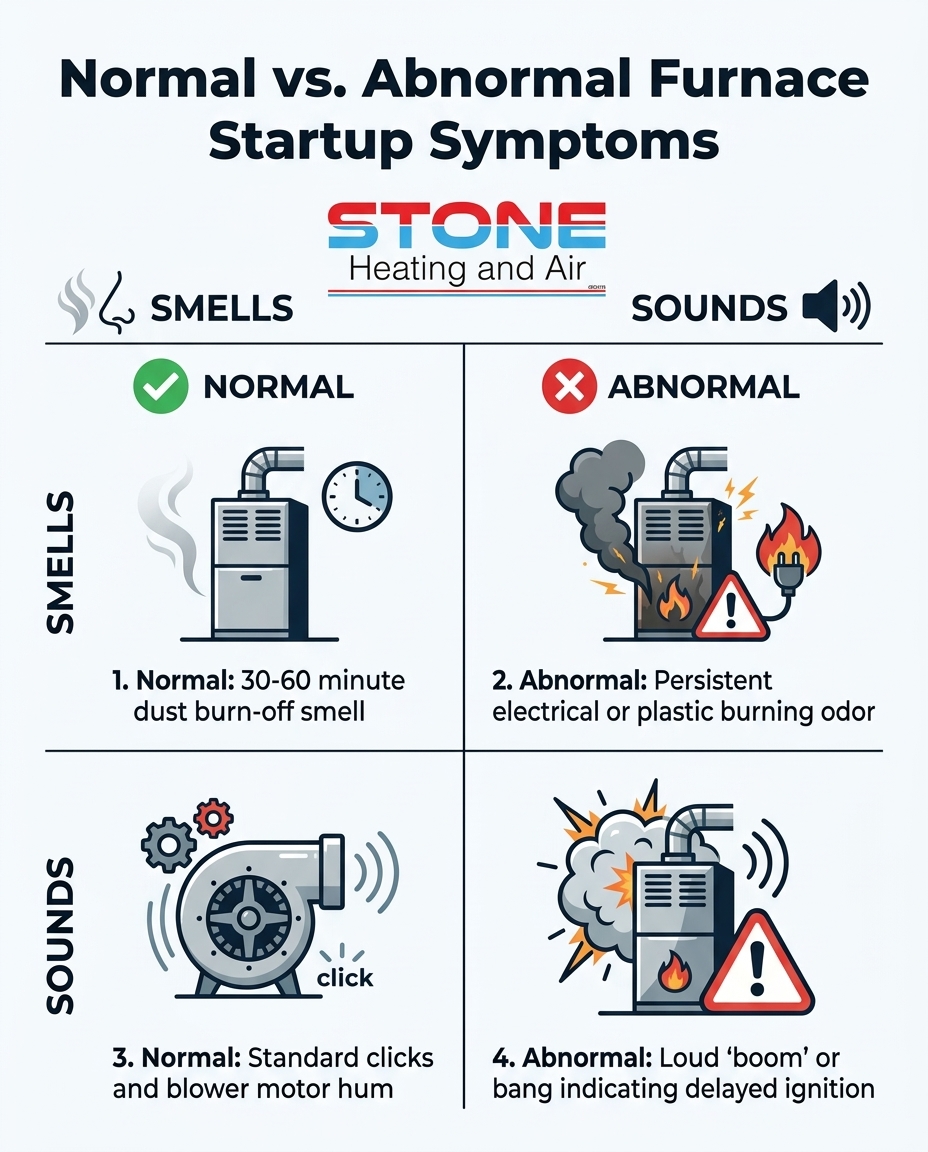
When you initiate your mid fall heating startup in October, that metal heat exchanger rapidly heats up to several hundred degrees. The accumulated dust layer literally incinerates. This process, known as dust burn-off, produces a very distinct, dry burning smell that permeates the house through the supply vents. The odor is unmistakable, but it is completely normal. In our experience servicing residential systems throughout Central Point, this harmless dust burn-off smell typically dissipates within 30 to 60 minutes of the initial startup as the residue is completely cleared away.
The Impact of Local Air Quality
The intensity of this odor heavily depends on the environment. Because our team at Stone Heating and Air operates right here in the Rogue Valley, we see firsthand how Central Point's seasonal summer wildfire smoke leaves additional particulate residue on heat exchangers. This makes the October dust burn-off smell much more pronounced than it might be in other regions. Micro-particulates from smoke easily bypass standard, low-efficiency air filters, coating the internal components of your furnace. When the heat kicks on, you are not just burning off household dust; you are burning off months of accumulated outdoor pollutants. Opening a few windows during that first hour of operation is a simple trick we recommend to clear the air while the system cleans itself.
When a 'Boom' Means Trouble: The Mechanics of Delayed Ignition
While a temporary burning smell is expected, loud concussive noises are never part of normal operation. One of the most concerning sounds our technicians encounter on service calls is a loud "boom" or bang immediately after the thermostat calls for heat. This specific noise points to a dangerous mechanical fault known as delayed ignition. Understanding the mechanics behind this issue is critical for the safety of your home and the longevity of your heating systems.
How Delayed Ignition Happens
In a properly functioning gas furnace, the ignition source (usually a hot surface ignitor or a spark ignitor) activates just before the gas valve opens. The moment the gas hits the burners, it should ignite smoothly and continuously. Delayed ignition occurs when the gas valve opens, but the ignitor fails to light the gas immediately. Because the gas valve remains open, highly combustible gas continues to pool and accumulate inside the combustion chamber.
When the delayed spark or glow finally catches the accumulated gas, the resulting mini-explosion creates a concussive "boom." You might even hear the metal panels of the furnace rattle or see a brief flash of light near the burner compartment.
Common Root Causes
• Carbon buildup on the flame sensor: A dirty sensor fails to read the flame correctly, causing erratic gas valve operation.
• Dirty or rusted burners: Corrosion prevents the gas from flowing smoothly across the burner tracks, delaying the flame rollout.
• Failing hot surface ignitor: An aging ignitor may not reach the required temperature quickly enough to light the initial gas flow.
The safety warning: This is a mechanical fault requiring professional diagnosis. The concussive force of repeated delayed ignitions can physically crack the heat exchanger, leading to carbon monoxide leaks into your living space. At Stone Heating and Air, we strictly advise against DIY repairs for gas and electrical components. If you hear a loud bang during startup, turn the system off at the thermostat and contact our certified technicians immediately.
Normal vs. Abnormal Furnace Symptoms: A Diagnostic Checklist
Drawing a hard line between safe operation and the need for professional intervention protects your equipment and your home. When performing your mid fall heating startup in October, use this diagnostic checklist that our field technicians recommend to evaluate your system's performance. Ignoring abnormal symptoms often leads to the severe risks of skipping HVAC maintenance, including complete system failure on the coldest night of the year in Central Point.
Symptom 1: Odor Duration and Type
• Normal: A dry, dusty burning smell that fades within 30 to 60 minutes.
• Abnormal: Persistent odors that last for hours or days. Smells resembling melting plastic, burning rubber, or electrical ozone indicate overheating wires or failing motor components.
Symptom 2: Startup Sounds
• Normal: A faint click from the thermostat, the gentle whir of the draft inducer motor, a soft "whoosh" as the burners ignite smoothly, and the steady hum of the main blower motor.
• Abnormal: Loud bangs (delayed ignition), metallic scraping (failing blower bearings), high-pitched squealing (worn belts or bad motor bearings), or rapid clicking without ignition.
Symptom 3: Airflow and Cycling
• Normal: Steady, consistent warm air flowing from all vents within a few minutes of startup, running until the thermostat set point is reached.
• Abnormal: Short cycling (the furnace turns on and off every two minutes), weak airflow, or cold air blowing continuously. Short cycling usually indicates the system is overheating and tripping its internal high-limit safety switch, often due to a severely clogged air filter.
Inside Your System: The Heating Sequence of Operations Explained
To truly understand why your furnace behaves the way it does during that mid fall heating startup in October, it helps to know the exact step-by-step process the system follows. Modern furnaces are designed with a strict sequence of operations. If any single step fails, the system locks itself out to prevent unsafe conditions.
1. The Call for Heat: You adjust the thermostat. The thermostat sends a low-voltage signal to the furnace control board. The very first component to activate is the draft inducer motor. This small fan pulls residual gases out of the heat exchanger and pushes them up the flue pipe, ensuring the chamber is safe for combustion.
2. Safety Verification: As the draft inducer spins, it creates negative pressure. A small safety device called a pressure switch detects this draft. If the flue pipe is blocked (by a bird's nest or debris), the pressure switch will not close, and the furnace halts the startup process. If airflow is verified, the control board sends power to the ignitor, which begins to glow bright orange or spark.
3. Ignition and Confirmation: Once the ignitor is ready, the gas valve opens, releasing fuel into the burners. The gas ignites. Within three seconds, a small metal rod called the flame sensor must detect the presence of fire. If the sensor is dirty and fails to feel the heat, it shuts the gas valve immediately to prevent gas buildup.
4. Air Distribution: If the flame is confirmed, the burners stay lit, heating up the metal heat exchanger. After a short delay (usually 30 to 60 seconds) to allow the metal to get hot, the main blower motor activates, pushing indoor air over the hot heat exchanger and distributing warm air through your ductwork.
If you notice your furnace turning on, blowing cold air for a minute, and shutting off, it is likely failing at step two or three of this sequence.
How Summer Air Quality Challenges Affect Your Winter Heat
HVAC systems operate as a single, interconnected breathing machine for your home. The conditions your equipment faces during the summer have a direct and profound impact on how it performs during the winter. Heavy summer particulate matter (PM2.5) exacerbates fall startup odors and stresses the internal components of the system.
As local HVAC experts, we know Central Point's hot summers and wildfire smoke mean your HVAC filter works overtime. As smoke and ash infiltrate the home, the air filter captures a massive volume of debris. If that filter is not changed regularly throughout the cooling season, the resulting restriction in airflow forces the blower motor to work significantly harder. This constant strain wears down motor bearings and electrical capacitors.
The Danger of Carryover Neglect
Neglecting the system during the cooling months often leads to unexpected heating failures. A severely clogged air filter does not just reduce the efficiency of your cooling systems; it directly impacts the furnace. When the furnace runs with restricted airflow, the heat exchanger cannot shed its heat fast enough. The metal overheats, tripping the high-limit switch and shutting the system down prematurely. Year-round filter maintenance is critical for protecting indoor air quality, maintaining comfort, and preventing premature equipment failure.
Preventing Startup Issues with Professional Care
The most effective way to eliminate the anxiety of a mid fall heating startup in October is through proactive, professional maintenance. Routine care prevents dirty burners and failing ignitors—the exact root causes of delayed ignition and other startling startup noises.
Dedicated maintenance plans designed specifically for the heavy seasonal demands and air quality challenges of the Southern Oregon climate offer exceptional long-term value. A thorough professional tune-up from our team goes far beyond simply swapping out an air filter. Our technicians meticulously clean the burner assembly, polish the flame sensor to ensure accurate readings, and test the micro-farad output of the blower motor capacitor. We also perform a visual and specialized inspection of the heat exchanger to ensure there are no microscopic cracks that could leak carbon monoxide.
Real-World Benefits of Routine Maintenance
Catching small wear-and-tear issues before they escalate into major breakdowns provides significant financial benefits. A failing ignitor is an inexpensive fix during a scheduled tune-up; a cracked heat exchanger caused by repeated delayed ignition often requires a complete system replacement. Furthermore, routine expert cleaning of the internal cabinet and heat exchanger minimizes those startling startup odors, as the technician physically removes the summer dust buildup before it has a chance to burn off.
During a recent fall service call for a family new to the Central Point area, one of our experienced Stone Heating and Air technicians demonstrated how replacing clogged filters and thoroughly cleaning the internal components prevents these exact startup issues. By taking the time to explain the equipment's specific needs, our technician ensured the new residents understood how to keep their system running efficiently and safely through the changing seasons.
Ensure a Safe and Efficient Heating Season
Navigating your mid fall heating startup in October does not have to be a stressful event. By understanding that a brief burning dust smell is a normal part of the seasonal transition, you can let your system clear itself out with confidence. However, loud noises, persistent electrical odors, and short cycling are clear indicators that your equipment requires an expert eye.
A clear, technical understanding of what is happening inside the unit empowers you to protect your home and your investment. Do not wait for a minor ignition delay to become a major mechanical failure. Explore professional HVAC maintenance options with Stone Heating and Air today to ensure your heating system operates safely, efficiently, and reliably all winter long.
Frequently Asked Questions
Why does my heater smell like burning dust when I turn it on?
The smell is caused by the incineration of household dust that settled on the heat exchanger during the summer. When the furnace heats up for the first time in the fall, this accumulated debris burns off rapidly. It is a normal process and does not indicate a fire hazard within the unit.
How long should a furnace smell like burning during the first fall startup?
A normal dust burn-off odor typically lasts between 30 and 60 minutes. Opening a few windows can help clear the air faster. If the smell persists for several hours or smells like melting plastic or electrical wiring, shut the system down immediately.
What causes delayed ignition in a gas furnace?
Delayed ignition happens when gas accumulates in the combustion chamber before the ignitor successfully lights it. This is usually caused by dirty burners, a failing hot surface ignitor, or carbon buildup on the flame sensor. It requires professional cleaning and recalibration to resolve safely.
Is it dangerous if my furnace makes a loud boom when turning on?
Yes, a loud concussive boom indicates delayed ignition, which is a serious safety concern. The force of the small gas explosion can eventually crack the metal heat exchanger. A cracked heat exchanger allows deadly carbon monoxide to leak into your home's air supply.
Can summer wildfire smoke make my furnace smell worse in the fall?
Absolutely. Wildfire smoke introduces a high volume of microscopic particulate matter into your home, which bypasses standard filters and coats the furnace internals. When the system heats up in the fall, burning off this heavy layer of smoke residue creates a much stronger odor than standard household dust.
How often should I schedule professional HVAC maintenance?
Professional maintenance should be scheduled twice a year: once in the spring for your cooling equipment and once in the fall for your heating system. This proactive schedule ensures components are clean, safety switches are tested, and the system is operating at peak efficiency before extreme weather arrives.