

That Chilly October Morning Surprise
When you switch your thermostat to "heat" for the first time this season, having reliable home maintenance tips and troubleshooting strategies can save you from an unexpected morning panic. It is a familiar scenario for homeowners in the Central Point area—and one our team at Stone Heating and Air hears about every October: you wake up to a sudden temperature drop, bump up the thermostat to take the chill out of the air, and are immediately met with a strange burning smell or an unsettling mechanical clank. Is your system failing, or is it just waking up from a long summer slumber? Knowing the difference between a harmless seasonal quirk and a genuine mechanical failure is the key to maintaining a safe, comfortable home.
For reliable diagnostics, trust professional HVAC services or reach out for emergency HVAC repair before freezing temperatures arrive.
The transition from hot, dry summers to chilly autumn mornings happens quickly in the Rogue Valley. Your heating equipment has likely been sitting completely dormant since early spring. During those long months of inactivity, the internal components of your furnace or heat pump undergo physical changes. Metal components contract and expand with ambient temperature shifts, while the blower motor works overtime to circulate chilled air. When that first mid-fall October heating startup occurs, the system is subjected to a sudden influx of thermal stress.
This initial startup is a critical decision point for your household comfort. A brief, dusty odor might simply be the system clearing its throat, so to speak. However, a persistent electrical burning smell or a loud banging noise could indicate that critical components have seized, degraded, or fallen out of alignment during the off-season. In our experience, ignoring these true warning signs often leads to far more severe consequences. What starts as a minor, easily fixable issue in October can rapidly degrade the surrounding components, forcing the system to work harder and less efficiently. If left unchecked, we typically see these early warning signs culminate in a complete system breakdown right in the middle of a freezing January night, necessitating urgent, large-scale repairs.
Summer Dormancy and the First Heating Cycle
To understand why your heating system acts strangely during its first fall run, you have to look at the physical toll that months of inactivity take on the equipment. Throughout the summer, your HVAC system's primary focus was on cooling your home. The indoor coil was constantly chilled, pulling humidity from the air, while the outdoor compressor worked tirelessly to exhaust heat. If you required AC repair in Central Point over the summer, the focus was entirely on the refrigeration cycle. Meanwhile, the heating-specific components—like the gas burners, the heat exchanger, or the reversing valve on a heat pump—sat entirely unused.
During this extended dormancy, the air circulating through your ductwork continues to carry microscopic particles. Even with a high-quality air filter in place, a fine layer of household dust, pet dander, and lint inevitably settles onto the cold heat exchanger and the burner assembly. When you finally initiate that mid-fall October heating startup, the burners ignite, and the heat exchanger rapidly climbs to temperatures exceeding several hundred degrees. The sudden, intense heat instantly incinerates the accumulated layer of dust.
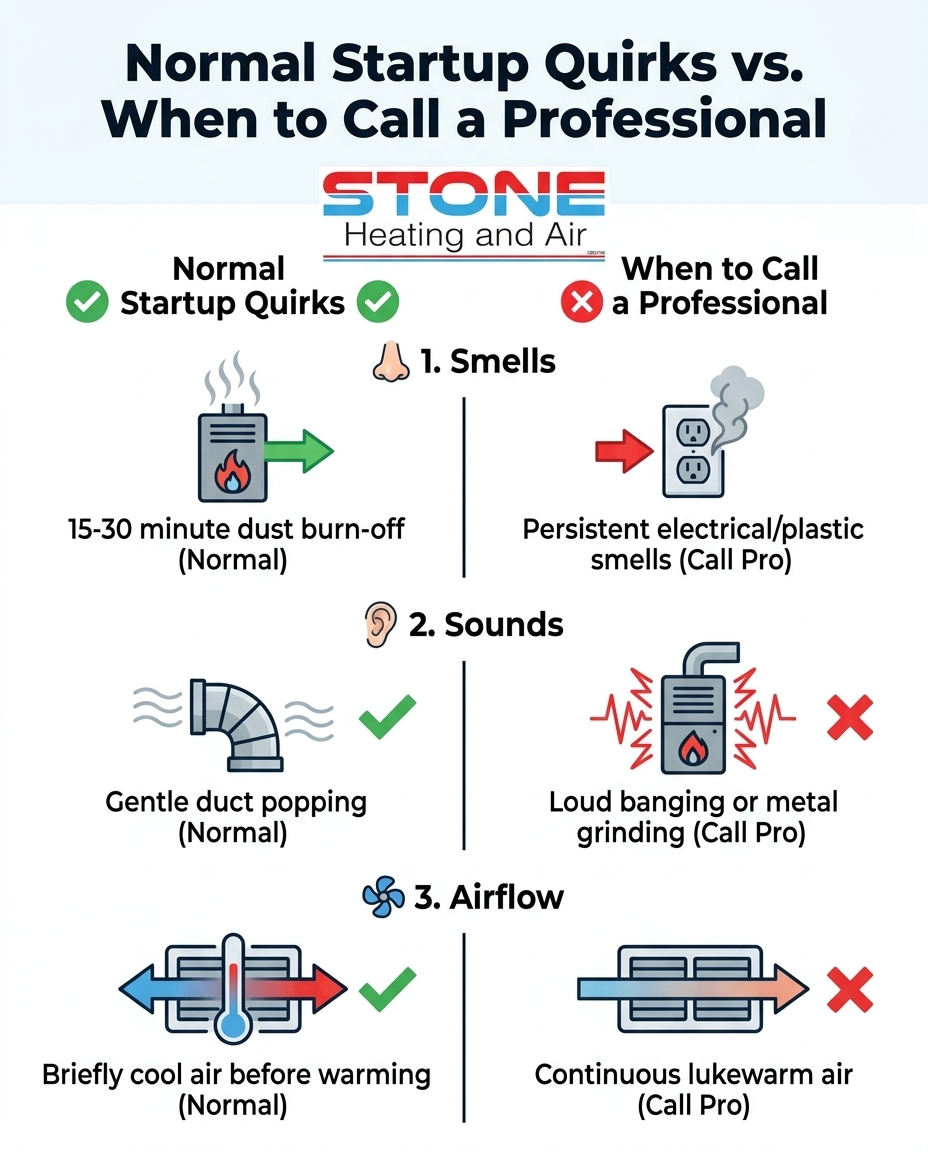
This physical reaction produces a distinct, slightly acrid odor that permeates the house through the ductwork. While the smell can be alarming, our technicians always reassure homeowners that it is a completely standard physical reaction to the first ignition of the season. The vast majority of the time, this harmless burn-off will dissipate entirely within 15 to 30 minutes of continuous operation as the dust is completely incinerated and cleared from the system.
The 30-Minute Rule for Burning Smells
If you encounter this common startup odor, follow the 30-minute rule to ensure your system is operating safely:
• Ventilate the space: Open a few windows slightly to allow fresh air to circulate and carry the initial dust burn-off out of the house.
• Monitor the operation: Keep the system running and pay close attention to the airflow and the intensity of the odor for the first half-hour.
• Identify the scent: Dust burn-off smells like a dusty radiator or an old hair dryer. If the smell resembles melting plastic, electrical ozone, or rotten eggs (natural gas), shut the system down at the thermostat immediately.
• Check the duration: If a standard dust smell persists beyond 30 to 45 minutes of continuous heating, it is time to turn the unit off and call our team for professional diagnostics.
Decoding Startup Sounds: Normal Clicks vs. Mechanical Warnings
Just as your heating system produces unique smells during its first run, it also generates a specific symphony of sounds. Guiding yourself through auditory troubleshooting is an excellent way to identify when a noise is a standard operational quirk versus when it requires a licensed professional. The sudden thermal expansion of cold metal and the engagement of dormant relays create a variety of noises that can startle homeowners.
Normal operational sounds include:
• Standard relay clicks: A distinct click from the thermostat followed by a click at the furnace control board simply means the electrical signal is successfully calling for heat.
• Gentle duct popping: As hot air rushes into cold sheet metal ductwork, the metal expands. This causes a gentle popping or ticking sound that usually subsides once the ducts reach a stable operating temperature.
• The initial rush of air: A whooshing sound as the blower motor ramps up to speed is expected, especially in modern variable-speed systems that adjust their airflow dynamically.
Dangerous mechanical warnings include:
• Loud banging on ignition: If you hear a loud "boom" or bang right as the furnace tries to light, this is a serious condition known as delayed ignition. Gas builds up in the combustion chamber before the igniter successfully lights it, resulting in a small explosion. This can crack the heat exchanger and pose a severe safety hazard.
• Metal-on-metal grinding: A harsh grinding or squealing noise typically indicates failing bearings in the blower motor or the inducer draft motor. Running the system in this state will quickly destroy the motor entirely.
• Continuous rattling: A persistent rattle could mean a component has vibrated loose over the summer, or that a panel is not properly secured, which can interfere with safety switches.
If you hear delayed ignition banging or metal-on-metal grinding, turn the system off immediately. Opening the furnace cabinet to investigate these dangerous mechanical noises is strictly off-limits for DIYers. Modern heating systems contain high-voltage electrical components, pressurized gas lines, and sensitive safety sensors that require specialized training to handle safely.
Home Maintenance Tips and Troubleshooting for Airflow and Filters
While invasive repairs and internal diagnostics must be left to the experts, there are several vital steps you can take to ensure your system breathes easily. Defining exactly what maintenance tasks are safe and necessary for the homeowner to perform prevents accidental damage and keeps your equipment running efficiently.
Restricted airflow is the number one enemy of any HVAC system. When a furnace or heat pump cannot pull enough air through the return ducts, the blower motor has to work twice as hard to compensate. This added strain increases your energy consumption and causes the internal components to overheat. In a furnace, this overheating will eventually trigger the high-limit safety switch, causing the system to short-cycle (turn on and off rapidly) before the house reaches the desired temperature.
Follow these safe homeowner maintenance steps during your mid-fall October heating startup:
1. Replace your air filter: This is the most critical, safe DIY task you can perform. A filter that gathered dust, pollen, and wildfire smoke all summer is likely heavily clogged. Swap it out for a fresh, appropriately sized pleated filter before turning on the heat.
2. Clear the outdoor unit: If you utilize a heat pump, the outdoor condenser needs clear airflow to extract ambient heat from the outside air. Clear away any summer debris, fallen leaves, tall grass, or overgrown vegetation within a two-foot radius of the unit.
3. Unblock indoor vents: Walk through every room in your home and check the supply registers and return grilles. Ensure they are fully open and unobstructed by rugs, curtains, or furniture that may have been moved during summer redecorating.
4. Check the thermostat settings: Verify that the thermostat is securely set to "heat" and that the fan is set to "auto" rather than "on," which prevents the system from blowing cold air between active heating cycles.
Sometimes, ensuring proper airflow means recognizing when old infrastructure is no longer viable. For example, our Stone Heating and Air technicians recently helped a Central Point homeowner remove an old 1950s wall heater to safely upgrade their home's heating capabilities. Our team swiftly removed the outdated unit and hauled it away, eliminating a potential hazard and clearing the path for modern, efficient airflow. For your modern system, safe maintenance means keeping the airways clear and trusting the deep internal work to certified technicians.
When to Call a Licensed Professional for Heating Repair
Establishing clear boundaries for when DIY troubleshooting must stop is critical for your safety and the longevity of your equipment. Heating systems rely on controlled combustion or high-pressure refrigerants to generate warmth. Any task involving gas lines, high-voltage electrical components, combustion chambers, or refrigerant handling requires a licensed technician with the proper diagnostic tools and safety training.
If your mid-fall October heating startup reveals any of the following immediate stop-and-call triggers, turn the system off and seek professional help:
• Persistent electrical smells: If the burning smell does not dissipate or smells strongly of melting wires, a motor may be overheating or a wire may be shorting out.
• Repeated system short-cycling: If the heater turns on, runs for only a minute or two, and then shuts off before warming the house, a safety sensor is likely detecting a dangerous condition (like overheating) and forcing a shutdown.
• Lukewarm or cold airflow: If the blower is running constantly but the air coming out of the vents never gets warm, you may have a failed igniter, a broken flame sensor, or a refrigerant leak in your heat pump.
• Tripped circuit breakers: If turning on the heat immediately trips the breaker at your electrical panel, do not keep resetting it. This indicates a serious electrical fault that needs immediate professional isolation.
Prompt heating repair and maintenance during the fall prevents complete system failure during harsh winter freezes. A pattern we see often is homeowners ignoring early warning signs, only to call us in a panic months later. Our team at Stone Heating and Air recently responded to a local resident whose home heating system went out completely during a severe cold snap. By quickly diagnosing the issue and providing clear options, we restored heat efficiently before the house reached dangerous temperatures. Working with a team that offers 24/7 emergency readiness and prompt local expertise ensures that when these stop-and-call triggers happen, you are never left freezing in the dark.
Preparing Your System for Deep Winter
Surviving the first startup is only the beginning of the season. To bridge the gap between immediate fall troubleshooting and long-term winter reliability, it is vital to look ahead to the colder months. The Rogue Valley is known for sharp winter temperature drops that put immense, sustained strain on residential heating equipment. A system that limps through October will likely fail when asked to run continuously in December.
This is why a comprehensive pre-winter inspection by a certified technician is so valuable. During a professional tune-up, our Stone Heating and Air technicians do far more than just change the filter. We inspect the heat exchanger for microscopic cracks that could leak carbon monoxide into your home. We clean the flame sensor so the furnace doesn't shut down prematurely. We test the amperage draw on the blower motor to ensure it isn't pulling too much electricity, and we calibrate the thermostat for accurate temperature reading.
If your technician discovers significant wear and tear during this inspection, you may need to make a bigger decision. Aging systems that require frequent, costly repairs might be candidates for replacement before extreme cold hits. If your unit is over 10 to 15 years old, you should carefully consider should you repair or replace your HVAC system to ensure reliable comfort. Upgrading to a modern, high-efficiency unit not only provides peace of mind but can also lower your monthly energy consumption.
Furthermore, taking proactive steps in the fall allows you to explore financial incentives without the pressure of an emergency breakdown. Qualifying energy-efficient heat pump installations may be eligible for generic federal tax credits or utility incentives. We always advise our customers in the Central Point area to verify current programs with their local utility providers or a tax professional, as upgrading your system proactively can often yield significant long-term benefits.
Frequently Asked Questions About Fall Heating Startup
Is a burning smell normal when I turn on my heater for the first time?
Yes, a brief burning dust smell is completely normal during the first heating cycle of the season. Dust and lint settle on the heat exchanger over the summer, and the initial ignition burns this debris away. This harmless odor typically dissipates within 15 to 30 minutes. However, if the smell persists longer or smells like melting plastic or ozone, shut the system down and call a professional.
What noises indicate my furnace needs repair?
Loud banging, booming, grinding, or continuous rattling are all signs that your furnace requires professional repair. A loud boom upon startup indicates delayed ignition, which can severely damage the heat exchanger. Metal-on-metal grinding usually points to failing motor bearings. While gentle duct popping is normal, violent or harsh mechanical noises should always be investigated by a technician.
Why is my heater blowing lukewarm air?
If your heater is consistently blowing lukewarm air, it is likely struggling with an ignition failure, a dirty flame sensor, or restricted airflow. In a heat pump, it could indicate low refrigerant levels or a malfunctioning reversing valve. While a brief burst of cool air is normal right at startup, continuous lukewarm air means the system is not successfully generating heat and requires professional diagnostics.
When should I call a professional for HVAC repair?
You should call a professional immediately if you experience persistent electrical burning smells, loud mechanical grinding, delayed ignition banging, or if your system repeatedly turns on and off (short-cycling) without heating the home. Any issue involving gas lines, complex electrical wiring, or internal furnace components must be handled by a licensed technician to ensure the safety of your household.
How do I prepare my HVAC system for winter?
The best way to prepare your system for deep winter is to replace the air filter, ensure all indoor vents are unblocked, and clear debris away from your outdoor heat pump unit. Most importantly, schedule a comprehensive pre-winter inspection with a certified HVAC technician. They will clean internal sensors, check for dangerous carbon monoxide leaks, and ensure the system can handle sustained freezing temperatures.
Why is my furnace making a loud noise on startup?
A loud "boom" or bang when the furnace starts is typically caused by delayed ignition, where gas builds up in the combustion chamber before finally catching a spark. This is a dangerous condition that puts immense pressure on the heat exchanger. If you hear this noise during your mid-fall October heating startup, turn the furnace off immediately at the thermostat and contact a licensed professional for repairs.
Secure Your Winter Comfort Today
The transition into the colder months doesn't have to be stressful. By applying these home maintenance tips and troubleshooting strategies, you can confidently navigate that first chilly morning and ensure your system is ready for the season ahead. Recognizing the difference between normal startup quirks and serious mechanical warnings empowers you to protect your equipment and your home.
Nothing beats the peace of mind that comes from a fully vetted, professionally inspected heating system. If your startup revealed lingering odors, strange noises, or inadequate airflow, do not wait for the deep freeze to arrive. Reach out to our trusted local professionals at Stone Heating and Air for emergency HVAC repair or a routine tune-up. Securing expert guidance now ensures you can enjoy a warm, safe, and comfortable home all winter long.