

Transitioning from Summer Heat to Fall Unpredictability
With the late August back-to-school transition just around the corner, scheduling end-of-summer AC maintenance before the fall rush is one of the smartest moves a homeowner can make. While your mind might be shifting toward autumn schedules and cooler evenings, your air conditioner is still working overtime to manage the lingering daytime heat. Most homeowners assume that because the hottest days are mostly behind us, their cooling system can simply coast until it is time to turn it off for the winter. This assumption often leads to frustrating and highly preventable breakdowns.
For comprehensive air conditioning services, including specialized AC maintenance in Central Point, proactive care is your best defense against unexpected equipment failures.
The Hidden Cost of Ignoring the Calendar
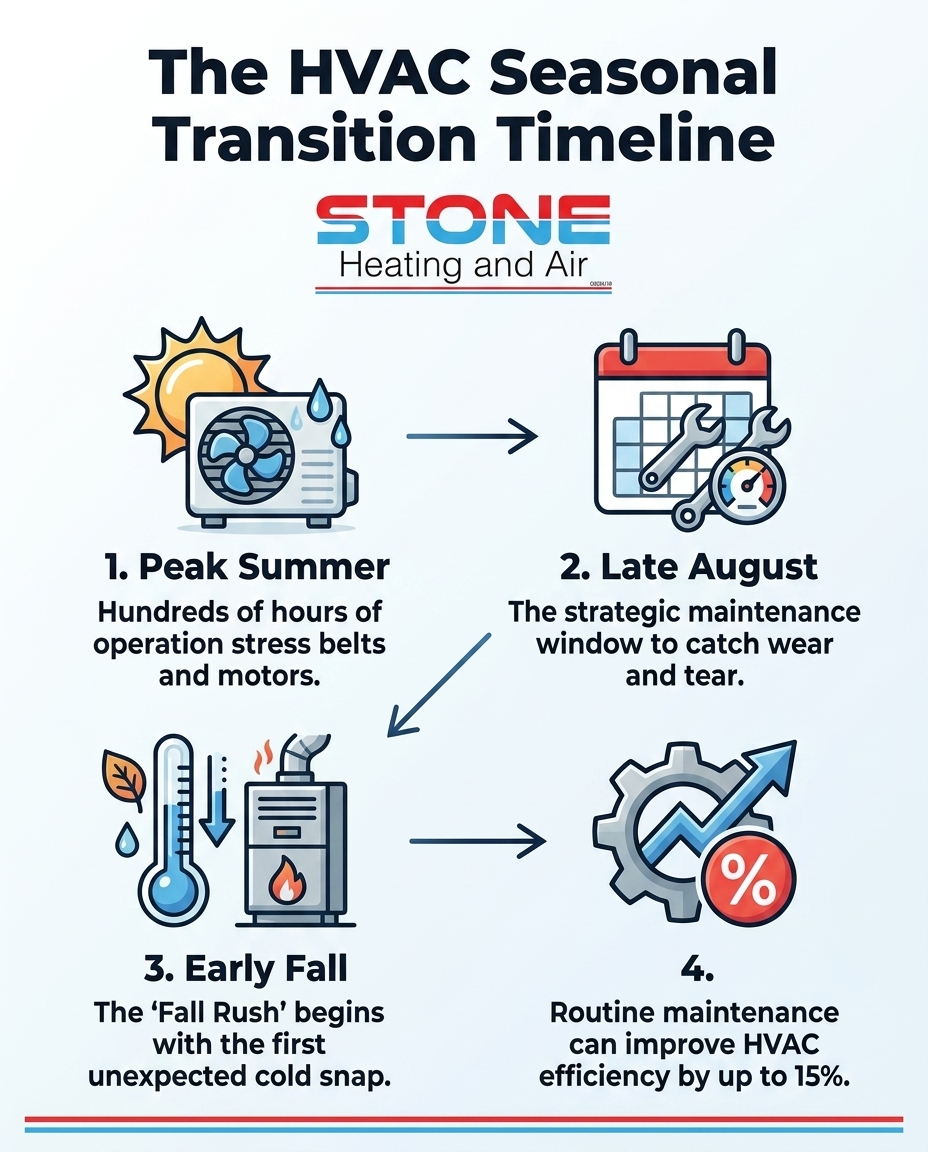
Throughout June and July, your cooling system handles intense demands. Hundreds of hours of continuous operation place incredible stress on moving parts, electrical connections, and refrigerant lines. Unseen summer wear—like degrading drive belts, stressed capacitors, and micro-leaks in the coils—accumulates silently inside the unit. The equipment may still be pushing cool air into your living room, but internally, it is operating on borrowed time.
Right now, you face a critical decision point. You can choose to ignore the system because the cooling season is winding down, hoping it survives until next year. Or, you can book a late-August checkup to address that accumulated summer stress before it turns into a catastrophic failure. A proactive approach smooths the transition into unpredictable autumn temperatures, ensuring your home remains comfortable no matter what the weather does next.
The Compounding Toll of Peak Heat on HVAC Components
Air conditioning units are built to withstand tough conditions, but mechanical stress is cumulative. Every hour your system runs to combat high ambient temperatures, the internal components experience friction, heat, and vibration. This wear and tear does not magically disappear just because the weather outside starts to cool down; instead, it compounds, leaving your equipment highly vulnerable to sudden failure.
Central Point, OR, and the surrounding Rogue Valley experience intense summer heat waves that severely strain AC units, setting the stage for late-season fatigue. When the outside temperature spikes well above normal, your system has to work twice as hard to maintain your indoor thermostat setting. This increased workload elevates the internal pressure of the system and forces components to operate near their maximum limits for extended periods.
One local homeowner experienced this exact breaking point when their AC unit failed completely during a severe summer heat wave. Fortunately, a technician arrived the same day to diagnose the issue and repair the system, getting it back online quickly. However, this situation perfectly illustrates what happens when equipment is pushed to the edge without preventative intervention. To understand more about this specific mechanical stress, it helps to learn why late summer is hard on your AC motor.
Mechanical Fatigue in Belts and Motors
The internal environment of an air conditioner is harsh, especially after months of peak operation.
• Continuous rotation degrades belts: The belts that drive your blower motor are made of tough rubber, but continuous rotation causes them to fray, stretch, or crack over time. A stretched belt slips, reducing airflow and forcing the system to run longer to achieve the same cooling effect.
• Motors run hotter: As the summer drags on, blower motors and condenser fan motors run hotter. This excess heat degrades the internal lubrication, increasing friction. Increased friction leads to even more heat, creating a destructive cycle that eventually burns out the motor entirely.
• Electrical stress: Capacitors, which provide the initial jolt of electricity to start the motors, lose their ability to hold a charge after repeated exposure to high temperatures. A weak capacitor forces the motor to pull more amps, which can cause the system to overheat and trip your circuit breaker.
Recognizing Hidden Signs of System Fatigue
Even if your air conditioner is still producing cool air, it might be struggling behind the scenes. Recognizing the subtle signs that a system is losing efficiency is critical for catching problems before they cause a complete shutdown. Homeowners often ignore these minor symptoms, assuming they are just normal quirks of an aging system or rationalizing that they only need the AC for a few more weeks.
Another local family noticed their AC unit was running constantly but failing to cool the house effectively during a hot stretch. A professional repair restored the unit, ensuring it provided great cooling once again. Their experience is a common pattern: the system runs, but the performance drops noticeably. If you are searching for AC low refrigerant symptoms end of summer, you are likely noticing longer cycles, lukewarm air, or even ice forming on your evaporator coils.
Identifying Subtle Performance Drops
Longer cooling cycles are one of the most reliable indicators of system fatigue. If your AC used to cool the house in twenty minutes but now takes forty-five minutes to reach the same thermostat setting, the system is working harder, consuming more electricity, and experiencing more wear. Pay attention to unusual sounds, such as squealing belts or grinding motors, which indicate significant mechanical friction. Monitor your vents for weak airflow or air that simply isn't as cold as it was in early June.
• Airflow feels weak from the vents — Potential Hidden Cause: Failing blower motor or clogged air filter — The Solution: Professional motor inspection and filter replacement
• System runs for hours without stopping — Potential Hidden Cause: Low refrigerant levels or dirty condenser coils — The Solution: Leak detection, refrigerant recharge, and coil cleaning
• High-pitched squealing near the indoor unit — Potential Hidden Cause: Frayed, slipping, or cracked drive belt — The Solution: Immediate belt replacement before it snaps
• Ice buildup on the indoor copper lines — Potential Hidden Cause: Restricted airflow or refrigerant leak — The Solution: System shutdown and professional diagnostics
Why Late August is the Strategic Maintenance Window
Timing is everything when it comes to home maintenance. The late August / back-to-school transition represents a unique, strategic window in the HVAC industry. During peak summer, technicians are overwhelmed with emergency no-cooling calls. By late August, those emergency calls begin to taper off, creating a brief industry "lull" before the early fall heating start-ups begin.
This window is your opportunity for proactive care rather than reactive panic. Catching a frayed belt, a failing capacitor, or a minor refrigerant leak now prevents a mid-September emergency when you need the system most. If you wait until a component actually breaks, you will likely need an urgent AC repair, which is always more stressful than a scheduled tune-up. Scheduling now guarantees professional availability before calendars book up entirely for the fall heating rush.
Preparing for the First Cold Snap: A Holistic Approach
It is a common misconception that your air conditioner and your heating system are entirely separate entities. In modern central HVAC systems, they share critical components. The most important shared component is the indoor air handler and its blower motor. This motor is responsible for pushing cold air through your ducts in the summer and warm air through those same ducts in the winter.
If that blower motor has been stressed to its limit during the cooling season, switching it directly into heating mode without an inspection is incredibly risky. The rapid transition to cooler fall weather in the region requires the HVAC system to switch modes unexpectedly. One day you are running the AC to combat the afternoon sun, and the next morning you are turning on the furnace to chase away the autumn chill.
The Danger of the Sudden Switch
A holistic health check ensures the furnace or heat pump is ready to take over seamlessly. Working with a team that takes a proactive approach to seasonal transitions means you get a whole-system health check. This comprehensive strategy saves homeowners from emergency breakdowns when they first turn on their heating. Knowing that the entire system—both the cooling and heating sides—is prepared for unpredictable temperature swings provides immense peace of mind. For more details on getting the warm side of your system ready, look into proper heating system preparation.
The Real Cost of the Fall HVAC Rush
Waiting until an emergency happens during the first cold snap is a gamble that rarely pays off. The "fall rush" is a very real phenomenon in the HVAC industry. The first time temperatures drop significantly across Central Point, OR, thousands of residents turn on their heaters simultaneously. Inevitably, systems that were ignored at the end of summer fail to start, triggering a massive surge in service calls.
The consequences of waiting:
1. Technician unavailability: When the rush hits, schedules fill up instantly. A minor issue that could have been fixed in an hour during late August might leave your household without climate control for days while you wait for an available appointment.
2. Cascading system failures: A minor summer issue, like a slightly clogged filter or a struggling motor, turns into a major system failure when forced to switch modes and operate under new seasonal demands.
3. Lost efficiency: Systems operating with worn parts consume significantly more energy, driving up your utility bills right as the seasons change.
Reinforcing your system during the late August / back-to-school transition is about securing reliability. It is not just about ticking a box on a homeowner checklist; it is about ensuring your family remains comfortable when the weather turns unpredictable.
What a Professional End-of-Season Tune-Up Entails
Many homeowners wonder what actually happens during a professional maintenance visit, assuming it is just a quick filter swap. In reality, a professional end-of-season tune-up is a comprehensive diagnostic evaluation focused on safety, efficiency, and longevity. A licensed technician knows exactly how to identify AC low refrigerant symptoms end of summer and uses specialized gauges to check pressure levels safely—tasks that require professional licensing and should never be attempted as a DIY project.
During a routine fall service call, technicians not only perform the necessary mechanical checks but also explain exactly how the customer can support correct maintenance for peak performance between visits. This educational component ensures you know how to operate your system efficiently year-round.
Beyond the Basic Filter Change
A professional inspection covers dozens of critical checkpoints. Here is a look at the most vital steps:
• Professional calibration of system controls: Ensuring the thermostat communicates flawlessly with the equipment, preventing short-cycling and wasted energy.
• Expert evaluation of moving parts: Inspecting drive belts for fraying, lubricating dry motor bearings, and checking fan blades for balance.
• Electrical connection tightening: Heat and vibration cause wires to loosen over the summer. Technicians tighten all connections and test capacitors to prevent electrical fires and sudden motor failure.
• Refrigerant pressure assessment: Verifying that the system has the exact right amount of refrigerant to operate efficiently, catching micro-leaks before they freeze the coils.
Secure Your Home's Comfort Before the Seasons Change: Scheduling End-of-Summer AC Maintenance Before the Fall Rush
The logic is simple: fixing summer wear and tear before autumn arrives protects your equipment and your comfort. Addressing frayed belts, electrical stress, and low refrigerant now prevents major, cascading breakdowns during the first cold snap of the year. Your HVAC system has worked hard for you all summer; giving it the professional attention it needs is the best way to ensure it continues to perform reliably.
Do not wait for the first freezing morning to find out your system is struggling. Take advantage of the current scheduling window in Central Point, OR, before the industry gets overwhelmed. Secure your appointment for comprehensive AC maintenance in Central Point today, and step into the new season with total confidence in your home's comfort system.
Frequently Asked Questions
Is it too late to service my AC at the end of summer?
It is never too late to service your AC, and late summer is actually an ideal time. Scheduling maintenance in late August catches the wear and tear accumulated during peak heat before it causes a breakdown. It also ensures your shared blower motor is in top condition before you switch over to heating mode for the fall.
What are the symptoms of low refrigerant at the end of summer?
The most common symptoms include longer cooling cycles, weak airflow, and air that feels lukewarm rather than crisp and cold. You might also notice ice forming on the indoor evaporator coils or hear a subtle hissing sound near the outdoor unit. If you experience these signs, a professional leak detection and recharge is necessary.
Why should I schedule maintenance before the fall rush?
Scheduling before the fall rush guarantees you can get an appointment quickly and at a time that is convenient for you. Once the first cold snap hits, service companies are flooded with emergency heating calls, which can lead to long wait times. Proactive scheduling ensures your home remains comfortable without the stress of an emergency breakdown.
How does intense summer heat impact my AC belts and motors?
Intense heat and hundreds of hours of continuous operation cause rubber belts to stretch, fray, and crack, which reduces airflow. The extreme temperatures also degrade the lubrication inside blower motors, leading to increased friction, overheating, and eventual motor failure if left unchecked.
Should I service both my heating and cooling systems in late August?
Yes, a holistic end-of-season tune-up is the best approach. Because your heating and cooling systems share critical components like the indoor blower motor and ductwork, a comprehensive inspection ensures both sides of the system are ready for the unpredictable temperature swings of autumn.