

The Critical Window for Commercial RTU Winter Transitions
Preparing Commercial HVAC Systems in Medford for the Winter Shift requires far more than simply waiting for the first frost and flipping a thermostat from cooling to heating. Your commercial building's cooling equipment has run non-stop all summer to manage heavy thermal loads, but expecting those same mechanical components to seamlessly handle freezing weather without a professional adjustment is a direct path to sudden facility downtime. The transition between seasons places immense physical and operational stress on large rooftop units (RTUs). Waiting until the building is already cold to discover a mechanical failure leaves your business vulnerable to disrupted operations, uncomfortable tenants, and urgent repair scenarios.
To ensure your building remains operational and energy-efficient throughout the changing seasons, our team at Stone Heating and Air emphasizes that scheduling professional commercial HVAC services before the temperature drops is a foundational step in responsible facility management.
We know from experience that Medford's average low temperatures begin dropping into the 40s in September, creating a narrow but critical window for pre-heating preparations. During this early fall shoulder season, facilities experience rapid daily temperature swings—requiring cooling during the afternoon peak and heating by the early morning hours. A proper September pre-heating transition addresses these fluctuations by verifying that both sides of the mechanical system can operate safely and independently.
The phases of a comprehensive seasonal transition include:
• System baseline assessment: Documenting the current operating metrics of the RTU after the heavy summer cooling season to identify any degraded components.
• Mechanical changeover: Physically preparing the dormant heating components for safe combustion and airflow after months of inactivity.
• Control calibration: Adjusting building automation systems (BAS) to handle shoulder-season temperature swings without causing the heating and cooling systems to fight each other.
• Airflow verification: Ensuring that variable air volume (VAV) boxes and dampers are responding correctly to new seasonal setpoints.
Facility managers must understand the necessity of scheduling these professional transition protocols well before the first major temperature drop. Relying on reactive maintenance rather than a scheduled transition protocol almost guarantees that minor mechanical wear will escalate into a major operational failure right when the heating demand is highest.
Why Commercial RTUs Cannot Be Treated Like Residential Systems
In our years of serving Central Point and the greater Rogue Valley, a common operational risk our technicians see occurs when decision-makers assume that large-scale commercial rooftop units operate on the same basic principles as residential split systems. While a homeowner might simply change an air filter and turn on their furnace, commercial facilities in Medford and Central Point require a vastly different approach. Commercial RTUs are complex, self-contained architectures that manage outside air intake, exhaust, cooling, heating, and humidity control within a single massive enclosure. Because these units are typically placed on exposed rooftops, they take the direct brunt of extreme weather conditions, from blistering summer UV rays to freezing winter winds.
The specific vulnerabilities of RTUs to sudden fall temperature drops demand highly specialized diagnostic tools and training. Technicians must evaluate heavy-duty inducer motors, complex gas manifolds, and multi-stage compressors that residential systems simply do not utilize. Understanding these strict commercial HVAC maintenance requirements is the only way to ensure the long-term integrity of the equipment.
• Component Location — Residential Split Systems: Furnace protected indoors; AC condenser outside. — Commercial Rooftop Units (RTUs): All components housed together on an exposed roof.
• Ventilation Strategy — Residential Split Systems: Relies mostly on passive infiltration for fresh air. — Commercial Rooftop Units (RTUs): Uses active economizers to mechanically introduce outside air.
• Heating Capacity — Residential Split Systems: Single or two-stage heating for a unified space. — Commercial Rooftop Units (RTUs): Multi-stage or modulating heat for diverse building zones.
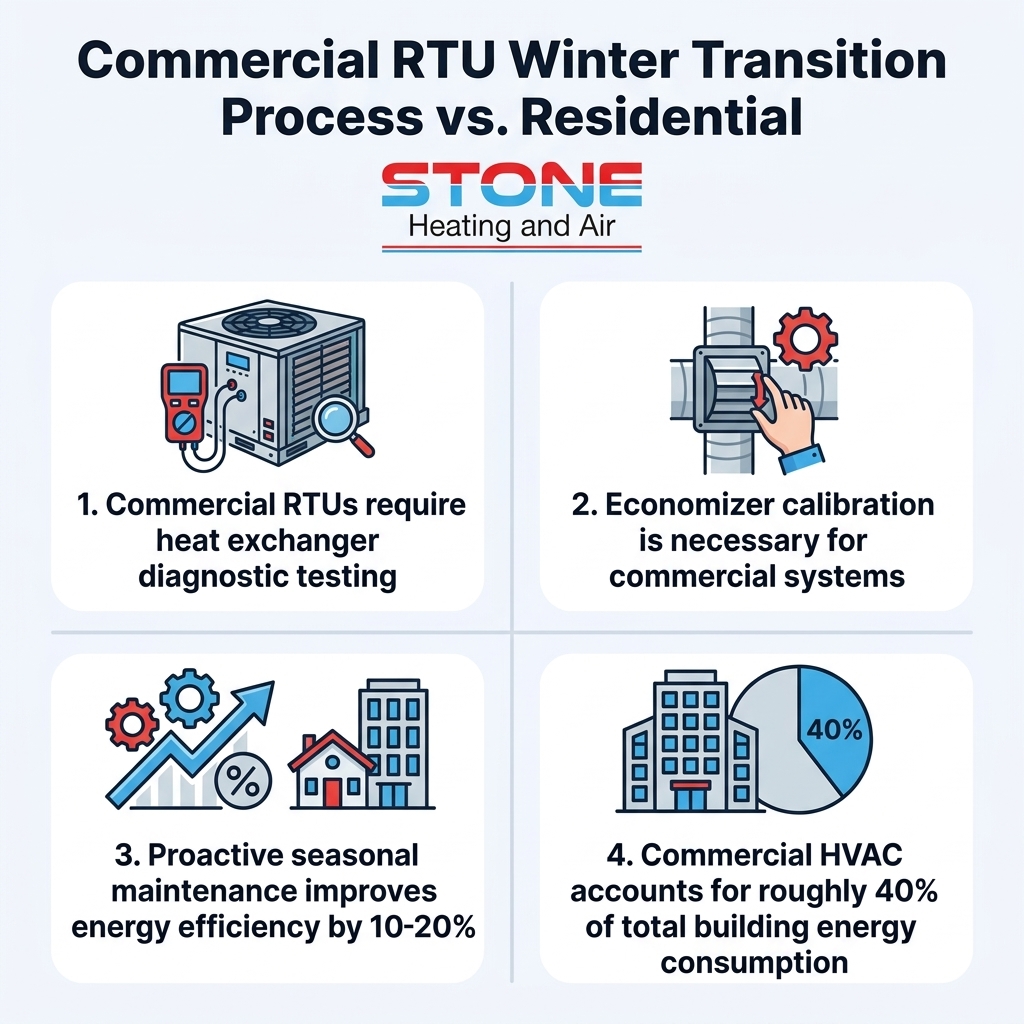
• Winterization Focus — Residential Split Systems: Basic filter changes and standard burner checks. — Commercial Rooftop Units (RTUs): Complex heat exchanger diagnostics and damper calibration.
• Downtime Impact — Residential Split Systems: Inconvenience for a single family. — Commercial Rooftop Units (RTUs): Loss of revenue, tenant complaints, and business closure.
The Role of Economizers in Shoulder Season Efficiency
One of the most distinct features of a commercial RTU is the economizer. Economizers are mechanical dampers that use outside air for "free cooling" when the ambient outdoor temperature is lower than the indoor temperature—a frequent occurrence during the fall shoulder season in the Pacific Northwest. Instead of running the energy-intensive compressors, the system opens the dampers to draw in cool, fresh outside air.
However, if these economizers are not professionally calibrated before winter, they present a severe risk. A damper that is stuck open due to a failed actuator or rusted linkage will continuously pull freezing air into the building during the winter months. This forces the heating system to work exponentially harder to warm the sub-freezing air, leading to massive energy waste and premature mechanical failure. Our commercial specialists always ensure professional calibration so the economizer opens and closes precisely according to the enthalpy controls.
Key Mechanical Protocols for Protecting Heat Exchangers
The core of any commercial gas-fired heating system is the heat exchanger. This component is responsible for transferring the thermal energy from the combustion process into the air stream that circulates throughout the building, all while keeping the toxic combustion gases safely contained and vented outside. Because commercial systems manage massive volumes of air and operate under high demand, their heat exchangers are subjected to extreme thermal expansion and contraction.
Over time, this continuous expansion and contraction can lead to metal fatigue, stress fractures, or corrosion. Operating a compromised heat exchanger in a commercial space is a severe safety hazard. Even a microscopic crack can allow carbon monoxide to enter the supply air stream, rapidly distributing dangerous gases throughout offices, retail spaces, or industrial floors. Protecting these components is our primary focus when servicing commercial heating systems ahead of the winter season.
Our professional testing protocols for heat exchangers include:
• Combustion Analysis: Technicians use specialized digital analyzers to measure the exact ratio of oxygen, carbon monoxide, and flue gases. Abnormal readings instantly flag a potential breach in the heat exchanger cells.
• Visual and Endoscopic Inspection: Because RTU heat exchangers are often difficult to access, professionals use flexible snake cameras to inspect the deep recesses of the metal tubing for rust, soot buildup, or hairline fractures.
• Draft and Pressure Testing: Verifying that the inducer draft motor is creating the correct negative pressure to safely pull combustion gases out of the unit and safely exhaust them into the atmosphere.
• Burner Alignment and Cleaning: Ensuring the gas burners are firing cleanly and directly into the heat exchanger tubes, preventing localized overheating that causes metal warping.
These diagnostic tests require licensed professionals and highly specialized equipment. We strongly advise facility managers to never attempt to bypass safety switches or manually force a commercial heating cycle to initiate without these foundational checks being completed first.
Mitigating Condensation and Drainage Risks in Damp Climates
Commercial cooling operations generate significant amounts of condensation. As massive volumes of warm, humid air pass over the evaporator coils during the summer, gallons of water are extracted and routed through a network of drain pans, P-traps, and condensate lines. During the transition to heating, this drainage infrastructure must be properly managed, especially given the regional climate realities of the Pacific Northwest.
Our crews know all too well that the Rogue Valley's damp fall and winter conditions significantly increase the risk of heat exchanger corrosion and frozen condensate lines if early freezes occur. If a commercial RTU enters the freezing months with standing water still trapped in its drainage system, the results can be highly destructive. Water expands when it freezes, which can easily shatter PVC drain lines, crack rigid condensate pans, and destroy the structural integrity of the unit's base.
Our professional process for winterizing drainage systems involves:
• Clearing biological buildup: Removing algae, mold, and sediment that accumulate in the drain pan over the summer, which can cause slow drainage and standing water.
• Flushing and treating condensate lines: Using high-pressure nitrogen to blow out the entire length of the condensate line, ensuring no blockages remain hidden deep within the pipe routing.
• Inspecting and clearing the P-trap: The trap is designed to hold a small amount of water to prevent outside air from being sucked into the unit, but it must be properly configured and cleared of debris to prevent freeze-ruptures.
• Verifying roof drainage: Ensuring that the water exiting the HVAC system has a clear path to the building's main roof drains, preventing water from pooling around the base of the RTU and causing structural roof leaks.
When rooftop components freeze and crack, the subsequent thaw often results in internal leaks. Water migrating down through the roof curb and into the ductwork causes severe operational disruptions, damaging ceiling tiles, ruining inventory, and forcing immediate facility closures until the structural breach is resolved.
Optimizing Building Energy Consumption During the Shoulder Season
Proper seasonal transitions are not just about preventing mechanical breakdowns; they are a critical component of financial management and energy optimization. According to Department of Energy (DOE) data, commercial HVAC systems account for roughly 40% of total building energy consumption. When a system is allowed to operate inefficiently, the financial waste accumulates rapidly across a large-scale facility.
Data indicates that proactive seasonal transitions improve overall energy efficiency by 10-20%. This improvement is achieved by ensuring that every mechanical component is operating without unnecessary resistance. A dirty blower motor, an uncalibrated economizer, or a clogged heat exchanger all force the system to draw more electrical amperage or consume more natural gas to achieve the thermostat's setpoint. When our technicians implement comprehensive HVAC solutions, we integrate this mechanical readiness directly with advanced energy management strategies.
Calibration of building controls is vital for optimization:
• Preventing simultaneous operations: In large buildings, it is common for the sun-facing perimeter to require cooling while the shaded interior core requires heating. Uncalibrated automated thermostats can cause the RTUs to fight each other, wasting massive amounts of energy.
• Optimizing setback schedules: Adjusting the building automation system to reflect winter occupancy hours. The system should automatically lower the temperature during unoccupied overnight hours and begin the morning recovery cycle just early enough to reach comfort levels before employees arrive.
• Demand-controlled ventilation (DCV): Verifying that CO2 sensors are accurately communicating with the economizers, ensuring the building only conditions as much outside air as is strictly necessary for the current occupancy level.
By treating the seasonal transition as an opportunity for comprehensive system optimization, facility managers can significantly reduce their winter utility expenditures while maintaining strict comfort standards for their occupants.
Proactive Risk Management to Prevent Facility Downtime
In the commercial sector, HVAC reliability is a matter of business continuity. A sudden loss of climate control does not just cause discomfort; it halts productivity, forces retail closures, and can compromise sensitive inventory or IT infrastructure. Framing the commercial HVAC transition as a proactive risk management strategy is the most effective way to protect the operational bottom line.
Just last season, our team at Stone Heating and Air partnered with a local facility dealing with a very old HVAC system, needing complete replacement of its aging AC units and furnaces. Because we assessed the situation early in the season before peak winter demand hit, our technicians quickly provided replacement options and efficiently set up the new units. This proactive approach ensured the building remained operational and avoided the severe downtime that would have occurred had the system failed during a mid-winter freeze.
The realities of the commercial supply chain make reactive emergency repairs highly disruptive. As we often remind our clients, unlike residential parts, which are often stocked on local shelves, commercial RTU components—such as specific inducer draft assemblies, 15-ton compressors, or custom heat exchangers—frequently require freight shipping and extended lead times. If a major component fails in late November, a facility might face weeks without adequate heating while waiting for the necessary parts to arrive.
Assessing older, multi-unit systems early in the fall season guarantees they are operational before peak demand stresses the infrastructure. Securing an established HVAC maintenance plan with us provides facility managers with priority service, predictable operational readiness, and deep local expertise serving Rogue Valley businesses. This ensures that commercial systems are optimized specifically to handle Southern Oregon's unique winter climate shifts, rather than relying on generic, one-size-fits-all maintenance checklists.
Frequently Asked Questions About Commercial RTU Winterization
How do you winterize a commercial rooftop HVAC unit?
Winterizing a commercial rooftop unit involves a strict series of professional protocols designed to prepare dormant heating components for active use. Technicians begin by inspecting the heat exchangers for any signs of metal fatigue or cracking using combustion analyzers and specialized cameras. They then move on to calibrating the economizers to ensure outside air dampers function correctly without letting in freezing drafts. Finally, the process includes clearing all condensate drains of summer buildup and test-firing the heating cycles to verify safe, efficient ignition before the cold weather arrives.
Why do commercial rooftop units require professional winterization?
The sheer complexity of RTU architecture demands professional oversight to prevent catastrophic mechanical failures and safety hazards. Unlike residential systems, commercial units manage massive volumes of air, complex gas manifolds, and integrated fresh air economizers all housed within an exposed rooftop environment. Furthermore, the safety risks of a compromised heat exchanger in a commercial space—such as distributing carbon monoxide through large duct networks—make specialized diagnostic tools and licensed expertise an absolute requirement for winter preparation.
At what temperature should you turn on commercial heating?
Standard building control setpoints typically dictate transitioning to heating when indoor temperatures consistently drop below 68°F during occupied hours. However, facility managers must also account for ambient outdoor temperatures and the thermal mass of the building itself. In large commercial spaces, the building automation system should be programmed to monitor both indoor sensors and outdoor weather data, initiating the heating cycle early enough in the morning to overcome the overnight temperature drop before tenants or employees arrive.
What is a commercial HVAC maintenance checklist?
A commercial HVAC maintenance checklist is a comprehensive, standardized protocol used by certified technicians to verify the integrity of every mechanical, electrical, and airflow component within the system. It goes far beyond simply changing air filters; it includes measuring electrical amperage on blower motors, testing the microfarads of capacitors, analyzing flue gases, and verifying the physical condition of belts and pulleys. This rigorous checklist ensures that no minor wear-and-tear item is overlooked before it can cause a major system failure.
Why do commercial HVAC systems need seasonal transitions?
Seasonal transitions are necessary because the mechanical load fundamentally shifts from removing heat and humidity (cooling) to generating and distributing warmth (heating). Components like gas burners, igniters, and heat exchangers sit completely dormant for months during the summer and collect dust, moisture, and debris. Physically preparing these dormant components through a structured transition protocol ensures they ignite safely and operate efficiently, preventing sudden breakdowns when the system is forced into heavy winter operation.
How do Medford's freezing overnight temperatures affect RTUs?
Medford's climate presents a specific challenge because the rapid drop to freezing overnight temperatures causes severe thermal stress on exposed rooftop components. The most immediate risk is rapid condensation freezing in the drain lines and P-traps, which can shatter PVC piping and cause internal water damage when the ice thaws. Additionally, the extreme temperature swings force the metal components of the unit to expand and contract rapidly, accelerating wear on belts, linkages, and the heat exchanger if the system is not properly calibrated.
Preparing Commercial HVAC Systems in Medford for the Winter Shift: Securing Your Facility
Securing your facility's climate control requires recognizing the distinct operational differences between basic cooling operations and the heavy demands of commercial heating. Early, professional mechanical transitions for commercial RTUs are not an optional luxury; they are a fundamental requirement for protecting your building's infrastructure and ensuring uninterrupted business operations. Avoiding facility downtime requires decisive action before the freezing weather sets in and stresses vulnerable rooftop components.
A clear, professional overview of the specific transition protocols required for commercial RTUs reinforces the immense value of proactive maintenance. By addressing heat exchanger integrity, economizer calibration, and drainage risks early in the fall, you protect your bottom line from energy waste and emergency repair costs. Facility managers are strongly encouraged to talk to our local commercial experts at Stone Heating and Air to develop a seasonal transition strategy tailored precisely to their building's specific mechanical needs and operational schedule.