


That Crisp Morning Surprise: Why Your Heat Pump is Steaming (And Is It Normal for My Heat Pump to Defrost in Early Fall?)
As the leaves begin to change, you might be asking yourself: is it normal for my heat pump to defrost in early fall? At Stone Heating and Air, our dispatchers often field this exact question during the first chilly mornings of the season in Central Point. These sudden temperature drops often bring unexpected behaviors from your outdoor equipment. Homeowners are frequently alarmed by a sudden, loud whooshing sound followed immediately by a thick cloud of white vapor rising from their unit. This sensory experience immediately triggers a stressful decision point: should you shut the system down and call for an emergency repair, or is this something you can safely ignore?
Understanding the basic mechanics behind this early-season event can quickly turn morning panic into peace of mind. Our team sees firsthand how crisp September mornings create the exact environmental conditions needed to trigger your system's built-in protection features. Before you reach for the thermostat to turn the unit off, it helps to know exactly what is happening inside that metal cabinet. Having a trusted provider for your heating services means knowing what is normal and what requires professional attention.
The Sensory Alarm: Decoding the Whoosh and Steam
The sudden noises and sights coming from your outdoor unit can be startling, especially during the first few weeks of the heating season. As our technicians often explain during fall maintenance visits, the loud whooshing sound you hear is simply the system's reversing valve shifting gears. This vital component temporarily changes the flow of refrigerant, turning your heating system into an air conditioner for just a few minutes. By reversing the flow, the system sends hot refrigerant outdoors to warm up the exterior coil.
As the system warms that outdoor coil, any accumulated frost melts rapidly. When this hot moisture hits the cold morning air, it creates a large plume of water vapor. In the cold morning air, this steam is incredibly dense. Our field team frequently reassures concerned homeowners who mistake this steam for smoke, worrying their unit is catching fire or suffering a catastrophic electrical failure. However, this entire process is a normal, healthy function designed to keep the unit running efficiently.
The Rogue Valley is known for sharp diurnal temperature shifts. In our years of serving the area, we know you frequently experience crisp, near-freezing mornings followed by warm, sunny afternoons. These specific climate conditions create the perfect high-humidity, low-temperature environment for sudden steam plumes. The heavy morning dew combined with cold air means frost accumulates faster than you might expect. If you are dealing with a heat pump not heating when it's cold outside, it might just be temporarily pausing to clear this frost away.
Key visual differences between steam and smoke:
• Dissipation rate: Steam vanishes into the air within a few feet of the unit. Smoke lingers and drifts across the yard.
• Smell: Steam is odorless water vapor. Smoke carries a distinct, acrid smell of burning plastic or electrical components.
• Color: Steam is pure white and translucent. Smoke often has a gray, yellow, or dark tint.
Why Frost Forms When It's Not Freezing Yet
It is a common misconception that frost only forms when the outside air temperature drops below 32 degrees Fahrenheit. In our experience servicing HVAC systems throughout the valley, we find that once homeowners understand the thermodynamics of how a heat pump extracts heat, the early fall frost makes perfect sense.
With outdoor temperatures dropping near freezing while indoor heating is active, the physical coil outside is actually functioning below the freezing point of water. Here is exactly how that process unfolds:
1. Heat extraction begins: To warm your home, the outdoor unit must extract ambient heat from the outside air. It does this by circulating liquid refrigerant through the outdoor coil.
2. Temperature drops sharply: The refrigerant in the outdoor coils can drop 10 to 20 degrees lower than the ambient air temperature. This temperature differential is required to pull heat out of the air.
3. The freezing threshold is crossed: When it is 40 degrees outside, the physical coil drops to roughly 20 to 30 degrees. The metal itself is now well below freezing.
4. Moisture condensates and freezes: Combined with early fall dew and high humidity, moisture in the air condenses on the freezing metal fins. This moisture rapidly turns into frost, necessitating a defrost cycle to keep airflow moving.
If the system did not periodically melt this frost, the ice would eventually block all airflow through the aluminum fins. Without airflow, the system cannot extract heat, and your indoor temperatures would drop dramatically.
What to Expect During a Normal Defrost Cycle
Our technicians at Stone Heating and Air always emphasize that knowing what a healthy defrost cycle looks and sounds like prevents unnecessary worry on crisp September mornings. A standard defrost cycle is relatively brief, highly automated, and follows a very specific sequence of events.
First, the system's internal sensors detect that the outdoor coil temperature has dropped too low, or a timer determines that enough time has passed since the last cycle. The system triggers the reversing valve, creating that signature whoosh. During this time, the outdoor fan will stop spinning. The fan turns off so the outdoor unit can retain as much heat as possible to melt the frost quickly, while the compressor continues to run to pump the hot refrigerant.
What happens inside your home:
• Temporary cool air: Because the system is temporarily running in air conditioning mode to send heat outside, your indoor vents may blow cooler air for a few minutes.
• Backup heat activation: To prevent your home from getting too cold, many systems automatically activate backup electric heat strips in the indoor air handler.
• Blinking lights: Some modern thermostats will display a small blinking icon or the word "Defrost" on the screen to let you know the cycle is active.
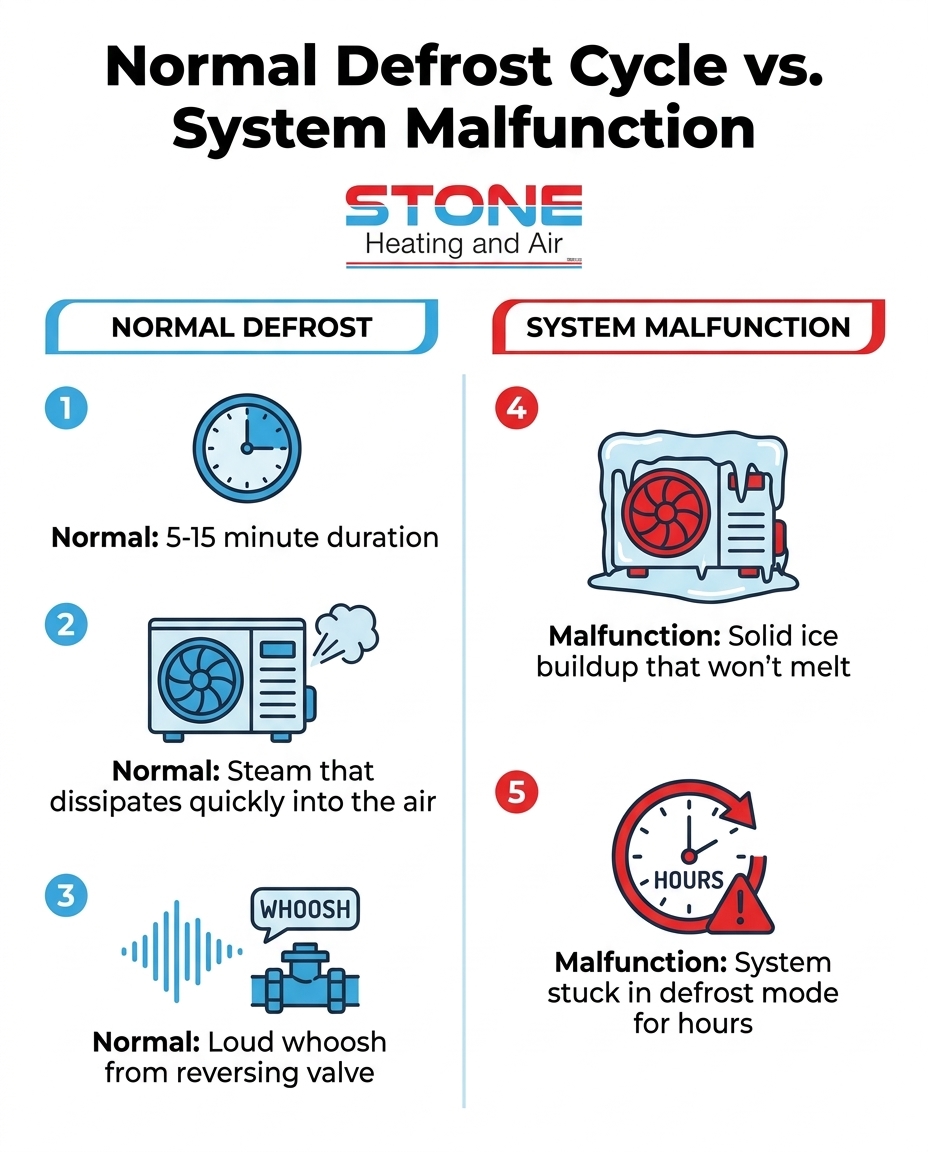
A standard defrost cycle typically lasts between 5 and 15 minutes. Once the outdoor coil reaches a specific temperature—usually around 50 to 60 degrees—the internal sensor signals that the frost is gone. The reversing valve shifts back with another whoosh, the outdoor fan kicks back on, and the system automatically switches back to standard heating mode.
Frequently Asked Questions About Early Fall Defrosting
As local Southern Oregon guides, Stone Heating and Air understands the exact sensory experience of a crisp September morning in the valley. We specialize in translating sudden homeowner panic into calm, mechanical understanding. Here are the most common questions our team hears during the first few weeks of fall.
Why is my heat pump making a whooshing noise?
The loud whooshing noise is caused by the reversing valve switching the flow of pressurized refrigerant. This action temporarily turns the outdoor unit into an air conditioner to melt coil frost. It is a completely normal mechanical sound that indicates your system's self-protection features are working correctly.
Is the white cloud coming from my heat pump smoke or steam?
It is almost always steam, created when frost melts off a hot coil into cold ambient air. Steam dissipates quickly into the air, whereas smoke will linger and smell like burning electrical components. If the cloud vanishes within a few seconds of leaving the unit, it is just water vapor.
Why is my heat pump defrosting when it's only 40 degrees outside?
The outdoor coil operates 10 to 20 degrees colder than the outside air to successfully extract heat. At 40 degrees ambient temperature, the physical coil is actually below freezing and will accumulate frost from morning humidity. This is why defrost cycles frequently happen well before the first official freeze of the year.
Should I turn off my heat pump if it's steaming?
No, turning it off interrupts the necessary defrost cycle and leaves the unit covered in frost. Allow the cycle to complete its 5 to 15-minute process automatically. Shutting the system down out of panic can actually cause more ice to build up over time.
How often should a heat pump defrost in early fall?
Frequency depends heavily on outdoor humidity and temperature, but typically only occurs during the coldest parts of the morning. If the system is constantly defrosting all day long, or getting stuck in a cycle, it may require a professional inspection to check the sensors and refrigerant levels.
Frost vs. Solid Ice: When to Call a Professional
While a light layer of morning frost is normal, heavy ice accumulation is not. A light coating of frost that melts away within 15 minutes is a sign of a perfectly healthy unit. However, if you notice a solid block of thick ice that never melts, the system is failing to defrost properly.
Recently, one local homeowner dealing with a complex system installation into difficult areas noted how our Stone Heating and Air crew went above and beyond to educate them on these exact signs, ensuring they understood how their system operates. Knowing the difference between normal frost and problematic ice saves you from unnecessary service calls.
Causes for solid ice buildup include low refrigerant levels, a faulty defrost control board, a broken reversing valve, or a failed outdoor fan motor. When the system fails to clear the ice or gets stuck in defrost mode for hours, a professional diagnosis is necessary to restore peak performance. Ignoring solid ice can eventually crush the delicate aluminum fins or destroy the compressor.
• Visual Appearance — Normal Defrost Cycle: Light, white frost resembling a thin layer of snow. — System Malfunction: Thick, clear, or milky solid ice encasing the entire unit.
• Duration — Normal Defrost Cycle: Clears completely within 5 to 15 minutes. — System Malfunction: Ice remains for hours or days without melting.
• Vapor — Normal Defrost Cycle: Produces a visible cloud of steam that dissipates quickly. — System Malfunction: No steam is produced because the cycle never initiates.
• Airflow — Normal Defrost Cycle: Outdoor fan stops temporarily, then resumes normally. — System Malfunction: Fan runs continuously but cannot pull air through the solid ice block.
• Action Required — Normal Defrost Cycle: None. Let the system run its automated cycle. — System Malfunction: Turn the system off and schedule an emergency HVAC repair.
Peace of Mind for the Fall Heating Season
Seeing steam and hearing a loud whoosh on a crisp morning is usually a sign that your system is actively protecting itself. By understanding the normal defrost cycle, you can enjoy the transition into cooler weather without panic. As your local experts, we want Central Point OR homeowners to rest easy knowing that a little vapor in the yard is just a byproduct of efficient heating technology doing exactly what it was designed to do.
However, keeping ahead of the cold season requires ensuring all sensors, defrost boards, and valves are operating correctly before the deep winter freezes arrive. A system that cannot trigger its defrost cycle will eventually freeze solid and leave you without heat. Have our local experts at Stone Heating and Air evaluate your system before winter hits to guarantee reliable, efficient heating. Schedule your routine HVAC maintenance today to ensure your unit is fully prepared for the cold months ahead, and never wonder, "is it normal for my heat pump to defrost in early fall?" again. (Note: If it is time to upgrade an aging, freezing system, generic federal tax credits and local utility incentive programs may apply to qualifying heat pump installations—check with your utility provider or a tax professional for current details.)