

The First Chilly Morning: Diagnosing Unexpected Heater Smells and Sounds
Here is the thing: waking up to a cold house, switching your thermostat to "Heat," and immediately smelling a sharp, burning odor is alarming. That distinct smell naturally triggers safety concerns for any homeowner. If you want to master basic home maintenance tips and troubleshooting, understanding exactly how to handle this specific scenario is a great place to start. During a typical mid-fall October heating startup, experiencing a brief burning smell is actually a highly common event. Your primary decision right now is figuring out whether to let the system run to burn off the dust or shut it down immediately to prevent damage.
Before you panic, know that context matters. Heating systems sit completely idle for months. When they finally ignite, physical reactions happen inside the cabinet that produce noticeable odors. While many initial smells are harmless, having professional HVAC services oversee your system's transition into winter ensures everything operates safely. A quick assessment can tell you exactly what is happening inside your ductwork, keeping your home warm and your family secure as the temperatures drop.
The Science Behind the 'Burning Dust' Odor
To understand why your heater smells like a dusty campfire, you have to look at the physical mechanics of your heating equipment. Whether you have a gas furnace or an electric heat pump, the core heating components—like the heat exchanger or the electric heating strips—spend the entire cooling season sitting cold and inactive in the dark. Over those months, household dust, pet dander, dead skin cells, and airborne particulates naturally settle onto these metal surfaces.
When you turn the system on for the first time, those components rapidly heat up to hundreds of degrees. This triggers a flash-burn process. The accumulated layer of debris is instantly incinerated, creating a distinct, dusty burning smell that gets pushed through your vents. The short answer is that this specific dust burn-off is a normal, temporary physical reaction. It is not necessarily a mechanical failure. However, the intensity of that smell depends heavily on your local environment.
How Summer Air Quality Impacts Your Winter Heating
The journey of microscopic smoke particles through your ductwork plays a massive role in fall startup smells. Homeowners in the Central Point / Rogue Valley area experience hot summers often accompanied by heavy late-summer wildfire smoke. This smoke significantly increases the amount of fine particulate matter (PM2.5) circulating in the air. Standard fiberglass air filters simply fail to catch fine summer ash, allowing it to bypass the filter and settle directly onto your idle heating components.
• Microscopic bypass: Standard 1-inch filters catch large dust bunnies, but let smoke particles pass right through to the heat exchanger.
• Sticky residue: Ash and smoke particulates often carry a slight oily residue, causing regular household dust to stick to internal components more stubbornly.
• The compounding effect: The combination of normal summer dust and heavy fall heating demands means your system has to burn off a much thicker, denser layer of debris during that first cycle.
Because of this local climate factor, that first start of the season might smell noticeably stronger than it would in a region with clear summer skies. Understanding this connection helps you evaluate whether the smell is a standard burn-off or something more serious.
Normal Burn-Off vs. Dangerous Odors: When to Shut It Down
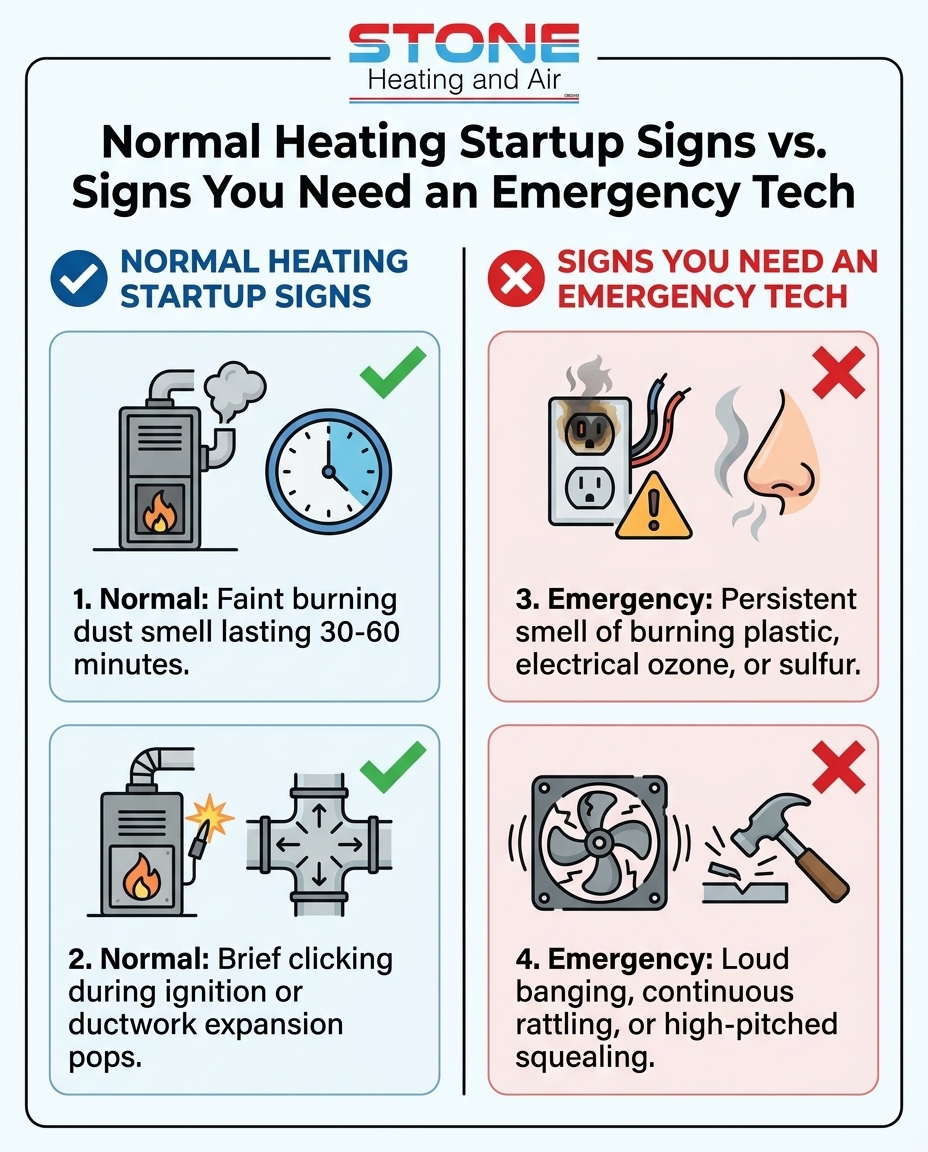
Establishing a clear safety baseline is critical for any homeowner. You need to know how to differentiate between harmless dust incineration and genuine electrical or mechanical emergencies. A normal dust burn-off during a mid-fall October heating startup should dissipate within 30 to 60 minutes of continuous operation. If the smell lingers for hours, or if the character of the smell changes, you must take action. Understanding the risks of skipping HVAC maintenance helps you recognize why these dangerous odors develop in the first place.
• Light, dusty burning smell — Likely Cause: Accumulated dust/dander on heat exchanger — Severity Level: Normal / Low — Required Action: Let the system run for 30-60 minutes to clear.
• Acrid, melting plastic smell — Likely Cause: Overheating wires, melting insulation, or foreign objects in vents — Severity Level: Emergency — Required Action: Shut down immediately at the thermostat and breaker.
• Electrical ozone (like a spark) — Likely Cause: Failing blower motor, short circuit, or burned-out capacitor — Severity Level: Emergency — Required Action: Shut down immediately and call a professional.
• Sulfur or rotten eggs — Likely Cause: Natural gas leak near the furnace — Severity Level: Critical Emergency — Required Action: Evacuate the home, leave doors open, and call the gas company.
• Metallic friction or burning oil — Likely Cause: Failing bearings or an overheating blower motor — Severity Level: High — Required Action: Turn off the system to prevent motor burnout.
Signs of an Electrical or Mechanical Emergency
If you detect an acrid, chemical, or melting plastic smell, do not wait for it to go away. These smells indicate that something inside the cabinet is actively failing or melting. Smells that persist or worsen after the first hour of operation are never normal. The critical importance of prioritizing safety over comfort cannot be overstated. Shut the system down at the thermostat, flip the corresponding switch on your electrical breaker panel to cut the power completely, and reach out for professional help. Ignoring persistent strange odors from heating equipment often leads to severe system damage or dangerous indoor air quality hazards.
Decoding Unusual Startup Noises: Rattles, Bangs, and Squeals
Beyond unusual smells, strange sounds are the second most common source of anxiety during a mid-fall October heating startup. Just like odors, noises fall into two categories: harmless operational sounds and warning signs of mechanical failure. As metal ductwork heats up for the first time in months, it naturally expands. This expansion causes harmless popping or pinging sounds echoing through your vents. However, consistent or aggressive mechanical noises require attention. Proper heating system care is the best way to prevent these disruptive sounds from developing.
Rattling noises usually indicate that something is vibrating loose. This could be an unsecured exterior panel on your furnace cabinet, debris caught in the fan blades of an outdoor heat pump, or early signs of failing motor bearings. If the rattling sounds like a continuous metallic vibration, it needs a professional look.
Banging or booming sounds are particularly concerning for gas furnaces. A loud bang when the heating cycle starts often points to delayed ignition. This happens when dirt or carbon buildup prevents the gas from igniting immediately. Gas builds up in the chamber, and when it finally catches, it creates a small explosion. This puts immense stress on your heat exchanger and requires immediate professional attention.
Squealing or screeching noises typically point to friction. In older systems, this often means a worn blower belt that is slipping on its pulley. In newer systems, a high-pitched squeal usually indicates an unlubricated blower motor or failing bearings. Ignoring a squeal forces your motor to work twice as hard, drastically reducing your system efficiency and risking a total motor burnout.
Identifying the Source of the Sound
When you hear a strange noise, try to isolate its location. Listening near the vents in your living room will sound very different than listening near the primary heating unit in your garage or basement. Pay attention to changes in pitch or volume during the heating cycle—does the noise happen only when the system turns on, or does it continue the entire time the fan is running? If the noise is loud or unusual, recording the sound on your smartphone is incredibly helpful for your technician. It allows them to hear exactly what you heard, even if the system decides to run quietly while they are standing in front of it.
Safe Troubleshooting Steps Before You Call a Professional
When your heater acts up, there are several safe, actionable steps you can take to troubleshoot the issue without violating safety rules or risking injury. Many common startup issues stem from simple oversights that you can fix in a few minutes. However, it is vital to know where your capabilities end and where a professional's job begins.
1. Verify your thermostat settings: Ensure the thermostat is actually set to "Heat" and not just "Fan" or "Cool." Double-check that the fan setting is on "Auto" so it only blows air when the furnace is actively heating. If the fan is set to "On," it will blow cold air continuously.
2. Inspect and replace the air filter: Most homeowners do not realize that heavy summer air conditioning performance takes a massive toll on air filters. A filter clogged with summer dust and smoke restricts airflow, causing the furnace to overheat and shut down prematurely. Start the season with a brand-new, high-quality pleated filter.
3. Clear the outdoor unit: If you use a heat pump, walk outside and inspect the exterior compressor. Clear away any fallen autumn leaves, overgrown branches, or debris that may have accumulated around the base. Heat pumps need clear airflow on all sides to extract heat from the outside air efficiently.
4. Check your circuit breakers: If the system is completely unresponsive, check your main electrical panel. A tripped breaker will prevent the system from turning on at all. Reset it once; if it trips again immediately, leave it alone and call a technician.
The Golden Rule of Home Heating Safety
The most important rule of home heating safety is simple: if it requires tools to open, it requires a licensed professional to inspect. Never attempt to open sealed furnace cabinets, tamper with internal electrical components, or try to clean the heat exchanger manually. Gas lines and high-voltage electrical systems are incredibly dangerous. DIY tampering not only risks severe injury or fire, but it also immediately voids your manufacturer warranty. Always rely on professional care for internal components.
Eliminating Startup Anxiety with Preventative Care
The best way to handle fall startup smells and noises is to prevent them from happening in the first place. A professional pre-season tune-up directly addresses the root causes of these issues. When a technician services your equipment, they comprehensively clean the heat exchanger, removing the accumulated dust, pet dander, and summer smoke residue before it ever has a chance to burn and smell. They also lubricate all moving parts, inspect motor bearings, and tighten electrical connections to prevent rattling and squealing from developing.
Investing in a preventative maintenance plan provides absolute peace of mind. You sleep better knowing the system has been rigorously safety-tested before freezing temperatures arrive in the Central Point / Rogue Valley area. Comprehensive maintenance plans handle the cleaning process for you, backed by 24/7 emergency service availability if a genuine safety concern arises during a cold night. Working with professionals who offer this level of ongoing support means you never have to face a breakdown alone.
Beyond safety, proactive care offers significant long-term financial benefits. Clean, well-lubricated systems use less energy to heat your home, lowering your monthly utility bills. By catching minor wear and tear early—like a fraying belt or a weak capacitor—you prevent unexpected, expensive mid-winter breakdowns. When you prioritize professional maintenance, you extend the lifespan of your equipment and guarantee a warm, comfortable home all season long.
Frequently Asked Questions
Why does my heater smell like burning dust when I turn it on?
A burning dust smell occurs because dust and particulates settle on the heat exchanger over the summer. When the heater turns on for the first time, it instantly burns off this accumulated layer. This flash-burn process creates a temporary dusty odor that is completely normal for the first cycle of the season. It usually dissipates quickly once the components are clean.
How long is it safe for a furnace to smell during its first startup?
A normal dust burn-off smell should clear out within 30 to 60 minutes of continuous operation. If the smell lingers beyond an hour, or if it grows stronger and more acrid, it is no longer a standard burn-off. At that point, you should turn the system off and schedule an inspection.
When should I call a professional for HVAC noises?
You should call a professional if you hear loud banging, continuous metallic rattling, or high-pitched squealing. While minor popping sounds from expanding ductwork are normal, aggressive mechanical noises indicate failing parts or delayed gas ignition. Ignoring these sounds can lead to total system failure or safety hazards.
Can summer wildfire smoke affect my furnace in the fall?
Yes, heavy summer wildfire smoke introduces microscopic particulate matter that bypasses standard air filters. This fine ash settles directly onto your idle heating components during the cooling season. When fall arrives, this extra layer of dense residue makes the initial burning smell much stronger and longer-lasting than normal dust.
Is it safe to let my heater run if it smells like burning plastic?
No, it is never safe to let a heater run if it smells like burning plastic, electrical ozone, or melting wires. These odors indicate an active electrical failure or a foreign object melting inside the system. Shut the heater off immediately at the thermostat and the breaker, and call for emergency service.
What does a failing furnace motor sound like?
A failing furnace motor typically produces a loud, high-pitched squealing or a deep, metallic grinding noise. The squealing often points to unlubricated bearings or a slipping belt, while grinding indicates metal-on-metal friction. Both sounds mean the motor is struggling and requires immediate professional attention before it burns out completely.
Mastering basic home maintenance tips and troubleshooting ensures you are never caught off guard by strange smells or sounds. If you want to skip the startup anxiety entirely, scheduling a comprehensive tune-up is the smartest move you can make. A clean, inspected system delivers safe, reliable warmth exactly when you need it most.