

Is Your HVAC System Ready for the Shift to Heating Season?
Are you truly prepared for the sudden drop in temperatures, or is your seasonal home maintenance checklist missing the most critical mechanical evaluations? When the crisp autumn air arrives, homeowners expect their heating systems to roar to life flawlessly. However, experiencing unexpected odors, strange noises, or poor airflow when turning on the heating system for the first time after months of dormancy is a concrete problem many face. The critical decision point is determining whether a dusty smell or minor rattling during this mid-fall heating startup (October) is a normal seasonal quirk or a glaring sign that a professional inspection is urgently needed.
Before the first freeze sets in, securing professional air conditioning services to transition your system, or booking an AC repair in Central Point if lingering issues remain, is the smartest move a homeowner can make.
Reviewing Summer Air Conditioning Wear-and-Tear Before Winter
The Hidden Toll of Summer Extreme Heat
HVAC systems work overtime during extreme summer heat, and this accumulated wear directly impacts overall system performance in the fall. Because your air conditioner and your furnace share the same blower motor and ductwork, the mechanical strain from July and August does not magically disappear when the calendar turns. Ignoring lingering cooling issues—such as weak airflow, unusual cycling, or a struggling blower motor—almost always leads to larger, more complex HVAC failures when you switch your thermostat to heat.
Addressing Aging Equipment Before the Freeze
The fall transition is the ideal time to evaluate aging equipment, especially if the system barely limped through the summer months. A typical pattern we see involves homeowners struggling to operate a very old and failing HVAC system just as the seasons change. In a recent scenario, a local homeowner experienced complete aging equipment failure during a period of intense heat. Technicians quickly assessed the situation and provided clear options for an upgrade, resulting in new AC units and furnaces being efficiently installed and set up before winter arrived. If your system fits this description, exploring an AC replacement now prevents a catastrophic mid-winter emergency when you need reliable heat the most.
Why Proactive Evaluation Matters
Addressing these mechanical vulnerabilities in October ensures that your shared components are in peak condition. A blower motor that was overheating in August will likely fail under the heavy load of a December freeze. By reviewing summer wear-and-tear now, you can systematically eliminate the root causes of winter breakdowns.
Why October Filter Changes Are Critical After Wildfire Season
Dirty air filters remain a leading cause of premature HVAC system failure, severely reducing heating efficiency and driving up utility costs. While changing a filter is standard advice all year round, the mid-fall heating startup (October) carries unique regional challenges that make this step absolutely non-negotiable.
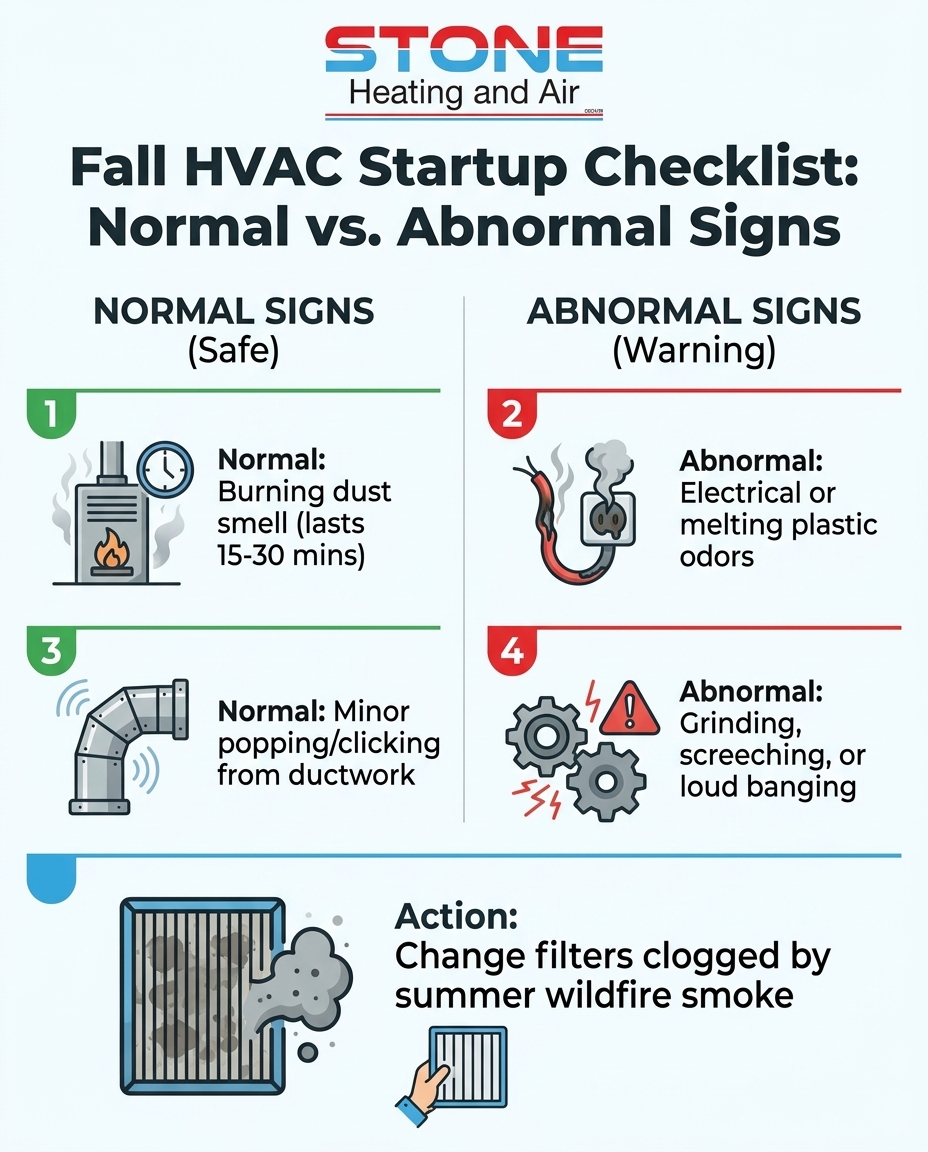
In Southern Oregon, late-summer wildfire smoke and ash heavily clog filters, embedding microscopic particulate matter deep into the pleated media. This dense accumulation drastically reduces indoor air quality and chokes off system airflow. When airflow is restricted, the blower motor must work twice as hard to push warm air through the ductwork, potentially causing the furnace to overheat and trigger automatic safety shutoffs.
Changing the filter is the most critical, safe DIY step a homeowner can take before initiating the heating season. Follow these steps for a successful pre-winter filter replacement:
1. Turn off the power: Always switch off the HVAC system at the thermostat and the breaker before opening the filter cabinet to prevent dust from being sucked into the blower.
2. Inspect the old filter: Pull out the existing filter and hold it up to a light source. If you cannot see light shining through the media, the filter is completely impacted by summer dust and wildfire ash.
3. Select the right MERV rating: Choose a filter with a MERV rating appropriate for your system (typically MERV 8 to 11 for standard residential units). Extremely high MERV ratings can sometimes restrict airflow as much as a dirty filter if your system is not designed for them.
4. Install with correct airflow direction: Look for the printed arrow on the edge of the new filter. Ensure this arrow points toward the furnace unit and away from the return duct.
5. Document the date: Write the installation date on the edge of the filter with a marker so you know exactly when the next replacement is due.
Normal vs. Abnormal Odors During the First Fall Heating Cycle
When you initiate the mid-fall heating startup (October), your system will likely produce a variety of scents. Knowing the difference between a harmless seasonal quirk and a dangerous mechanical failure is crucial for home safety.
The "Burning Dust" Phenomenon
The most common scent homeowners report during the first heating cycle is a distinct "burning dust" smell. Over the long summer months of dormancy, household dust, pet dander, and microscopic debris settle directly onto the furnace heat exchanger and heating elements. When the burners ignite for the first time, this settled debris rapidly burns off.
This is a completely normal, harmless burn-off process. The key diagnostic factor is time: expected duration of the smell should not exceed 15 to 30 minutes. Once the initial layer of dust is incinerated, the odor should dissipate entirely, leaving you with clean, warm air circulating through your vents.
Warning Signs of Electrical Odors
While burning dust is normal, other odors require immediate action. If you detect the sharp, acrid scent of ozone, electrical burning, or melting plastic, you are likely facing a serious mechanical hazard. These smells often indicate failing blower motors, fried capacitors, or frayed wiring where the insulation is melting under high electrical resistance.
Persistent exhaust smells or the scent of sulfur (often likened to rotten eggs) are equally dangerous, pointing to potential gas leaks or improper venting of combustion gases. If you encounter any of these warning signs, the immediate shutdown procedure is critical: turn off the heating system at the thermostat, shut off the gas valve if applicable, and contact a licensed professional right away.
Decoding Strange Noises When the Heater Kicks On
Just as odors can tell a story about your system's health, auditory signals provide vital clues during the startup process. As the metal components of your ductwork and furnace heat up and expand, minor popping or clicking sounds are entirely normal. However, aggressive mechanical noises indicate that internal components are failing.
Homeowners must remember the strict rule against DIY repairs on internal moving parts, electrical boards, or combustion chambers. If you hear any of the abnormal sounds listed below, sourcing a local professional for ac repair medford oregon or nearby heating diagnostics is the only safe path forward.
• Minor popping or clicking — Classification: Normal — Potential Cause: Metal ductwork expanding as warm air pushes through it. — Required Action: Monitor; no action needed unless it becomes excessively loud.
• Loud, metallic grinding — Classification: Abnormal — Potential Cause: Worn out blower motor bearings or a misaligned fan belt. — Required Action: Shut down system; call a professional immediately.
• High-pitched screeching — Classification: Abnormal — Potential Cause: Failing fan motor or severe friction in moving internal parts. — Required Action: Shut down system; requires professional part replacement.
• Booming or loud banging on startup — Classification: Abnormal — Potential Cause: Delayed ignition in the combustion chamber (gas buildup). — Required Action: Emergency shutdown; indicates a severe safety hazard.
• Rapid, continuous clicking — Classification: Abnormal — Potential Cause: Failing spark igniter, bad flame sensor, or electrical relay issue. — Required Action: Shut down system; requires professional electrical diagnostics.
Thermostat and Airflow Troubleshooting
Before assuming your heating system has suffered a major mechanical failure, it is essential to rule out basic communication and airflow issues. Many mid-fall heating startup (October) service calls turn out to be simple thermostat misconfigurations or blocked vents. Providing safe, actionable steps ensures your system is communicating and distributing air correctly.
• Verify thermostat mode and temperature: The most common oversight is forgetting to switch the thermostat from 'cool' to 'heat'. Ensure the system mode is updated and that the target temperature is set at least three to five degrees higher than the current ambient room temperature to trigger the ignition cycle.
• Check and replace thermostat batteries: Weak batteries can cause intermittent cycling, blank screens, or total communication failure between the thermostat and the furnace control board. Swap in fresh batteries at the start of every fall season.
• Unblock all supply and return vents: Ensure all vents are fully open. Over the summer, it is common for seasonal decorations, heavy rugs, or rearranged furniture to block floor or wall registers. Blocked returns starve the system of air, while blocked supplies create dangerous back-pressure in the ductwork.
• Assess air distribution: If the system is running but failing to distribute warm air properly, you may have a blower issue, disconnected ductwork, or severely clogged filters. Understanding the mechanics behind airflow is crucial, much like diagnosing why your AC is running but not cooling your home during the summer.
When to Schedule a Professional Pre-Winter Inspection
While replacing filters and checking thermostat batteries are safe homeowner tasks, the internal mechanical health of your furnace requires specialized expertise. Defining the exact criteria for calling a licensed professional helps prevent minor issues from escalating into dangerous winter emergencies.
Triggers for Professional Intervention
You should immediately schedule a professional pre-winter inspection if your system exhibits any of the abnormal symptoms discussed earlier. Persistent odors that last beyond the first 30 minutes, loud mechanical screeching, poor airflow despite a clean filter, or a system that repeatedly trips safety switches all indicate underlying failures. Operating a compromised system not only risks total breakdown but can also pose severe safety hazards to your household.
The Importance of Heat Exchanger Inspections
A comprehensive professional inspection includes a rigorous evaluation of the heat exchanger. Over time, the constant expansion and contraction of heating cycles can cause microscopic cracks in the metal. A cracked heat exchanger allows deadly, odorless carbon monoxide to leak into your home's airstream instead of venting safely outside. Only a licensed technician with specialized combustion analysis tools can verify that your heat exchanger is intact and your system is burning fuel safely.
System Upgrades and Emergency Support
If a startup check reveals that your aging unit is failing, this is the optimal time to consider an upgrade. Generic federal tax credits and local utility rebates may apply to qualifying high-efficiency heat pump upgrades, making proactive replacement highly beneficial. Most importantly, Stone Heating and Air provides 24/7 emergency service availability, ensuring that if a critical failure is discovered during your initial startup, expert help is always just a phone call away. For comprehensive HVAC solutions, relying on verified local professionals guarantees your home stays warm and safe.
Frequently Asked Questions About Fall HVAC Maintenance
What should be on a fall home maintenance checklist?
A complete fall home maintenance checklist should prioritize your home's mechanical and weatherproofing systems before freezing temperatures arrive. Key tasks include replacing your HVAC air filter, testing all smoke and carbon monoxide detectors, cleaning gutters to prevent ice dams, and ensuring your thermostat is correctly programmed for heating mode. By addressing these items during your mid-fall heating startup (October), you prevent minor inefficiencies from turning into major winter emergencies.
How do you prepare a house for winter?
Preparing a house for winter requires sealing the building envelope and verifying that your heating equipment is fully operational. Start by checking windows and doors for drafts, applying weatherstripping where necessary to keep warm air inside. Next, clear any debris or summer furniture away from your outdoor heat pump unit and ensure all indoor vents are unblocked. Finally, scheduling a professional pre-winter HVAC inspection guarantees your system can handle the heavy workload of the coming months safely.
Why does my heater smell like burning dust when I first turn it on?
The burning dust smell is a completely normal part of the first heating cycle of the season. Over the summer, household dust, pet dander, and airborne particles settle on the inactive heat exchanger and heating elements. When the burners ignite for the first time in months, this settled debris rapidly burns off, creating a distinct odor that should naturally dissipate within 15 to 30 minutes of operation.
When should I schedule a pre-winter HVAC inspection?
You should schedule a pre-winter HVAC inspection in early to mid-fall, ideally before you need to rely on your heating system for daily comfort. October is the perfect window, as it allows technicians to address any wear-and-tear from the summer cooling season before the first major freeze hits. Proactive scheduling ensures your system is clean, safe, and operating at peak efficiency when you need it most.
How does late-summer wildfire smoke affect my HVAC system?
Late-summer wildfire smoke heavily impacts your HVAC system by embedding dense, microscopic ash and particulate matter deep into your air filter. This rapid accumulation severely restricts airflow, forcing your blower motor to work harder and potentially causing the system to overheat. Changing your filter immediately after wildfire season is one of the most critical steps to protect your indoor air quality and prevent mechanical strain.
Can I inspect my own heat exchanger?
No, inspecting a heat exchanger requires specialized diagnostic tools and professional training. Hairline cracks in the metal—which can leak dangerous carbon monoxide into your home—are often invisible to the naked eye and require combustion analysis equipment to detect. Because this involves the safe containment of combustion gases, this task must always be left to a licensed HVAC professional.
Ensure a Safe and Warm Winter with Expert Support
By following clear, safe guidelines during your mid-fall heating startup, you can confidently distinguish between normal seasonal quirks and serious mechanical warnings. Addressing warning signs in October prevents catastrophic mid-winter breakdowns and keeps your household secure. For total peace of mind, schedule a comprehensive inspection and professional AC repair in Central Point with a local expert today.