

The Urgent Shift: Preparing Your Condenser for the First Chilly Autumn Night
The September transition to heating season is approaching rapidly, and our team at Stone Heating and Air constantly reminds customers that clearing away summer debris before your heat pump switches to heating is the most critical step you can take for your home's comfort. After months of running in cooling mode, your outdoor unit has likely accumulated a thick layer of environmental buildup. Dust, leaves, and yard clippings act as a physical barrier across the delicate metal fins that line the exterior of the system. Many homeowners assume that as long as the system kept the house cool in August, it is ready to keep the house warm in October. Unfortunately, this physical barrier severely handicaps the equipment's ability to operate efficiently.
Ignoring this seasonal buildup forces your equipment to work significantly harder just to perform its basic functions. When the outdoor unit cannot pull enough air through its fins, the entire thermodynamic process slows down, leading to increased wear and tear on vital components. To protect your investment and ensure reliable warmth, understanding how heating systems operate under these conditions is essential. Taking proactive steps now, such as booking a routine maintenance plan, ensures your equipment is prepped, clean, and ready to handle the temperature drop without skipping a beat.
How Summer Debris Handicaps Early-Season Heat Extraction
To understand why a dirty outdoor unit is so problematic in the fall, you have to look at how a heat pump actually generates warmth. Unlike traditional furnaces that burn fuel to create heat, a heat pump works by moving heat from one place to another. During the winter, the system operates in reverse compared to summer. It absorbs ambient heat energy from the outdoor air—even when it feels cold outside—and transfers that warmth inside your home. Because the system relies entirely on pulling vast amounts of outdoor air across its coils, unobstructed airflow is absolutely non-negotiable.
According to data from the U.S. Department of Energy, restricted airflow caused by dirt and debris can reduce a system's efficiency by 10% to 20%. When the condenser fins are choked by a layer of grime, the compressor must work significantly harder and run for much longer cycles to pull in the necessary air. This extended run time directly translates to higher utility bills right at the start of the season. Even as temperatures drop in the Central Point and Rogue Valley areas, the system desperately relies on pulling air through those fins. Removing summer buildup is highly critical before the rainy season begins, as wet debris creates an even tighter seal against the equipment.
The Invisible Barrier: Why Airflow is Your Heat Pump's Fuel
The refrigerant cycle is the heart of your system's operation. Liquid refrigerant circulates through the outdoor coil, acting as the primary heat exchanger. As the fan pulls ambient air across these coils, the refrigerant absorbs the latent heat energy from the air, turns into a gas, and travels inside to warm your living space. If you are interested in protecting your outdoor HVAC unit from late summer debris, you must recognize that airflow is essentially the fuel for this entire process. Without a steady, unrestricted breeze moving over the coils, the refrigerant cannot absorb enough heat, leaving your home chilly and your system overworked.
• Clean, unobstructed fins — Airflow Quality: Maximum volume pulled through coils — Compressor Strain: Normal operating pressure — Heating Efficiency: Optimal (lower energy use)
• Light dust and cobwebs — Airflow Quality: Slightly reduced volume — Compressor Strain: Moderate increase in run cycles — Heating Efficiency: Noticeable efficiency drop
• Heavy leaves, fluff, and ash — Airflow Quality: Severely blocked intake — Compressor Strain: High risk of overheating/failure — Heating Efficiency: Reduced by 10% to 20%
The Unique Challenges of Late-Summer Accumulation
In our years of serving the Central Point and Rogue Valley regions, our team at Stone Heating and Air has seen firsthand how local environmental challenges go far beyond normal yard dust. By the time late summer rolls around, the outdoor air has been filled with dry particulates for months. The primary culprits that plague outdoor units include fine dry dust, sticky cottonwood fluff, and early falling leaves. These materials are drawn directly into the sides of the heat pump by the powerful suction of the condenser fan.
The Wildfire Ash Factor: One of the most aggressive forms of buildup in this region is wildfire ash. Unlike normal dust, ash is incredibly fine and slightly alkaline. When it gets pulled into the system, it coats the delicate aluminum fins in a dense, insulating layer. Aluminum is used for these fins specifically because it transfers heat rapidly. When a blanket of ash covers the metal, it completely neutralizes that rapid heat transfer, trapping the heat energy and blocking the refrigerant from doing its job.
The Cement Effect: The combination of dry summer particulates and early autumn moisture creates a severe hazard. When the first fall rains hit a condenser coil that is caked in dust, ash, and fluff, the mixture turns into a thick, cement-like paste. Once this paste dries onto the coils, it is nearly impossible to brush off safely. This unique regional accumulation makes standard indoor filter changes completely insufficient for full fall preparation. You must address the exterior unit before the moisture arrives to prevent this permanent bonding.
The True Cost of a Choked System: Avoiding Unexpected Winter Breakdowns
Operating a restricted system during cold weather carries severe consequences that go far beyond higher utility bills. As the September transition to heating begins, cold nights test the limits of your equipment. When airflow is restricted by debris, the outdoor unit struggles to complete its natural defrost cycles. Heat pumps naturally build up a thin layer of frost during winter operation, and they periodically reverse themselves to melt this frost away. If the coils are choked with debris, the defrost cycle fails, causing the outdoor unit to freeze up entirely into a solid block of ice.
A struggling compressor is the most common cause of complete system failure, and it almost always happens when homeowners need heat the most. The strain of trying to pull air through a blocked intake causes the compressor motor to overheat, pull excess amperage, and eventually burn out.
Just last winter, our technicians responded to a local homeowner who experienced this exact disruption during a bitter cold snap when their heat went out entirely in the middle of the night. We arrived to find a severely stressed system that had finally given out under the strain of prolonged restriction. After diagnosing the fatal compressor issue, our team provided options for a necessary system replacement and worked efficiently to get the new unit installed so the family's heat was restored quickly. Preventative clearing of the exterior unit is the ultimate safeguard against these stressful, unexpected, and highly disruptive breakdowns.
Your Safe Exterior Clearing Checklist: What Homeowners Can Do
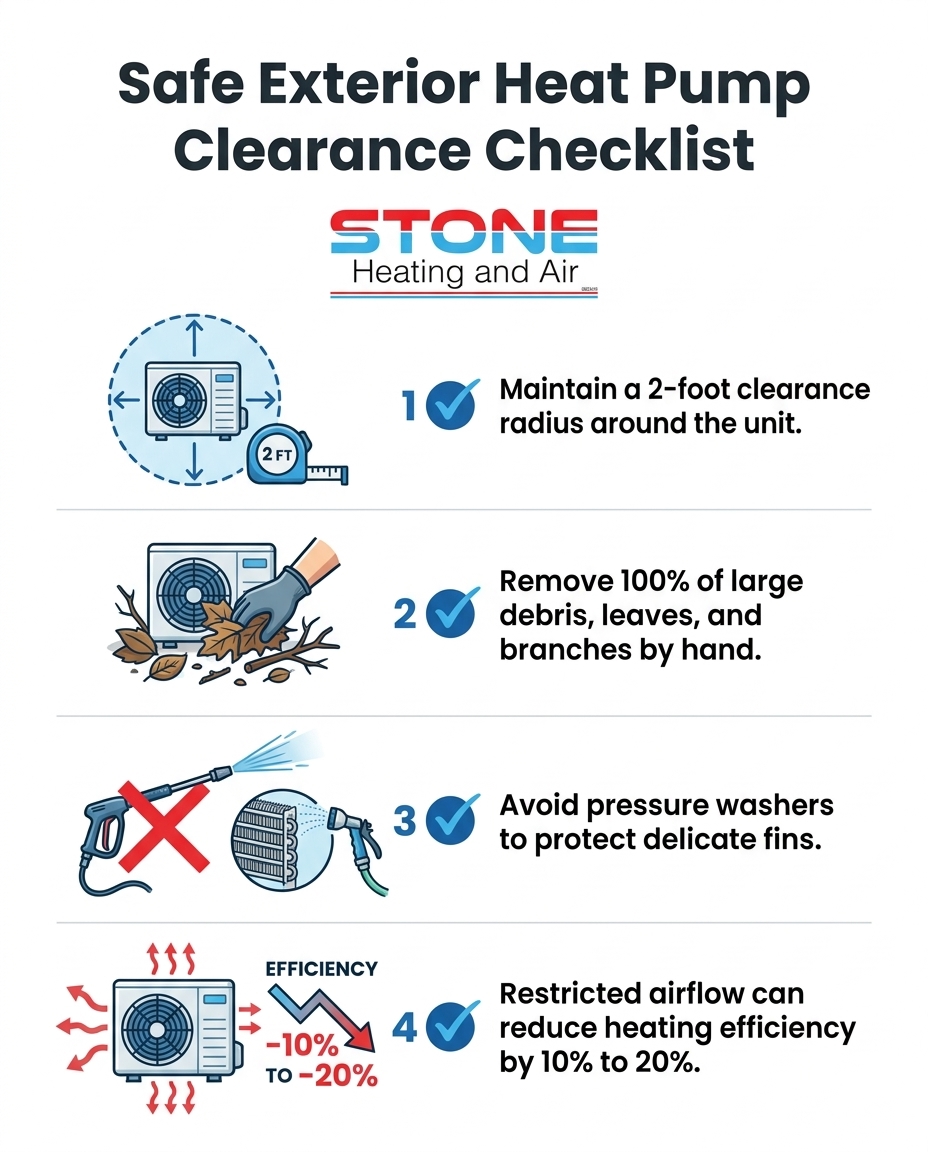
Taking action before the September transition to heating requires a careful, methodical approach. While deep mechanical maintenance requires a professional, there is a substantial amount of safe, exterior clearing that homeowners can and should perform. The golden rule of outdoor unit care is the two-foot clearance zone. Your system needs an absolute minimum of 24 inches of completely unobstructed space around its entire perimeter, as well as several feet of vertical clearance above the fan exhaust.
Safe Clearing Methods: When approaching the unit, always use a soft-bristle brush, like a clean automotive snow brush or a soft hand broom, to gently sweep away loose leaves, cottonwood fluff, and cobwebs from the exterior grates. Never use a stiff bristled push-broom or a wire brush, as these will easily damage the equipment. Trimming back overgrown shrubs, bushes, or ornamental grasses that encroached on the unit during the summer growing season is also a vital homeowner task. Finally, take a flashlight and visually inspect the base of the unit for signs of pest nesting, chewed wires, or physical damage before turning the system on for the season.
Step-by-Step Exterior Clearance
1. Turn off the power: Always locate your thermostat and switch the system to the "Off" position before inspecting the outdoor unit to ensure the fan does not engage while you are working near it.
2. Remove large debris by hand: Carefully pick out any large twigs, heavy wet leaves, or trash that has gathered around the base of the unit.
3. Sweep the surrounding pad: Clear the concrete pad underneath and around the unit so that the next rainstorm doesn't simply splash dirt right back up onto the coils.
4. Ensure overhead clearance: Look up and safely trim any low-hanging branches that could drop leaves or heavy snow directly into the top exhaust fan.
Where to Draw the Line: Avoiding Dangerous DIY Coil Cleaning
While clearing the exterior perimeter is highly encouraged, there is a strict boundary between homeowner upkeep and tasks that require a licensed professional. One of the most common and destructive mistakes our technicians see in the Central Point and Rogue Valley areas is homeowners attempting to wash the coils themselves using aggressive methods. You must absolutely avoid the dangers of using a pressure washer or a high-powered garden hose nozzle on your outdoor unit. The aluminum fins that surround the coils are incredibly thin—often thinner than a credit card. A blast of high-pressure water will instantly bend these fins flat. Once the fins are bent over, they block airflow just as severely as a thick layer of dirt, permanently crippling the unit's efficiency.
Furthermore, homeowners should never open the metal cabinet or attempt to clean internal electrical components. The outdoor unit contains high-voltage capacitors that hold a lethal electrical charge long after the power has been disconnected. Additionally, the risks of using harsh chemical coil cleaners purchased from a hardware store are severe. Professional-grade coil cleaners require specific dilution ratios and chemical neutralizers. If a homeowner applies a foaming acid or heavy alkaline cleaner without properly neutralizing it, the chemical will literally eat away the aluminum fins and copper tubing, causing a catastrophic refrigerant leak. Your job is strictly exterior perimeter clearance; leave the internal mechanical maintenance to the experts.
Bridging the Gap: The Role of Professional Seasonal Preparation
Once you have safely cleared the two-foot perimeter and gently brushed away the loose exterior debris, your system is ready for its professional seasonal preparation. This is where a licensed technician bridges the gap between basic airflow clearance and true mechanical readiness. A professional technician performs critical tasks that a homeowner cannot safely execute. They will safely open the cabinet to clean the inner coils from the inside out, check the exact weight of the refrigerant charge, and test the electronic defrost board to ensure it will properly trigger during freezing nights.
Professional maintenance ensures the system is precisely calibrated to extract heat efficiently despite dropping outdoor temperatures. Stone Heating and Air's proactive approach to extending equipment lifespan focuses heavily on this deep, preventative care, protecting local homeowners from unexpected winter breakdowns through comprehensive seasonal preparation. Positioning professional tune-ups as the natural next step after your exterior clearing ensures that every component—from the fan motor bearings to the electrical contactors—is verified safe. Reaching out for professional HVAC services before the first major cold front hits is the smartest way to guarantee a warm, stress-free winter.
Secure Your Winter Comfort with Proactive Fall Care
A clean, unobstructed heat pump is the absolute foundation of efficient winter heating. As the September transition to heating approaches, taking the time to clear away the summer dust, ash, and leaves will allow your system to breathe easily and extract ambient warmth without excessive strain. Taking action now prevents high utility bills, excessive component wear, and the immense stress of a mid-winter breakdown.
Complement your safe exterior clearing efforts by scheduling a professional inspection to handle the internal mechanical calibration. By securing a routine maintenance plan today, you guarantee that your home will remain a warm, comfortable sanctuary no matter how cold the outside air becomes.
Frequently Asked Questions
Why does my heat pump need clearance?
Your heat pump requires at least two feet of clearance because it relies on pulling massive volumes of outdoor air across its coils to absorb heat energy. If shrubs, fences, or debris block this airflow, the system cannot extract enough heat, forcing the compressor to run longer and harder. Proper clearance ensures optimal efficiency and prevents the unit from overheating or freezing up during cold weather.
How to safely clear debris from a heat pump condenser?
The safest way to clear debris is by turning off the power at the thermostat and using a soft-bristle brush to gently sweep away loose leaves, cobwebs, and fluff from the exterior grates. You can carefully pick out larger sticks or heavy wet leaves by hand from the base of the unit. Never use a wire brush, a stiff broom, or sharp tools, as these can easily bend the delicate metal fins.
What happens if my heat pump gets clogged with leaves?
When a heat pump is clogged with leaves, the physical barrier prevents the fan from drawing sufficient air over the condenser coils. This severe airflow restriction causes a sharp drop in heating efficiency, meaning your system will use significantly more electricity to warm your home. Over time, the strain of operating while clogged can lead to compressor failure and cause the unit to freeze into a block of ice during winter.
Can I spray my heat pump with water?
You should never spray your heat pump with a pressure washer or a high-pressure hose nozzle, as the force will instantly bend and ruin the delicate aluminum fins. While a very gentle mist from a garden hose can sometimes be used to rinse light, loose dust from the exterior, it is generally safer to leave water-based coil cleaning to professionals. Improper washing can drive dirt deeper into the coils or damage sensitive electrical components.
Does a heat pump need to be covered in winter?
No, you should never cover a heat pump while it is actively being used to heat your home during the winter. The system must have completely open access to the surrounding air to absorb ambient heat and function properly. Covering the unit will instantly choke the airflow, trap moisture inside the cabinet, and cause the system to shut down or suffer severe mechanical damage.
Why is my heat pump freezing up in winter?
A heat pump usually freezes up in winter due to severely restricted airflow or a malfunction in its electronic defrost cycle. When summer debris clogs the exterior fins, the system cannot pull enough air to naturally melt away the light frost that forms during normal operation. Additionally, low refrigerant levels or a failing fan motor can cause rapid ice accumulation that requires professional diagnosis.
Is wildfire ash harmful to my outdoor HVAC unit?
Yes, wildfire ash is highly harmful to outdoor HVAC units because it is composed of fine, slightly alkaline particulate matter. When drawn into the condenser, the ash coats the aluminum fins, acting as a thick insulating blanket that stops the transfer of heat. If left on the coils when autumn rains begin, the ash can turn into a cement-like paste that is incredibly difficult to remove and severely limits system lifespan.