

That First Crisp Morning: Why Your Heating Startup Causes Anxiety
Applying proper home maintenance tips and troubleshooting during the October first cold snap heating startup often prevents a simple observation from turning into full-blown anxiety. You flip your thermostat to "heat" for the first time since spring, anticipating a rush of cozy warmth. Instead, you are immediately hit with a harsh, burning odor and a series of unfamiliar clanks coming from the vents. That strange combination of noises and smells is enough to make any homeowner immediately switch the system back off and wonder if something is seriously wrong.
For comprehensive support, explore our HVAC services to ensure your system is ready for the changing seasons.
The transition from summer cooling to winter heating is the most critical time for system observation. Your equipment has sat dormant for months, collecting debris and settling into a state of disuse. When you suddenly demand high-temperature performance from those components, the system has to wake up quickly. The core decision you face on that first chilly morning is determining whether these initial symptoms are just harmless dust burning off or a sign of a hazardous component failure that requires immediate attention.
Understanding the Anatomy of a Fall Heating Startup
To understand why your system smells or sounds different after sitting dormant through the summer, you have to look at the physical mechanics of the equipment. Whether you rely on a gas furnace or an electric heat pump, the internal components undergo a drastic temperature shift during that first cycle.
The Mechanics of the Heating Sequence
The typical sequence of operations begins the moment your thermostat sends a signal to the control board. For a furnace, the draft inducer motor starts up to clear residual gases from the heat exchanger. Next, the igniter glows hot, the gas valve opens, and the burners ignite. The heat exchanger rapidly climbs to temperatures exceeding 400°F. Once the chamber is adequately heated, the blower motor kicks on, pushing air over the hot metal and distributing warmth throughout your home. Every step in this sequence introduces sudden heat and mechanical movement to parts that have been completely still since spring.
The Role of Summer Dust Accumulation
The underlying problem: Throughout the summer, dust, pet dander, and microscopic airborne particles constantly circulate through your home. Even with a good air filter, a fine layer of this debris settles on the furnace burners, heating elements, and the heat exchanger.
The direct cause: When the system fires up for the first time in the fall, those metal components heat up rapidly. The settled dust has nowhere to go but up in smoke. The system is suddenly exposed to high temperatures, causing that accumulated debris to vaporize instantly.
The natural solution: This process is the most common cause of temporary burning smells during the first seasonal heating cycle. In the Central Point and Rogue Valley area, our dry, dusty summers contribute to a much heavier accumulation of particulate matter on internal components compared to other regions. Because of this local climate factor, the initial burn-off smell is often more pronounced and noticeable in our neighborhoods.
Troubleshooting Burning Smells: Normal Dust vs. True Danger
Knowing how to differentiate between harmless burn-off and hazardous odors is a vital skill for any homeowner. You can perform clear, observation-only troubleshooting to assess the situation safely without ever opening the equipment cabinet.
Sometimes, what seems like a heating issue is actually a lingering electrical fault from summer cooling stress. If you recently needed AC repair in Central Point, the same electrical panel or blower motor might be struggling to transition to heating mode, making observation even more critical.
Identifying the Scent Profile
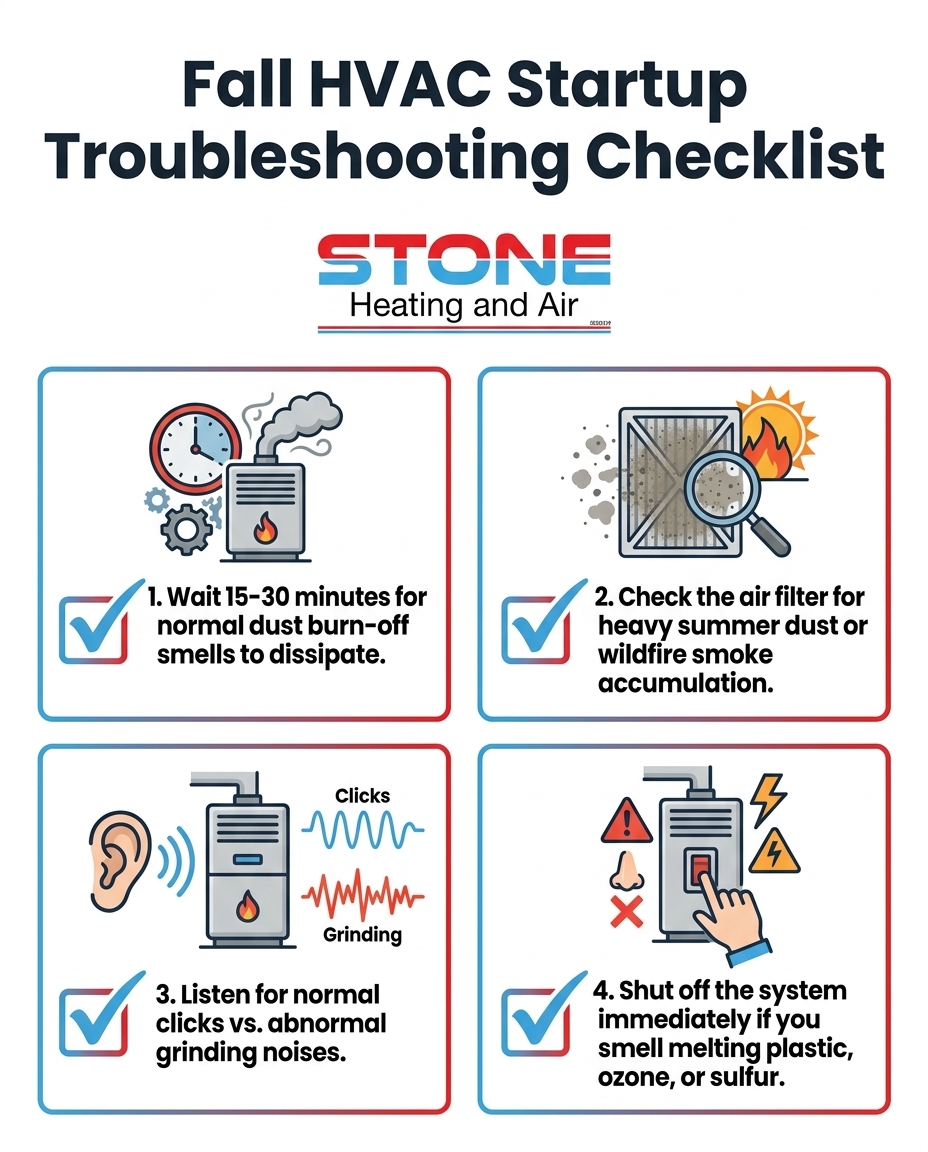
The "dust burn-off" smell is very distinct. It usually resembles singed hair, warm dust, or the scent of a hot clothing iron. While unpleasant, it is entirely normal during an October first cold snap heating startup. On the other hand, warning smells indicate a severe malfunction. Melting plastic suggests wire casings are overheating. A sharp, metallic electrical ozone smell points to arcing wires or a failing motor. Most critically, a persistent sulfur or rotten egg odor indicates a dangerous gas leak.
Immediate Observation Steps
1. Monitor the duration: Note the exact time you turned the heating system on. A normal dust burn-off smell should begin to dissipate within 15 to 30 minutes of continuous operation.
2. Ventilate the area: Open a few windows slightly to allow fresh air to circulate and help clear the harmless dust odors from your living space.
3. Observe the vents: Check multiple vents throughout the house. If the smell is isolated to just one room, you may have debris inside that specific duct rather than an issue at the main furnace.
4. Take decisive action on hazards: If you detect melting plastic, electrical ozone, or sulfur at any point, stop troubleshooting immediately. Turn off the system at the thermostat, shut off the gas valve if applicable, and contact a professional.
Never attempt DIY internal inspections if you suspect an electrical or gas issue. Opening the cabinet exposes you to high voltage and carbon monoxide risks that require specialized training to handle safely.
How Wildfire Smoke Impacts Your HVAC Filters and Airflow
In our region, summer air quality challenges have a direct and lasting impact on fall heating performance. The heavy PM2.5 particulates from seasonal Rogue Valley wildfire smoke necessitate much more frequent filter inspections than standard manufacturer guidelines suggest.
The Science of PM2.5 in Your Ductwork
PM2.5 refers to particulate matter that is 2.5 microns or smaller in diameter. During wildfire season, these microscopic ash and smoke particles infiltrate your home and are pulled into the return vents. Because they are so small, they quickly embed themselves deep into the fibers of your air filter. A filter that might normally last three months can become completely choked with PM2.5 in a matter of weeks.
Blower Motor Strain Explained
When a clogged filter from summer restricts airflow, your system faces severe physical strain. The blower motor has to work twice as hard to pull the necessary volume of air through the dense wall of trapped smoke particles. During the fall startup, this restricted airflow forces the motor to overheat. Furthermore, because less air is moving over the heat exchanger, the furnace itself can overheat, triggering safety limit switches that shut the system down unexpectedly.
A typical pattern we see involves new residents in the area needing assistance with changing household air filters during the winter because they are unfamiliar with how rapidly local smoke clogs standard filters. Technicians arrive on time, change the filters in the house, and ensure the system can breathe freely again. Checking and replacing your air filter before the first heavy heating cycle begins is the single most effective way to prevent this strain. If you are unsure about proper filter sizing, MERV ratings, or placement, enrolling in a routine maintenance plan ensures a visiting technician handles these critical replacements for you.
Listening Closely: Normal Startup Sounds vs. Warning Noises
Just as your nose can tell you a lot about your system's health, your ears provide vital clues during the initial startup. Guiding yourself on what auditory cues to listen for will help you catch minor mechanical wear before it escalates.
Decoding the Clicks, Pops, and Bangs
When metal heats up, it expands. When motors wake up from months of sleep, they settle into their rhythms. Understanding the difference between these normal operational sounds and the warning noises of a failing component is essential for long-term system health.
• Soft click followed by a whoosh — Likely Cause: Thermostat engaging and burners igniting normally. — Required Action: None. This is the standard sequence of operations.
• Intermittent popping or pinging — Likely Cause: Metal ductwork expanding as hot air pushes through cold vents. — Required Action: None. Normal thermal expansion in the ductwork.
• Loud banging or booming — Likely Cause: Delayed ignition in the furnace causing a small gas buildup to ignite at once. — Required Action: Turn off the system. Professional burner cleaning required.
• Persistent grinding or scraping — Likely Cause: Worn bearings in the blower motor or a loose fan belt. — Required Action: Turn off the system to prevent motor failure. Call for service.
• High-pitched squealing — Likely Cause: Failing inducer motor or severe friction in moving parts. — Required Action: Turn off the system. Professional inspection needed.
Unusual noises often point to mechanical wear or loose components that require professional attention. During a routine service call last fall, a homeowner needed guidance on correct maintenance to keep their system running smoothly. The technician provided a thorough service call, explained proper maintenance procedures, and ensured the system was optimized for peak performance. Learning proper maintenance routines from a professional can prevent these mechanical issues from developing over the summer. If your system consistently makes warning noises despite regular care, it might be time to start deciding whether to repair or replace your HVAC equipment entirely.
Safe Pre-Winter Checks for Homeowners
Before you even touch the thermostat for that first heating cycle, there are several safe, non-DIY exterior checks you can perform. Verifying these observable items ensures your system has the best possible environment to operate in.
Indoor Airflow Verification
• Thermostat settings: Check the thermostat batteries and replace them if they are more than a year old. Ensure the system settings are correctly switched to "heat" and the fan is set to "auto."
• Vent clearances: Walk the perimeter of your home to ensure all supply and return vents are fully open. Move any rugs, heavy curtains, or furniture that might be blocking the airflow, as restricted vents force the system to work harder.
• Filter inspection: Pull out the current air filter and hold it up to a light source. If you cannot see light shining through the material, it is too clogged to use and must be replaced immediately.
Outdoor Heat Pump Preparation
• Clear the perimeter: If you use a heat pump, walk outside and inspect the exterior unit. Clear away any fallen leaves, overgrown branches, or summer yard debris from the base of the unit.
• Maintain breathing room: Ensure there is at least two feet of clear space around all sides of the outdoor cabinet to guarantee proper airflow for the heat transfer process.
• Visual inspection only: Look for obvious signs of physical damage to the exterior fins, but remember that any task requiring opening the equipment cabinet must be left to a licensed professional.
When to Stop Troubleshooting and Call a Professional
There is a distinct line between observing your system's behavior and attempting to fix a complex mechanical failure. Transitioning from observation to action means knowing exactly when symptoms cross the line into requiring expert intervention.
Identifying the Service Triggers
The definitive triggers for a service call are clear and uncompromising. If you experience burning smells lasting longer than 30 minutes, you must call a professional. If you detect any electrical odors, melting plastic, or sulfur, shut the system down and seek help immediately. Another major red flag is short-cycling, which occurs when the heating system turns on, runs for only a minute or two, and shuts back off before warming the house. This rapid cycling usually indicates a tripped safety sensor, an overheating heat exchanger, or a failing flame sensor.
The Value of a Pre-Winter Inspection
A comprehensive pre-winter inspection offers long-term reliability and peace of mind that simple observation cannot provide. A licensed technician has the tools to measure gas pressure, test electrical draw, and inspect the heat exchanger for microscopic cracks that leak carbon monoxide. Local Southern Oregon expertise means technicians understand exactly how the dry climate and smoke seasons impact your specific equipment model. Reassure yourself that if a startup issue reveals a true hazard, help is readily available. With 24/7 emergency HVAC service, you never have to face a freezing night without support.
Frequently Asked Questions About Fall HVAC Maintenance
Why does my heater smell like burning on the first use?
Your heater smells like burning on the first use because accumulated summer dust is vaporizing off the heat exchanger. Throughout the warmer months, airborne particles settle on the internal heating components. When the furnace reaches high temperatures for the first time in fall, this dust burns away rapidly, creating a distinct singed odor. This is a normal process that typically resolves itself quickly.
How to tell if a furnace smell is dangerous?
You can tell a furnace smell is dangerous if it resembles melting plastic, electrical ozone, or rotten eggs. While a dusty, singed hair scent is normal, sharp chemical or sulfur odors indicate serious hazards like overheating wires or gas leaks. If you notice any of these severe warning smells, you should turn off the system immediately and contact a professional technician.
How long should a heater smell like burning?
A heater should only smell like burning for about 15 to 30 minutes during its initial seasonal startup. Once the accumulated dust has fully burned off the heat exchanger, the air circulating through your vents should return to smelling neutral. If the burning odor persists beyond half an hour or grows stronger over time, it indicates a mechanical issue rather than simple dust burn-off.
What to check before turning on the heat for winter?
Before turning on the heat for winter, you should check your air filter, thermostat batteries, and vent clearances. Ensure you have installed a fresh filter to guarantee proper airflow and prevent the blower motor from overheating. Additionally, walk through your home to verify that all supply and return vents are fully open and unblocked by furniture or rugs.
Why is my furnace making a loud noise on startup?
Your furnace may be making a loud noise on startup due to delayed ignition, worn motor bearings, or expanding ductwork. Minor popping sounds are usually just metal ducts expanding as hot air hits them, which is harmless. However, loud booming, persistent grinding, or high-pitched squealing indicate mechanical failures that require immediate professional inspection to prevent further damage.
How does summer wildfire smoke affect my heating system?
Summer wildfire smoke affects your heating system by prematurely clogging the air filter with dense, microscopic particulate matter. When the filter becomes choked with PM2.5 ash, it severely restricts airflow into the furnace or air handler. This restriction forces the blower motor to work much harder during the fall startup, increasing the risk of overheating and unexpected system shutdowns.
Ensure Your Winter Reliability with Professional Support
Navigating the first cold snap of the season does not have to be a stressful experience. While some dust burn-off and minor duct popping are perfectly normal, persistent odors and grinding noises require expert eyes to diagnose safely. A professional pre-winter inspection provides the ultimate peace of mind, ensuring that your equipment is clean, calibrated, and ready to handle whatever temperatures lie ahead. Schedule a thorough tune-up today to secure a warm, safe, and reliable home environment before the freezing winter nights arrive.