

Facing a Mid-Fall Heating Startup with an Aging System
When evaluating options comparisons for homeowners, our team at Stone Heating and Air knows firsthand that deciding between a heat pump and a gas furnace is the most critical step you can take for your indoor comfort. You flip your thermostat to "heat" on the first chilly evening of October, but instead of a steady flow of warm air, you are greeted by strange noises, weak airflow, and a persistent chill in the hallway. A mid-fall heating startup often reveals the hidden wear and tear that accumulated over the previous winter. As the crisp autumn air signals the impending drop in regional temperatures, finding out your aging system is failing forces a major decision.
Making an objective, informed replacement decision before emergency freezing conditions arrive gives you the upper hand. In our experience, rushing into a purchase during a mid-winter breakdown often leads to installing whatever equipment is immediately available, rather than what is best for your home's long-term efficiency. Today, the two main contenders for modern home heating are advanced electric heat pumps and traditional gas furnaces. Each technology offers distinct mechanical advantages depending on your home's infrastructure and your daily comfort preferences.
Signs your aging system needs a proactive replacement:
• Inconsistent temperatures: Certain rooms remain cold while others overheat, indicating a loss of heating capacity.
• Frequent cycling: The unit turns on and off constantly without ever reaching the set temperature on the thermostat.
• Unusual noises: Grinding, banging, or squealing sounds point to failing internal components like blower motors or inducer fans.
• Rising energy consumption: Your utility bills spike unexpectedly despite normal usage patterns.
It is also important to recognize that upgrading your heating equipment often impacts your home's cooling infrastructure. Because these systems share ductwork, blower motors, and sometimes even the same physical cabinet, addressing your heating needs makes comprehensive AC maintenance in Central Point a closely related priority. Taking a whole-home approach ensures that whatever heating solution you choose will integrate seamlessly with your cooling demands.
Understanding the Mechanical Differences: Heat Transfer vs. Combustion
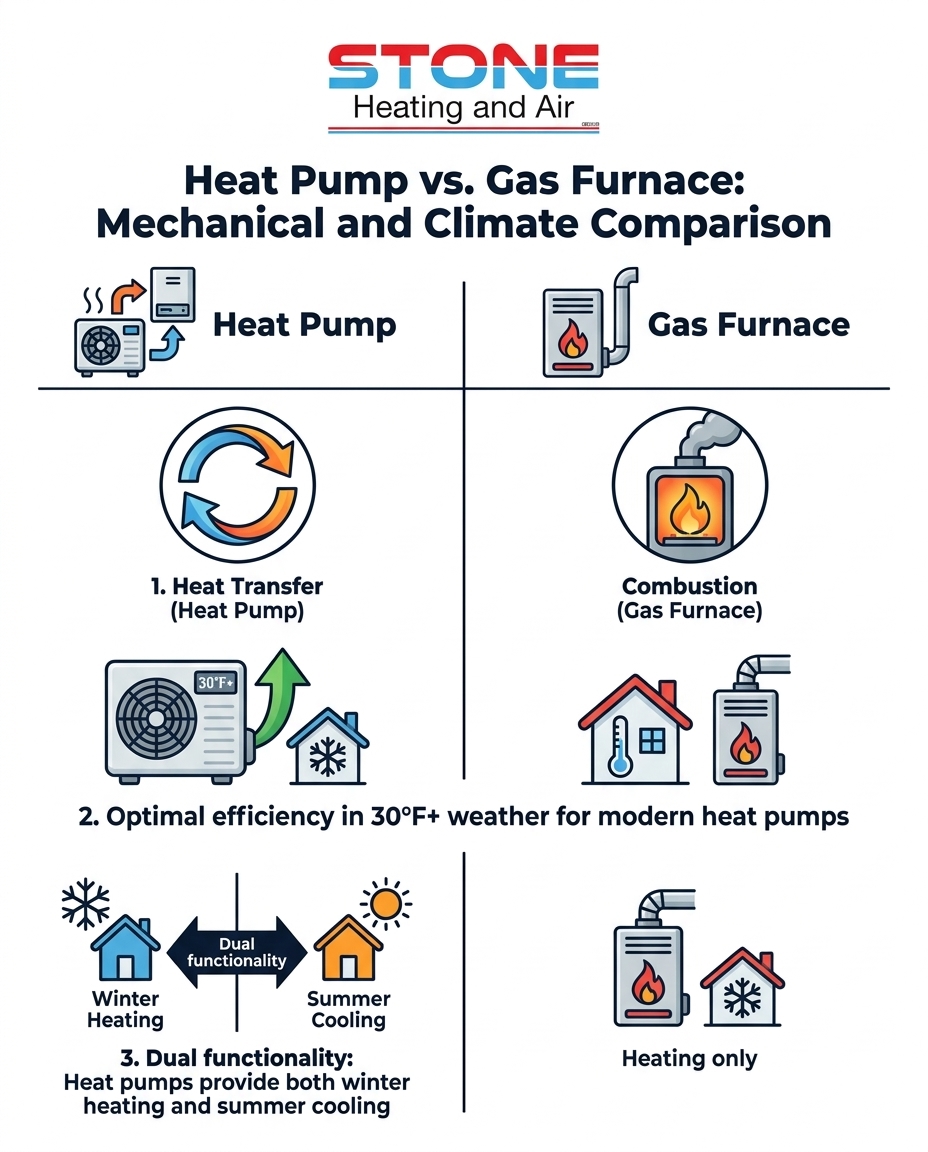
To make an educated choice between a heat pump and a gas furnace, you first need to understand how each system generates and distributes warm air. The fundamental difference lies in their mechanical operation: one creates heat through controlled combustion, while the other moves existing heat from one place to another. This distinction impacts everything from energy utilization to your home's overall Air Conditioning layout.
How Combustion Heating Works
The Problem: Traditional homes require a rapid, powerful influx of heat to combat extreme cold drafts and poor insulation.
The Cause: Generating this level of absolute high-temperature air requires a fuel source that can be burned continuously to create a localized fire inside the equipment.
The Solution: A gas furnace utilizes fossil fuel combustion to generate a high supply air temperature. When your thermostat calls for heat, natural gas or propane flows into a burner assembly and is ignited. The resulting flames heat a specialized metal component called a heat exchanger. As the system's blower motor pulls cold indoor air across the exterior of this blazing hot heat exchanger, the air absorbs the thermal energy and is pushed back into your living spaces. Because this process involves burning fuel, it requires strict venting requirements to safely exhaust harmful byproducts, like carbon monoxide, outside your home. The primary characteristic of a gas furnace is its rapid temperature delivery; the air coming out of your vents feels noticeably hot to the touch.
The Science of Heat Transfer
The Problem: Creating heat by burning fossil fuels consumes a significant amount of energy, which can lead to high operational costs and wasted resources.
The Cause: The laws of thermodynamics dictate that generating new thermal energy is inherently more energy-intensive than simply relocating thermal energy that already exists.
The Solution: An electric heat pump operates utilizing refrigerant lines to extract ambient heat from the outdoor air and transfer it indoors. Even when the outside air feels cold to human skin, it still contains measurable thermal energy. The heat pump runs a refrigerant cycle in reverse compared to a standard air conditioner. The outdoor unit's compressor pressurizes the refrigerant, absorbing outdoor heat, and pumps it inside where it is released into your ductwork. Because transferring heat requires significantly less electrical energy than creating it from scratch, heat pumps offer superior energy efficiency metrics. They provide consistent, even temperature maintenance rather than the sudden, intense blasts of hot air typical of combustion systems.
• Heating Method — Gas Furnace: Fuel combustion (natural gas/propane) — Electric Heat Pump: Refrigerant-based heat transfer
• Air Temperature — Gas Furnace: Very high (rapid delivery) — Electric Heat Pump: Moderate (consistent delivery)
• Energy Source — Gas Furnace: Fossil fuels + minor electricity — Electric Heat Pump: 100% Electricity
• Lifespan Expectancy — Gas Furnace: Longer (fewer moving parts run year-round) — Electric Heat Pump: Moderate (runs year-round for heating and cooling)
Assessing Climate Suitability for Southern Oregon Winters
In our years of keeping Central Point homes comfortable, we've found that one of the most common myths surrounding heating upgrades is that heat pumps simply cannot handle cold weather. While this may have been true for early-generation models decades ago, modern compressor technology has completely changed the landscape. When evaluating options in Central Point, understanding the specific regional climate is essential to making the right choice.
As our technicians see every season, historical winter low temperatures in the region typically hover in the low-to-mid 30s. The crisp autumn air quickly gives way to these chilly, but rarely sub-zero, winter nights. Modern heat pumps are highly viable and exceptionally efficient in these exact temperature ranges. Advanced variable-speed compressors allow the system to extract sufficient thermal energy from the outdoor air even when temperatures dip below freezing. Because the Central Point climate aligns perfectly with a heat pump's optimal operating range, homeowners can enjoy reliable warmth without the massive energy draw associated with older electric resistance heaters.
Gas furnaces, on the other hand, are designed to handle extreme cold. They produce significantly hotter air, which is highly beneficial in climates that regularly see prolonged blizzard conditions and negative temperatures. However, the mild-to-moderate winter climate of Southern Oregon rarely necessitates that level of aggressive combustion power. Installing an oversized gas furnace in a moderate climate can actually lead to short-cycling, where the system blasts the house with heat, shuts off rapidly, and leaves cold spots in distant bedrooms.
For homes that do experience occasional extreme freezes, or for homeowners who want the absolute maximum reliability, evaluating the concept of a dual-fuel system is a wise step. A dual-fuel setup combines an electric heat pump with a backup gas furnace. The system uses the highly efficient heat pump for the vast majority of the winter, only seamlessly switching to the gas furnace on the rare nights when temperatures plummet to extreme, abnormal lows.
How Your Cooling Needs Factor Into Heating Upgrades
The Problem: Homeowners often view their heating and cooling systems as two completely separate entities, leading to disjointed replacement schedules and mismatched equipment.
The Cause: Traditional HVAC setups separate the workload: a furnace handles the winter, and a standalone air conditioner handles the summer, even though they share the exact same ductwork and blower motor.
The Solution: When deciding between a gas furnace and a heat pump, you must evaluate the current state of your cooling infrastructure. A heat pump is a two-way system that provides both winter heating and summer cooling. By utilizing a reversing valve, the heat pump simply flips the flow of refrigerant. In the summer, it pulls heat out of your house and dumps it outside; in the winter, it pulls heat from outside and pumps it indoors.
Homeowners facing a mid-fall heating startup with an aging air conditioner that suffered frequent breakdowns over the summer are prime candidates for a heat pump. Instead of paying for extensive AC repair services next spring and buying a new furnace now, you can replace the entire HVAC setup with a single, highly efficient heat pump. This consolidates your equipment, refreshes your entire comfort system at once, and ensures that both heating and cooling functions are operating at peak modern efficiency.
Contrast this with keeping a gas furnace. If you install a new gas furnace, you still require a separate, standalone AC unit to handle the summer heat. If your current air conditioner is relatively new and in excellent condition, replacing just the failing furnace with a new gas model might make the most logical sense. Evaluating the viability of your ongoing cooling equipment should heavily influence your final heating replacement choice.
Energy Efficiency and Generic Incentive Opportunities
Efficiency is a major driving factor for homeowners looking to upgrade their heating systems. Operating costs accumulate over the 15-to-20-year lifespan of the equipment, making high-efficiency ratings a critical consideration.
According to U.S. Department of Energy (DOE) guidelines, heat pumps dramatically lower overall energy consumption compared to traditional combustion heating. Because they transfer heat rather than generate it, heat pumps can deliver significantly more thermal energy into a home than the electrical energy they consume to operate. This is measured by the Heating Seasonal Performance Factor (HSPF2). Gas furnaces are measured by Annual Fuel Utilization Efficiency (AFUE), which dictates what percentage of the fuel is successfully converted into usable heat versus what is lost as exhaust waste.
When reviewing options in Central Point, looking for ENERGY STAR ratings is a reliable way to ensure you are comparing top-tier equipment. Both gas furnaces and electric heat pumps feature ENERGY STAR certified models that utilize advanced technologies—like variable-speed blower motors and multi-stage operation—to reduce energy waste and maintain tighter temperature control.
Beyond monthly energy savings, upgrading to high-efficiency systems often opens the door to generic incentive opportunities. Homeowners may qualify for generally applicable energy rebates, local utility incentive programs, or federal tax credits when transitioning to greener, high-efficiency equipment. These programs are designed to encourage the adoption of advanced technologies that lower grid strain and reduce fossil fuel consumption. Because qualification tiers, equipment requirements, and program availability change frequently, it is always advised to consult with your local utility providers or a qualified tax professional to verify current, applicable programs before making your final installation decision.
Post-Installation Guidance and Ongoing System Reliability
Selecting the right equipment is only the first half of the journey. Ensuring that your new heating system operates reliably for decades requires a proactive approach to post-installation care and ongoing maintenance.
Transitioning to a new technology—especially moving from a traditional gas furnace to an electric heat pump—requires a brief learning curve regarding thermostat operation and airflow expectations. For example, during a recent early-fall post-installation walk-through, a homeowner realized they were unfamiliar with how to operate their newly installed system. Our installation team at Stone Heating and Air took the time to carefully explain and demonstrate the system operations, ensuring the customer understood exactly how to run the new equipment properly. This level of professional guidance is crucial for long-term satisfaction.
To maximize the lifespan of your new heating system, follow these core steps:
1. Understand your new airflow: If you switch to a heat pump, the air coming from the vents will feel cooler to the touch than the scorching air from a gas furnace. The system runs longer cycles at a lower, steady temperature to maintain comfort efficiently. Do not panic and assume the system is broken; this is normal operation.
2. Master your thermostat settings: Avoid drastically adjusting the thermostat up and down. Modern variable-speed systems operate best when allowed to maintain a consistent set point, gently ramping up and down as needed rather than blasting on and off.
3. Commit to regular filter changes: Both heat pumps and gas furnaces rely on unrestricted airflow. Check your filter monthly and replace it as soon as it shows visible dirt accumulation. A clogged filter forces the blower motor to work harder, accelerating wear and tear.
4. Secure proactive professional care: Whether you choose combustion or heat transfer, mechanical reliability depends heavily on an active HVAC maintenance plan. Routine inspections allow technicians to clean blower wheels, verify refrigerant charges, and inspect heat exchangers before minor issues escalate into major failures.
5. Schedule during shoulder seasons: Note the strategic advantage of booking your heating check-ups in early fall and your cooling check-ups in early spring. This ensures your equipment is prepped and verified before the extreme weather actually arrives, preventing mid-season emergencies.
Frequently Asked Questions About Heating Replacements
Understanding the nuances of different heating technologies often brings up specific, technical questions. While proactive care—such as leveraging the strategic advantage of scheduling AC maintenance right as the seasons change—helps prevent unexpected failures, sometimes a full system replacement is the only logical step. Here are clear, objective answers to the most common questions homeowners ask when evaluating their heating options.
Is a heat pump better than a gas furnace?
Neither system is universally "better"; the right choice depends entirely on your home's infrastructure and climate. A heat pump is generally more energy-efficient and provides both heating and cooling from a single unit. A gas furnace excels at delivering rapid, high-temperature heat in extreme, sub-zero climates. Evaluating your local weather patterns and existing ductwork is the best way to determine which system fits your specific needs.
At what temperature does a heat pump become inefficient?
Older generation heat pumps often struggled when temperatures dropped below 40°F. However, modern cold-climate heat pumps equipped with variable-speed compressors can maintain high efficiency even when outdoor temperatures fall into the teens or single digits. In a mild-to-moderate winter climate, a modern heat pump will rarely, if ever, reach a temperature where it cannot efficiently extract ambient heat.
Can you replace a gas furnace with a heat pump?
Yes, replacing a gas furnace with a heat pump is a very common upgrade. The process involves capping the existing gas line, updating the electrical circuit to handle the heat pump's requirements, and installing the new indoor air handler and outdoor compressor. Because they use the same ductwork, the transition is straightforward when performed by qualified professionals.
How do heat pumps perform in Oregon winters?
Heat pumps perform exceptionally well in Oregon winters. Because regional temperatures typically hover in the low-to-mid 30s rather than plunging into deep, prolonged negative digits, the climate is perfectly suited for heat transfer technology. Homeowners in this region benefit greatly from the steady, efficient heating cycles a heat pump provides without the high fuel consumption of a furnace.
What is the difference in heating comfort between a heat pump and a gas furnace?
The primary difference in comfort is how the air feels as it leaves the vent. A gas furnace delivers short, intense blasts of very hot air (often over 120°F), which heats a room quickly but can cause temperature swings. A heat pump delivers a steady, continuous flow of moderately warm air (around 95°F to 100°F), resulting in a more even, consistent ambient room temperature without the dramatic hot and cold spikes.
Does upgrading to a heat pump mean I also get a new air conditioner?
Yes. Because a heat pump is fundamentally an air conditioner that can reverse its operational cycle, installing a new heat pump automatically upgrades your home's cooling system as well. This dual functionality is one of the main reasons homeowners with aging AC units choose to transition entirely to a heat pump rather than replacing a furnace and an air conditioner separately.
Taking the Next Step in Your Heating Upgrade Journey
Navigating options comparisons for homeowners does not have to be an overwhelming process. The right choice ultimately depends on your home's existing infrastructure, your ongoing cooling needs, and your long-term energy efficiency goals. Whether you opt for the rapid, powerful warmth of a traditional gas furnace or the highly efficient, year-round versatility of a modern electric heat pump, making an informed decision is paramount.
Reiterate the peace of mind that comes from proactively addressing a mid-fall heating startup before the harsh winter weather fully sets in. By evaluating your equipment now, you avoid the stress of emergency breakdowns and ensure your home remains comfortable and safe. We encourage you to explore your specific home layout and heating options with our experts at Stone Heating and Air, who can provide objective, technical guidance tailored to your unique comfort needs.