

Beating the October Rush: Why September Makes All the Difference
Before the first frost settles over the Rogue Valley, you might be asking yourself why September is the ideal time for your annual furnace tune-up, especially when the afternoons still feel like summer. It is incredibly easy to be lulled into a false sense of security by mild early-fall weather. The sun is shining, the windows are open, and your heating equipment is the furthest thing from your mind. However, this is precisely when the most strategic homeowners take action.
The primary risk of waiting is a pattern our technicians at Stone Heating and Air see year after year: turning on the heater on that very first freezing night in October, only to discover it simply will not ignite. In our years serving Central Point and the surrounding areas, we've noticed a rapid temperature drop from September average highs in the 80s to freezing overnight lows by October. When that sudden shift happens, every unprepared homeowner in the region reaches for their thermostat at exactly the same time.
By treating the September pre-freeze transition as your critical window for preparation, you avoid the sudden panic of a cold house. Securing professional heating services now ensures your equipment is tested, cleaned, and calibrated before local technicians are fully booked. Furthermore, enrolling in an annual maintenance plan guarantees you will never be left waiting in the cold, providing priority scheduling and complete peace of mind long before the winter weather actually arrives.
The Reality of Local HVAC Schedules During the First Cold Snap
Understanding how local service schedules operate is key to keeping your home comfortable all winter long. There is a distinct psychological trap that catches many homeowners off guard: waiting for the physical sensation of cold weather to remind them to test their heating equipment. By the time you feel a chill in the air, the local service industry is already overwhelmed.
The Sudden Surge in Heating Demand
When the first major frost hits Central Point and the surrounding Rogue Valley, our dispatch center at Stone Heating and Air experiences an immediate and overwhelming spike in service requests. Hundreds of dormant furnaces are switched on simultaneously across the region. A significant percentage of those systems will fail to start, emit strange odors, or shut down after just a few minutes of operation. This creates a massive bottleneck of emergency "no heat" calls that flood dispatch centers overnight.
The Logistical Nightmare of Peak Season
The hard truth: Wait times for emergency repairs can stretch into weeks during this peak period. Technicians work around the clock, but the sheer volume of calls means triage protocols take over. If your system requires a specific replacement part, you might find yourself waiting even longer as local supply houses empty their inventory.
Contrast the stress of waiting in a freezing house, relying on space heaters and extra blankets, with the total peace of mind that comes from proactive scheduling. Booking your service during the mild September pre-freeze transition means you choose the date and time that works best for your schedule. You bypass the chaos entirely, knowing your home will be warm and safe the moment you need it.
Addressing Critical Safety Risks Before Turning the Heat On
Activating a dormant heating system after a long, dry summer carries specific safety hazards that should never be ignored. Over the warmer months, your furnace sits idle in a dark, often dusty environment, making it susceptible to a variety of hidden issues.
Hidden Hazards in Dormant Systems
During the summer, dust, pet dander, and household debris settle heavily onto your furnace burners and electrical components. In some cases, pests may even seek shelter inside the venting or cabinet. Turning the system on without a proper cleaning can lead to burning odors, poor indoor air quality, or even fire hazards.
Steps to Ensure Safe Operation
A professional inspection during the September pre-freeze transition mitigates these dangers through a rigorous safety checklist:
1. Carbon Monoxide Prevention: Unmaintained gas furnaces pose a serious risk of carbon monoxide leaks. The Centers for Disease Control and Prevention (CDC) reports that carbon monoxide poisoning risks peak during the fall and winter months when heating systems are first turned on. Technicians test all safety switches and gas valves to ensure proper, safe combustion.
2. Heat Exchanger Inspection: The heat exchanger is the metal shield that separates the breathable air in your home from the toxic exhaust gases created by burning fuel. Over time, metal fatigue can cause microscopic cracks to form. A professional uses specialized cameras to identify cracked heat exchangers before they become dangerous.
3. Venting and Exhaust Checks: Technicians inspect the flue pipe to ensure nothing is blocking the safe exit of exhaust gases. A blocked vent can force dangerous fumes to backdraft into your living space.
4. Electrical Connection Tightening: Vibrations from the previous winter can loosen electrical connections. Tightening these components prevents short circuits and reduces the risk of electrical fires.
Reclaiming Lost Efficiency After a Long Summer
Beyond safety, there is a significant financial and performance benefit to early maintenance. Heating equipment does not age like fine wine; it degrades with use. If you neglect annual care, your system has to work much harder to produce the same amount of heat.
The 5% Efficiency Drop
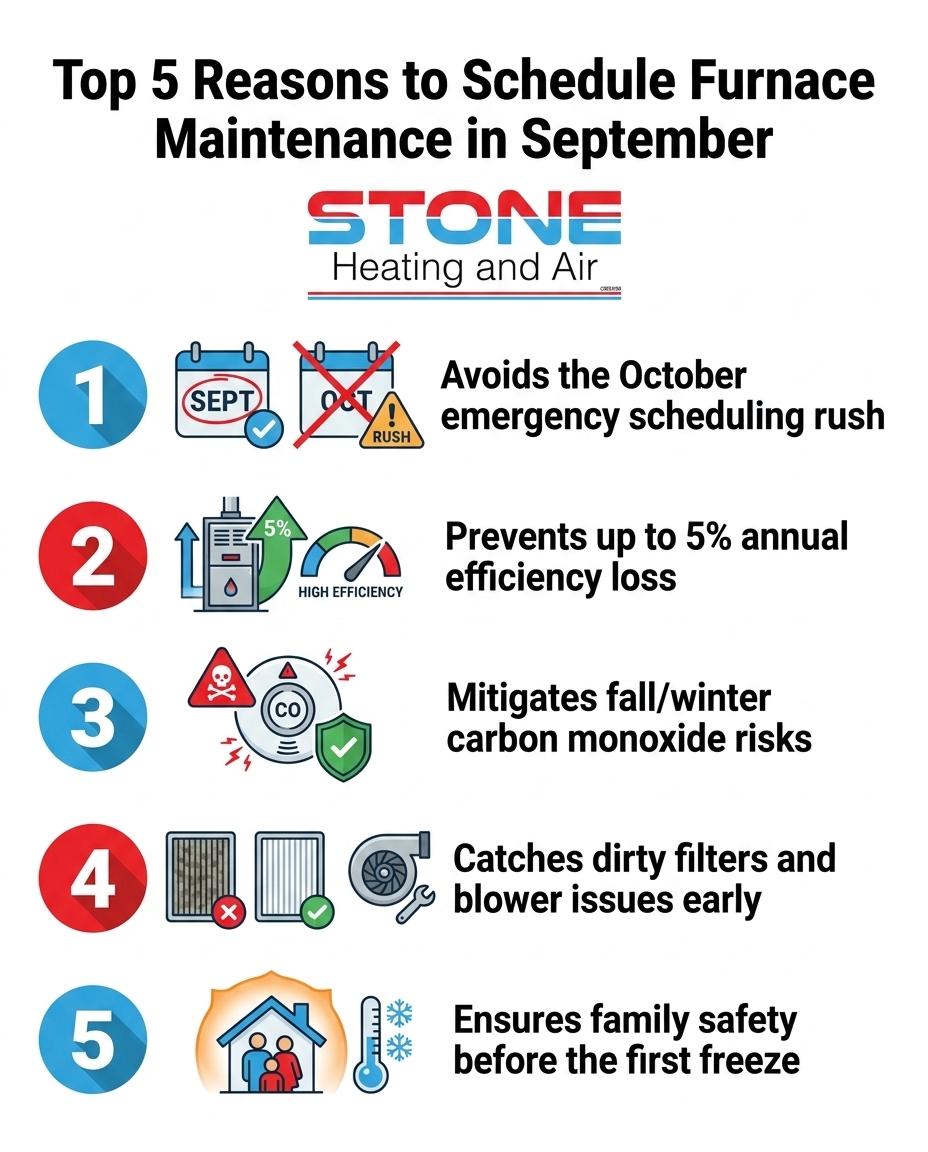
According to data from the Department of Energy, unmaintained furnaces can lose up to 5% of their efficiency annually. This happens because soot builds up on the burners, friction increases in unlubricated moving parts, and airflow becomes restricted by dirty components. When your system is inefficient, it runs longer cycles, consumes more fuel, and drives up your winter utility bills.
Easing the Seasonal Transition
The transition from heavy summer cooling directly to fall heating puts an immense amount of stress on your entire HVAC system. In our years of servicing homes across Central Point and the surrounding Rogue Valley, we frequently see systems running air conditioning during the day and heating at night during these unpredictable transition weeks. This constant switching demands peak performance from shared components like the blower motor.
The professional difference: By cleaning the burners, checking the airflow, and calibrating the thermostat in September, technicians restore that lost efficiency. A clean, well-lubricated system moves air effortlessly and burns fuel cleanly. This restored efficiency translates directly to lower winter utility bills and a more even, comfortable temperature throughout your home.
What to Expect from a Pre-Season Heating Inspection
Many homeowners wonder what actually happens during a professional tune-up. It is important to emphasize that a pre-season inspection is a comprehensive professional service, not a simple DIY task like changing a filter. Modern furnaces are highly complex machines that require specialized tools and training to service correctly.
Comprehensive System Checks
During a visit in the September pre-freeze transition, a licensed technician will perform a deep dive into your system's mechanics. Here is what that process typically includes:
• Burner Combustion Analysis: Ensuring the fuel is burning efficiently and cleanly, without producing excess soot or dangerous gases.
• Gas Valve Operation: Verifying that the gas valve opens and closes precisely, preventing dangerous fuel leaks.
• Electrical Component Testing: Measuring voltage and amperage on all motors to ensure they are not drawing too much power or overheating.
• Blower Motor Performance: Cleaning the blower wheel and checking the fan speed to guarantee optimal airflow through your ductwork.
• Thermostat Calibration: Testing the communication between your thermostat and the furnace to ensure accurate temperature control.
Professional Service You Can Count On
Whether you are preparing an existing system for winter or upgrading your equipment entirely, professional diligence is paramount. For example, when Central Point homeowners reach out to our team for a full HVAC unit installation, our technicians arrive promptly, take precise measurements, provide a clear estimate, and install the new unit exactly on the scheduled date. That exact same level of thorough, punctual, and professional care is applied to every single pre-season heating inspection we perform.
Technicians ensure your system is perfectly calibrated for the specific, harsh demands of the upcoming winter. For a deeper dive into exactly what gets inspected, you can review our comprehensive fall furnace tune-up checklist.
Preventing Costly Mid-Winter Breakdowns
The most frustrating part of a mid-winter furnace breakdown is that it is almost always preventable. The primary goal of September maintenance is to identify and resolve small issues before they snowball into catastrophic failures on the coldest night of the year.
The Domino Effect of Neglected Maintenance
Dirty filters and neglected blower motors are the leading causes of early-season furnace failures. When a filter is clogged, the blower motor has to work twice as hard to pull air through the system. This excessive strain causes the motor to overheat. If the motor overheats, the heat exchanger cannot dissipate its heat quickly enough, which triggers the system's high-limit safety switch to shut the furnace down. What started as a simple airflow issue quickly compounds into a major mechanical failure.
Beating the Supply Chain
Minor wear and tear from the previous season will always worsen if ignored. A slightly worn belt or a failing capacitor might survive the first few weeks of fall, but it will inevitably snap or short out when the system is running constantly in December.
The strategic advantage: Catching a failing part in September allows ample time for ordering replacements without supply chain stress. In Central Point and the surrounding Rogue Valley, sourcing specific furnace components mid-winter can take time. Finding and fixing a weak component during the mild fall weather ensures your system will not leave you stranded later. Ultimately, this preventative care significantly extends the overall lifespan of your heating equipment.
Gaining Peace of Mind Through Proactive Care
At the end of the day, early booking is a strategic move, not just another seasonal chore to check off your list. The September pre-freeze transition offers a brief but vital window to prepare your home for the harsh months ahead.
A Strategic Move for Your Home
There is immense value in knowing your home will be warm, safe, and comfortable regardless of exactly when the first frost arrives. You remove the guesswork and the anxiety from the seasonal shift. Instead of crossing your fingers and hoping the heater turns on, you flip the switch with absolute confidence.
Proactive Customer Care
At Stone Heating and Air, we believe that proactive customer care is the ultimate way to guarantee your family's safety and comfort. By scheduling your tune-up before the local emergency rush begins, you secure priority service and ensure that your system is thoroughly vetted by a professional. Beating the local seasonal rush means you get the attention, time, and thoroughness your home deserves, setting you up for a flawless, worry-free winter.
Frequently Asked Questions
When is the best time to schedule furnace maintenance?
The best time to schedule furnace maintenance is early fall, specifically in September. This timing allows you to secure an appointment before the busy winter season begins and HVAC technicians become fully booked. It also ensures your system is clean, safe, and ready to operate flawlessly before the first freezing night hits.
What happens if you don't tune up your furnace?
If you skip your annual tune-up, your furnace will suffer from decreased efficiency, higher operating costs, and a much higher risk of unexpected breakdowns. Dust and debris build up on critical components, forcing the system to work harder to produce heat. Over time, this neglected maintenance can lead to cracked heat exchangers, carbon monoxide risks, and premature system failure.
How often should a furnace be tuned up?
A furnace should be professionally tuned up once every year, ideally just before the heating season begins. Annual inspections are critical for maintaining the manufacturer's warranty and ensuring the system operates safely. Consistent yearly maintenance catches minor wear and tear before it turns into a major, expensive repair.
Is an annual furnace tune-up necessary?
Yes, an annual furnace tune-up is absolutely necessary for both safety and performance. Gas furnaces produce carbon monoxide during combustion, and a yearly inspection ensures that all venting and safety switches are functioning correctly to protect your home. Furthermore, annual care restores lost efficiency, which helps keep your winter utility bills as low as possible.
Why is the transition from summer cooling to fall heating so hard on a system?
The transition period forces shared HVAC components, like the blower motor, to work constantly as you switch between daytime cooling and nighttime heating. This back-and-forth operation puts continuous stress on the system without giving it a true resting period. A pre-season tune-up ensures these shared components are clean, lubricated, and ready to handle the shifting demands.
What are the most common causes of early-season furnace failures?
The most common causes of early-season failures are dirty air filters, neglected blower motors, and soot buildup on the burners. When a system sits dormant all summer, dust accumulates and restricts airflow the moment it is turned back on. This restricted airflow causes the system to overheat and trigger safety shutoffs, resulting in a sudden loss of heat.
Ready to secure your spot before the cold weather hits? Don't wait for the first freezing night to find out if your heater works. Schedule your pre-season inspection today or sign up for an annual maintenance plan to guarantee priority service, maximize your system's efficiency, and ensure total safety for your family all winter long.