

The Sudden Burning Smell During Your Mid-Fall Heating Startup
It is a chilly October morning, you adjust the thermostat for the first time in months, and suddenly, an alarming odor fills your home—which brings us to one of the most common homeowner questions answered by our team at Stone Heating and Air during the mid-fall heating startup. You expect warm, comfortable air, but instead, you are greeted by a distinct, dry burning scent wafting from the vents. For many homeowners, this sudden odor triggers immediate panic and a rapid rush to the thermostat to shut the system down.
This scenario forces a critical decision point: determining whether it is safe to leave the system running or if the smell indicates a severe electrical or mechanical emergency that requires an immediate shutdown. The instinct to protect your home is correct, but understanding the mechanics behind your HVAC system can provide much-needed peace of mind. Even with diligent upkeep during the summer cooling season, your heating elements have been sitting idle in a dark, enclosed cabinet for months. During that downtime, physical changes occur inside the equipment that make a brief odor almost inevitable.
Here is the thing: not all burning smells are created equal. Distinguishing harmless dust burn-off from serious electrical emergencies is a necessary skill for any homeowner navigating the transition to colder weather. By learning exactly how your system operates, you can confidently evaluate the situation without unnecessary stress. In our years serving Central Point, we've found that exploring professional Air Conditioning Services and heating solutions ensures your equipment transitions safely between seasons.
Why Your Heater Smells Like Burning Dust After Summer
To understand why your heating system produces this specific odor, you have to look at what happens inside the cabinet while the equipment is turned off. For roughly half the year, the heating components—specifically the heat exchanger in a gas furnace or the auxiliary heat strips in a heat pump—remain completely dormant. While your blower motor circulates cooled air throughout the summer, those heating elements act as a resting place for airborne particulates.
The Accumulation of Airborne Particulates
Even in the cleanest homes, indoor air contains microscopic debris. Pet dander, fabric fibers, pollen, and standard household dust constantly circulate through the ductwork. Our technicians see this constantly; it is especially relevant given Southern Oregon's dry summers and seasonal wildfire smoke, which we notice directly contribute to higher-than-average particulate settling inside idle heating equipment. Over several months, these tiny particles bypass minor gaps or slip past older filters, eventually coating the cold metal surfaces of your heating elements in a fine layer of debris.
Your indoor air filter plays the most significant role in preventing this buildup. A clean, high-quality filter traps the majority of these particulates before they ever reach the internal cabinet. However, if the filter becomes saturated during heavy summer use, the blower motor will pull air—and dust—around the edges of the filter, depositing it directly onto the heat exchanger. This is why keeping up with AC maintenance in Central Point during the cooling season directly impacts how your heater performs in the fall. For instance, our team recently helped a homeowner who reached out late in the day during the summer when their cooling system stopped working properly. After repairing the system, our technician took the time to demonstrate proper upkeep methods, proving that maintaining clean airflow in July prevents heavy dust accumulation by October.
The First Ignition Cycle
When the thermostat calls for heat on that first chilly morning, the heat exchanger rapidly climbs to temperatures exceeding several hundred degrees. The layer of dust, dander, and microscopic smoke particles that settled on the metal over the summer is instantly incinerated. This physical process creates a specific chemical reaction, releasing the dry, earthy odor that you recognize as a heater smells like burning dust.
This incineration is entirely expected for systems that have been dormant. The burners or heat strips are simply clearing off the accumulated debris through heat. Because the blower motor engages immediately after the heat exchanger warms up, that newly created odor is pushed directly through your ductwork and into your living spaces, making the smell seem much more pervasive and alarming than it actually is.
How Long Should the Furnace Burning Smell Last?
Knowing that a heater smells like burning dust due to normal incineration is only half the battle; knowing how long that smell should linger is what truly empowers a homeowner. The duration of the odor is the most reliable indicator of whether your system is functioning normally or if it is experiencing a mechanical failure.
The 30-to-60 Minute Rule
Based on the hundreds of fall maintenance calls we handle, harmless dust burn-off typically dissipates within 30 to 60 minutes of the initial heating cycle. The intensity of the smell should peak within the first ten minutes as the system reaches its maximum operating temperature and incinerates the bulk of the settled debris. After that initial peak, the odor should steadily decrease until it vanishes completely.
If your home feels overwhelmed by the smell during this window, the most effective strategy is to open a few windows to ventilate the living areas. Turning on ceiling fans or exhaust fans can also help cycle the odorous air out of the house faster. Because the weather is usually only mildly chilly during the first fall startup, a brief period of ventilation will not drastically impact your indoor comfort.
When to Turn the System Off
While a brief odor is normal, a smell that intensifies or lasts longer than an hour is a clear signal to intervene. If the system has completed a full heating cycle, shut down, and then restarted, but the smell remains just as strong on the second or third cycle, you must shut down the thermostat immediately.
A persistent smell indicates a deeper issue, such as a severely clogged air filter, a failing blower motor, or a cracked heat exchanger that is allowing combustion gases to mix with your breathing air. Under no circumstances should you attempt DIY mechanical inspections of the heat exchanger or the internal electrical components. These are highly complex, potentially dangerous systems that require specialized diagnostic tools. Instead, securing professional AC service and heating diagnostics is the only safe way to resolve persistent odors and protect your home.
Normal Dust Burn-Off vs. Electrical Emergencies
Creating a clear, objective framework to distinguish between safe seasonal odors and dangerous mechanical failures prevents unnecessary panic while keeping your household safe. Your nose is an excellent diagnostic tool if you know exactly what to smell for.
Identifying Harmless Dust Odors
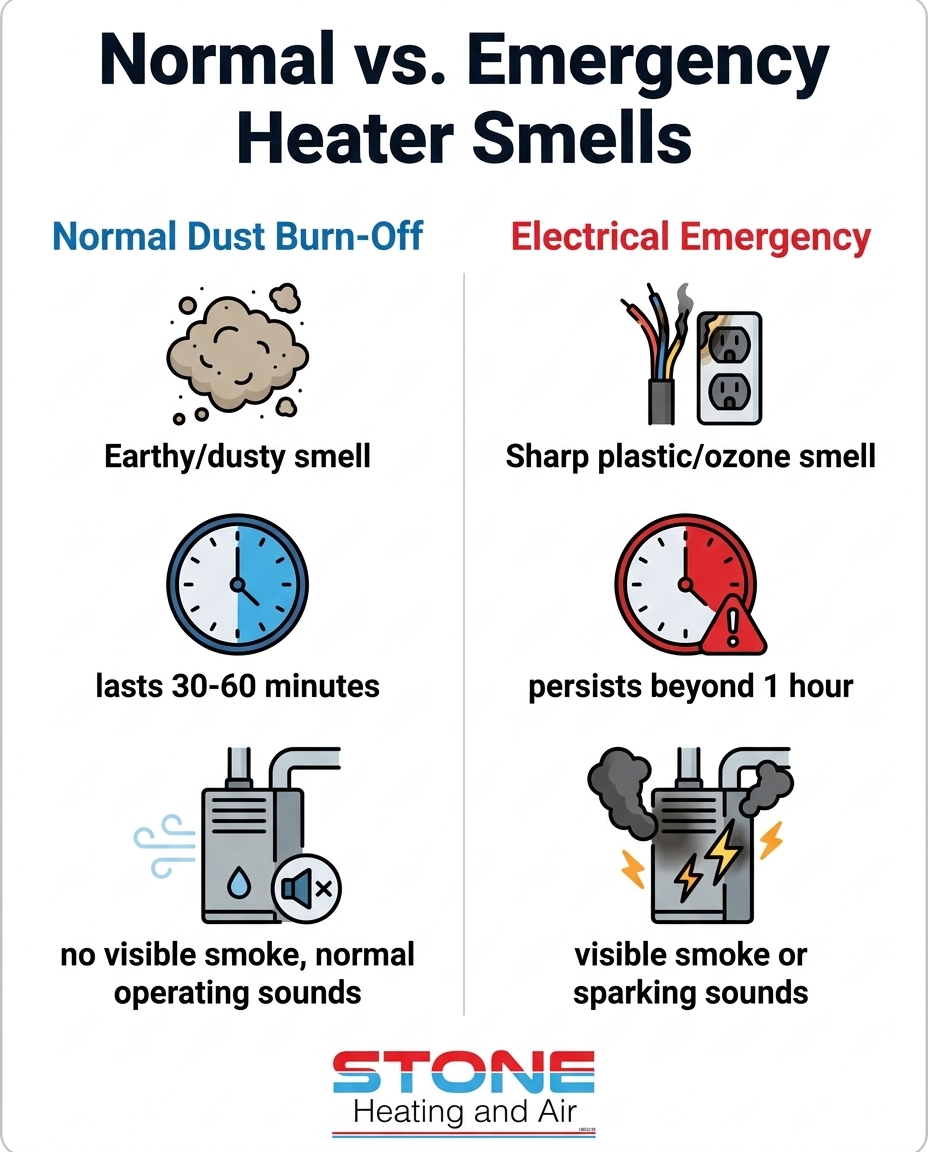
Normal burn-off has a very specific profile. It smells dry, earthy, and distinctly like hot dust—very similar to the scent of a hair dryer that has just been turned on after sitting in a drawer. Crucially, this smell is never accompanied by visible smoke, and your furnace will continue to sound completely normal. You will hear the standard click of the thermostat, the whoosh of the gas burners igniting, and the steady hum of the blower motor. If the heater smells like burning dust but operates quietly and the odor fades within an hour, the system is performing exactly as designed.
Warning Signs of Electrical Failure
Electrical emergencies produce entirely different odors that demand immediate action. If you detect a sharp, metallic, or fishy smell, you are likely dealing with melting wire insulation or an overheating circuit board. A strong smell of burning plastic or rubber often points to a failing capacitor or a seized blower motor belt. An acrid, chemical scent similar to ozone indicates electrical arcing or sparking inside the cabinet.
We always advise our Central Point customers that these odors will not fade after 60 minutes; in fact, they will grow stronger and more pungent the longer the system runs. If you detect any of these warning signs, turn off the system at the thermostat immediately. If the smell is severe, locate your home's main electrical panel and flip the breaker dedicated to the HVAC system to completely cut the power. Once the system is safely powered down, contact a licensed professional for AC repair and heating diagnostics, as these issues pose a legitimate fire risk.
• Odor Profile — Normal Dust Burn-Off: Dry, earthy, dusty (like a hot hair dryer) — Electrical / Mechanical Emergency: Sharp, metallic, melting plastic, ozone, or fishy
• Duration — Normal Dust Burn-Off: Fades steadily within 30 to 60 minutes — Electrical / Mechanical Emergency: Persists, worsens, or returns on every cycle
• Visual Signs — Normal Dust Burn-Off: None; air remains clear — Electrical / Mechanical Emergency: Visible smoke or haze near vents or the indoor unit
• Audio Cues — Normal Dust Burn-Off: Normal blower and burner ignition sounds — Electrical / Mechanical Emergency: Sparking, buzzing, grinding, or loud popping noises
• Action Required — Normal Dust Burn-Off: Monitor for 1 hour, ventilate home if needed — Electrical / Mechanical Emergency: Shut off system immediately at the breaker and call a pro
Preventing Startup Odors with Pre-Winter Inspections
While the mid-fall heating startup odor is generally harmless, it is entirely preventable. Proactive professional maintenance eliminates the stress of startup odors by cleaning the system long before the thermostat ever calls for heat. By addressing the root cause—the accumulated summer dust—you can enjoy a seamless transition into the colder months.
Comprehensive System Cleaning
A comprehensive pre-winter tune-up involves much more than just swapping out the air filter. A licensed technician will manually clean the internal cabinet, carefully wiping down the heat exchanger, the burner assembly, and the auxiliary heating elements. This professional cleaning physically removes the summer dust buildup, pet dander, and wildfire smoke particulates, preventing the burning smell from occurring in the first place.
Furthermore, this process directly improves your indoor air quality during the winter. Instead of blasting incinerated dust particles through your ductwork, a clean system circulates fresh, healthy air from the very first cycle. When you rely on our comprehensive maintenance plans at Stone Heating and Air, you benefit from our local expertise tailored to handling Southern Oregon's specific environmental strains on HVAC systems, ensuring your equipment is uniquely prepared for the regional climate. As an added bonus, keeping your system properly maintained can help you qualify for various generic utility incentive programs or federal tax credits for energy efficiency; we always recommend verifying current programs with your utility provider or a tax professional.
During a recent routine fall service call, one of our technicians provided guidance to a local homeowner on proper upkeep to ensure peak system performance before the cold weather set in. The technician explained the necessary maintenance steps while cleaning the cabinet, ensuring the homeowner had clear instructions on maintaining system efficiency and avoiding unexpected startup odors. Beyond cleaning, a thorough inspection includes checking all electrical connections, testing safety limit switches, and verifying that the blower motor is pulling the correct amperage. This level of detail is why scheduling AC maintenance and heating tune-ups is the single most effective way to ensure safety, efficiency, and peak performance throughout the heavy heating season.
Frequently Asked Questions About Heating Startup Smells
Why does my heater smell like it's burning?
Your heater smells like it is burning because it is actively incinerating microscopic dust particles that settled on the internal components during the summer. When the heat exchanger or electric heat strips reach high operating temperatures, this accumulated debris burns off instantly. The resulting odor is pushed through your ductwork by the blower motor, making the smell noticeable in every room. This is a standard physical reaction for any heating equipment that has been dormant for several months.
Is it normal for a heater to smell like burning dust?
Yes, we assure homeowners that it is completely normal for a heater to smell like burning dust during the first few cycles of the season. As long as the odor is strictly a dry, earthy dust smell and is not accompanied by smoke or strange noises, it is a harmless part of the seasonal transition. The smell simply indicates that the system is clearing off its heating elements to prepare for winter operation.
How long does furnace burning smell last?
A normal furnace burning smell should last between 30 and 60 minutes after the system is turned on for the first time. The odor will be strongest during the first ten minutes and should steadily fade as the dust is fully incinerated. If the smell persists for several hours or returns strongly over multiple days, it is no longer normal burn-off and requires professional attention.
Can a dirty air filter cause a burning smell?
Absolutely. A severely clogged air filter restricts airflow, causing the system's internal components to overheat and produce a burning odor. Furthermore, a dirty filter allows excess dust and debris to bypass the filtration media and settle directly on the heat exchanger. Replacing your air filter regularly is the easiest way to prevent excessive dust buildup and minimize burning odors throughout the winter.
When is a burning smell from a heater dangerous?
A burning smell becomes dangerous when it smells like melting plastic, burning rubber, sharp ozone, or an electrical fire. It is also dangerous if a standard dust smell lasts longer than an hour, or if you see visible smoke coming from the vents. These warning signs indicate electrical failure, melting wire insulation, or a cracked heat exchanger, all of which require you to shut off the system at the breaker immediately and call a professional.
Does a heat pump smell different than a gas furnace on startup?
A heat pump generally produces the exact same burning dust smell as a gas furnace during the first cold snap. While heat pumps do not use gas combustion, they rely on electric auxiliary heat strips to supplement warmth when temperatures drop significantly. These internal metal strips sit idle all summer, collect dust, and burn it off rapidly when activated, resulting in the same dry, earthy odor.
Ensure a Safe, Odor-Free Heating Season
Experiencing a sudden burning smell during the mid-fall heating startup is alarming, but in the vast majority of cases, it is simply your system clearing its throat for the winter. A brief, dusty odor on the first chilly morning is a normal, expected part of homeownership that resolves itself within an hour. However, it is always crucial to trust your senses—if an odor smells distinctly electrical, resembles melting plastic, or lasts far too long, safety must come first. Shutting the system down and seeking professional guidance is always the right call when in doubt. By understanding the normal signs of seasonal burn-off and keeping up with proactive, professional tune-ups with our team, you can ensure a safe, efficient, and comfortable heating season all winter long.