

Are You Prepared for the Impending Dryness of the Heating Season?
Are you already bracing for the sudden drop in indoor moisture that arrives with the first chilly nights of fall? If you are currently weighing the benefits of Whole-Home Humidifiers vs. Portable Units for Dry Oregon Winters, you are likely trying to solve a very specific seasonal problem. As we approach the typical September furnace startup, our team at Stone Heating and Air frequently helps homeowners across the region who experience an abrupt and uncomfortable shift in their indoor air quality.
Before you even check the thermostat, your body often tells you the air has changed. You might wake up with dry sinuses, experience sudden static shocks when touching a light switch, or even notice the early signs of cracking in your home's woodwork and hardwood floors. The central decision point becomes clear: do you continue managing the constant refilling, cleaning, and shuffling of multiple portable room humidifiers, or is it time to transition to a system integrated directly into your central HVAC ductwork?
If you want to optimize your winter heating systems for maximum comfort, understanding the mechanical and practical differences between these two approaches is the first step. Here is an objective, deep-dive comparison to help you make an informed choice for your home.
Why Southern Oregon Winters Strip Moisture from Your Home
The chilly winter climate in Southern Oregon inherently lacks the ambient coastal moisture found further west. However, the weather outside is only half of the equation. The primary culprit behind severe indoor dryness is actually the mechanical heating equipment working hard to keep your living spaces warm.
In our years of servicing homes in Central Point, OR, and the surrounding communities, we see firsthand how the specific chilly conditions require your heating system to run in longer, more frequent cycles. As these systems operate, they continuously strip whatever remaining moisture exists in the air. To understand why this happens, we have to look at the mechanics of relative humidity and heat.
The moisture-loss cycle typically happens in three stages:
1. Cold air enters the home: Cold winter air naturally holds significantly less moisture than warm summer air. Even if it is raining outside, the absolute humidity remains quite low.
2. The furnace heats the air: As your heating equipment draws in this cold air and raises its temperature, the air's capacity to hold water expands rapidly.
3. Relative humidity plummets: Because the temperature rises but no new moisture is added, the relative humidity percentage drops drastically. The air becomes "thirsty" and begins pulling moisture from anywhere it can—including your skin, your houseplants, and your home's structural materials.
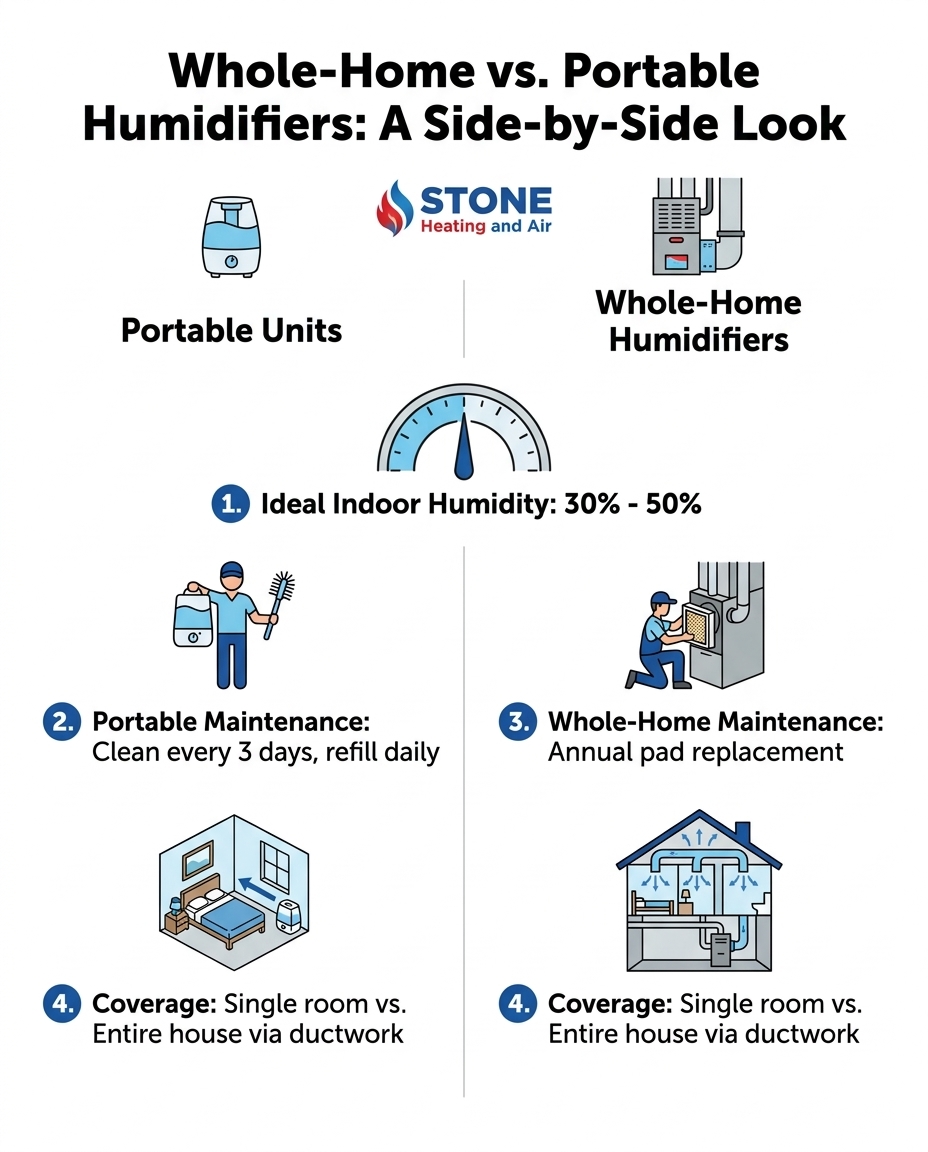
According to the Environmental Protection Agency (EPA), ideal indoor relative humidity should be maintained between 30% and 50%. Staying within this range helps reduce respiratory irritation and protects home interiors from physical wear and tear. When relative humidity drops into the teens or low twenties, the dry air pulls moisture out of wood framing, flooring, and furniture, leading to separation and cracking. Relying on uneven moisture coverage during long heating cycles leaves certain rooms vulnerable to this damage. Upgrading to whole-home air purification and humidity control ensures that every square foot of your home maintains that ideal EPA-recommended balance.
Portable Room Humidifiers: The Upfront Fix with Hidden Chores
For many homeowners, the immediate reaction to dry winter air is to purchase a standalone portable humidifier. These units are accessible, easy to plug in, and offer a localized solution. However, objectively analyzing their benefits against their significant drawbacks reveals a hidden labor cost that many people overlook.
The pros of portable units:
• Lower upfront commitment: You can purchase a unit at any local hardware store and plug it in immediately.
• Targeted relief: They are highly effective at adding moisture to a single, enclosed space, such as a nursery or a small bedroom.
• Portability: You can physically move the unit from a home office during the day to a bedroom at night.
The cons and hidden chores:
• Strict square footage limits: A standard portable unit only covers a small radius. To protect an entire home, you would need to purchase, run, and maintain multiple units simultaneously.
• The daily refilling chore: Most portable tanks hold enough water for 12 to 24 hours of operation. If you run them continuously, you will spend time every single day carrying heavy, dripping water tanks to and from the sink.
• Uneven home protection: Because they only treat specific rooms, the rest of your home's woodwork, flooring, and drywall remains exposed to the damaging effects of low humidity.
The quick fix becomes a long-term burden: The most significant drawback of portable units is the rigorous cleaning schedule required to keep them safe. The Consumer Product Safety Commission (CPSC) guidelines strongly advise that portable humidifiers require thorough cleaning every three days. Because they hold stagnant water at room temperature, they are prime breeding grounds for harmful microbial growth, mold, and mineral scale. Cleaning them involves unplugging the unit, emptying the tank, soaking the base in white vinegar, scrubbing tight corners with a small brush, and rinsing thoroughly. Multiplying this chore across three or four units for an entire winter turns a simple comfort measure into a relentless part-time job.
Whole-Home Humidifiers: Seamless Coverage Through Your Ductwork
Integrated whole-home humidifiers take a completely different approach. Rather than treating the air one room at a time, these systems are installed directly into your central HVAC ductwork and plumbed straight into your home's main water supply. This setup provides distinct advantages for comprehensive, hands-off home comfort.
The integration process involves mounting the humidifier unit onto the supply or return plenum of your furnace or air handler. A small water line is connected to the unit, feeding a specialized evaporator pad or steam canister. A dedicated humidistat monitors the moisture levels in the air, much like your thermostat monitors temperature.
When the humidistat detects that the indoor humidity has dropped below your set preference (for example, 40%), it communicates with the HVAC system. The humidifier's water valve opens, moistening the internal pad. As the blower motor pushes warm air through the ductwork, that air passes through the moistened pad, absorbing water vapor and distributing it evenly across every single room in the house.
Working with professional HVAC services to handle this installation ensures the equipment operates flawlessly. Seamless HVAC integration by experienced technicians guarantees that the humidifier works in perfect tandem with your home's heating cycle. It activates exactly when needed, utilizing the airflow that is already circulating through your home to deliver a superior, balanced experience.
The primary benefit of this system is hands-off consistency. It completely eliminates the daily chore of carrying water tanks and manually adjusting individual room settings. Furthermore, because the moisture is distributed evenly through the ductwork, your entire home interior—from the hardwood floors in the dining room to the crown molding in the upstairs bedrooms—receives consistent protection against dry air damage.
Head-to-Head Comparison: Maintenance, Coverage, and Integration
To truly evaluate which system makes the most sense for your lifestyle, it helps to look at a direct, side-by-side comparison of the daily realities of both options.
• Coverage Area — Portable Room Humidifiers: Single room (typically 200 to 400 square feet). Requires multiple units for whole-house relief. — Whole-Home Integrated Humidifiers: Comprehensive whole-house distribution via existing HVAC ductwork.
• Daily Maintenance — Portable Room Humidifiers: High. Requires daily tank refilling and monitoring of water levels. — Whole-Home Integrated Humidifiers: Zero. Plumbed directly into the home's water supply for automatic refilling.
• Cleaning Schedule — Portable Room Humidifiers: Vinegar soak and scrub every 3 days to prevent mold and microbial growth. — Whole-Home Integrated Humidifiers: Low. Requires a single water panel/pad replacement once per year.
• Aesthetics & Space — Portable Room Humidifiers: Takes up floor or counter space. Power cords and water tanks create visual clutter. — Whole-Home Integrated Humidifiers: Hidden entirely out of sight in the basement, garage, or utility closet with the HVAC equipment.
• Long-Term Value — Portable Room Humidifiers: Lower upfront cost, but units frequently break or calcify, requiring replacement every few seasons. — Whole-Home Integrated Humidifiers: A permanent home fixture that adds lasting value and protects interior woodwork long-term.
• Maintenance realities: Portables demand your attention multiple times a week. Integrated systems only require attention once a year.
• Coverage areas: Portables leave hallways, bathrooms, and secondary rooms completely dry. Integrated systems treat the entire cubic volume of the home.
• Space considerations: Portables add clutter and tripping hazards with power cords. Integrated systems remain completely out of sight.
The True Cost of Maintenance Time
If you calculate the rough time spent over a long, six-month heating season, the hidden cost of portables becomes glaring. Spending just 15 minutes every three days cleaning and filling three portable units adds up to over 15 hours of tedious labor per winter. Contrast that with the simplicity of an integrated system.
One homeowner, new to the area, reached out to our Stone Heating and Air team during an early fall cold snap for routine pre-season maintenance on their newly acquired home's heating system. While performing the tune-up and changing filters, our technician demonstrated the equipment's features—including the existing whole-home humidifier—and simply swapped out the water panel. The homeowner was thrilled to learn they wouldn't have to juggle room humidifiers all winter, completely exceeding their expectations for their new home's comfort. Having a professional check the whole-home humidifier pad during a routine HVAC maintenance plan visit completely removes the burden from your shoulders.
Ensuring Compatibility with Heat Pumps and Furnaces
A common concern we hear from our customers at Stone Heating and Air is whether a central humidifier will actually work with their specific type of heating equipment. The short answer is yes: whole-home humidifiers can be successfully paired with both traditional gas furnaces and modern, high-efficiency heat pumps.
However, the mechanics of how they pair differ slightly. Traditional gas furnaces produce very hot supply air, which easily evaporates water from a standard bypass humidifier pad. Modern heat pumps, on the other hand, operate at a lower, more consistent supply temperature. Because the air isn't quite as hot, a heat pump system often benefits from a fan-powered humidifier or a steam humidifier to ensure adequate moisture is pushed into the ductwork.
Regardless of the heating source, integrated humidifiers are wired to activate only when the HVAC blower motor is running. This safety feature ensures that moisture is actually distributed throughout the house rather than pooling inside the ductwork. If the fan isn't blowing, the water valve remains closed.
Before adding humidity control to your home, a thorough pre-season system check is highly recommended. A technician will verify that your ductwork is properly sealed so that moist air isn't leaking into unconditioned spaces like attics or crawlspaces. They will also ensure your blower motor is operating efficiently enough to carry the conditioned air to the furthest rooms in the house. This is a perfect addition to the process of preparing your furnace for the fall and winter.
Frequently Asked Questions About Winter Humidity Control
Are whole house humidifiers worth it?
Yes, for homeowners who want consistent, low-maintenance comfort, whole-house humidifiers are highly worthwhile. They eliminate the daily chore of refilling water tanks and the constant cleaning required by portable units. By protecting your entire home's interior—including hardwood floors, drywall, and wooden furniture—from cracking, they provide long-term value that far exceeds the temporary relief of a room humidifier.
How much maintenance does a whole house humidifier need?
Whole-house humidifiers require very little maintenance compared to portable units. A typical system only needs its internal water panel (or evaporator pad) replaced once a year, usually before the heating season begins. Aside from that annual swap and a quick check of the water line and drain tube by your HVAC technician, the system operates automatically all winter long.
Can a whole house humidifier cause mold?
When installed correctly and maintained annually, a whole-house humidifier will not cause mold. These systems are designed with built-in humidistats that monitor indoor moisture levels, preventing the relative humidity from exceeding the safe threshold of 50%. Furthermore, because they are plumbed directly into the ductwork and utilize a continuous drain for excess water, they do not hold stagnant water like portable units do.
What is the ideal indoor humidity in winter?
The ideal indoor relative humidity during the winter months should remain between 30% and 50%. Keeping your home's moisture levels within this specific range minimizes respiratory irritation, reduces the transmission of airborne viruses, and prevents static electricity. If condensation begins forming on the inside of your windows, it is a sign that the humidity level should be dialed down slightly.
Do whole home humidifiers work with heat pumps?
Yes, whole-home humidifiers are fully compatible with modern heat pumps. Because heat pumps generally produce a lower supply air temperature than traditional gas furnaces, HVAC professionals often recommend fan-powered or steam humidifiers to maximize evaporation. A qualified technician can easily configure the system to ensure it works perfectly with your heat pump's specific airflow and heating cycles.
Make the Right Choice for Your Home's Comfort
While portable humidifiers offer a quick, localized fix for a single dry room, they demand a heavy toll in constant refilling and rigorous cleaning. An integrated whole-home system provides the hands-off consistency and comprehensive coverage needed to maintain a truly comfortable, healthy environment all winter long.
Eliminating the daily maintenance chores while simultaneously protecting your home's woodwork and your family's respiratory health makes an integrated system a smart upgrade. If you are tired of waking up to dry air and static shocks, talk to our local experts at Stone Heating and Air today. We can evaluate your current ductwork and heating equipment to recommend the perfect humidity control solution, giving you a clear, objective path to a more comfortable season.