

The Invisible Threat Inside Your Furnace Before Winter Hits
Your furnace has been sitting dormant for months, but before you flip the thermostat to warm your home, you need to understand why we always check the heat exchanger during fall maintenance. As the September pre-heating transition begins in Central Point and the Rogue Valley, thousands of local homeowners are preparing their homes for the coming chill. However, beneath the metal casing of an aging furnace lies a potential concrete problem: microscopic cracks in the heat exchanger that can leak deadly gases directly into your living space.
At Stone Heating and Air, we see firsthand how many homeowners view their annual furnace tune-up as a simple checklist of filter changes and fan tests. The reality is much more serious. Recognizing that a professional inspection is a life-safety necessity—not just a routine chore—is the most critical decision you can make before winter arrives. Carbon monoxide is an invisible, odorless threat that requires specialized detection, and your heat exchanger is the only barrier standing between that exhaust gas and your family's breathable air.
If you are preparing for the cold weather and need to schedule a comprehensive inspection for your heating system, our team is ready to ensure your home is fully protected.
What Is a Heat Exchanger and Why Does It Matter?
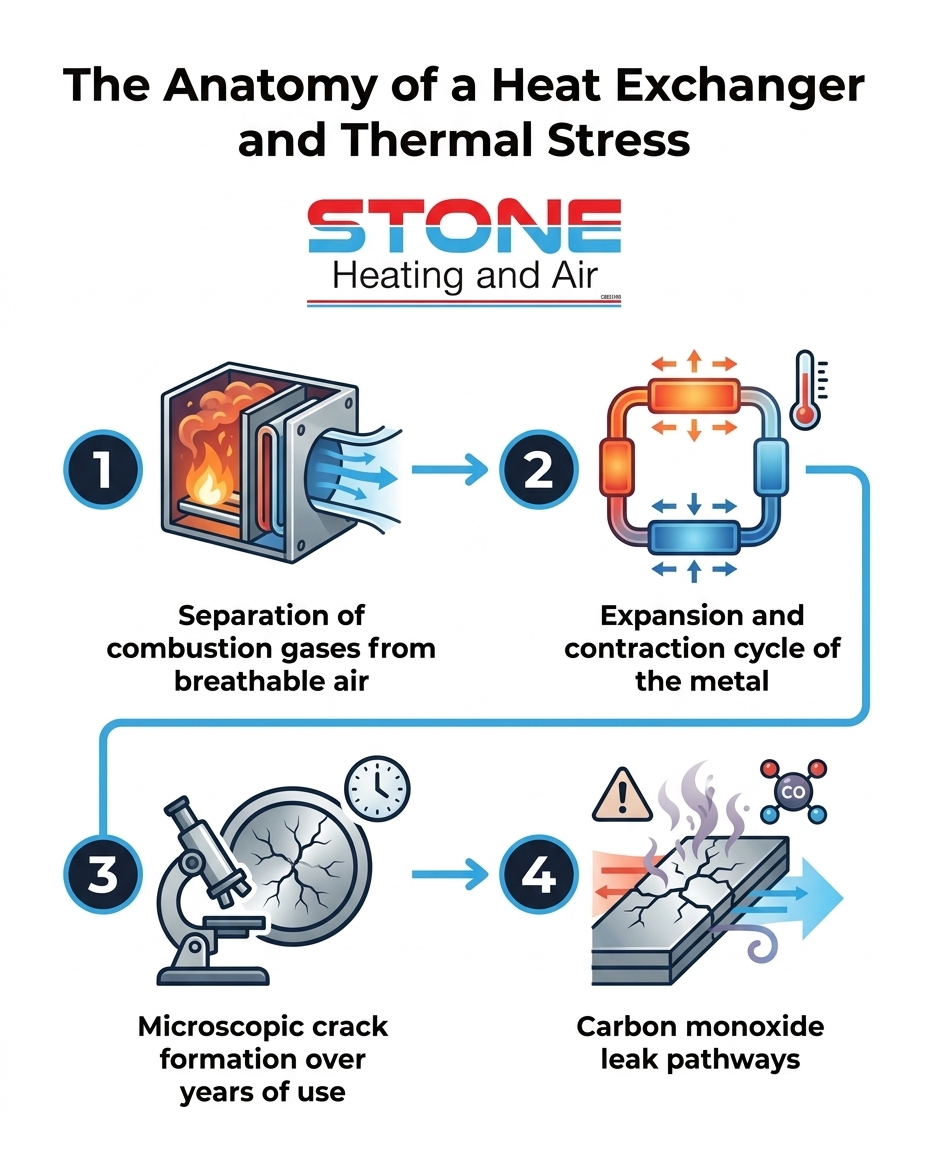
To understand why this component is the focal point of a safety inspection, you first need to understand its vital role in your home's ecosystem. The heat exchanger is a critical metal shield—a series of tubes or coils—that separates toxic combustion gases from the breathable air circulated throughout your home.
The Safe Heating Process
When your furnace turns on, burners ignite a mixture of fuel and air inside the heat exchanger. The metal heats up rapidly. Simultaneously, your blower motor pulls cold indoor air from your return vents and pushes it over the outside of the hot heat exchanger. The air absorbs the heat and is then blown through your ductwork into your rooms.
During this entire process, the toxic exhaust gases created by the burning fuel (including carbon monoxide, sulfur dioxide, and nitrous oxide) remain safely trapped inside the metal walls of the heat exchanger. These gases are then safely vented out of your home through a flue pipe.
The critical takeaway: As long as this component is perfectly intact, your system operates safely and efficiently.
When the Barrier Fails
Any breach in this metal barrier—even a crack as thin as a human hair—immediately compromises your indoor air quality. When the blower fan kicks on, it creates pressure changes that can pull those toxic exhaust gases out of the heat exchanger and push them directly into the air you breathe.
• Intact Heat Exchanger — Air Quality Impact: Clean, breathable air circulated indoors. — System Safety: 100% safe. Exhaust vents outdoors.
• Microscopic Crack — Air Quality Impact: Trace amounts of carbon monoxide leak into airflow. — System Safety: Compromised. Requires immediate professional repair.
• Major Structural Failure — Air Quality Impact: High levels of toxic exhaust pushed into living spaces. — System Safety: Critical danger. System must be shut down immediately.
Because Central Point and the Rogue Valley rely heavily on forced-air HVAC systems during the winter, verifying the integrity of this barrier is the single most important step in preparing your home for the cold.
The Mechanics of Metal Fatigue: How Thermal Stress Causes Cracks
Heat exchangers do not typically fail overnight. They degrade slowly due to a scientific process known as thermal stress. Understanding the physics of metal fatigue explains why older systems are particularly vulnerable.
The Physics of Expansion and Contraction
Every single time your thermostat calls for heat, the burners ignite, and the metal heat exchanger is subjected to intense, rapid temperature increases. Physics dictates that metal expands when it gets hot. Once your home reaches the desired temperature, the burners shut off, and the cold air blowing over the metal causes it to cool and contract.
The lifecycle of thermal stress:
• The Heating Cycle: Burners heat the metal rapidly, causing structural expansion.
• The Cooling Cycle: The blower fan cools the metal, causing structural contraction.
• The Accumulation of Wear: Over thousands of cycles, the molecular structure of the metal weakens.
• The Breaking Point: Eventually, the stressed metal develops hairline fractures along seams and bends.
Think of it like bending a paperclip back and forth. If you bend it once or twice, it holds its shape. But if you bend it back and forth continuously, the metal eventually fatigues and snaps. Our technicians at Stone Heating and Air frequently encounter older furnaces throughout Central Point where years of this daily "bending" process have taken a hidden toll on the heat exchanger.
The Danger of Invisible Expansion
One of the most insidious aspects of metal fatigue is that microscopic cracks often form gradually and remain tightly closed when the furnace is off. It is only when the furnace reaches peak operating temperatures and the metal fully expands that these cracks open up, allowing carbon monoxide to escape.
This is precisely why a fall furnace tune-up is so vital during the September pre-heating transition. Identifying these stress points before they become active leaks is the key to a safe winter.
Why Visual DIY Inspections Fail to Catch Invisible Threats
With the abundance of online tutorials, some homeowners assume they can simply open their furnace cabinet, shine a flashlight inside, and confirm their system is safe. We can't tell you how many times our team has arrived at a home where a resident thought their system was perfectly fine based on a quick visual check, only for our diagnostic tools to reveal a dangerous, hidden flaw.
The Limitations of the Human Eye
As we discussed regarding thermal stress, hairline cracks are often completely invisible to the naked eye when the metal is cold. A flashlight beam bouncing off cold metal will not reveal a fracture that only opens when the furnace is running at hundreds of degrees.
Why DIY attempts fall short:
• Hidden components: The heat exchanger is buried deep inside the furnace cabinet, surrounded by other mechanical parts.
• Microscopic fractures: Cracks often start at the cellular level of the metal, undetectable without specialized magnification or chemical analysis.
• Complex teardowns: Properly inspecting the entire surface area of a heat exchanger requires dismantling parts of the system—a task that should never be attempted by an unlicensed homeowner.
The Danger of False Security
Relying on a quick visual glance provides a false sense of security. You might close the cabinet door believing your family is safe, completely unaware that a microscopic fracture is waiting to expand on the first freezing night in Central Point and the Rogue Valley. Attempting to diagnose your own heating equipment not only risks your safety but can also void manufacturer warranties. Always leave this critical diagnostic work to licensed professionals.
Professional Diagnostics: Going Beyond Basic Filter Changes
When a licensed professional from Stone Heating and Air arrives for a fall tune-up, they are not just changing a filter and wiping off dust. They are performing a comprehensive, life-safety diagnostic check using advanced tools that see what the human eye cannot.
Advanced Tools of the Trade
To accurately assess the health of a heat exchanger during the September pre-heating transition, technicians rely on rigorous testing protocols.
1. Combustion Analyzers: This highly sensitive device is placed in the ambient air and the exhaust flue. It detects trace amounts of carbon monoxide down to the part-per-million (PPM). If the analyzer detects CO in the breathable air stream, it is an immediate indicator that the heat exchanger has been breached.
2. Infrared Inspection Cameras: Technicians snake specialized, high-definition endoscope cameras deep into the heat exchanger tubes. These cameras allow them to visually inspect every inch of the metal, looking for soot buildup, rust, and hairline stress fractures that are otherwise hidden from view.
3. Flame Pattern Analysis: A healthy furnace burns with a steady, crisp blue flame. If a technician observes a dancing, wavering, or yellow flame, it often indicates that the blower fan is pushing air through a crack in the heat exchanger and disrupting the burner.
A Commitment to Family Safety
We approach the heat exchanger inspection as the ultimate family safety commitment. We know that protecting your home from invisible threats requires meticulous attention to detail. Just recently, a customer new to Central Point scheduled routine maintenance to prepare for their first Oregon winter. Our knowledgeable technicians didn't just change the filters; we went far beyond basic expectations by performing a thorough diagnostic check on the heat exchanger, ensuring the new residents felt completely supported and safe in their home.
Carbon Monoxide: Understanding the Odorless Risk
To truly understand the importance of a healthy heat exchanger, you must understand the nature of the threat it holds back. Carbon monoxide (CO) is often referred to as the "silent killer," and for good reason.
The Science of CO Exposure
According to the Centers for Disease Control and Prevention (CDC) and the Consumer Product Safety Commission (CPSC), carbon monoxide is a colorless, odorless, and tasteless gas resulting from the incomplete combustion of fossil fuels. Because human senses cannot detect it, a leak can fill a home without anyone noticing.
The danger lies in how CO interacts with the human body. When inhaled, carbon monoxide binds to the hemoglobin in your red blood cells much faster than oxygen does. This effectively starves your brain and vital organs of the oxygen they need to function.
Symptoms vs. Winter Illnesses
One of the most challenging aspects of a mild CO leak is that the physical symptoms closely mimic common winter ailments like the flu. This is why a proactive inspection is so critical for families in Central Point and the Rogue Valley.
• Physical Feeling — Common Flu Symptoms: Fever, chills, body aches. — Carbon Monoxide Exposure Signs: Dull headache, dizziness, weakness.
• Respiratory — Common Flu Symptoms: Coughing, congestion, sore throat. — Carbon Monoxide Exposure Signs: Shortness of breath, chest pain.
• Environmental Clues — Common Flu Symptoms: Symptoms persist regardless of location. — Carbon Monoxide Exposure Signs: Symptoms improve when you leave the house and return when you come back inside.
The role of detectors: Carbon monoxide detectors are an essential secondary line of defense in your home, and you should test them monthly. However, they are exactly that—secondary. Your primary defense is preventing the leak from occurring in the first place through proper heat exchanger maintenance. If your CO alarm ever sounds, evacuate immediately and contact emergency service professionals.
Preparing for Sudden Temperature Drops in the Rogue Valley
The urgency of a fall furnace inspection is deeply tied to our specific local climate. In Central Point and the Rogue Valley, early autumn is characterized by beautiful, mild days followed by sharp, sudden nighttime temperature drops.
The Shock to Dormant Systems
When the sun goes down and the temperature plummets, your thermostat triggers a furnace that has been sitting dormant all summer. This sudden demand places heavy, immediate thermal stress on cold metal components. If a heat exchanger has weakened over the previous winter, this sudden shock of intense heat followed by cold air can be the exact moment a stress fracture snaps open. In our experience, these early cold snaps are exactly when we receive the highest volume of emergency heating calls.
Timing Your Maintenance
Scheduling your maintenance before these cold snaps arrive ensures that your system can handle the sudden workload safely and efficiently. During a routine service call last September, a local homeowner asked us to verify their system's peak performance before the winter weather hit. Our technicians took the time to explain our testing process, carefully checking the heat exchanger and vital components. The outcome was a system working safely, ready to handle the sharp temperature drops without risking the family's safety.
Common Questions About Heat Exchanger Safety and Inspections
Why is a cracked heat exchanger dangerous?
A cracked heat exchanger is dangerous because it allows toxic combustion gases, including carbon monoxide, to mix with the breathable air circulating through your home. When the furnace blower fan turns on, it can force these invisible, odorless gases out of the crack and into your ductwork. Breathing these gases can lead to severe illness or fatal carbon monoxide poisoning.
How do professionals check a heat exchanger?
Professionals check a heat exchanger using a combination of advanced diagnostic tools and visual teardowns. They use highly sensitive combustion analyzers to detect trace amounts of carbon monoxide in the air, and they use specialized infrared inspection cameras to look deep inside the metal tubes for soot, rust, and hairline fractures. They also analyze the burner flame pattern for inconsistencies that indicate a breach.
Can I inspect my furnace heat exchanger myself?
No, you cannot safely or accurately inspect a furnace heat exchanger yourself. Hairline fractures are often microscopic and invisible to the naked eye when the metal is cold. Furthermore, a proper inspection requires specialized testing equipment and the dismantling of internal furnace components, which should only be performed by a licensed professional to avoid voiding warranties or creating safety hazards.
How do I know if my heat exchanger is bad?
You might know your heat exchanger is bad if you notice soot buildup around the furnace cabinet, a yellow or dancing burner flame instead of a steady blue one, or strange odors near the unit. The most urgent warning sign is if your home's carbon monoxide detectors sound an alarm. However, because many signs are invisible, a professional diagnostic test is the only definitive way to know.
Does a cracked heat exchanger mean I need a new furnace?
Often, yes, a cracked heat exchanger means you need a new furnace. The heat exchanger is the core component of the system, and replacing it is highly labor-intensive and costly. Depending on the age of your furnace and the status of your manufacturer warranty, investing in a completely new, highly efficient unit is usually the safer and more cost-effective long-term solution.
Prioritize Your Family's Safety This Heating Season
For our team at Stone Heating and Air, a healthy, intact heat exchanger is the absolute foundation of safe winter heating. When you understand the science of thermal stress and the invisible dangers of carbon monoxide, it becomes clear that a professional diagnostic check is far more than just a routine tune-up. Clear, scientific diagnostics provide true peace of mind, ensuring that the warm air filling your home is clean and safe to breathe.
Don't wait for the first freezing night to find out if your system is structurally sound. Protect your home and your loved ones by exploring a comprehensive annual maintenance plan today, and rest easy knowing your heating system is ready for whatever the Rogue Valley winter brings.