

Securing Reliable Warmth Before the Frost Arrives
As the September pre-heating season arrives and mornings grow brisk, it is time to settle the debate over gas furnaces vs. electric heat pumps for Southern Oregon winters. You are likely facing a familiar concrete problem: your aging heating system is struggling, and you need to secure reliable warmth before the real cold weather hits. This brings up a major decision point. Should you replace your failing unit with a traditional gas furnace, or is it time to transition to a modern electric heat pump? In our years of servicing homes across Central Point and the Rogue Valley, our team at Stone Heating and Air has found that the right choice depends entirely on our specific local climate patterns rather than generic national advice that assumes sub-zero blizzards.
If you are ready to explore your options right now, learn more about our Heating Services or discover if Ductless Heat Pumps are the perfect fit for your home.
Making this choice early in the fall gives you a distinct advantage. You avoid the desperate rush that happens during the first unexpected freeze, ensuring you have time to weigh the pros and cons carefully. By evaluating how each system performs in our unique regional conditions, you can make an upgrade that keeps your home comfortable, manages your energy usage, and provides peace of mind for years to come.
Defining the Demands of a Southern Oregon Winter
To choose the best heating system, you first have to understand what that system is actually fighting against. Winters in Central Point and the greater Rogue Valley are not defined by feet of snow or weeks of sub-zero temperatures. Instead, our cold season is characterized by damp, chilly conditions with temperatures typically hovering in the 30s and 40s. That persistent, bone-chilling dampness requires a specific kind of climate control.
National heating advice often assumes that "winter" means extreme, dry cold. Because extreme sub-zero freezes are rare here, the performance calculus for electric heating changes significantly. A system that might struggle in a North Dakota blizzard can operate at peak efficiency during a damp, 38-degree night in the Rogue Valley. Our technicians at Stone Heating and Air have seen firsthand exactly how local weather patterns dictate heating system performance, and we know that managing indoor comfort here is about more than just raw temperature.
Damp cold feels colder than dry cold. When the humidity is high outside, that moisture can make its way indoors, making your living space feel clammy. An effective heating system in our region must balance temperature control with humidity management. If a system blasts dry heat too aggressively, it can strip all the moisture from the air, leaving your home uncomfortable. If it doesn't heat evenly, you end up with cold spots and lingering dampness. Understanding this local reality is the first step in deciding which technology belongs in your home.
The Case for Gas Furnaces: Immediate, Intense Heat
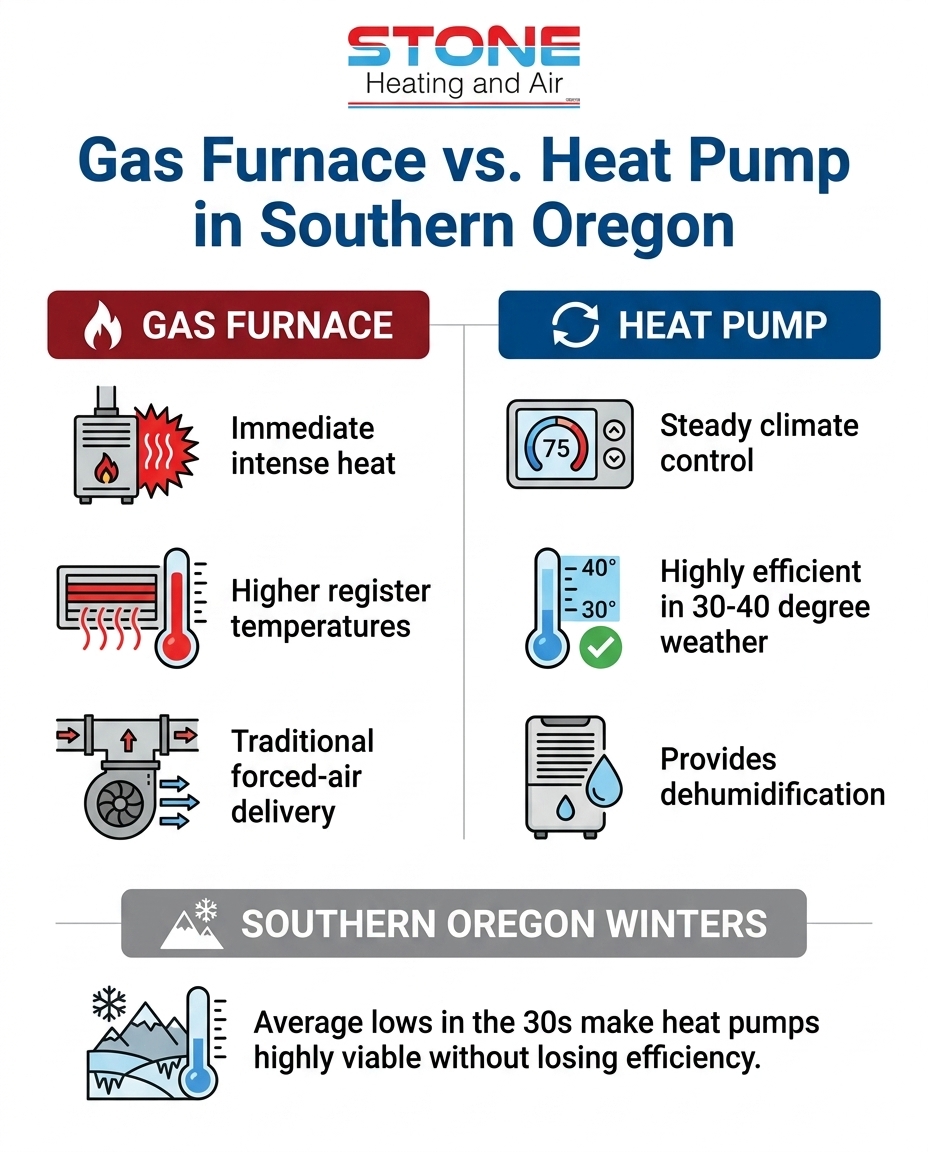
For decades, traditional forced-air gas systems have been the standard for residential heating, and they remain highly popular for good reason. Gas furnaces operate by burning fuel to create a powerful, high-temperature heat output at the register. If you are someone who loves standing over a vent to feel a blast of hot air, a gas furnace delivers exactly that experience.
The operational mechanics of a traditional gas furnace follow a precise, sequential process to generate this intense warmth:
1. Thermostat Activation: When the indoor temperature drops below your setting, the thermostat signals the furnace control board to begin the heating cycle.
2. Ignition Sequence: The draft inducer fan turns on to clear the heat exchanger of any leftover gases. Then, the igniter activates and the gas valve opens, creating a controlled flame.
3. Heat Exchange: The burners heat up a metal component called the heat exchanger. The combustion gases are kept safely inside this chamber and eventually vented outside.
4. Air Distribution: The main blower motor kicks on, pulling cold indoor air through your return ducts, blowing it over the hot exterior of the heat exchanger, and pushing the newly heated air through your supply vents.
This process results in air that feels significantly warmer than your room temperature—often exiting the vent at 120°F or higher. Just last fall, our team worked with a local homeowner who needed a replacement system that provided strong, hot heat after their previous unit failed. After discussing their preferences, our installers set them up with a new high-efficiency gas heater that met their exact performance needs, and it now works wonders to provide that intense, comforting warmth they desired.
When Rapid Warming Matters Most
The primary appeal of a gas furnace is its ability to overcome sudden overnight temperature drops rapidly. If you prefer to turn your thermostat down to 60°F while you sleep or while you are away at work, a gas furnace can recover that temperature and reheat the home to 70°F very quickly. This rapid recovery makes gas heating highly attractive for households with fluctuating schedules or those who simply enjoy the immediate gratification of a fast-warming house.
Why Modern Heat Pumps Thrive in Damp, Chilly Weather
While gas furnaces rely on combustion, heat pumps use electricity to transfer heat from one place to another. In the past, there was a widespread myth that heat pumps could not handle winter temperatures. While early models did struggle when the thermometer dropped near freezing, modern cold-climate technology has completely changed the landscape.
Today's heat pumps can extract ambient heat from the outside air even when temperatures are below freezing. Because our average winter lows typically stay in the 30s, a heat pump operates incredibly well in this environment. If you are considering an HVAC System Replacement, our technicians always emphasize that transferring heat is inherently more energy-efficient than generating it from scratch.
The heating style of a heat pump is fundamentally different from a gas furnace. Instead of a sudden, intense blast of hot air, a heat pump provides a steady, consistent flow of warm air. This low-and-slow heating approach perfectly counters the persistent damp chill of our region without over-drying the indoor air. It maintains a highly consistent temperature, meaning you won't experience the noticeable temperature swings often associated with a furnace kicking on and off.
Additionally, heat pumps run longer cycles at lower speeds. This continuous air circulation provides excellent dehumidification benefits during damp Oregon winters. By constantly moving air across the indoor coil, the system helps regulate indoor humidity, eliminating the clammy feeling that often accompanies a 40-degree rainy day. For homeowners who value consistent, even comfort over rapid temperature spikes, our installation crews consistently recommend modern heat pump technology as an exceptional fit for the Rogue Valley.
Side-by-Side Comparison: Efficiency, Lifespan, and Comfort
When deciding between these two systems, a direct, objective comparison helps clarify which option aligns with your household priorities. Both systems have distinct advantages, but they measure efficiency, deliver comfort, and require maintenance in very different ways.
• Efficiency Metric — Gas Furnace: AFUE (Annual Fuel Utilization Efficiency) - measures percentage of fuel converted to heat. — Electric Heat Pump: HSPF2 (Heating Seasonal Performance Factor) - measures electrical efficiency over a season.
• Heat Delivery Style — Gas Furnace: Intense, rapid blast of hot air (120°F+ at the register). — Electric Heat Pump: Steady, consistent flow of warm air (90°F - 105°F at the register).
• Expected Lifespan — Gas Furnace: 15 to 20 years with proper annual maintenance. — Electric Heat Pump: 12 to 15 years (runs year-round for both heating and cooling).
• Environmental Impact — Gas Furnace: Relies on fossil fuels; produces on-site combustion emissions. — Electric Heat Pump: Runs on electricity; zero on-site emissions; highly eco-friendly.
• Ideal Use Case — Gas Furnace: Homes needing rapid temperature recovery and intense heat. — Electric Heat Pump: Homes prioritizing even temperatures and high energy efficiency.
Understanding these differences is key to evaluating the total Furnace Replacement Cost in Southern Oregon. While a gas furnace might have a longer lifespan because it only operates during the winter months, a heat pump serves double duty by acting as your air conditioner during the summer. This means replacing an aging furnace and an aging AC unit simultaneously can often be accomplished by installing a single, highly efficient heat pump system.
Navigating Efficiency Upgrades and Generic Incentives
Upgrading your heating system is a significant investment in your home's infrastructure. However, transitioning to high-efficiency equipment can yield substantial long-term utility savings. Older heating systems often operate at 70% to 80% efficiency, meaning a large portion of the energy you pay for is lost through exhaust or inefficient operation. Modern systems, whether gas or electric, utilize energy far more effectively.
When our team at Stone Heating and Air discusses upgrades with customers, we always point out that there are often financial incentives designed to encourage energy-efficient choices. Federal tax credits may apply to qualifying high-efficiency heat pump installations, helping to offset the initial investment. Additionally, state-level utility incentives often exist for energy-efficient upgrades across the Pacific Northwest.
Because these programs frequently change and depend on the specific SEER2 and HSPF2 ratings of the equipment you choose, we advise homeowners to verify current programs with their local utility provider or a qualified tax professional. Taking advantage of these incentives can make the transition to a premium, high-efficiency system much more accessible, ultimately lowering your monthly energy usage while improving your daily comfort.
The Strategic Advantage of Early Fall Replacements
Timing is everything when it comes to HVAC upgrades. The September pre-heating season is the absolute best window for scheduling assessments and replacements. Waiting until your system fails on the coldest night of the year severely limits your options and puts you at the mercy of emergency wait times.
Booking early avoids the massive backlog that local contractors face when the first major cold snap hits. It gives you the breathing room to make a calculated decision rather than a rushed one. A pattern we see often at Stone Heating and Air is new residents moving into the area who proactively reach out for routine maintenance and filter changes. For example, one recent customer needed a comprehensive assessment of their newly purchased home's equipment. Our technician arrived on time, demonstrated deep knowledge of the system, and ensured everything was prepared for peak performance before winter arrived. That proactive approach prevents mid-winter breakdowns.
If you are considering a replacement this fall, here is what our professional assessment process looks like:
• Comprehensive Load Calculation: A technician will measure your home's square footage, window placement, and insulation levels to determine the exact heating capacity required.
• Ductwork Inspection: We evaluate your existing ductwork to ensure it can handle the airflow of a modern, high-efficiency system without leaking.
• Tailored Recommendations: Based on the data, you receive objective options for both gas and electric systems that fit your home's unique footprint.
• Scheduled Installation: You get the peace of mind that comes with completing an installation on an agreed-upon date, long before the winter weather becomes a daily struggle.
Common Questions About Heating in Southern Oregon
Do heat pumps work well in Southern Oregon?
Yes, they work exceptionally well. Because our average winter low temperatures typically stay in the 30s and 40s, modern heat pumps operate within their peak efficiency range. They easily extract ambient heat from the outside air to keep your home consistently warm without the massive energy spikes associated with older electric resistance heaters.
At what temperature does a heat pump become inefficient?
Standard heat pumps begin to lose efficiency when temperatures drop below freezing, but modern cold-climate models can maintain high efficiency down to 5°F or lower. Since the Rogue Valley rarely experiences prolonged sub-zero freezes, our installers find that a properly sized heat pump will remain highly efficient throughout our entire winter season.
Should I replace my gas furnace with an electric heat pump?
This depends on your comfort preferences and existing infrastructure. If you prefer a steady, even temperature and want to combine your heating and cooling into one energy-efficient unit, switching to a heat pump is an excellent choice. However, if you prefer the rapid, intense heat of a gas flame and already have gas lines in good condition, upgrading to a high-efficiency furnace might be your best route.
What is the best heating system for the Rogue Valley?
There is no single "best" system for every home; the ideal choice depends on your home's layout, insulation, and your family's comfort habits. Heat pumps offer incredible year-round efficiency and humidity control for our damp climate, while gas furnaces provide the rapid temperature recovery some homeowners rely on during sudden cold snaps.
How does a heat pump help with indoor humidity during damp winters?
Heat pumps run longer, slower cycles than traditional furnaces. As the system continuously circulates air over the indoor coil, it naturally dehumidifies the air. This constant air movement prevents the damp, clammy feeling that can infiltrate homes during wet Oregon winters, resulting in a much more comfortable indoor environment.
Make a Confident Choice for Your Home's Winter Comfort
Both gas furnaces and electric heat pumps offer distinct, powerful advantages for regional winters. A gas furnace will deliver the rapid, intense warmth you might crave after a long day in the cold, while a modern heat pump provides steady, highly efficient climate control that perfectly counters our damp, chilly weather. There is no wrong answer—only the answer that best fits your home's specific footprint and your family's daily habits.
Objective, regionally accurate advice is the key to making the right choice. You don't have to navigate this decision alone. Schedule a Free Heating Estimate with our team today. We will evaluate your home, listen to your preferences, and help you secure a reliable, efficient heating system that will keep you comfortable for many winters to come.