

The October Chill: Facing Your First Heating Startup in Central Point
Your thermostat clicks on for the first time since spring, but instead of a steady flow of warm air, you are greeted by a strange grinding noise and a freezing house. Options comparisons for homeowners become an urgent priority when that very first October heating-startup in Central Point reveals a failing system. Here at Stone Heating and Air, our technicians see this panic every fall. The transition between seasons is a critical window in Southern Oregon. Warm afternoons quickly give way to freezing overnight lows, meaning you cannot rely on space heaters or extra blankets for long. Properly closing out the cooling season with professional air conditioning services is just as important as ensuring your heating system is safe to operate.
If your unit is aging, you face a tough choice: apply a quick patch to a struggling furnace or invest in a modern replacement before severe winter weather sets in. Scheduling AC maintenance in Central Point as part of a holistic seasonal transition prevents cross-seasonal wear and tear from ruining your comfort. A comprehensive approach ensures that both halves of your HVAC system are prepared for the demands of the Rogue Valley climate.
How Rogue Valley Temperature Swings Stress Aging Systems
In our years serving the Rogue Valley and Central Point area, the Stone Heating and Air team has seen exactly how distinct fall climate patterns impact local equipment. During October, it is entirely common to experience freezing temperatures in the early morning, followed by rapid warming that pushes afternoon temperatures into the upper 60s or 70s. These wild temperature swings force your heating system to work in short, intense bursts rather than running in long, efficient cycles.
This frequent short-cycling puts immense strain on older gas furnaces. Every time the system fires up, the blower motor, inducer draft motor, and heat exchanger undergo thermal expansion and mechanical stress. For a newer system, this is standard operation. For an aging furnace that has already endured a decade or more of wear and tear, these constant stops and starts often trigger cascading component failures.
The Impact of Dormancy on HVAC Components
Furnaces do not sit perfectly preserved during the summer months. While your air conditioner handles the cooling load, your heating components sit dormant in a dusty environment. This period of inactivity leads to several hidden issues that only reveal themselves during that critical October heating-startup:
• Dust buildup on critical sensors: Over the summer, household dust accumulates on the furnace's flame sensor and burners. When the system tries to ignite in the fall, this dust can prevent the sensor from reading the flame, causing the furnace to shut down immediately for safety.
• Dried out belts and unlubricated parts: Moving parts that sit idle for months lose their lubrication. Blower motors can seize up, and older fan belts can become brittle and snap upon their first rotation.
• Compromised heat exchangers: The constant heating and cooling cycles over many years cause metal fatigue. After sitting dormant, the sudden introduction of high heat can cause microscopic cracks in the heat exchanger to expand, creating a serious safety hazard.
Neglecting end-of-season cooling care compounds this overall system stress. Relying on professional evaluation rather than dangerous DIY troubleshooting is the only way to ensure these dormant components are ready for the winter load.
Assessing System Health: When to Repair Your Current Unit
Deciding whether to fix a broken furnace or replace it entirely requires a clear, objective framework. Just as you evaluate the long-term viability of your cooling equipment when scheduling AC repair services in Medford during summer breakdowns, heating repairs require weighing immediate relief against future reliability. Here is how our seasoned technicians at Stone Heating and Air evaluate an aging system:
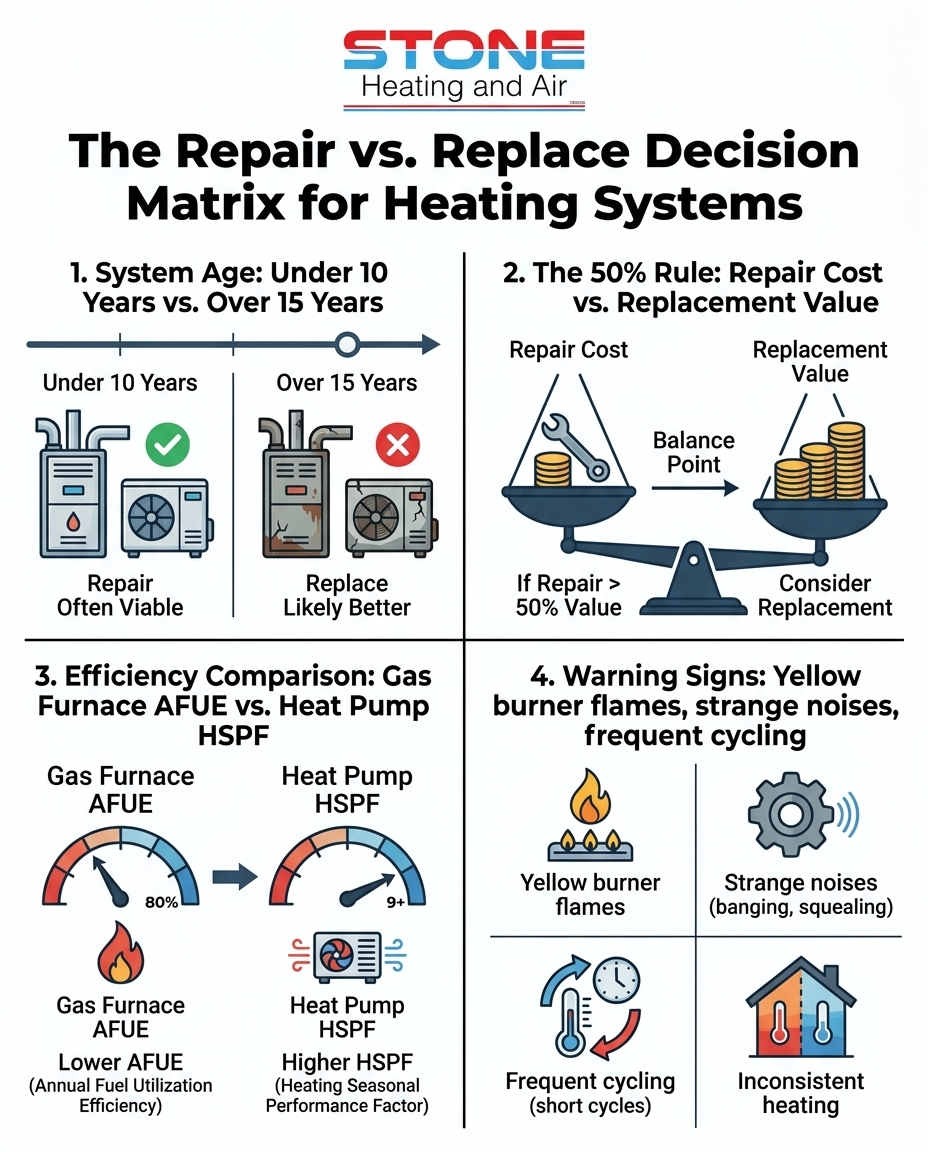
1. Apply the 50 percent rule: This is a standard industry benchmark. If the cost of repairing your current furnace equals or exceeds half the value of a new replacement system, investing in a new unit is almost always the wiser financial choice. Pouring significant funds into a failing system only delays the inevitable.
2. Calculate the true age of the unit: A traditional gas furnace typically lasts between 15 and 20 years. If your system is approaching or has surpassed this 15-year mark, major components are reaching the end of their operational lifespan. A repair today does not guarantee the blower motor will not fail next month.
3. Track your repair frequency: One minor repair every few years is normal maintenance. However, if you are experiencing frequent, sequential breakdowns—such as replacing a flame sensor in November, a control board in January, and an inducer motor the following fall—your system is signaling a terminal decline.
4. Monitor efficiency drops: If your heating bills are climbing steadily despite keeping your thermostat at the same temperature, your aging furnace is working harder to produce the same amount of heat. This loss of efficiency means you are paying more for decreased comfort.
Safety First: Non-Negotiable Repair Scenarios
Some warning signs indicate that a repair is no longer a safe option. Identifying strange odors, such as the smell of raw gas or melting plastic, requires immediate professional intervention. The most critical danger is a cracked heat exchanger. Because the heat exchanger separates the combustion process from your breathing air, a crack can allow carbon monoxide to leak into your home. Licensed professionals must handle all diagnostic work to ensure your family's safety is never compromised.
Heat Pumps vs. Gas Furnaces: Understanding Your Replacement Options (Comparisons for Homeowners)
If your current system fails the 50 percent rule, you face another important decision: replacing it with another traditional gas furnace or upgrading to a high-efficiency heat pump. Understanding the fundamental differences between these technologies is crucial for long-term comfort in the Rogue Valley / Central Point area.
The primary difference lies in how they generate warmth. A gas furnace generates heat through combustion, burning fuel to create a flame that heats the air circulated through your home. A heat pump, on the other hand, does not generate heat at all. Instead, it uses electricity and refrigerant to transfer ambient heat from the outside air into your home. Even when it feels freezing outside, there is still thermal energy in the air that a modern heat pump can extract and compress.
Southern Oregon's moderate winter climate is absolutely ideal for heat pump technology. In fact, we frequently recommend modern heat pumps to our Central Point customers because winter temperatures here rarely drop to extreme, sub-zero levels for extended periods. This allows heat pumps to operate at peak efficiency without constantly relying on expensive auxiliary heating strips. Furthermore, heat pumps provide a massive dual-benefit: they reverse their operation in the summer to act as an air conditioner, drastically improving your overall HVAC system performance year-round.
• Heating Method — Traditional Gas Furnace: Combustion (burns fuel to create heat) — Modern Heat Pump: Heat Transfer (moves heat from outside to inside)
• Summer Functionality — Traditional Gas Furnace: None (requires a separate AC unit) — Modern Heat Pump: Reverses to provide full air conditioning
• Energy Source — Traditional Gas Furnace: Natural gas or propane — Modern Heat Pump: Electricity
• Ideal Climate — Traditional Gas Furnace: Extreme, deep-freeze winters — Modern Heat Pump: Moderate winters (like the Rogue Valley)
• Average Lifespan — Traditional Gas Furnace: 15 to 20 years — Modern Heat Pump: Approximately 15 years (runs year-round)
Efficiency Ratings Explained
Comparing these systems requires understanding their specific efficiency ratings. Gas furnaces are measured by AFUE (Annual Fuel Utilization Efficiency). An 80 percent AFUE furnace converts 80 percent of its fuel into usable heat, while 20 percent escapes as exhaust. High-efficiency furnaces can reach up to 98 percent AFUE.
Heat pumps are measured by HSPF (Heating Seasonal Performance Factor) for heating and SEER (Seasonal Energy Efficiency Ratio) for cooling. Because heat pumps move heat rather than creating it, they can achieve efficiencies well over 100 percent, meaning they produce more heating energy than the electrical energy they consume. Higher efficiency ratings directly translate to lower energy waste and a smaller carbon footprint.
Navigating Energy Incentives and the Financial Picture
Upgrading your heating system is a major home investment, but modern efficiency standards mean you do not have to shoulder the entire burden alone. Upgrading to a high-efficiency system often qualifies homeowners for various energy incentives designed to reduce grid strain and lower overall energy consumption.
Many generic federal tax credits are currently available for qualifying high-efficiency heat pump installations. In addition to federal programs, local utility providers frequently offer generic rebates for homeowners who transition away from older, less efficient equipment. These incentives are designed to make the initial transition to a heat pump much more accessible.
Because energy programs change frequently and vary based on the specific equipment you choose, we highly recommend consulting with a tax professional or your local utility provider to verify current, applicable programs before making a final decision. Framing this financial decision as an investment in your home's value, improved indoor air quality, and long-term comfort makes the transition much easier than viewing it simply as a sunk cost.
Why a Preventative Approach Protects Your Investment
Whether you choose to repair your existing furnace or upgrade to a modern heat pump, shifting your focus to long-term care is the only way to protect your investment. Proactive maintenance prevents the stressful, go/no-go decisions that occur during an unexpected October heating-startup failure.
At Stone Heating and Air, we see the value of preventative care constantly. Recently, a local customer reached out for a pre-winter inspection after noticing strange smells during their initial heating-startup. Our technicians arrived promptly, identified a failing blower motor before it could completely seize up, and took the time to explain the underlying issue. The customer learned exactly how to maintain their system moving forward, which perfectly illustrates the importance of ongoing education. That same proactive mindset applies directly to your heating equipment.
Regular tune-ups extend the lifespan of both gas furnaces and heat pumps by catching minor wear and tear before it becomes a major mechanical failure. Joining a preventative maintenance plan ensures your systems are thoroughly checked before peak seasons hit, allowing you to avoid emergency breakdowns entirely.
Basic homeowner upkeep is just as vital. Frequent wildfire smoke in Southern Oregon necessitates cleaner filters and well-maintained systems for optimal indoor air quality. Changing your home air filters regularly reduces the strain on your blower motor, keeps your indoor air fresh, and ensures your system operates at peak efficiency. Having a professional team monitor your equipment's health year-round provides unparalleled peace of mind.
Making Your Final Decision Before Winter Hits
Acting quickly during the fall window is essential. The mild weather of October provides a brief opportunity to evaluate your equipment before severe winter weather arrives in the Rogue Valley. Waiting until the first major freeze to test your system often leads to rushed decisions and uncomfortable nights.
Whether you choose to repair an existing furnace or upgrade to a highly efficient heat pump, professional guidance is essential to ensure the safety and reliability of your home. Schedule a comprehensive inspection today to get a definitive answer on your system's overall health. Navigating options comparisons for homeowners does not have to be overwhelming when you have a clear, regionally-accurate assessment helping you make a confident decision before winter hits.
Frequently Asked Questions
When should I replace my furnace instead of repairing it?
Our team at Stone Heating and Air generally advises that you should replace your furnace if the repair costs exceed 50 percent of a new system's value or if the unit is over 15 years old. Frequent breakdowns and rising energy bills are also strong indicators that a replacement is necessary. Upgrading provides better reliability and safer operation than continuing to patch a failing system.
Is it better to get a heat pump or a new gas furnace in Oregon?
A heat pump is generally an excellent choice for Southern Oregon due to the region's moderate winter climate. Heat pumps provide highly efficient heating during the winter and reverse to offer full air conditioning during the summer. However, a high-efficiency gas furnace remains a strong option if your home already has robust gas infrastructure in place.
How long do gas furnaces typically last?
A traditional gas furnace typically lasts between 15 and 20 years with proper preventative maintenance. Once a furnace reaches this age bracket, major components like the heat exchanger and blower motor become highly susceptible to failure. Regular annual tune-ups are the best way to help your system reach its maximum lifespan.
Are heat pumps effective in cold weather?
Yes, modern heat pumps are highly effective in cold weather, especially in moderate climates like the Rogue Valley. Advanced heat pump technology can extract thermal energy from the outside air even when temperatures dip near freezing. They only rely on auxiliary heating strips during extreme, sustained deep freezes.
What is the 50 percent rule for HVAC repairs?
The 50 percent rule states that if a repair estimate equals or exceeds half the cost of a brand-new replacement system, you should replace the unit. This rule helps homeowners avoid pouring excessive money into an aging system that will likely experience further breakdowns in the near future. It ensures your money goes toward long-term reliability.
How often should I schedule preventative maintenance for my heating system?
You should schedule preventative maintenance for your heating system at least once a year, ideally in the early fall before you turn the system on for the season. If you have a heat pump that runs year-round for both heating and cooling, it requires professional maintenance twice a year to ensure both cycles operate efficiently.